Best pick: LED bar fixtures
Ceilings under 12 ft
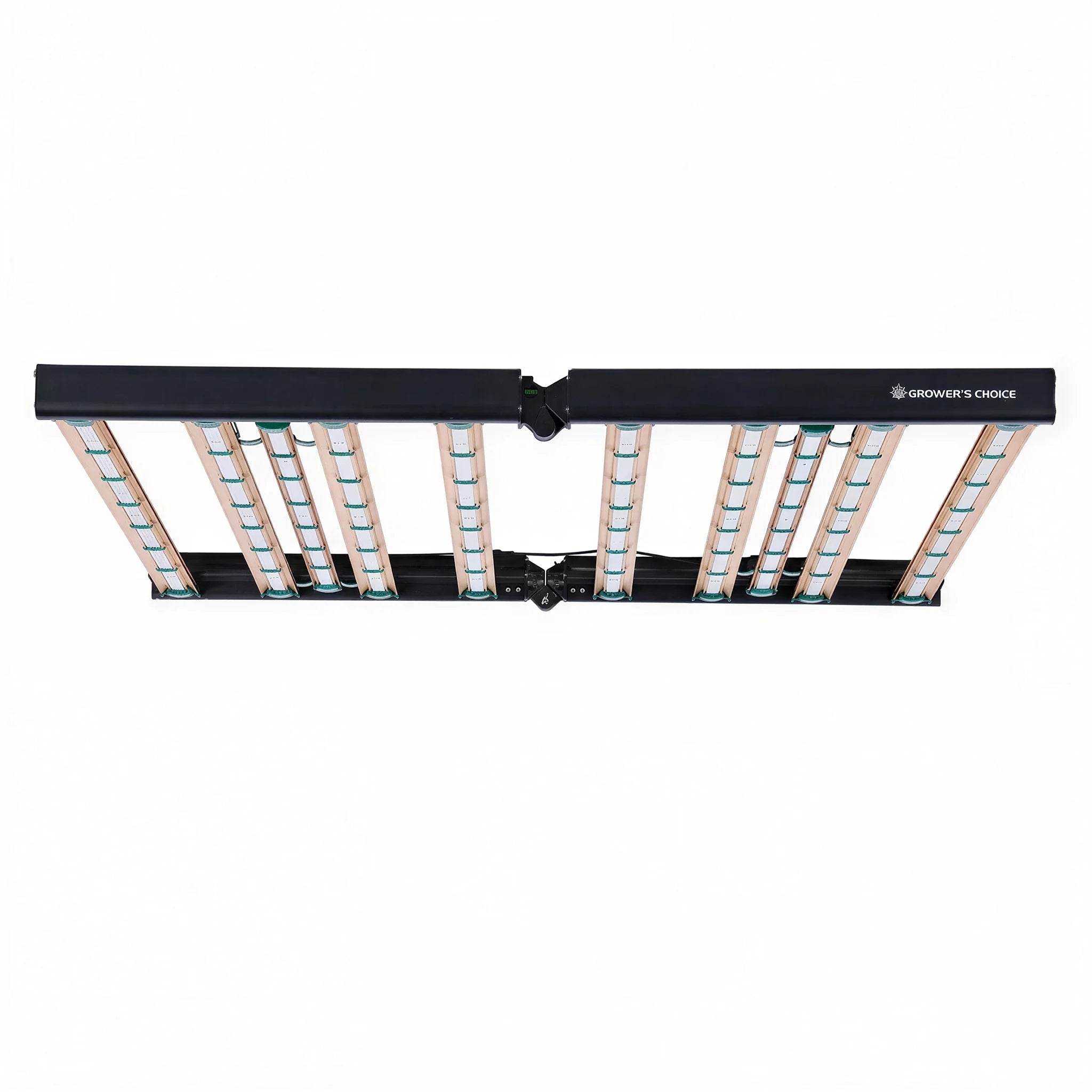
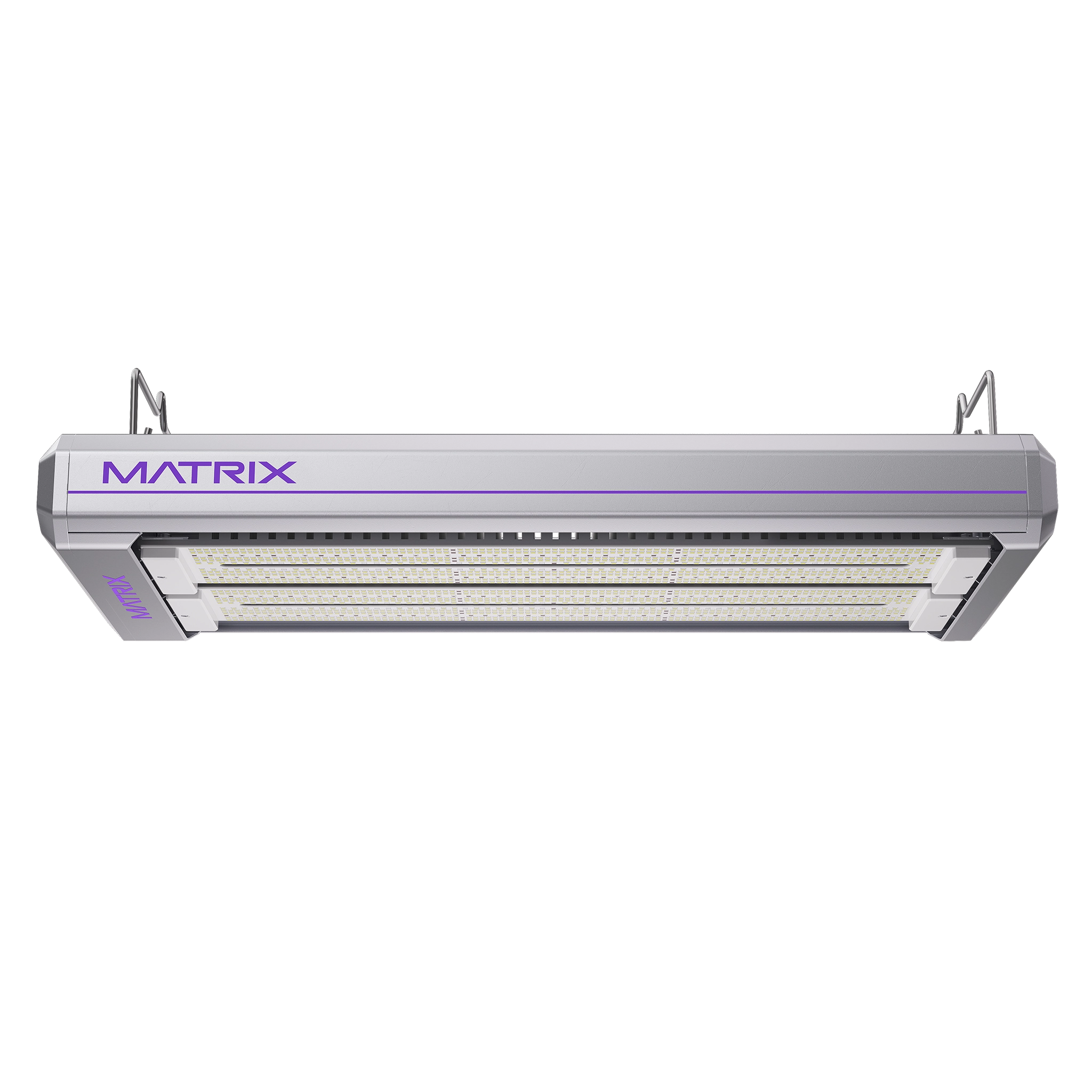
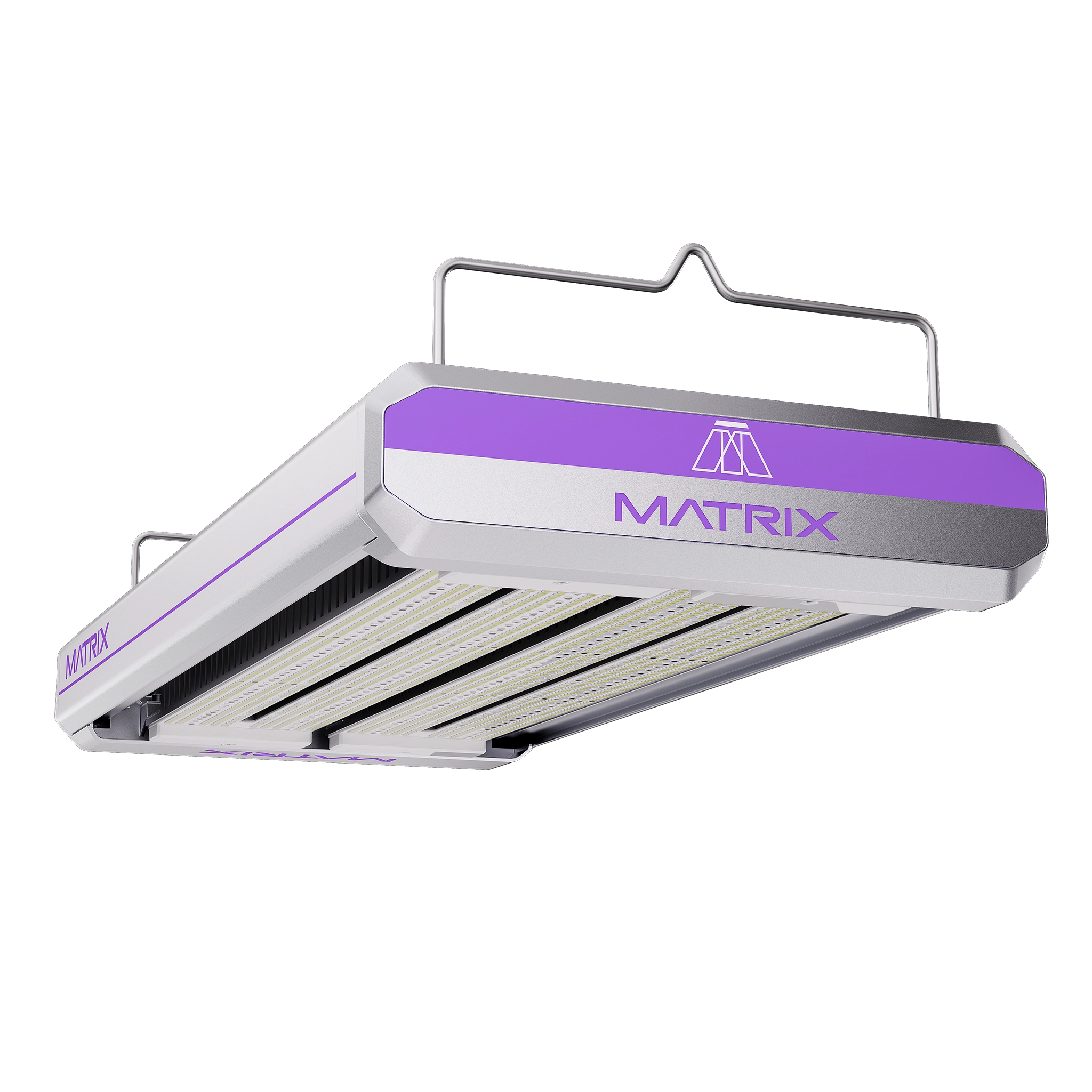
Multi-bar LED fixtures hang close to the canopy and spread light evenly, so they suit lower ceilings where a big single-point fixture would be too close to the plants.

Lighting for commercial grows
Commercial LED grow lights are high-output fixtures built to light a whole facility for years, not a single tent. They run on 208-480V, connect to central controls and are judged by photons per watt (µmol/J). DLC-listed LEDs must reach at least 2.5 µmol/J and the best top 3.5, against about 1.7 for a 1000W double-ended HPS. Shop commercial grow lights from Matrix, Iluminar, Gavita, Growers Choice and DimLux, and get help sizing, wiring and funding your build-out.
Updated October 2026 · Reviewed by Austin Melead, Sales Rep



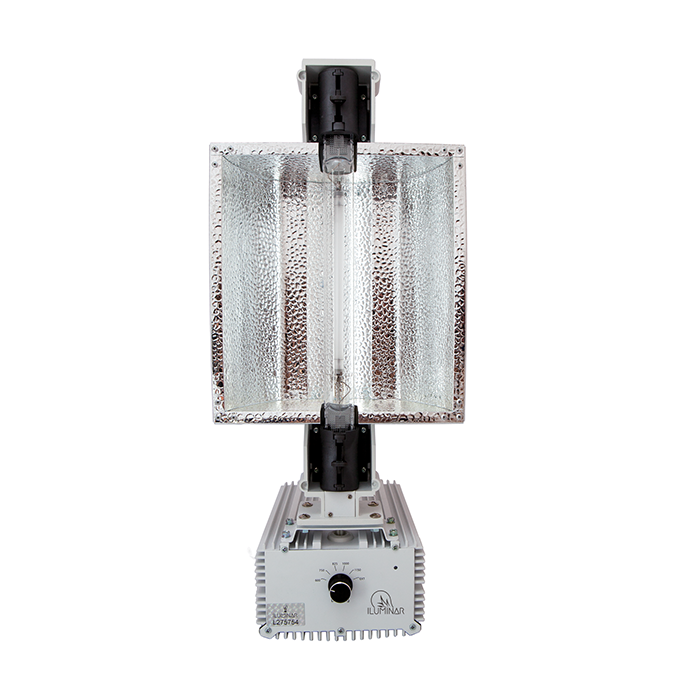
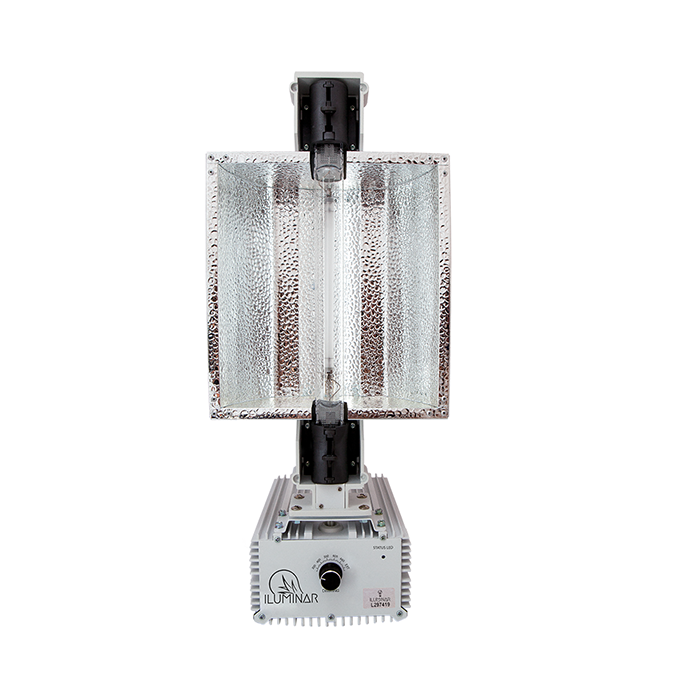
Start with your ceiling height, then your facility and budget. Each card jumps to the type that fits.
Expert tip
Ceiling height is the main factor when picking lights for a commercial grow. Below 12 ft, you want a multi-bar LED; above 12 ft, we can look at high-bay LEDs or HPS.
Best pick: LED bar fixtures
Multi-bar LED fixtures hang close to the canopy and spread light evenly, so they suit lower ceilings where a big single-point fixture would be too close to the plants.
Best pick: high-bay LED or HPS
With more height to work with, compact high-bay fixtures mount higher and cover a wide area. High-bay LED saves power; HPS costs less up front and adds heat.
Best pick: LED bar fixtures
You'll get the most light per watt, and every watt you save is heat your HVAC doesn't have to remove.
Best pick: multi-tier LED bars
Thin bars sit just above the crop on each shelf. The US DOE found commercial vertical farms run almost entirely on LED.
Best pick: LED, sized by output
Compare fixtures by output in µmol/s, not watts. An LED at 2.5 µmol/J makes the same light as a 1000W double-ended HPS on about 690W.
Best pick: high µmol/J plus controls
The US DOE puts LED savings at 31-35% of lighting electricity per square foot. Dimming to your light target saves more on top of that.
Best pick: tunable LED
Separate white, red, blue and far-red channels let you change the light recipe by crop or stage without buying new fixtures.
Best pick: double-ended HPS
HPS fixtures cost far less to buy than LED, but more to run. Check utility rebates first, since they can close much of the LED price gap.
Some fixtures are built for commercial rooms: high efficiency, high voltage and central control. Others cost less up front and still work well in the right space. Here's what each type does best, when to choose something else, and our top picks.
Built for commercial rooms
Best forSingle-tier flower rooms and greenhouse toplighting
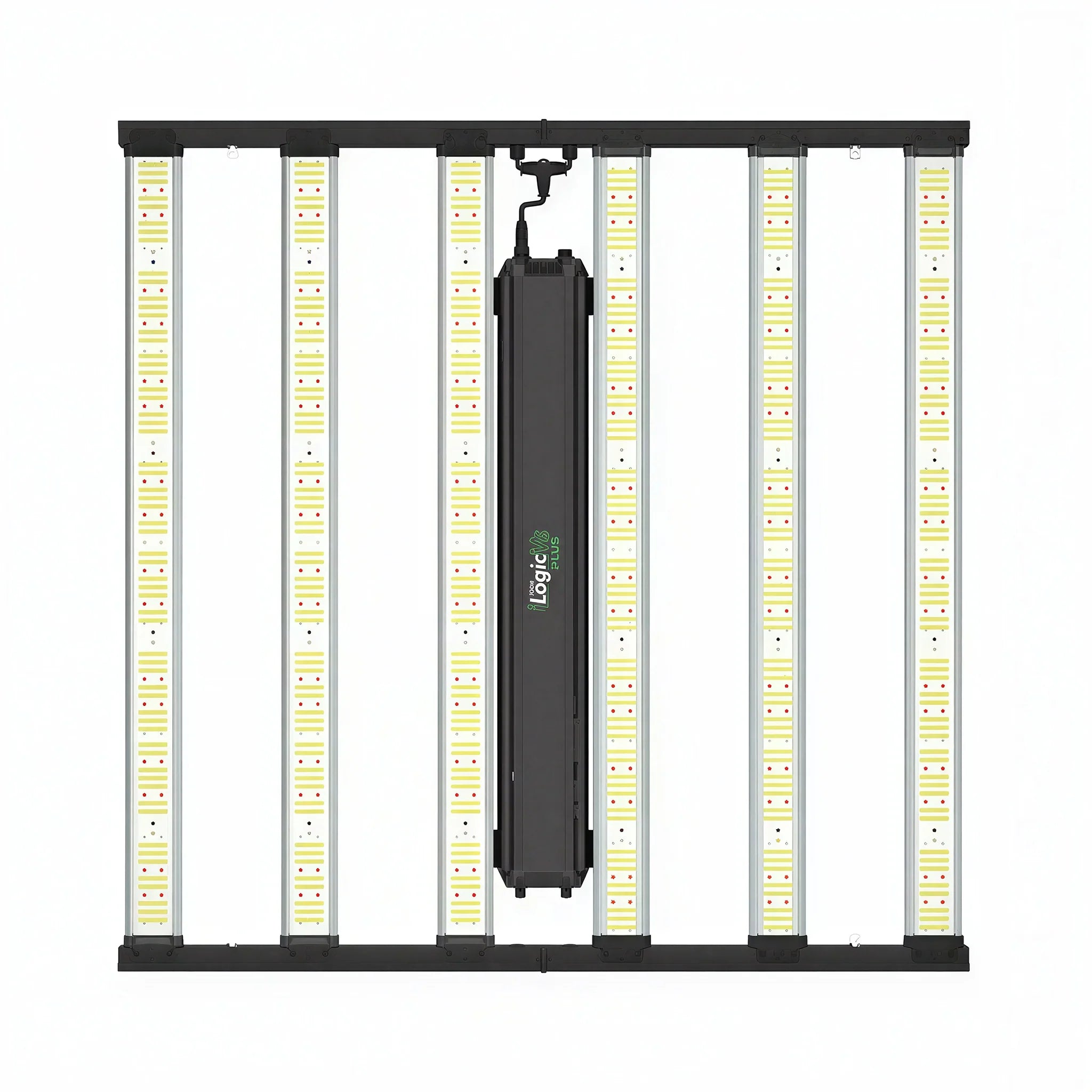
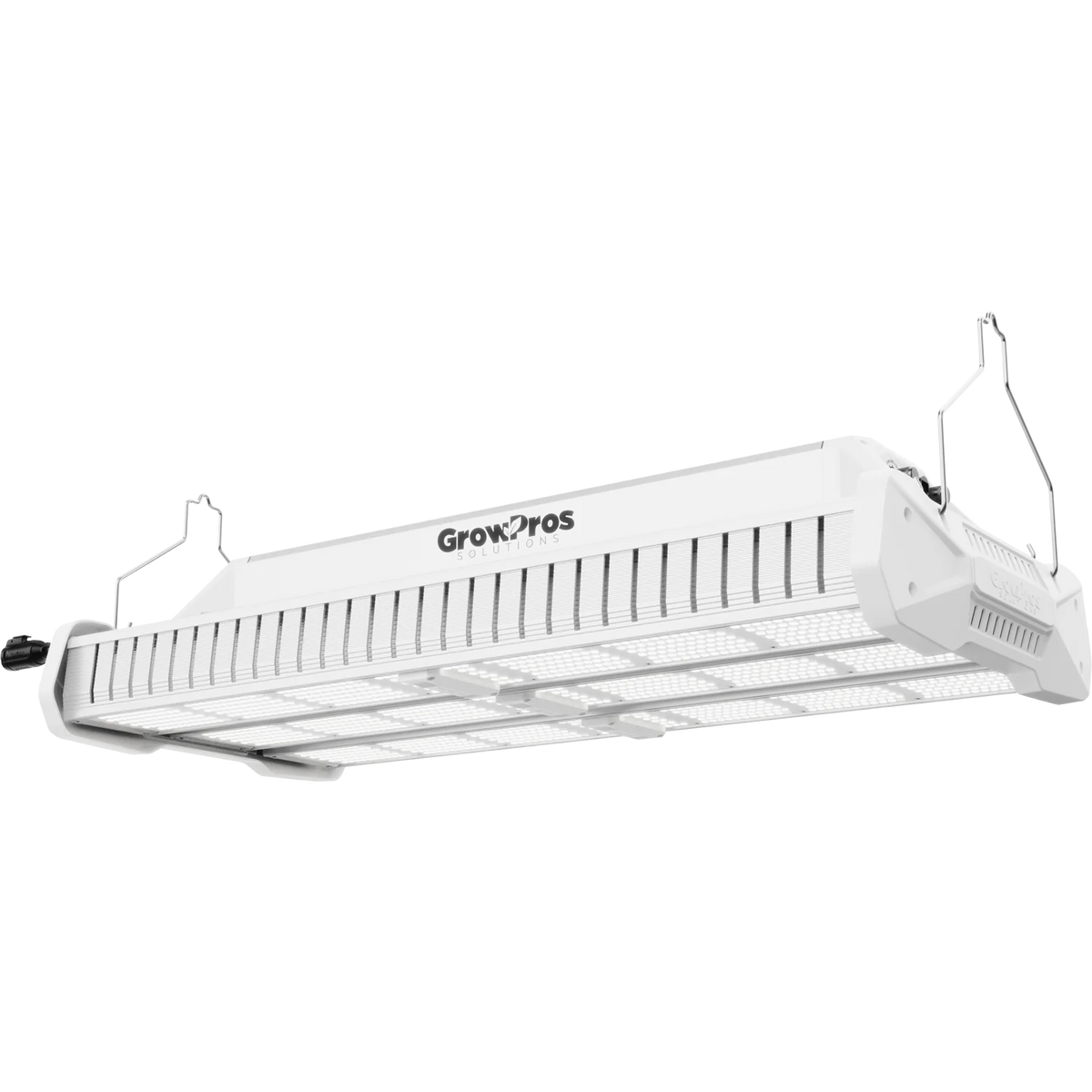
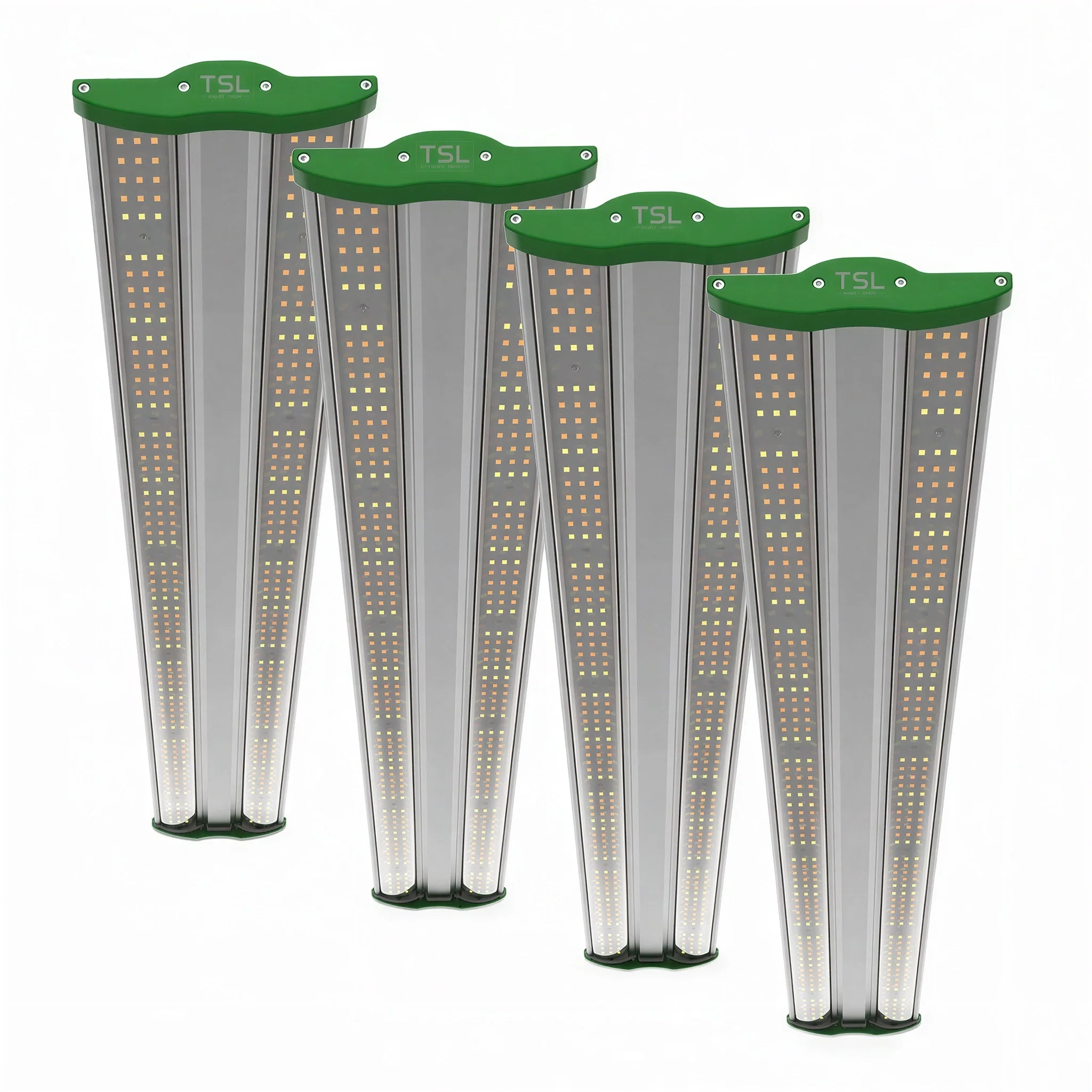
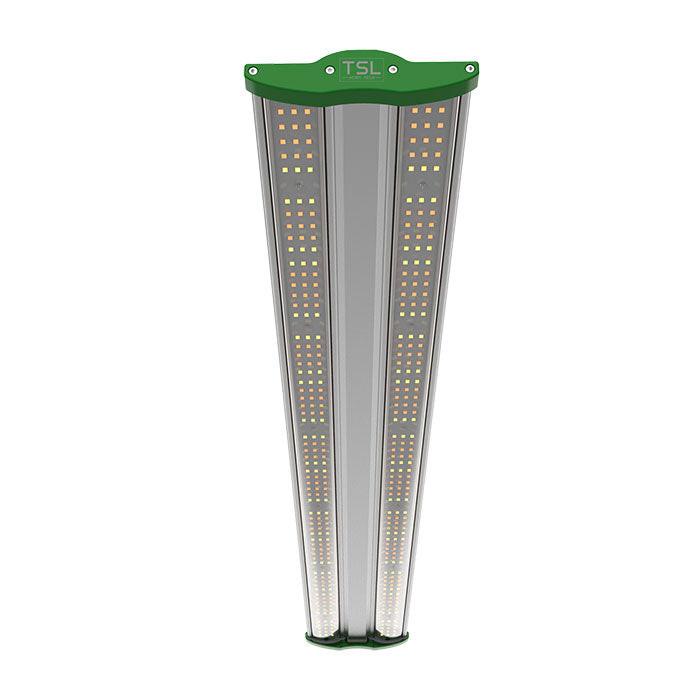
Several LED bars share one frame with a remote or onboard driver. You get even coverage and a cooler canopy than HID, and most models dim with 0-10V or a central controller.
Choose it when
Pick something else if
Shop High-output LED bar fixtures
Shop all LED grow lights →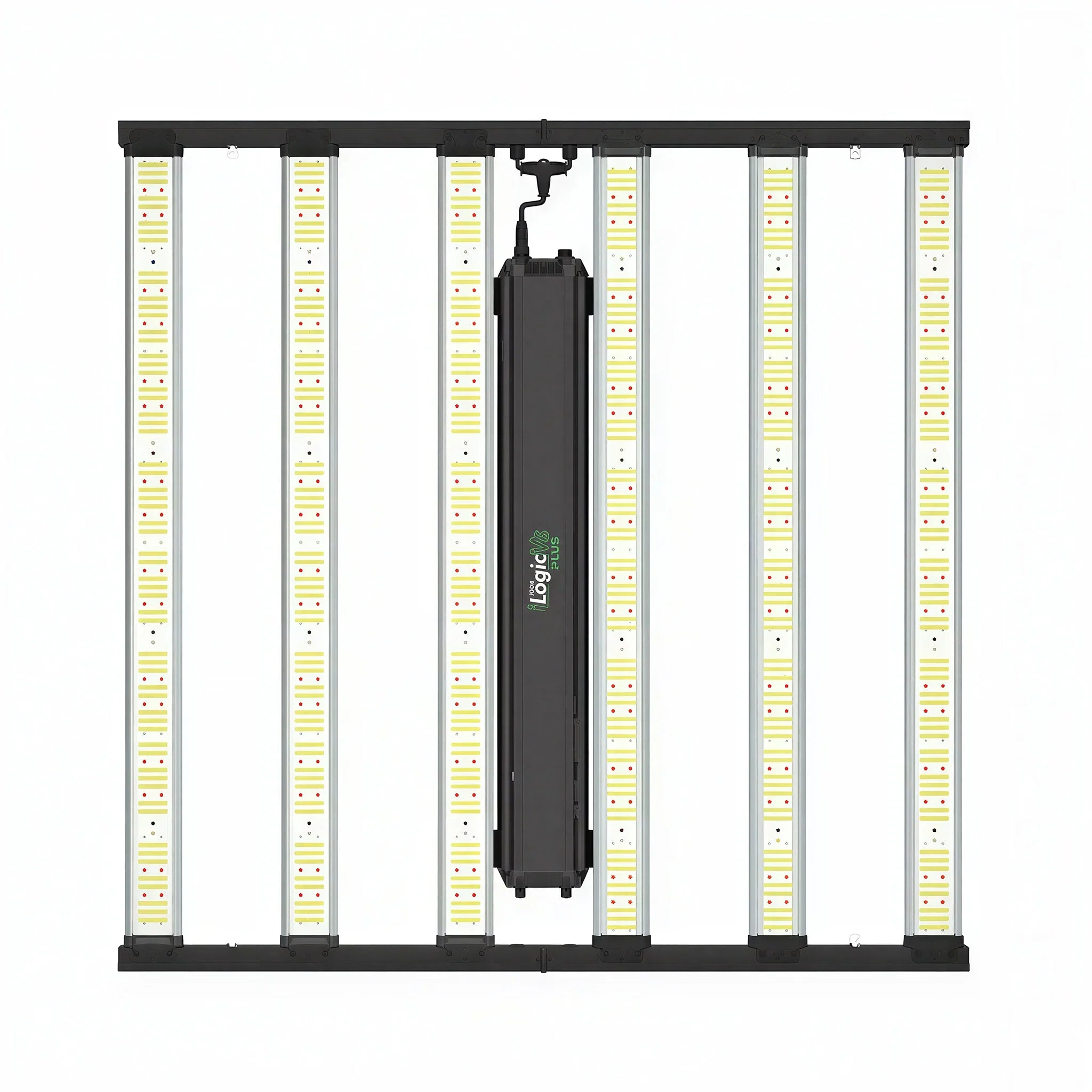
Built for high ceilings
Best forWarehouses, greenhouses and rooms with ceilings 12 ft and up
A compact LED fixture made to hang high, often in the same spot and power class as an old HPS or high-bay fixture. One fixture covers a wide area, so you need fewer drops on tall ceilings.
Choose it when
Pick something else if
Shop High-bay LED
Shop all LED grow lights →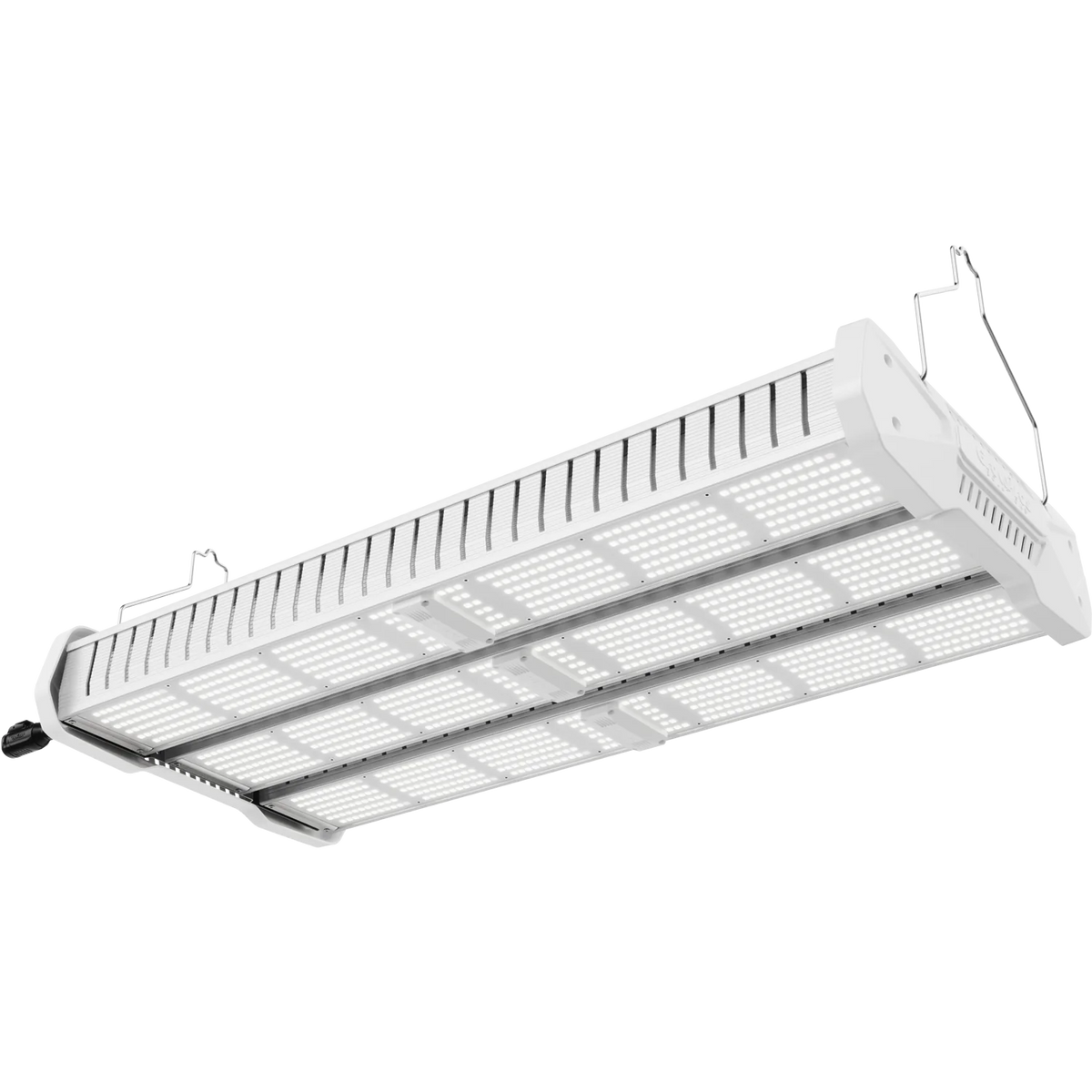
Built for commercial rooms
Best forGrowers who change the spectrum by crop or stage
An LED fixture with separate channels (white, red, blue, far-red) you can dim one at a time, so you can shift the spectrum without swapping fixtures.
Choose it when
Pick something else if
Shop Tunable multi-channel LED
Shop all LED grow lights →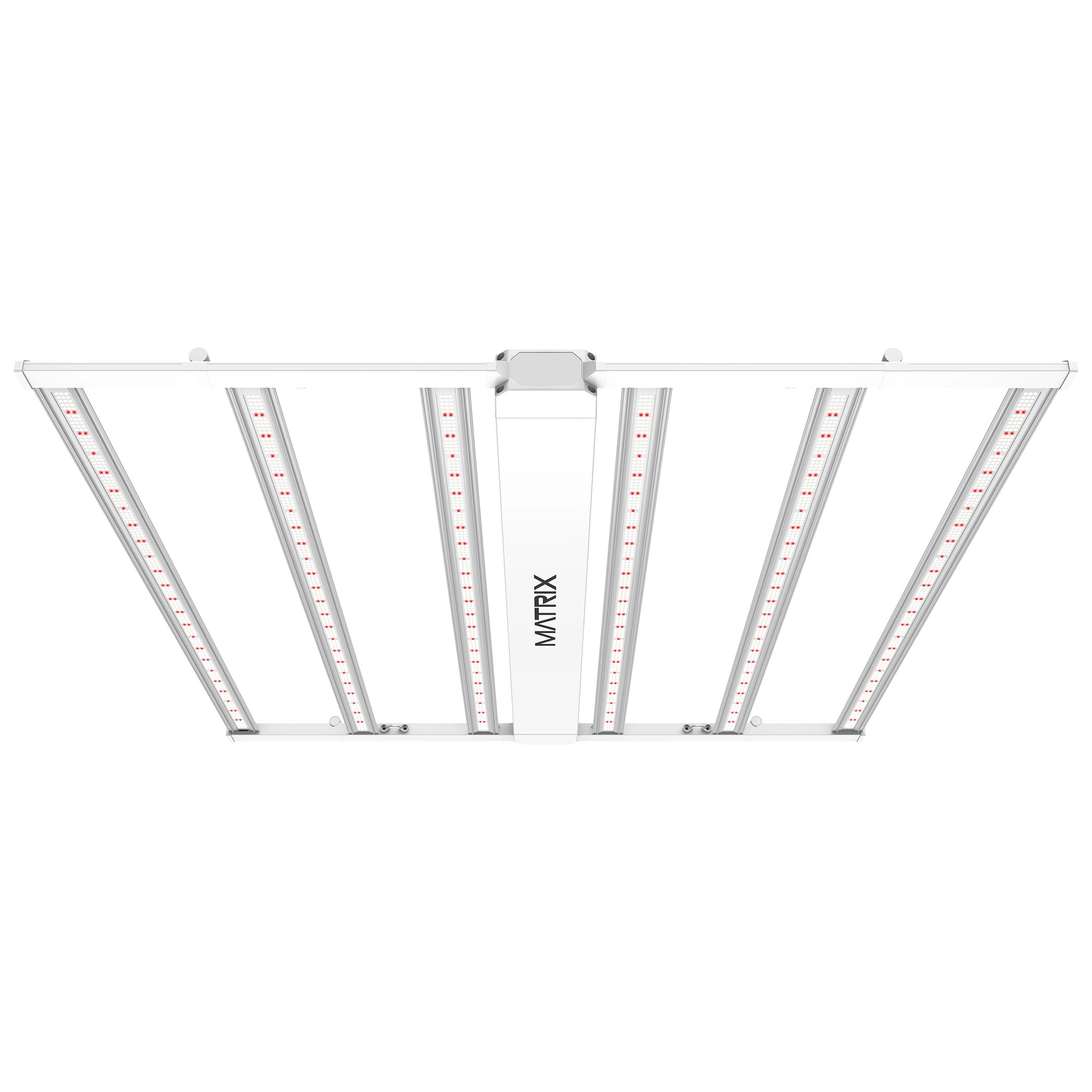


Built for commercial rooms
Best forRacks, leafy greens, propagation and vertical farms
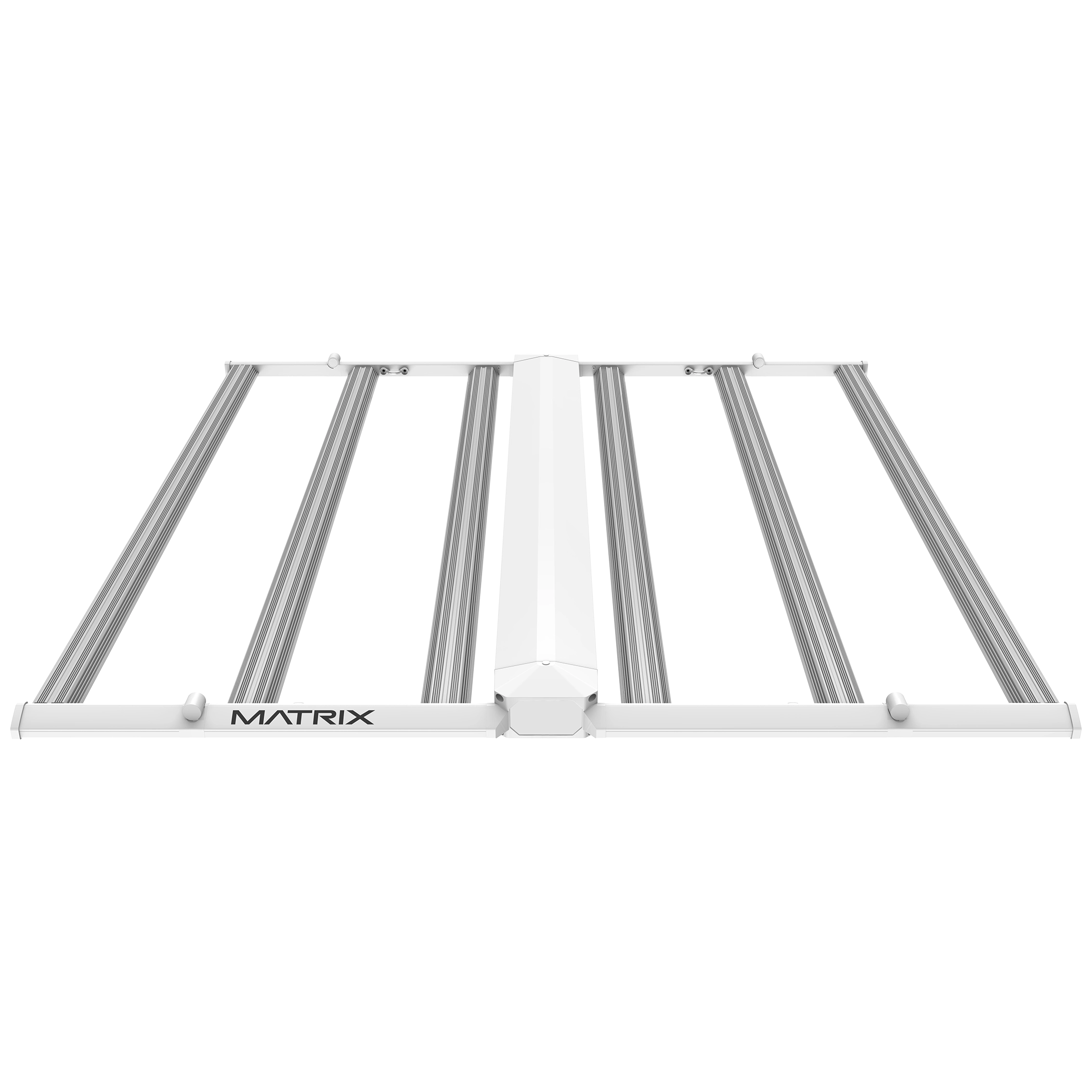
On racks, light has to fit between shelves. These thin, low-heat bars mount inside each tier, so you can stack growing area on one footprint and hang the light close to short crops.
Choose it when
Pick something else if
Shop Vertical and multi-tier LED bars
Read the vertical growing guide →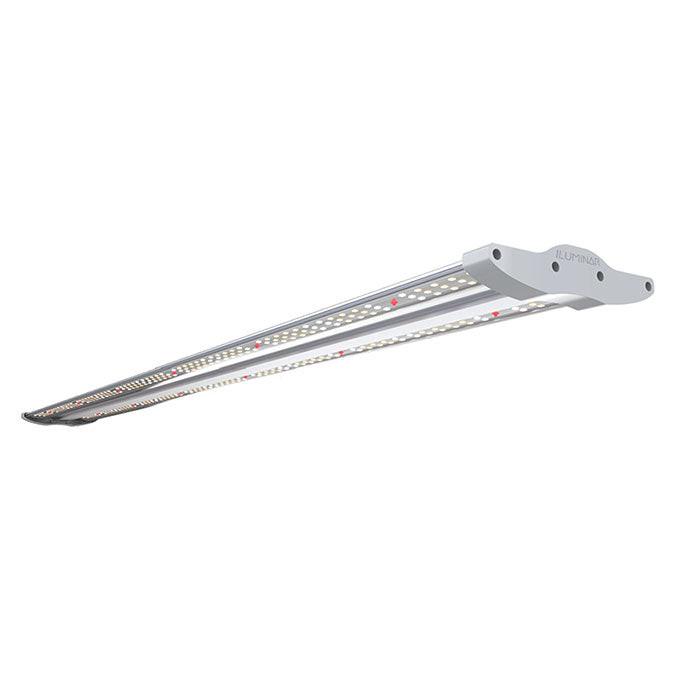


Also works commercially
Best forTight budgets and cold greenhouses
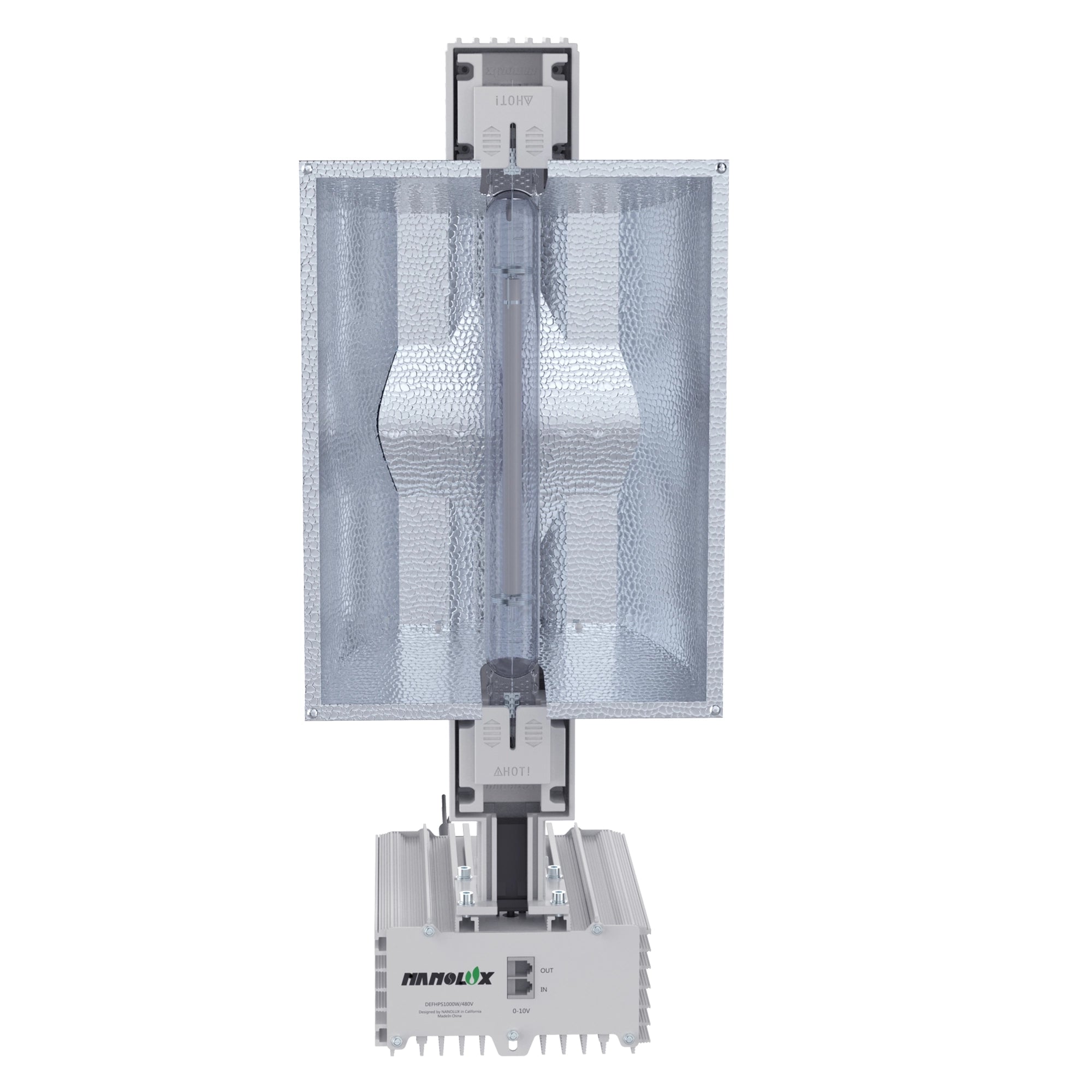
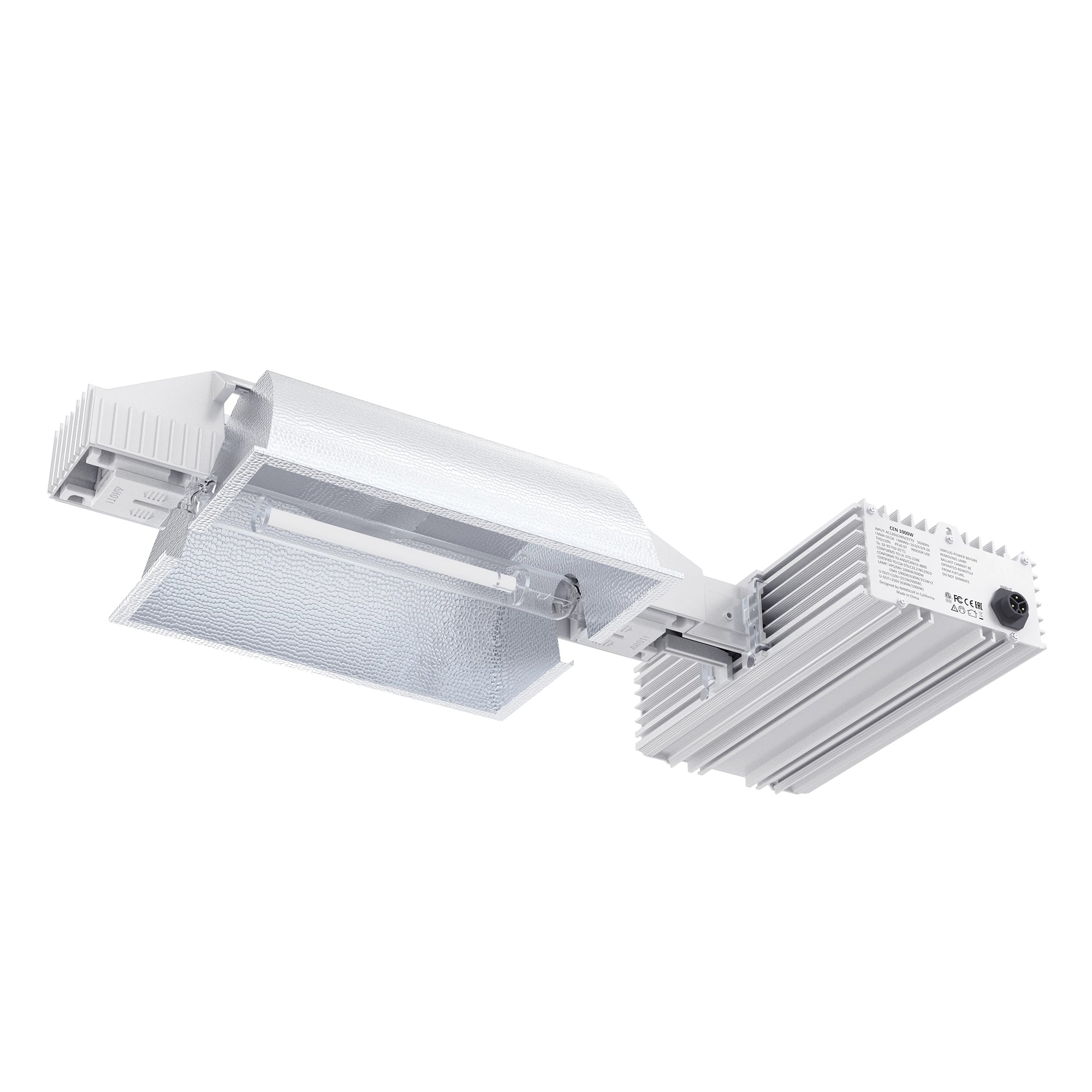
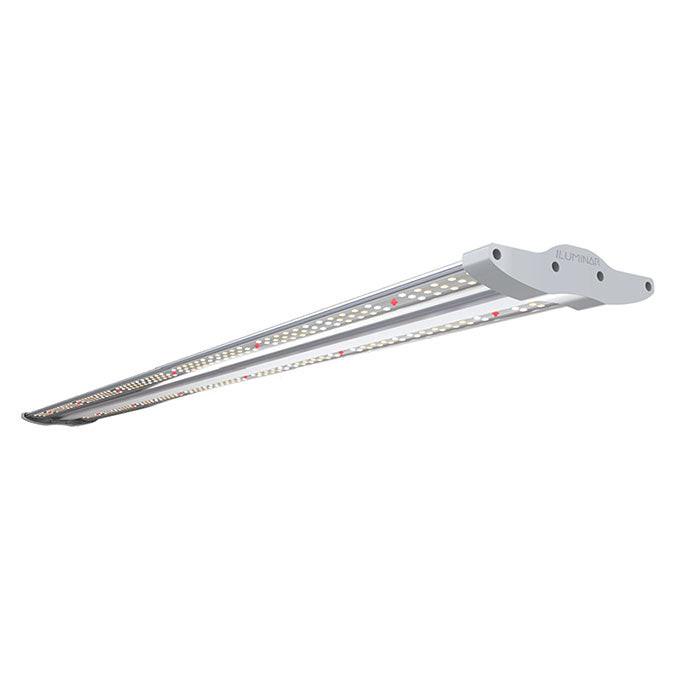
A 1000W lamp is held at both ends and run on an electronic ballast. It's cheap to buy and well proven, but lamps lose output as they age and need replacing.
Choose it when
Pick something else if
Shop Double-ended HPS
Shop all double-ended HPS →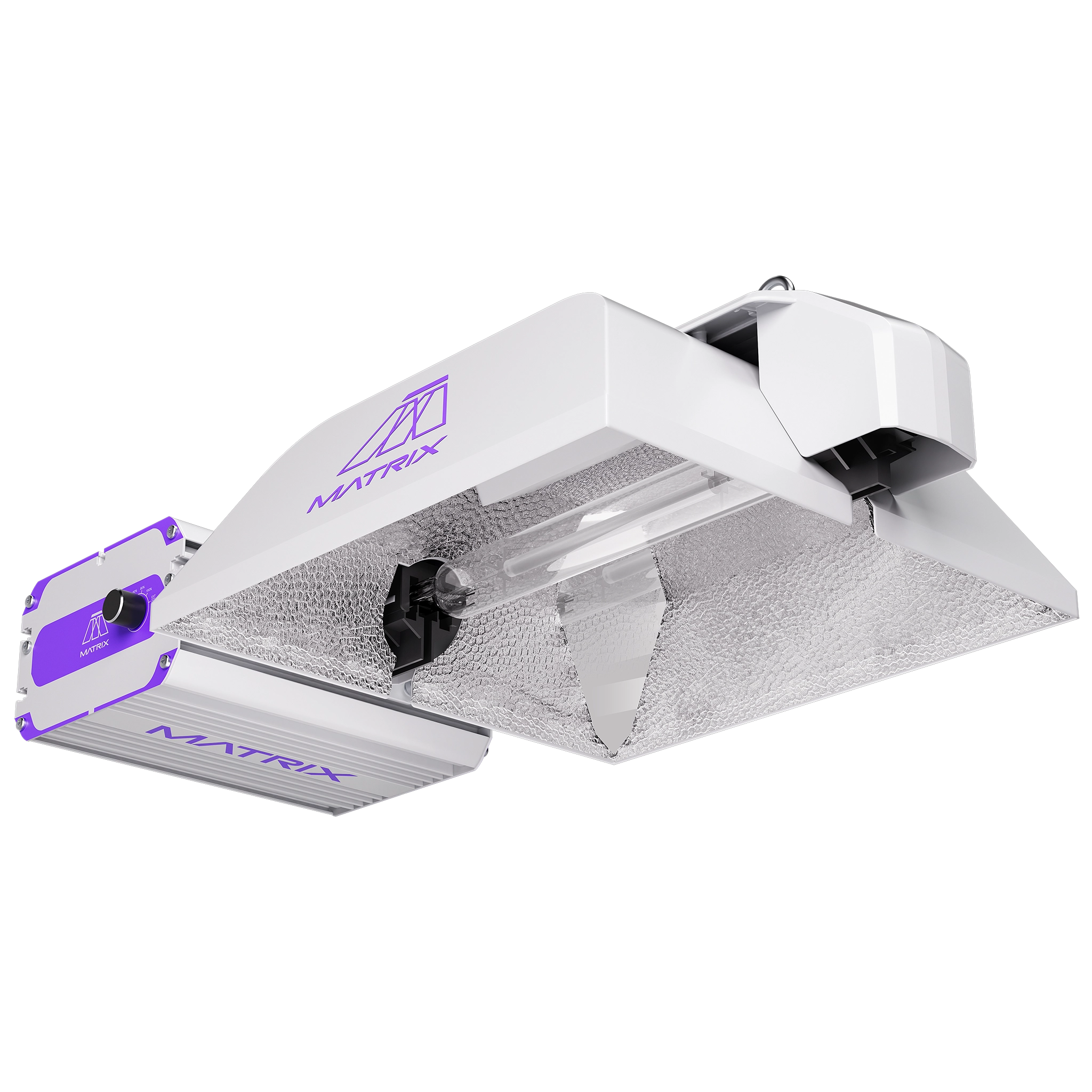


Also works commercially
Best forSmall rooms, vegetative growth and budget full spectrum
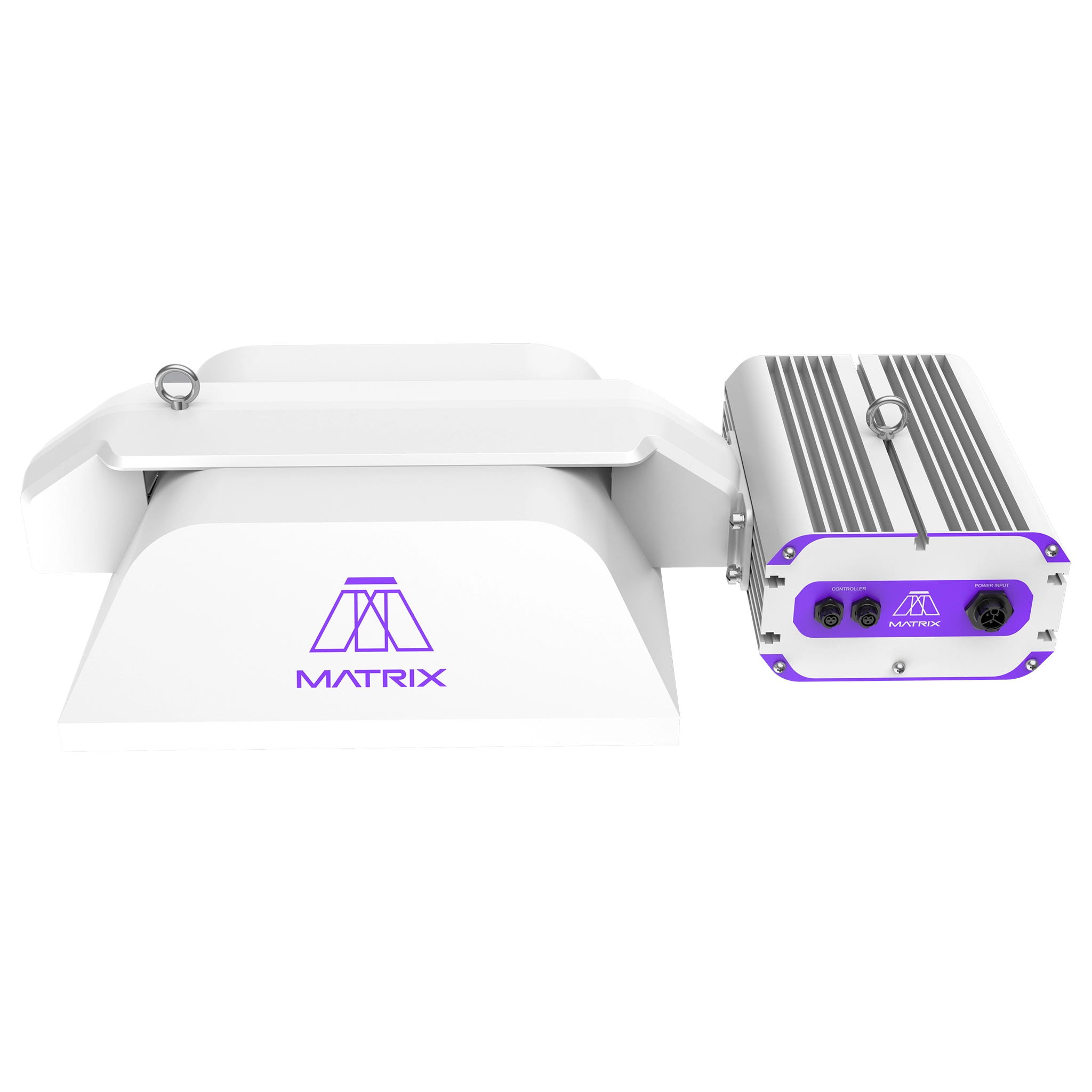
Ceramic metal halide lamps, often 315W, give a broad, sun-like spectrum. They're simple and inexpensive, though less efficient than double-ended HPS or LED.
Choose it when
Pick something else if
Shop CMH / LEC
Shop all CMH fixtures →


Built for commercial rooms
Best forAny facility with more than one room of fixtures
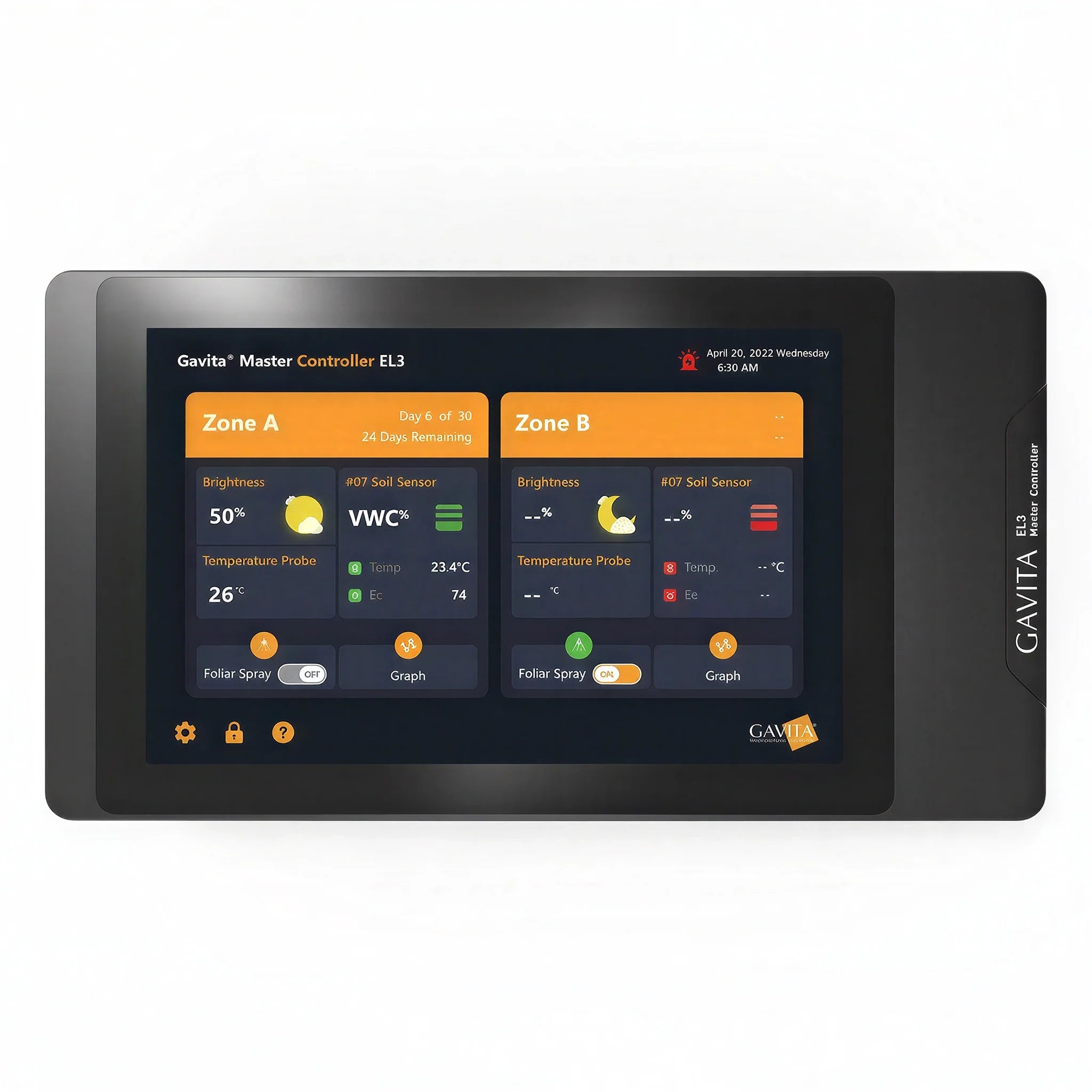
One controller that dims, schedules and syncs many fixtures, often with sunrise and sunset ramps. Most are brand-specific, so match the controller to your fixtures.
Choose it when
Pick something else if
Shop Lighting controllers
Shop all lighting controllers →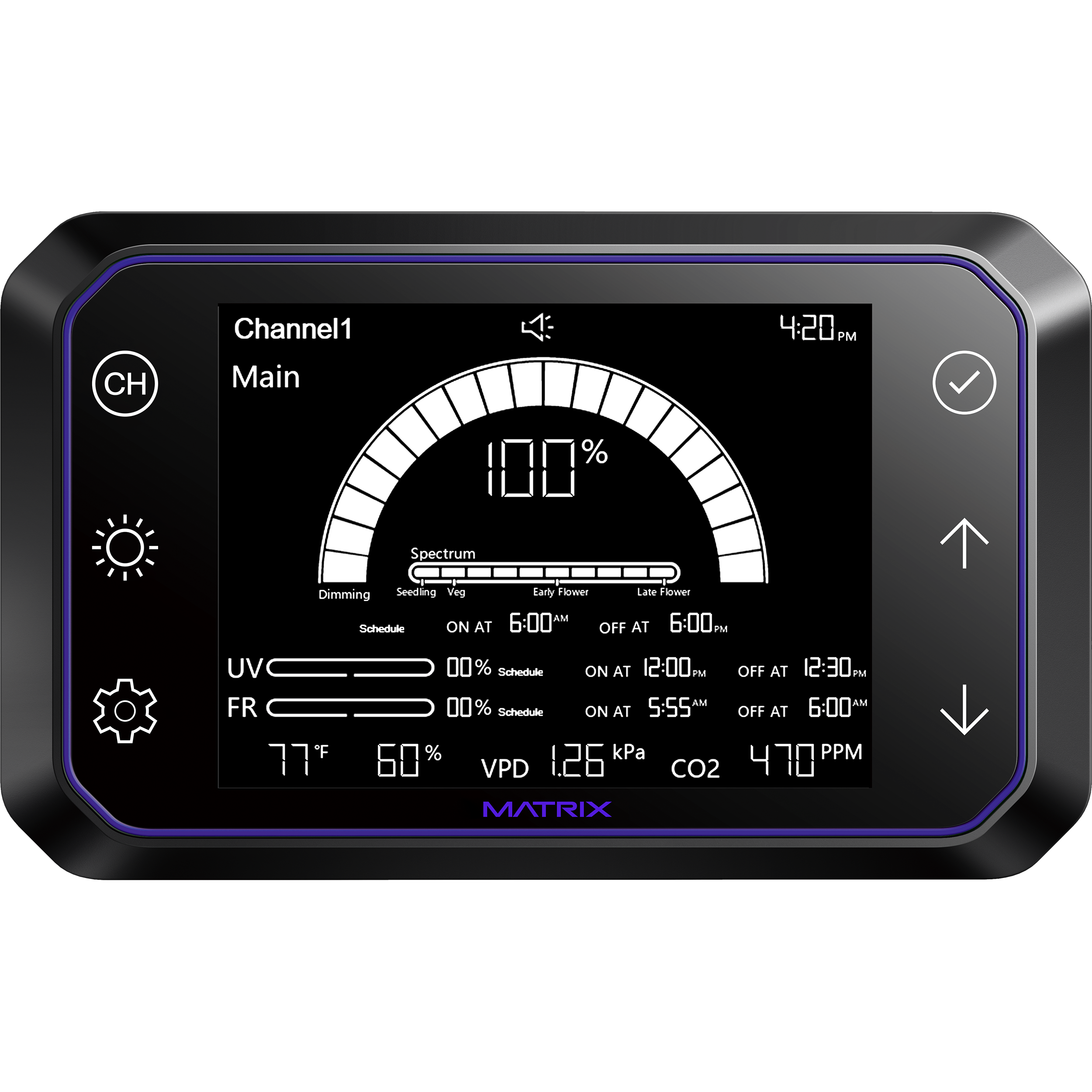


| Type | Efficiency | Heat | Lifespan | Upfront cost | Controls | Best for |
|---|---|---|---|---|---|---|
| High-output LED bar fixtures | 2.5-3.7 µmol/J | Low at canopy | L70 ~50,000 hrs | Higher | Yes, most | Flower rooms, greenhouses |
| High-bay LED | ~2.7-2.8 µmol/J | Low at canopy | L70 ~50,000 hrs | Mid | Some models | Ceilings 12 ft+, HPS swaps |
| Tunable multi-channel LED | 2.5+ µmol/J if DLC | Low at canopy | Q90 36,000+ hrs (DLC) | Highest | Per channel | Trials, several crops |
| Vertical and multi-tier LED bars | 2.5+ µmol/J if DLC | Very low | Q90 36,000+ hrs (DLC) | High | Yes | Racks, vertical farms |
| Double-ended HPS | ~1.7 µmol/J | High, radiant | Relamp ~12,000 hrs | Lowest | Some ballasts | Budgets, cold greenhouses |
| CMH / LEC | ~1.5 µmol/J | High | Replace lamps | Low | Limited | Small rooms, veg |
| Lighting controllers | n/a | n/a | n/a | Low per fixture | Central | Multi-room sites |
Typical ranges from university research, the US DOE and the DesignLights Consortium. Check each fixture's spec sheet for exact output.
Match photons, not watts. A 1000W double-ended HPS at about 1.72 µmol/J makes roughly 1,720 µmol/s. An LED at the DLC minimum of 2.5 µmol/J makes the same light on about 690W. A 2.8 µmol/J fixture needs about 615W, and a 3.5 µmol/J fixture only about 490W.
| Fixture efficiency | Watts for 1,720 µmol/s | Power saved vs HPS |
|---|---|---|
| 1.72 µmol/J (DE HPS) | 1,000W | Baseline |
| 2.5 µmol/J (DLC minimum) | ~690W | ~31% |
| 2.8 µmol/J | ~615W | ~39% |
| 3.5 µmol/J (high-efficiency LED) | ~490W | ~51% |
Efficiency: Kusuma et al. 2020, Runkle's 2022 review of the DLC list (Michigan State University) and DLC Hort V4.0. Savings: US DOE 2020. Watts are our math: µmol/s ÷ µmol/J.
It's the first thing to check. Below about 12 ft, multi-bar LED fixtures work best because they hang close to the canopy and spread light evenly. At 12 ft and up, compact high-bay LED fixtures (or HPS, if you want the lowest upfront cost and the extra heat) can mount higher and cover more floor per fixture.
DLC-listed LED fixtures with high µmol/J, even coverage and central dimming. The DesignLights Consortium now requires at least 2.5 µmol/J to list a fixture, and the most efficient models top 3.5. After that, match the fixture to the room: bar fixtures for single-tier flower rooms, thin bars for racks and tunable LED if you grow several crops.
Divide your target light level by what one fixture delivers over its footprint. Pick a daily light target (DLI) for your crop, divide it by your light hours to get PPFD, then check the maker's PPFD map for coverage. A University of Kentucky guide walks through the math, and our PPFD calculator does it for you in a minute.
Usually, yes. Most US utility programs pay only on fixtures listed on the DesignLights Consortium horticultural list, and HPS doesn't qualify. Rules and amounts vary by utility, so check yours and get pre-approval before you buy, since many programs won't pay after the fact. See LED grow light rebates or ask our team to check your project.
Higher voltage means fewer amps for the same light, so you need smaller wire and fewer circuits. Amps equal watts divided by volts: a 780W fixture draws about 6.5A at 120V but only about 2.8A at 277V. Order the voltage that matches your panel, and have a licensed electrician confirm the circuit plan before install.
DLC-listed LEDs must keep 90% of their light output for at least 36,000 hours. That's the DesignLights Consortium's Q90 rule, and many fixtures are rated well beyond it. HPS lamps, by contrast, are usually replaced around every 12,000 hours according to Michigan State University, which adds lamp and labor costs over a fixture's life.
Thin, low-heat LED bars that mount inside each shelf. The US DOE found commercial vertical farms run almost entirely on LED, because only LEDs can sit a few inches above the crop without scorching it. Look for linear bars sized to your rack length, a spectrum suited to greens and herbs, and dimming so you can match light to each tier.
Send us your floor plan, crop and power specs. Our lighting team will suggest a fixture layout, quote it and check rebate options.
Sources