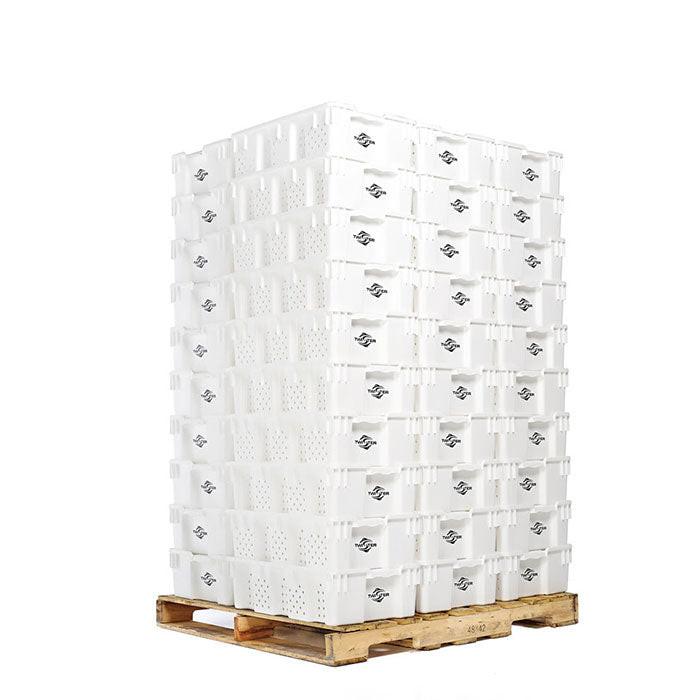
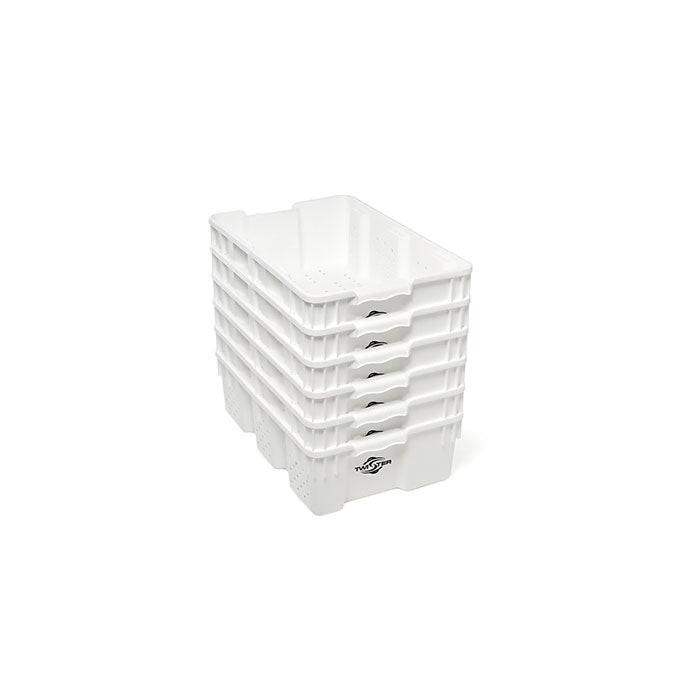
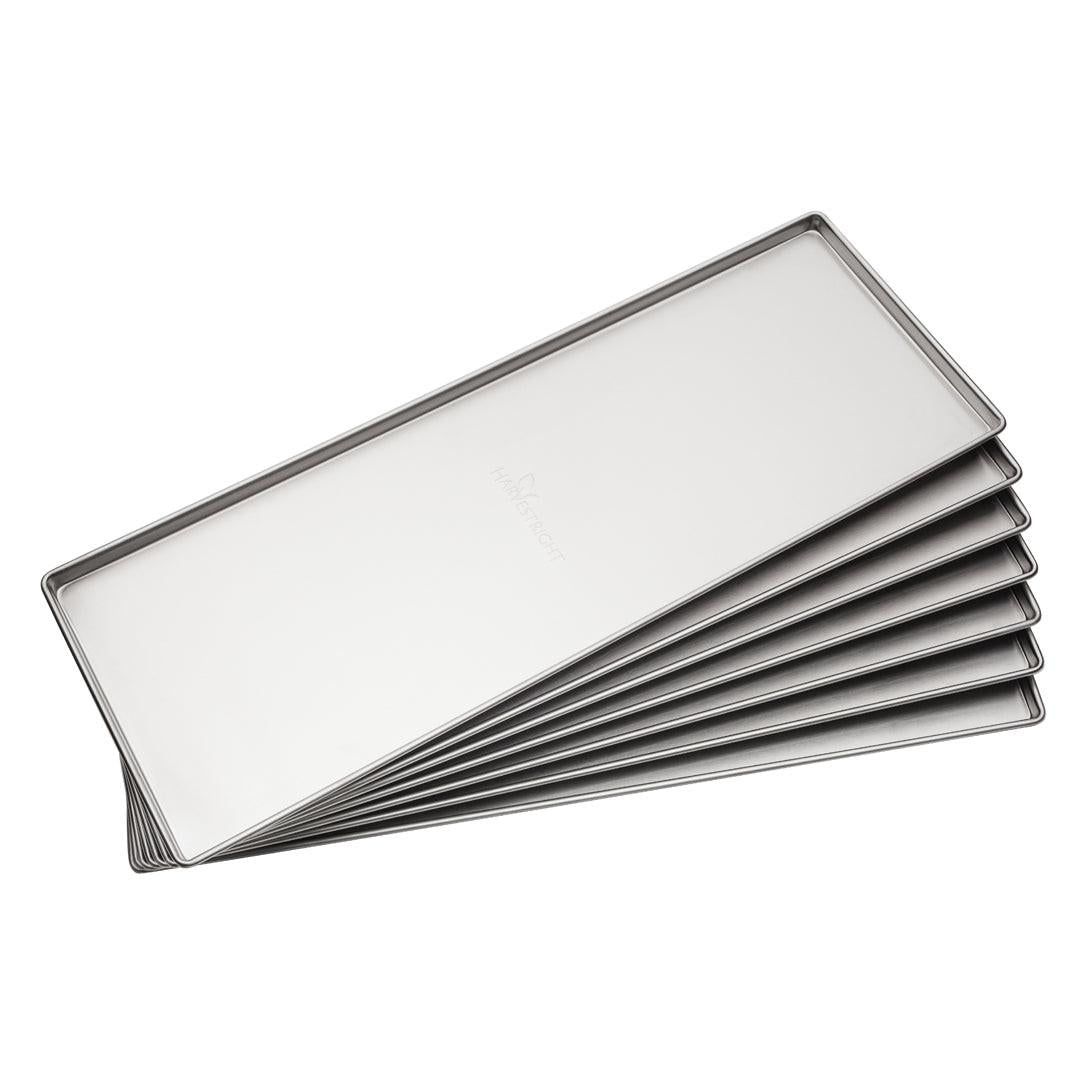
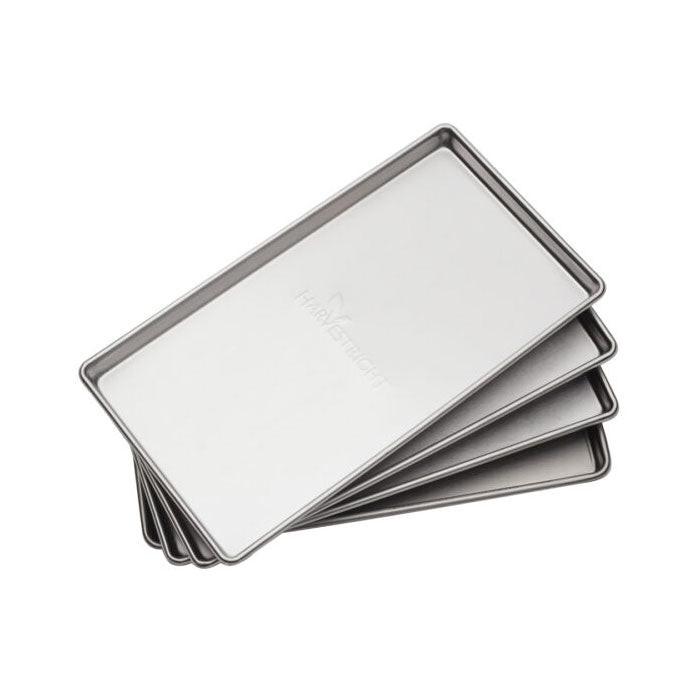
Stackable Trays for Harvest Freezing & Handling
Stackable freezing and handling trays are interlocking flat trays designed for space-efficient post-harvest processing - specifically for spreading freshly harvested plant material in thin layers for even freezing before cold water extraction, or for organizing material through the handling steps of a post-harvest processing workflow. The stackable design allows multiple trays loaded with material to be stored in a freezer or cold room in a compact vertical arrangement, making efficient use of limited cold storage space while keeping batches organized and separate through the freezing and processing stages.
Freezing Applications
Pre-freezing plant material before cold water extraction significantly improves particulate separation quality - frozen plant material is more brittle and breaks more cleanly from the plant surface during agitation. Stackable trays allow freezing large batches in thin layers that freeze uniformly throughout rather than having the outer material frozen and the interior still warm, which occurs in deep containers or bags. Spreading material evenly in a single layer on each tray, then stacking multiple trays in a chest freezer or reach-in freezer, maximizes cold storage efficiency while ensuring all material reaches target temperature (-10 to -20 degrees C) before processing.
General Handling Applications
Beyond extraction prep, stackable trays serve as a general harvest organization tool - keeping batches from different strains or harvest times physically separated and labeled through the trimming, drying preparation, and initial processing workflow. Food-grade tray materials that are compatible with standard cleaning solutions allow thorough sanitation between batches. Fast shipping.
Stackable Freezing Trays FAQ
Why freeze plant material before cold water extraction?
Freezing plant material before cold water extraction makes the material extremely brittle by lowering the temperature of the waxy cell wall material below its glass transition temperature. During agitation in ice water, this pre-frozen material breaks cleanly from the plant surface rather than bending and reattaching. The result is better separation efficiency and higher yield from the same material compared to using unfrozen or fresh material. Target -10 to -20 degrees C for pre-freezing; standard chest and upright freezers achieve this range. Allow 8-24 hours of freezing time for material to reach target temperature throughout.
How thin should I spread material on freezing trays?
Spread material in a layer no more than 1-2 inches deep for even freezing throughout. Thicker layers freeze from the outside in - the surface material may be fully frozen while the interior is still at refrigerator temperature or above. For the most uniform freezing: spread in a single loose layer on each tray. Stack trays with adequate airflow between them in the freezer - tight stacking slows the freezing of middle trays. If the freezer is packed tightly, allow extra freezing time (12-24 hours vs. 8 hours for loosely arranged trays).
What material are quality stackable trays made from?
Food-grade HDPE or polypropylene trays rated for use at freezer temperatures (-20 degrees C and below) without becoming brittle or cracking. Avoid trays made from materials that are not cold-rated - some plastics become brittle at freezer temperatures and crack when loaded or stacked. Trays should be smooth-surfaced for easy cleaning and compatible with standard sanitation solutions (isopropyl alcohol, dilute bleach, H2O2). Stainless steel trays are also excellent for freezing applications - durable, easy to clean, and cold-rated - but more expensive and heavier than plastic.
Can I use standard sheet pans instead of purpose-made extraction trays?
Standard stainless steel bakery sheet pans (half-sheet and quarter-sheet sizes) work well as extraction freezing trays - they are food-grade, cold-rated, easy to clean, and stack efficiently. The main difference from purpose-made extraction trays is the stacking mechanism: standard sheet pans can slide when stacked while purpose-made stackable trays have interlocking features that keep stacks stable in a loaded freezer. For occasional use, sheet pans are a practical and inexpensive alternative; for regular commercial extraction use, purpose-made interlocking trays improve stability and organization.
How do I organize multiple batches on stackable trays?
Label each tray with the batch identifier, harvest date, and any other relevant tracking information before loading. Waterproof adhesive labels or freezer-rated marker directly on the tray edge are both practical. Keep all trays from a single batch on adjacent stacks rather than interleaving with other batches - this allows pulling an entire batch at once for processing without sorting through mixed trays. For commercial operations processing multiple strains or harvests in the same facility, a simple tray numbering system with a master log prevents batch confusion through the multiple processing stages.