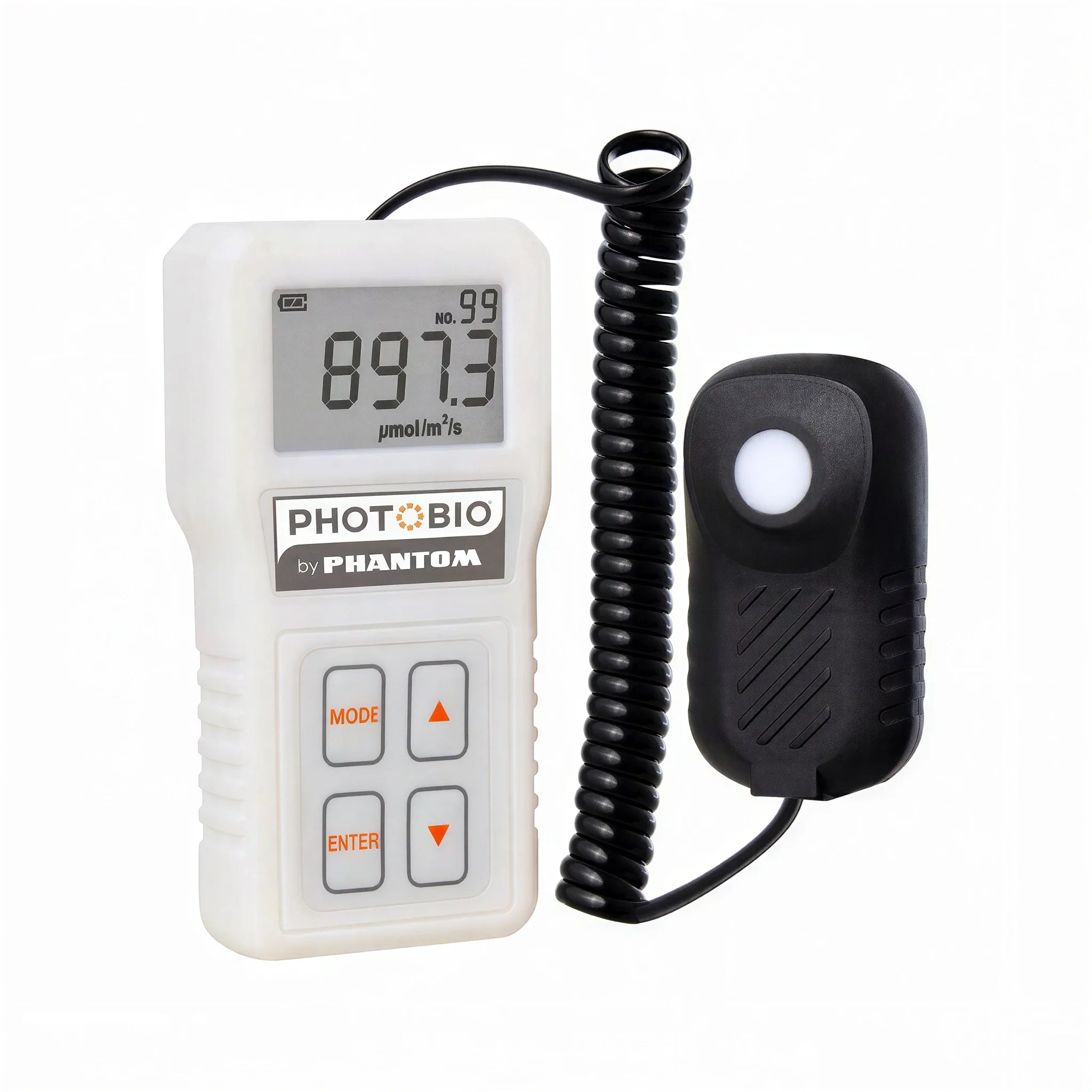
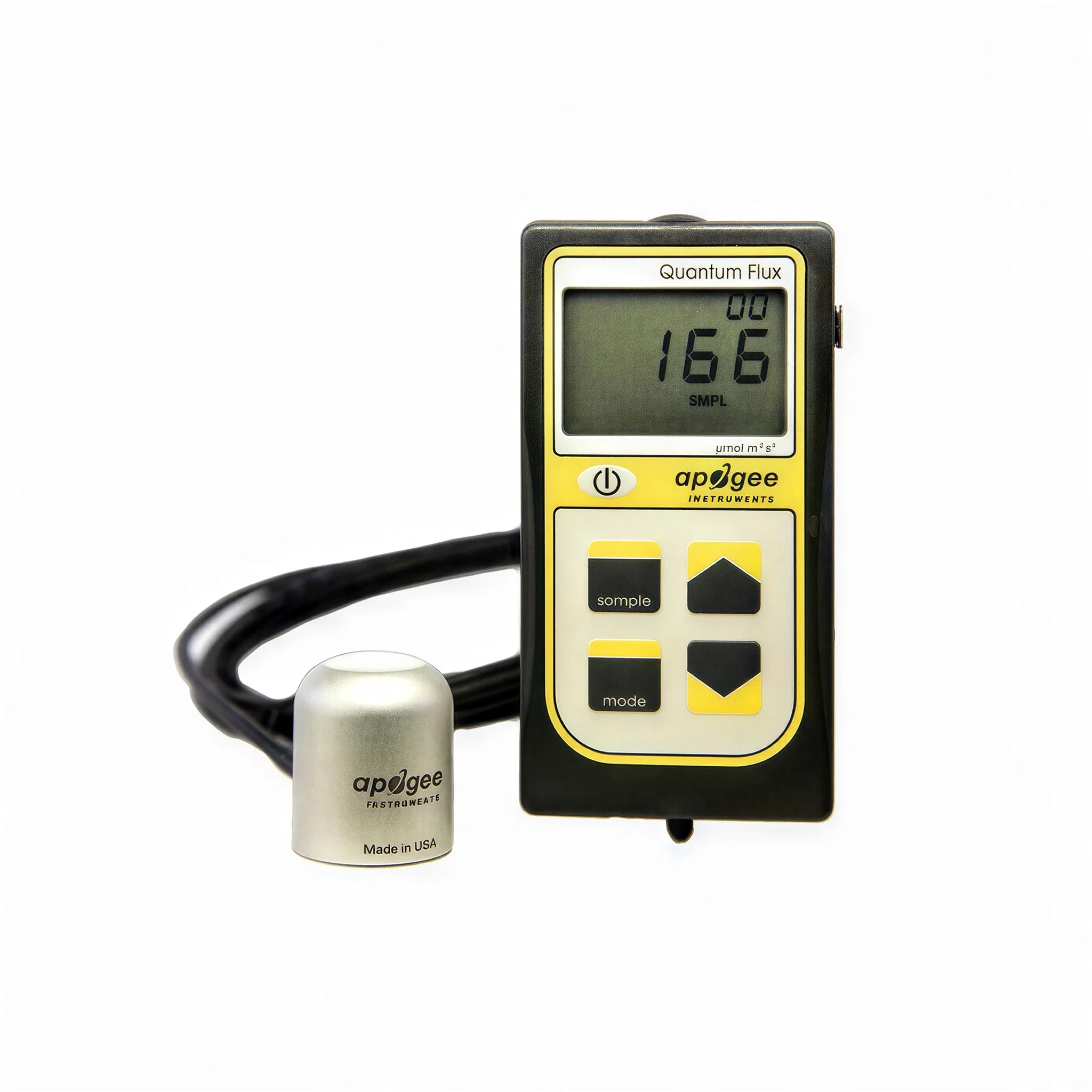
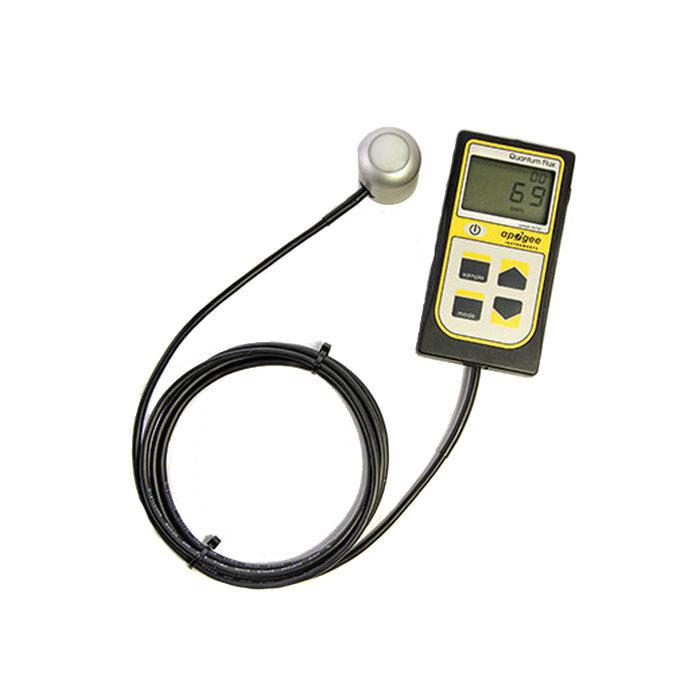
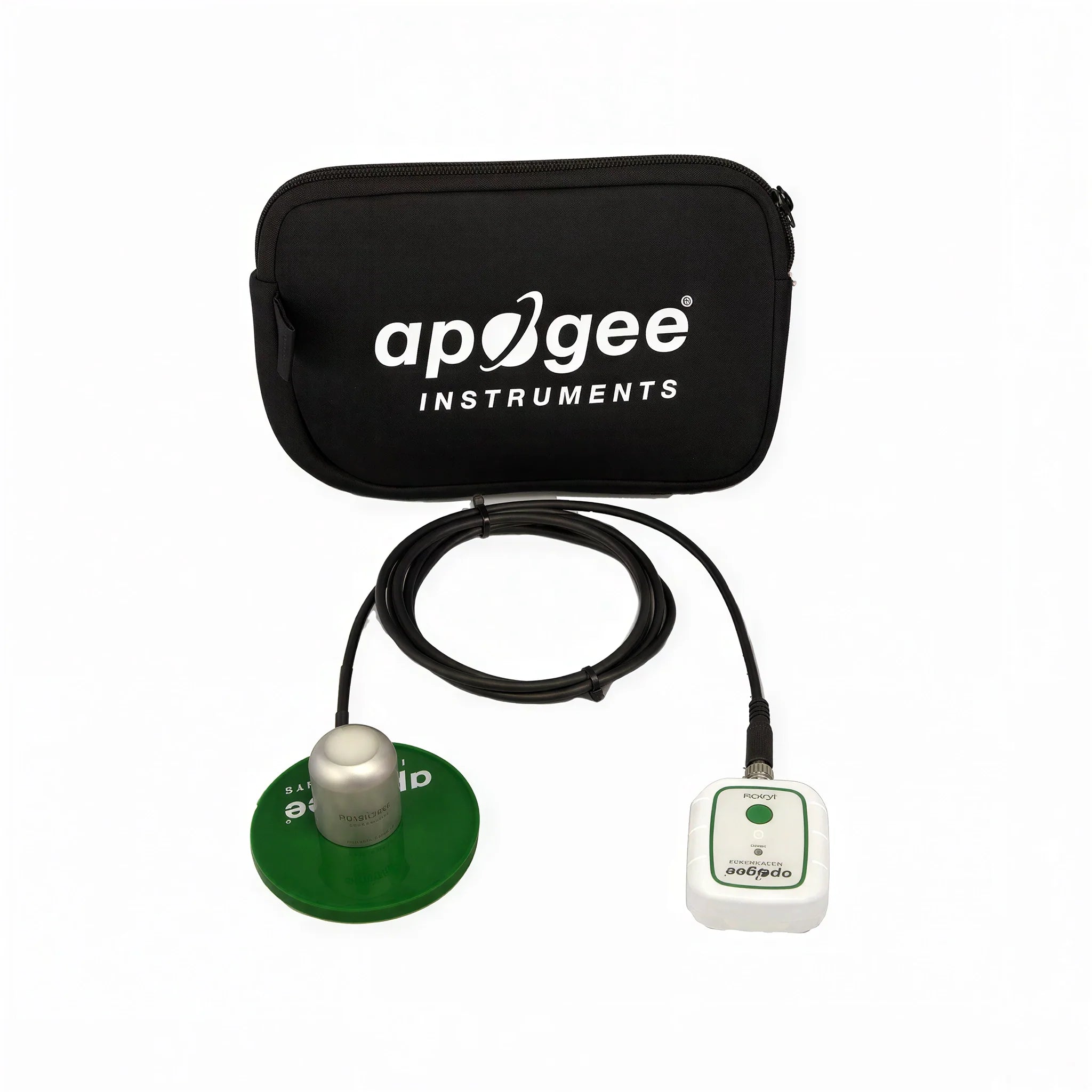
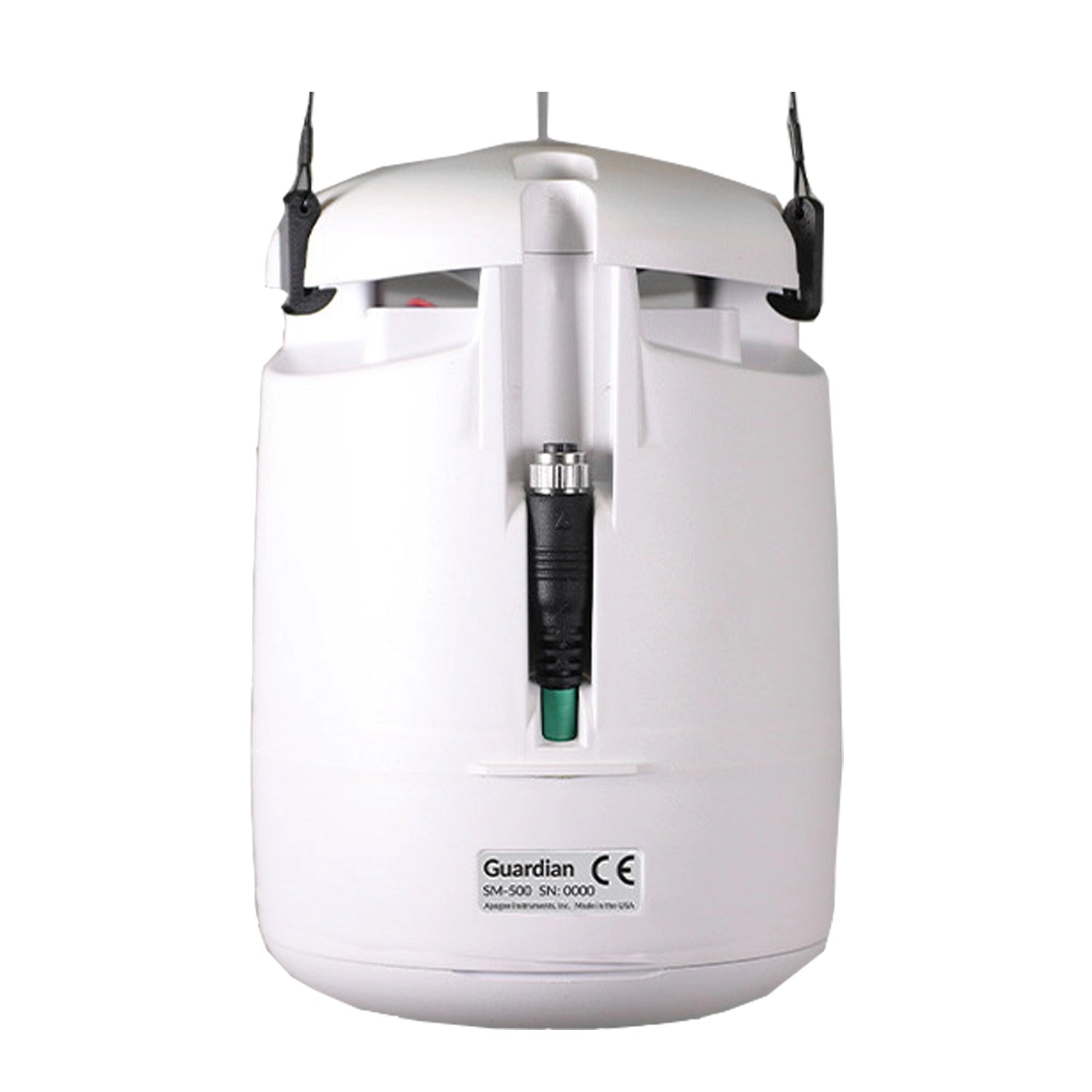
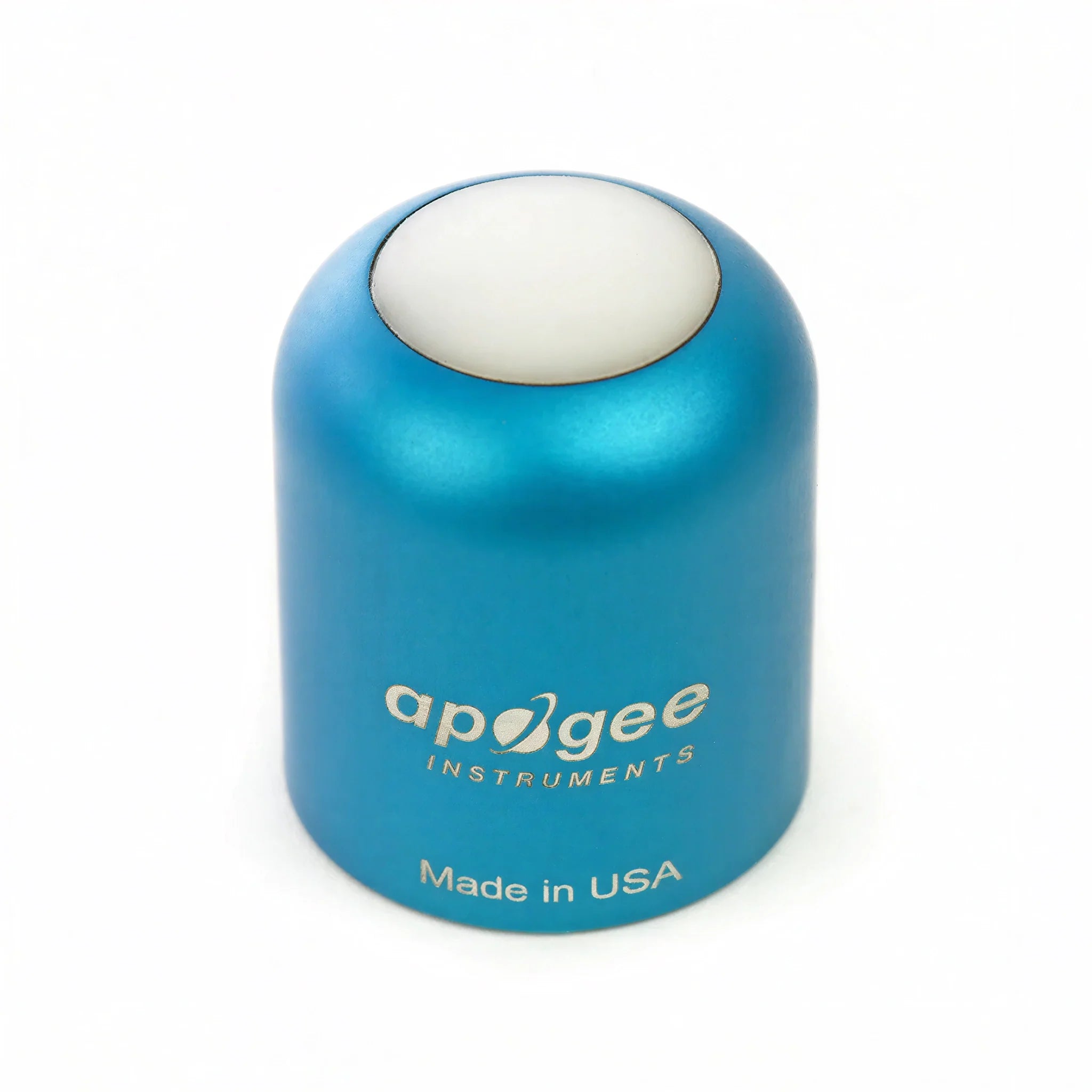
PAR Meters & Light Meters for Grow Rooms
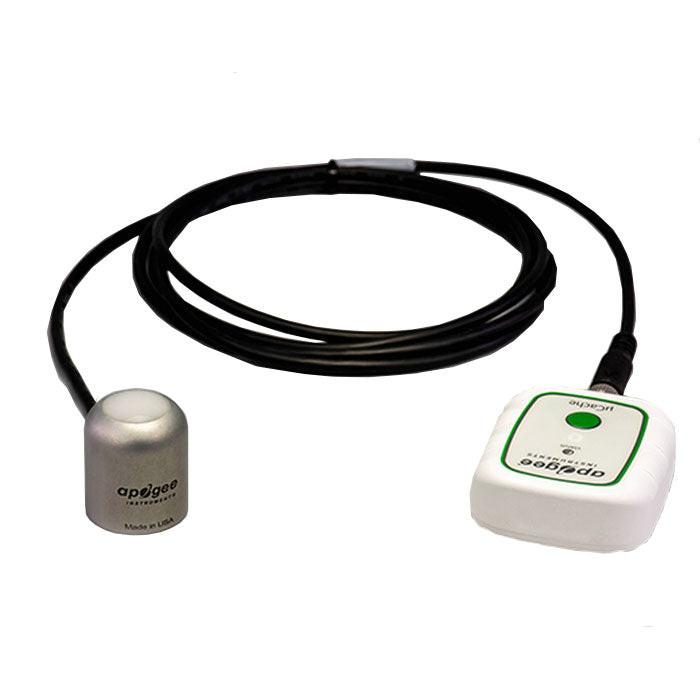
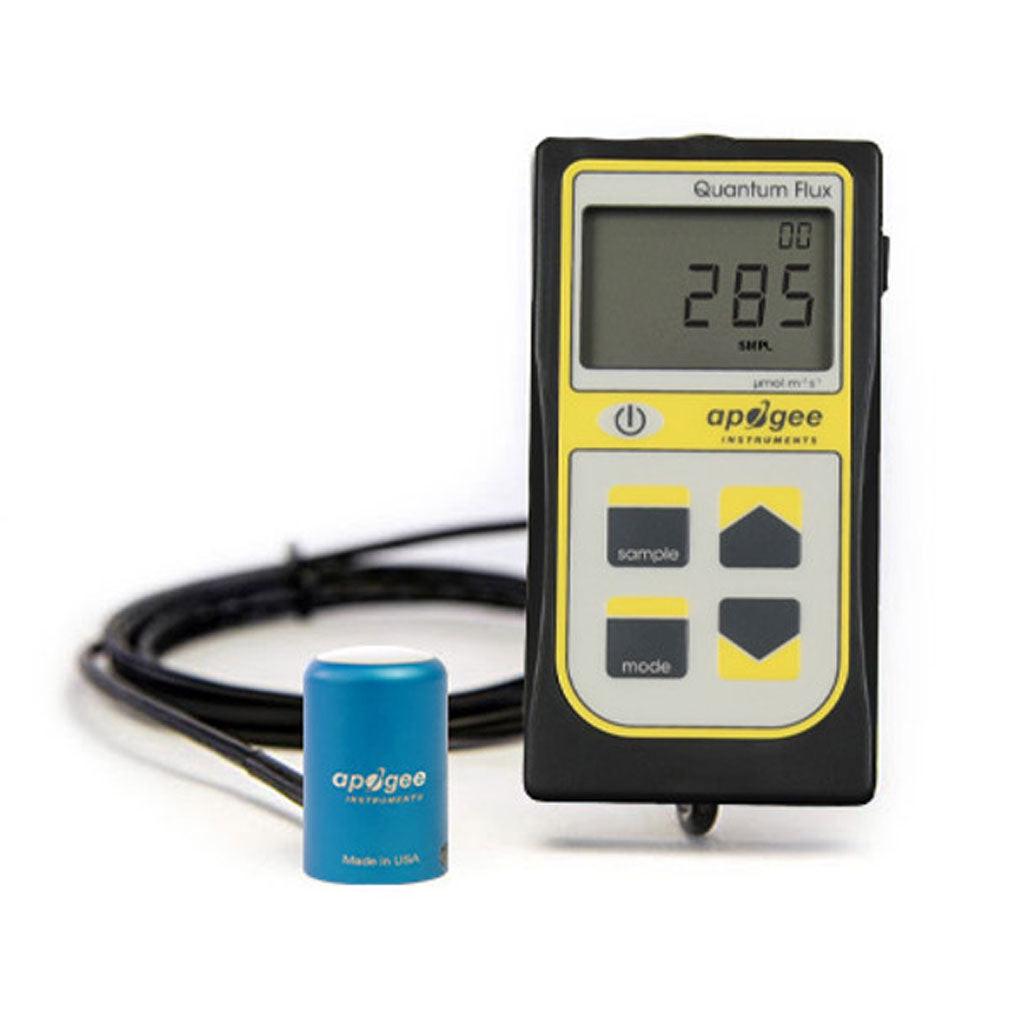
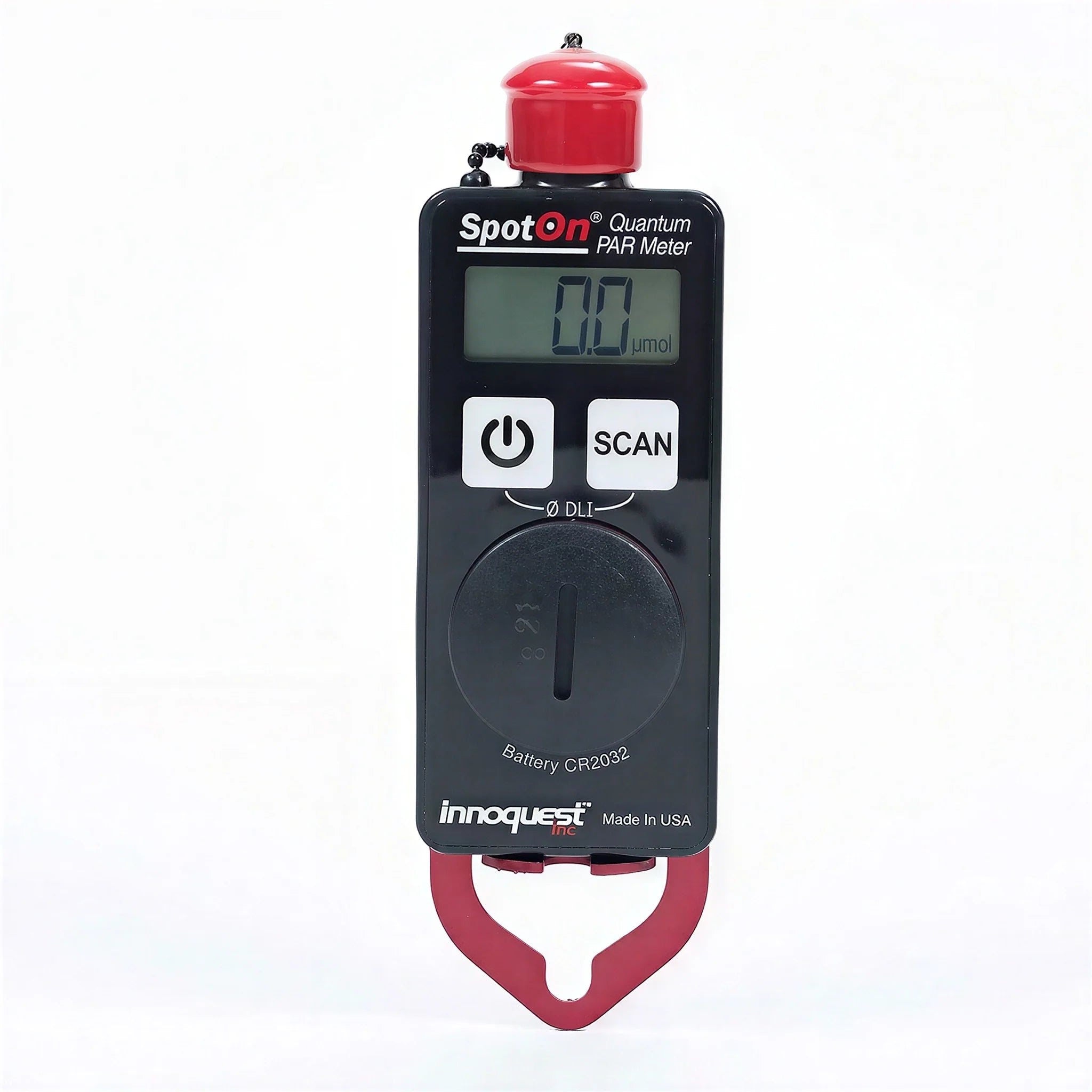
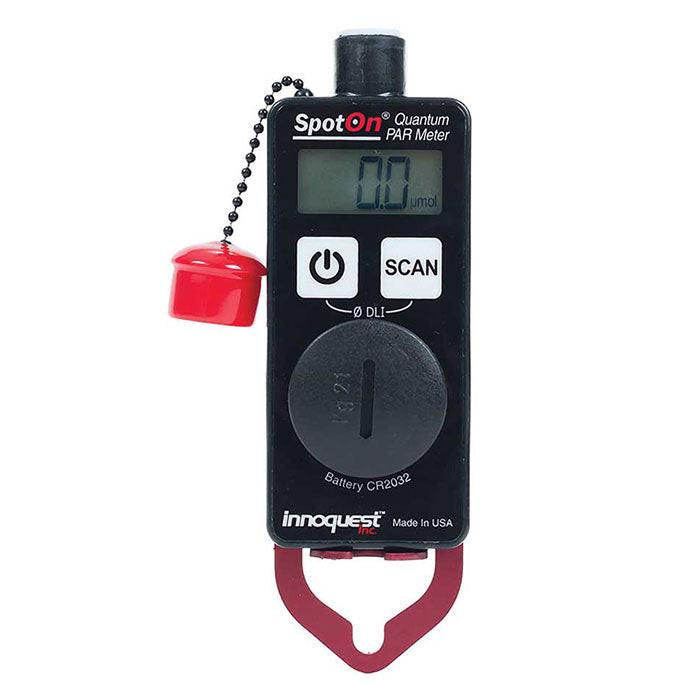
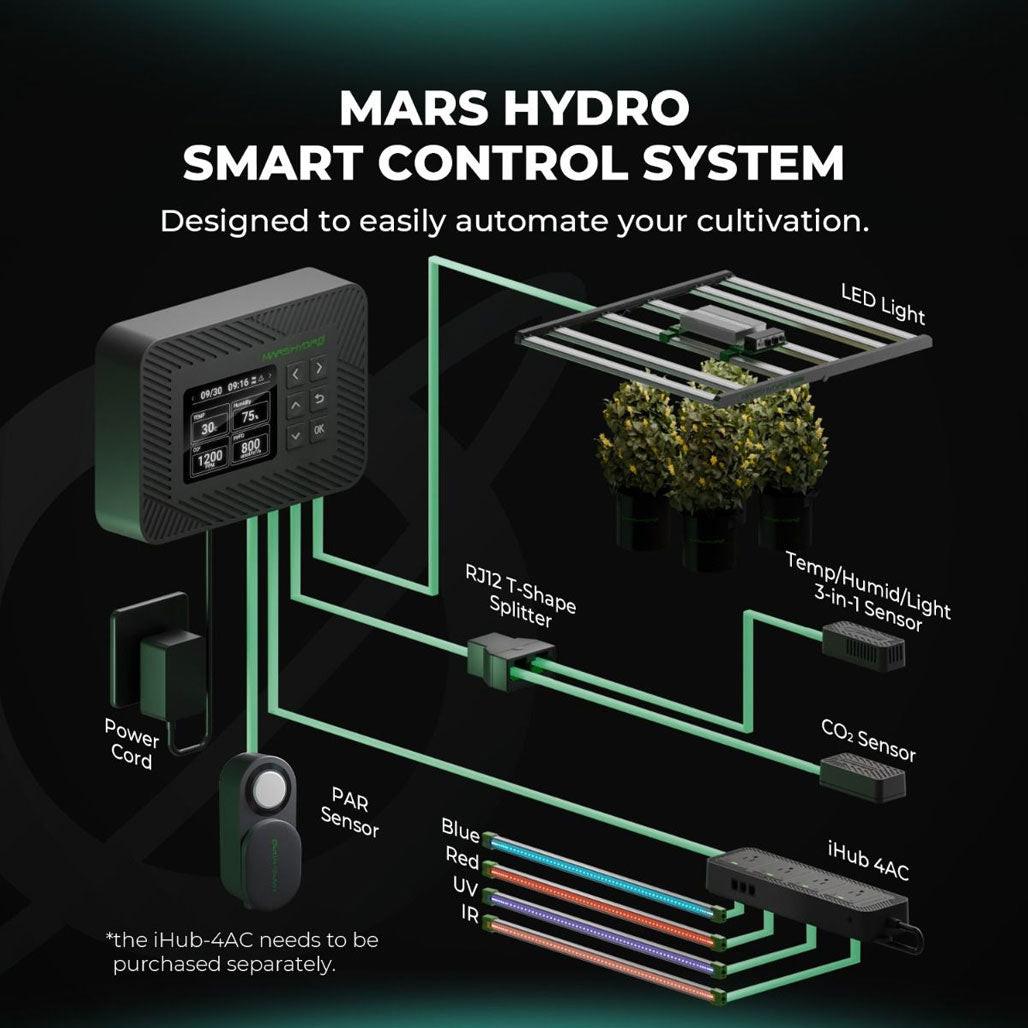
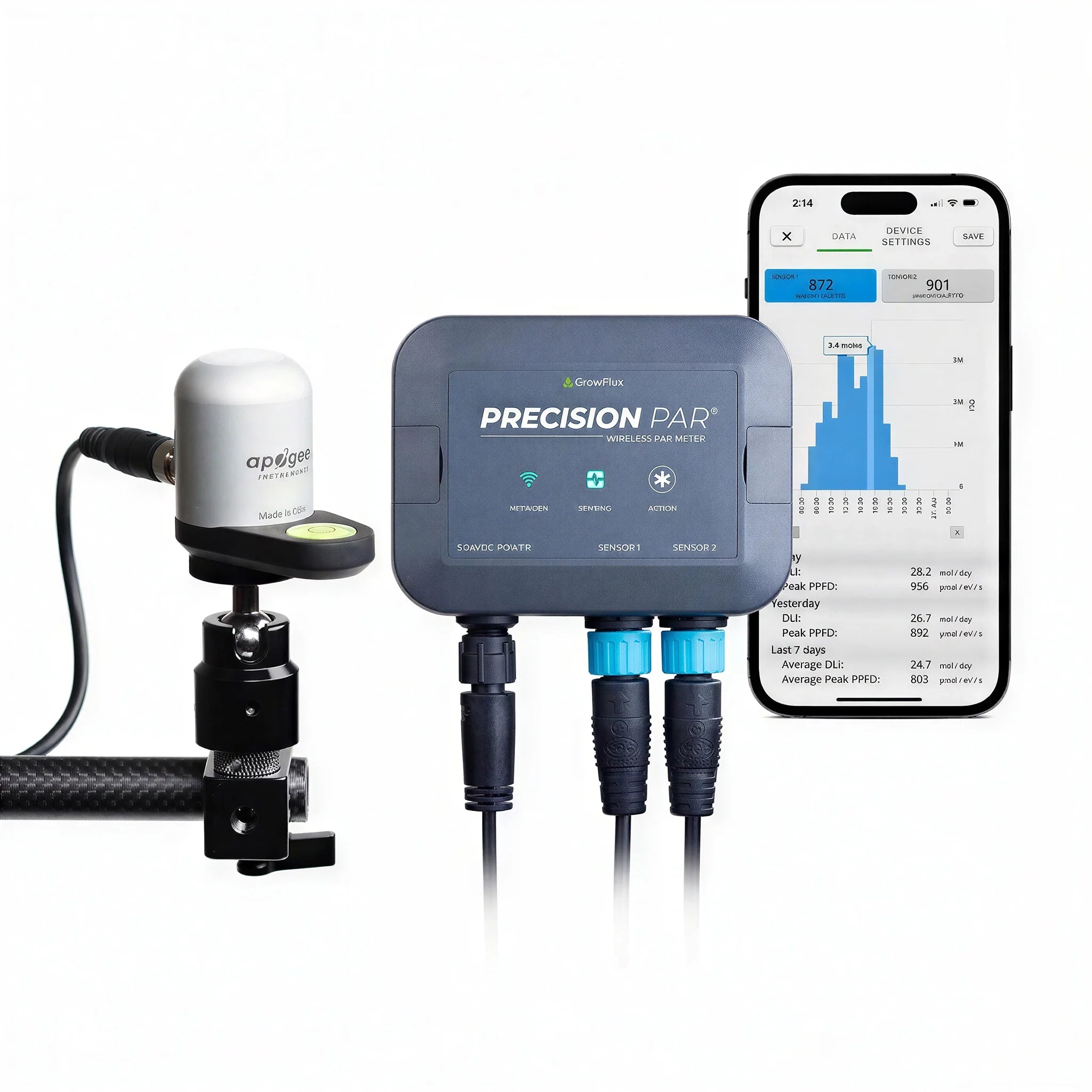
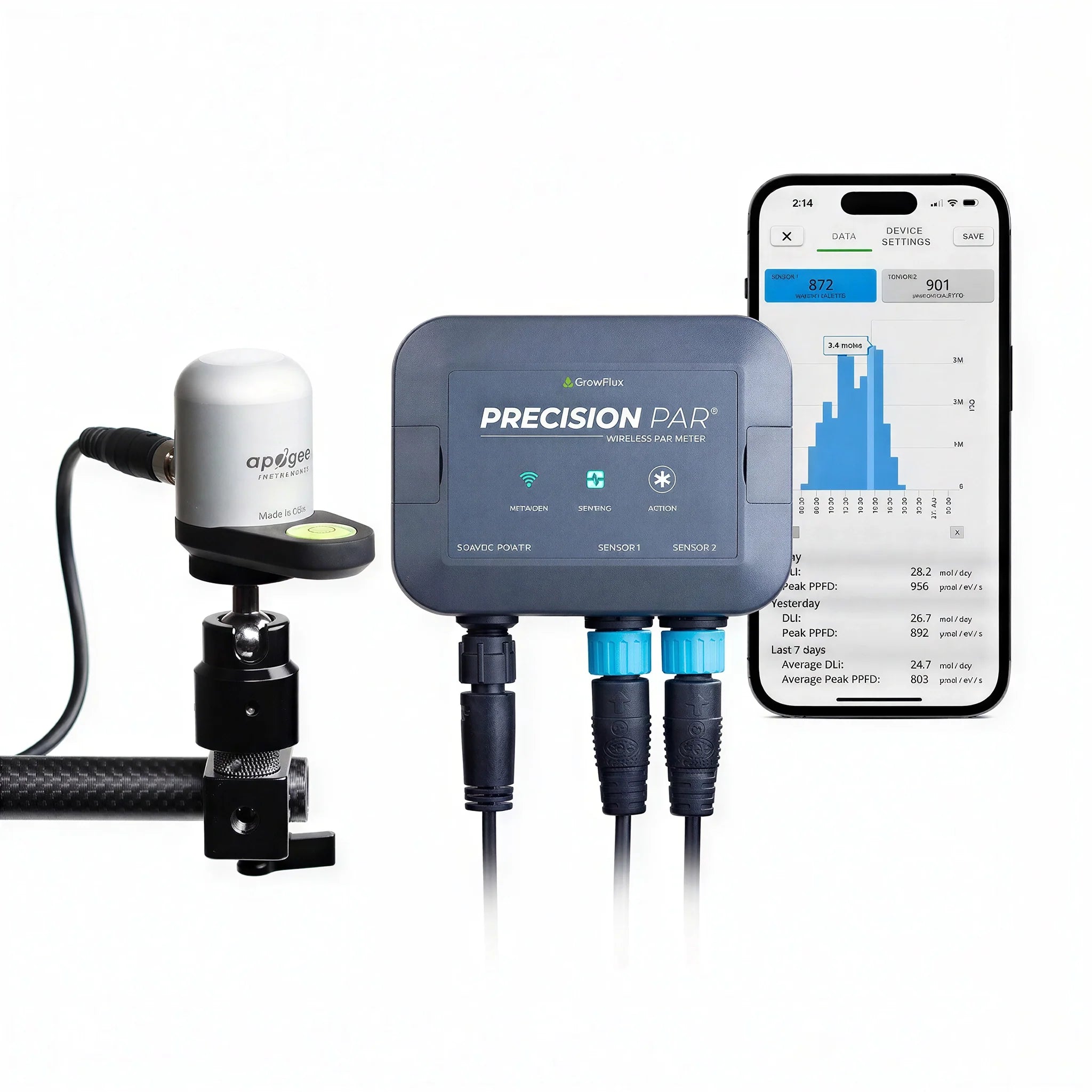
PAR meters (photosynthetically active radiation meters) are used alongside a grow room monitor to measure PPFD - photosynthetic photon flux density in micromoles per square meter per second (umol/m2/s) - the metric that directly quantifies how much photosynthetically useful light is reaching your plant canopy. Unlike lux meters that measure perceived brightness weighted toward human vision, PAR meters measure the specific 400-700nm wavelength range that drives photosynthesis. For growers dialing in fixture hanging height, optimizing canopy PPFD for specific growth stages, verifying fixture performance against manufacturer specifications, or designing commercial lighting layouts, a PAR meter provides the objective data that guesswork and lux readings cannot. For LED grow lights especially, PPFD data is far more reliable than wattage for comparing fixtures.
Why Lux Meters Are Not Adequate for Plant Growing
Lux is a photometric unit weighted toward the green wavelengths (555nm) that human eyes perceive most sensitively. HPS fixtures produce a warm orange-yellow light that lux meters read as high; LED fixtures with more blue and red wavelengths (which plants use efficiently but human eyes see as dimmer) read as lower lux at equivalent photosynthetic output. A lux reading does not translate reliably to PPFD or photosynthetic effectiveness across different light types. PAR meters measure all wavelengths from 400-700nm with equal weighting - the only measurement that accurately represents the light available for photosynthesis regardless of spectrum. For any serious grow room calibration work - verifying HPS or LED output - a PAR meter is the essential instrument.
PAR Meter Brands & Features
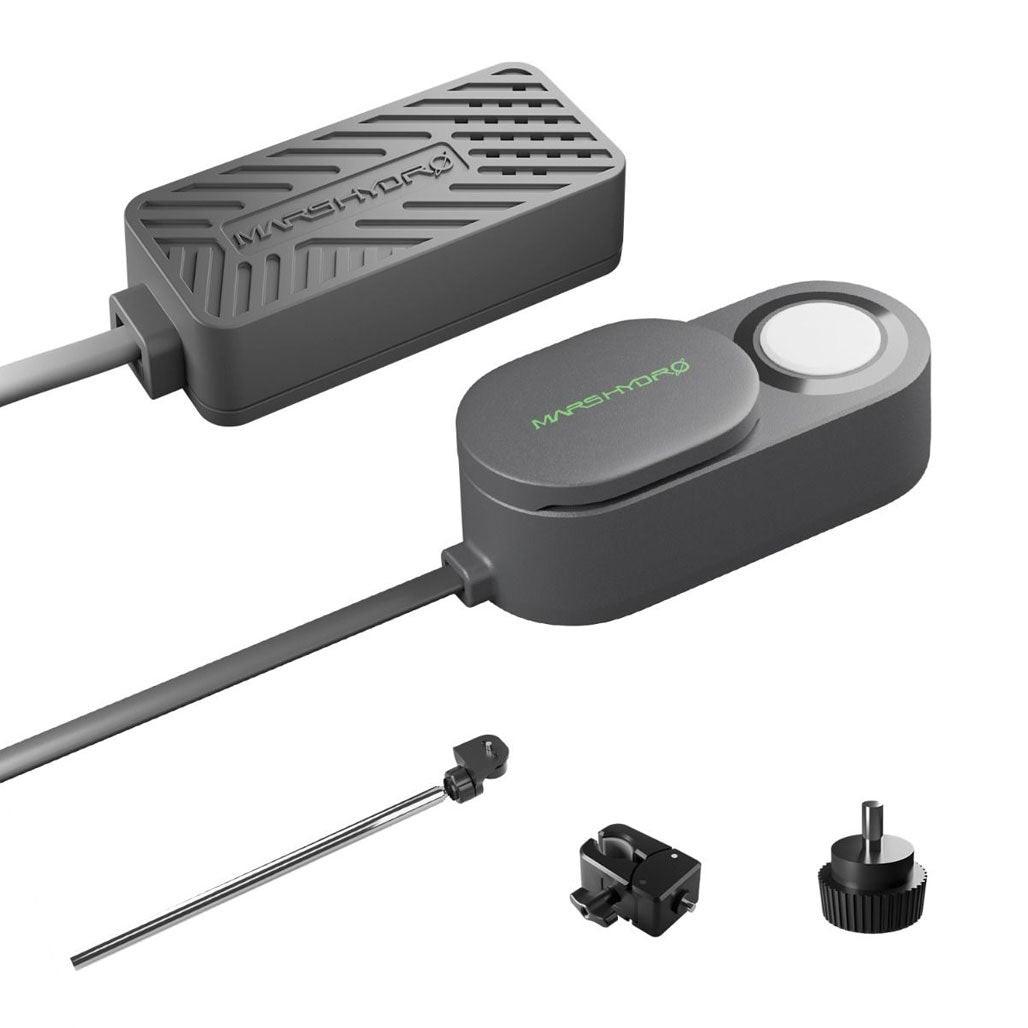
The most widely used professional PAR meters in commercial growing are Apogee Instruments (SQ-500 and SQ-520 series - the research-grade standard with calibrated accuracy across LED, HPS, and solar spectra) and LI-COR (laboratory research standard). For hobby and small commercial use, Apogee's lower-cost quantum sensors (SQ-100 and equivalents) and compatible PAR meters from Hydrofarm provide accurate PPFD measurements at accessible price points. Key feature to verify: ensure the meter is calibrated for electric grow light spectra, not solar spectrum only - some lower-cost PAR meters are calibrated only for sunlight and produce inaccurate readings under LED or HPS fixtures with different spectral distributions. Expert support available.
PAR Meters & Light Meters FAQ
What is PPFD and why does it matter for growing?
PPFD (photosynthetic photon flux density) measures how many photons in the 400-700nm photosynthetically active range are hitting a surface per second, in units of umol/m2/s. It is the most direct measurement of how much photosynthetically useful light is available at the plant canopy. A target PPFD for vegetative growth is 400-600 umol/m2/s; for flowering, 800-1,200+ umol/m2/s. These targets are universal across light types - whether you are running LED, HPS, or CMH, the PPFD at the canopy is what drives photosynthesis, and a PAR meter is the only reliable way to know what your canopy is actually receiving.
Can I use my phone camera as a PAR meter?
Smartphone PAR meter apps using the camera sensor are not reliable for grow room use. Camera sensors are optimized for human vision (similar to lux meters) and cannot accurately measure the photosynthetically active radiation spectrum, particularly the blue and red wavelengths that LED grow lights emphasize. Some apps claim PAR measurement but have not been validated against calibrated quantum sensors across different light types. For accurate PPFD data to make grow room decisions, a proper quantum sensor PAR meter calibrated for electric grow light spectra is necessary.
How do I use a PAR meter to optimize my grow light height?
Take PPFD readings at multiple points across your canopy at your current hanging height: center directly under the fixture, at the canopy corners, and at midpoints along each edge. This maps your PPFD distribution and shows the center-to-edge gradient. Raise or lower the fixture to hit your target PPFD at the center while maximizing coverage across the full canopy. Most growers target 800-1,000 umol/m2/s at center for early to mid flowering and 1,000-1,200+ for peak flowering. Use our PPFD Calculator alongside your meter readings to confirm whether your fixture covers your canopy footprint adequately at the target intensity.
What PPFD do I need for different growth stages?
Clones and unrooted cuttings: 50-150 umol/m2/s. Seedlings: 100-300 umol/m2/s. Early vegetative: 300-500 umol/m2/s. Late vegetative: 500-700 umol/m2/s. Early flower: 700-900 umol/m2/s. Peak flower: 900-1,200+ umol/m2/s. These ranges are for most common indoor crop types; specific varieties may have higher or lower light saturation points. A PAR meter allows you to verify you are delivering these target ranges rather than assuming from fixture wattage - two fixtures of the same wattage from different manufacturers can deliver PPFD values that differ by 20-30% based on efficiency and optical design.
How do I verify my LED grow light is performing as advertised?
Measure PPFD at the center and multiple canopy points at the fixture's advertised hanging height and compare against the manufacturer's published PPFD map. A quality fixture should hit within 10-15% of published PPFD values at the same distance. If your readings are significantly lower than advertised: verify the fixture is at the exact hanging height specified in the PPFD map (small changes in height produce large PPFD changes); confirm the fixture is running at 100% output; and check that the dimmer (if present) is set to full power. Fixtures that consistently read 20-30% below published PPFD may have quality control issues or the published data may use conditions different from your setup.