Grow Room Electrical Receptacles & Outlet Hardware
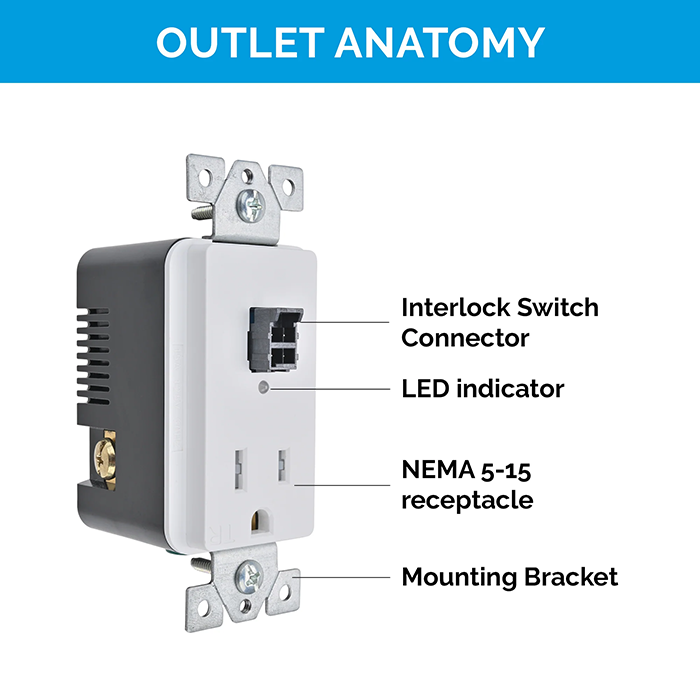
Electrical receptacles in growing environments require attention to safety specifications that go beyond standard residential installations - humidity, water splashing, condensation, and the high continuous current draws of grow lights and environmental equipment create conditions where standard residential outlets are inadequate. Weatherproof and in-use covers protect outlets in humid environments; GFCI (Ground Fault Circuit Interrupter) receptacles provide essential shock protection where water and electricity may come into contact; and high-amperage outlets accommodate the 20A and 240V loads of commercial grow lights and dehumidifiers without requiring dedicated panel runs for every piece of equipment.
GFCI Receptacles
GFCI protection is a code requirement for electrical installations in wet and damp locations - essential for any grow room environment - and growing environments qualify. A GFCI receptacle continuously monitors the current balance between hot and neutral conductors; if a fault occurs (current flowing through an unintended path, such as a person or pooled water), the GFCI trips within 25 milliseconds - fast enough to prevent serious electrical shock injury. Install GFCI receptacles at all outlet locations in grow rooms, greenhouses, and any space where irrigation, condensation, or cleaning creates moisture exposure risk. A single GFCI outlet at the first position in a circuit protects all downstream outlets on that circuit.
High-Amperage & 240V Outlets
Commercial grow lights, dehumidifiers, and air conditioners often require 20A or 240V circuits. NEMA 5-20 receptacles (T-slot 120V 20A) are required for any equipment - such as commercial dehumidifiers - drawing more than 15A on a 120V circuit. NEMA 6-20 (240V 20A) and 6-30 (240V 30A) receptacles serve high-wattage 240V equipment. These must be installed by a licensed electrician on appropriately wired circuits - see our extension cords and power strips for in-room power distribution - the receptacle and the circuit wiring, breaker, and panel capacity must all match. Fast shipping on in-stock receptacle hardware.
Electrical Receptacles FAQ
Do I need GFCI outlets in my grow room?
Yes - GFCI protection is required by the National Electrical Code (NEC) for all outlets in wet and damp locations, which includes grow rooms, greenhouses, and any area where water, irrigation, and condensation are present. Beyond code compliance, GFCI protection is a genuine safety measure in growing environments - the combination of water and electricity that is inherent to hydroponic and irrigation-based growing creates shock hazard that GFCI protection directly addresses. Install GFCI outlets at every receptacle in the growing space, or use a single GFCI at the first outlet on a circuit to protect all downstream outlets on that circuit.
What is the difference between GFCI and AFCI protection?
GFCI (Ground Fault Circuit Interrupter) protects against shock hazards from current flowing through unintended paths - particularly important in wet locations. It trips when current imbalance exceeds 5 milliamps. AFCI (Arc Fault Circuit Interrupter) protects against fire hazards from arcing faults in wiring - loose connections, damaged insulation, and similar faults that can ignite fires without triggering standard breakers. Grow rooms need GFCI protection at all outlets. AFCI protection is a code requirement for many residential circuits; consult your local electrical code and a licensed electrician for the specific requirements in your installation.
What NEMA outlet type do I need for a 1000W grow light ballast?
A 1000W ballast at 120V draws approximately 8.5A continuously - within the range of a standard NEMA 5-15 (15A 120V) outlet. At 240V, the same ballast draws approximately 4.2A - within NEMA 6-15 (240V 15A). For multiple ballasts on the same circuit: add continuous draw of all ballasts and keep total continuous load at or below 80% of circuit breaker rating (12A on a 15A breaker, 16A on a 20A breaker). Running multiple 1000W ballasts at 120V on a single circuit quickly exceeds safe loading - a dedicated circuit per two ballasts at 120V or per four ballasts at 240V is standard commercial practice.
Can I use an indoor outlet in a greenhouse?
Standard indoor outlets (non-weatherproof) are not appropriate for greenhouse use. Greenhouses create wet location conditions through irrigation, condensation, and humidity - standard indoor outlets can corrode, allow moisture ingress, and create shock and fire hazards in these conditions. Use weatherproof in-use covers on all outlets in greenhouse applications, and install GFCI protection on all circuits. For permanent greenhouse installations, use outdoor-rated weatherproof receptacle housings designed for wet location service.
Should I hire an electrician for grow room wiring?
For any work beyond plugging equipment into existing outlets - adding circuits, installing 240V outlets, adding sub-panels, or running new wiring - hire a licensed electrician. Grow room electrical installations are subject to local electrical code requirements, permit requirements in many jurisdictions, and specific NEC requirements for wet location installations. Unpermitted electrical work creates insurance liability, fire risk, and potential code violations that complicate property sale or insurance claims. The cost of professional electrical installation is small relative to the equipment value it protects and the safety risk it prevents.