Harvest Hand Trimming Kits & Scissor Sets
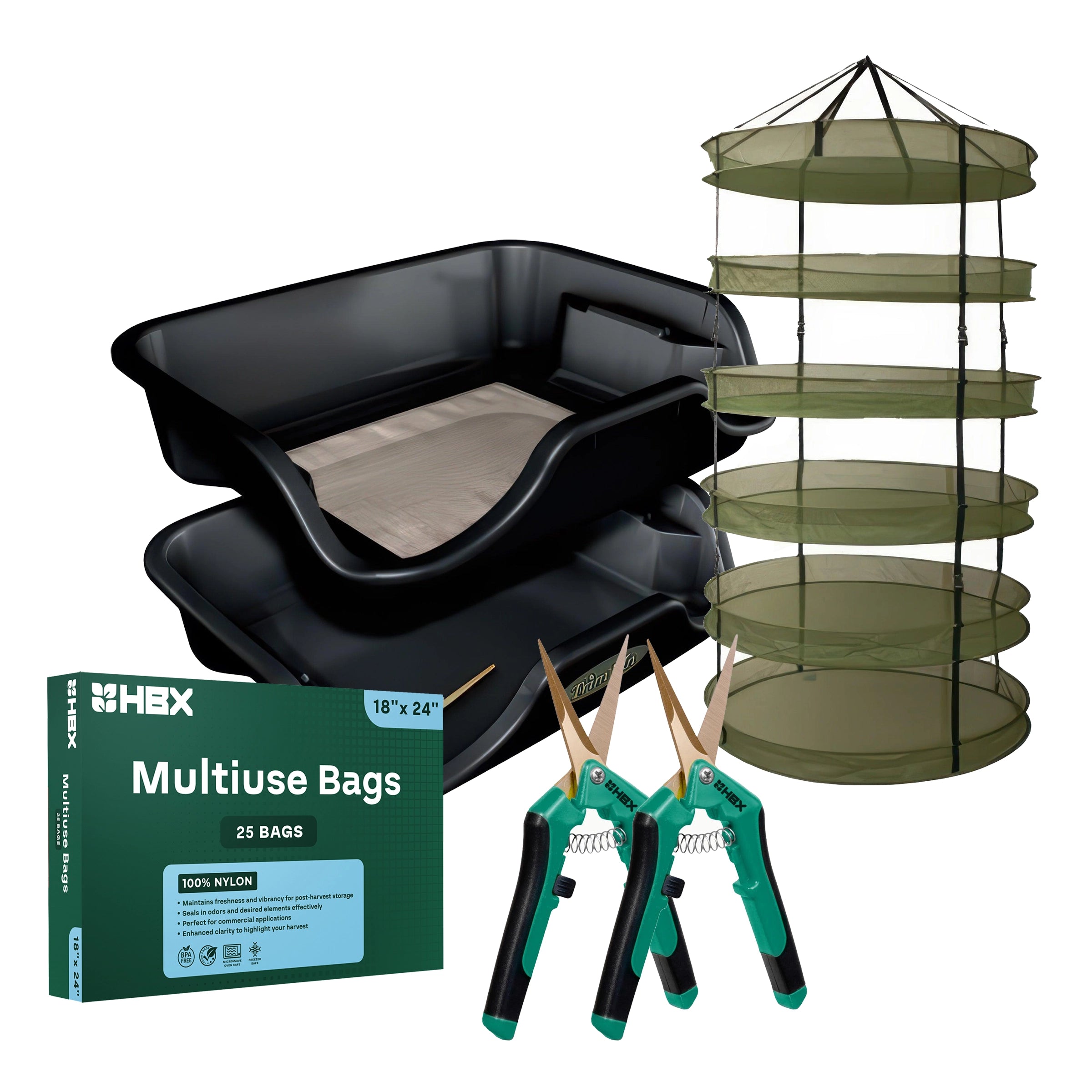
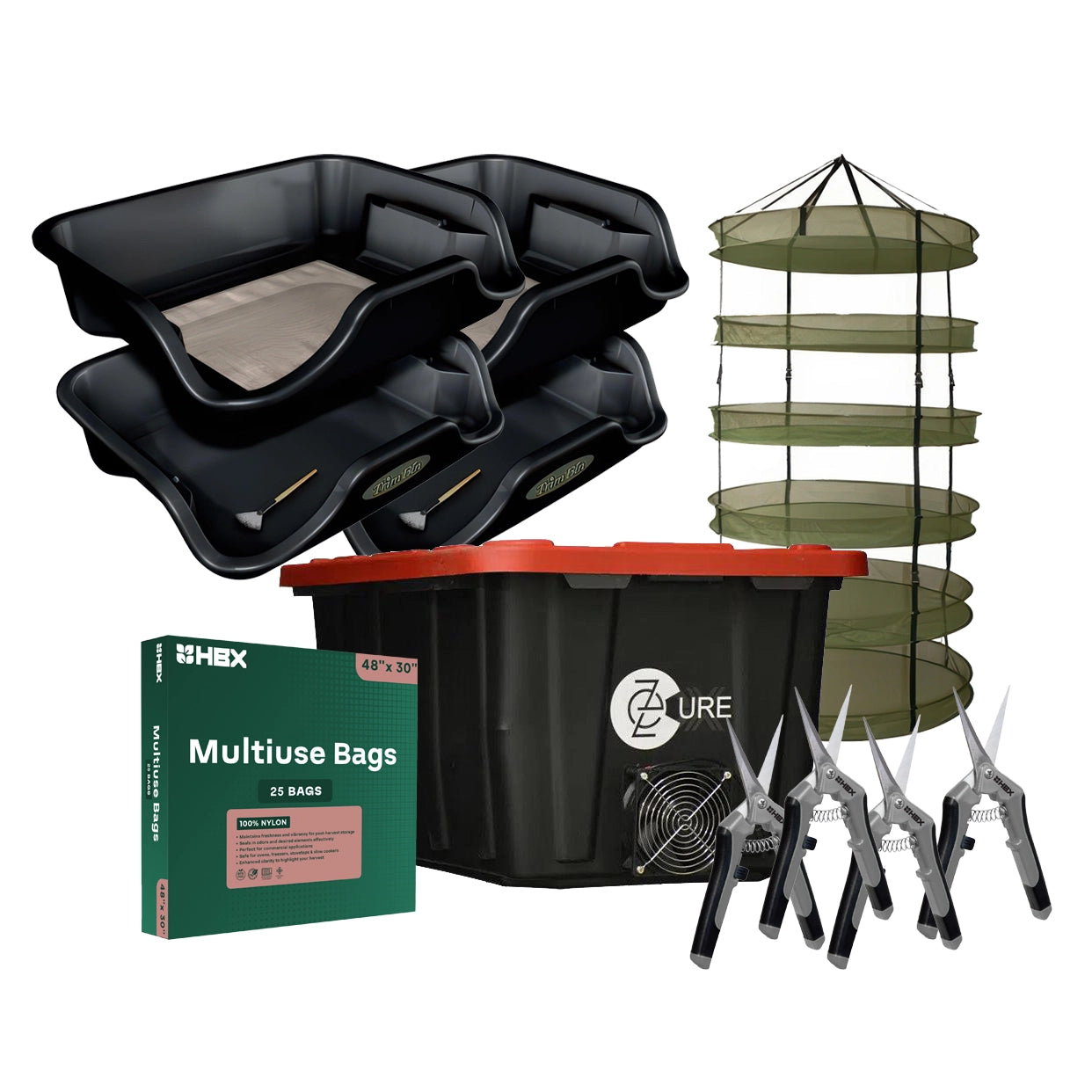
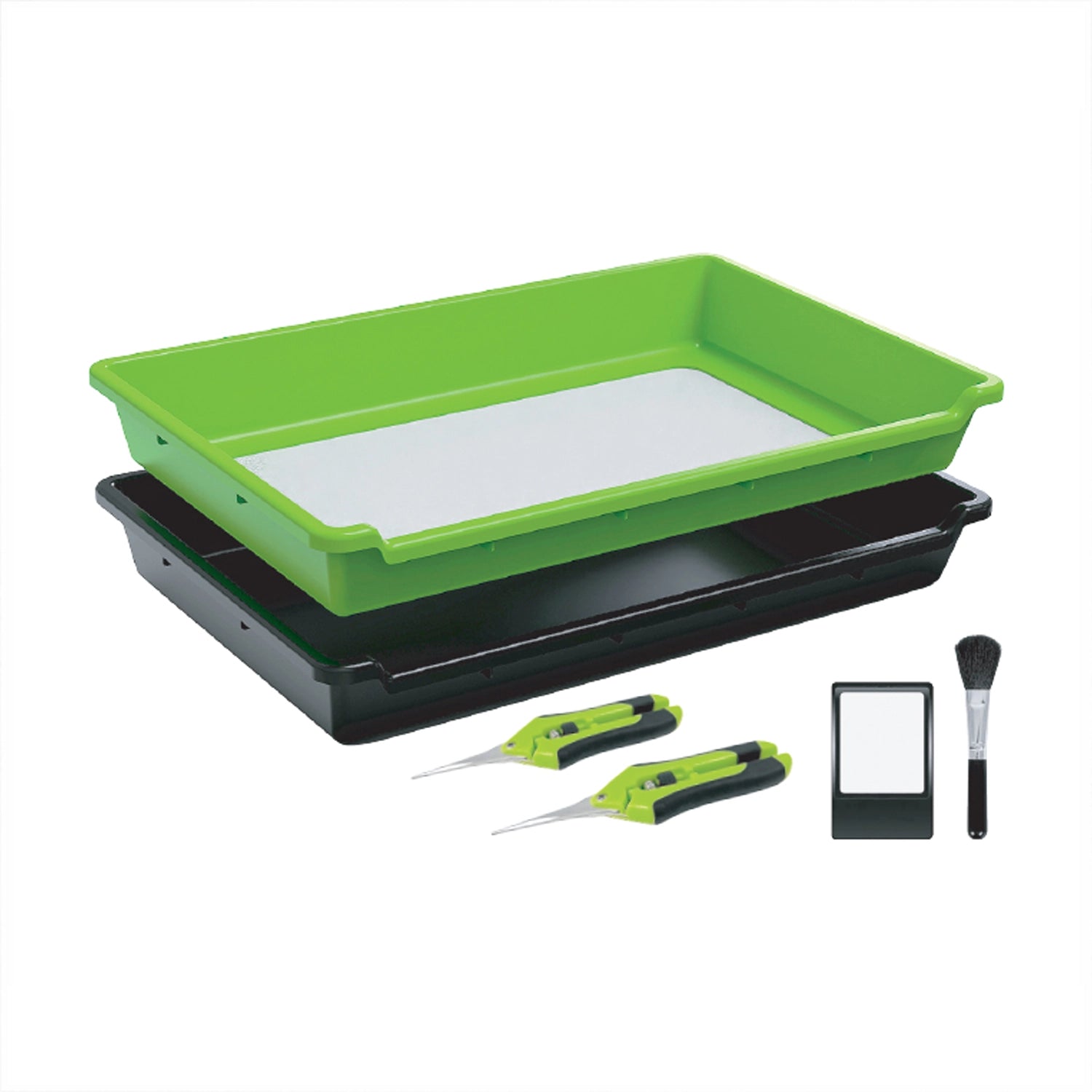
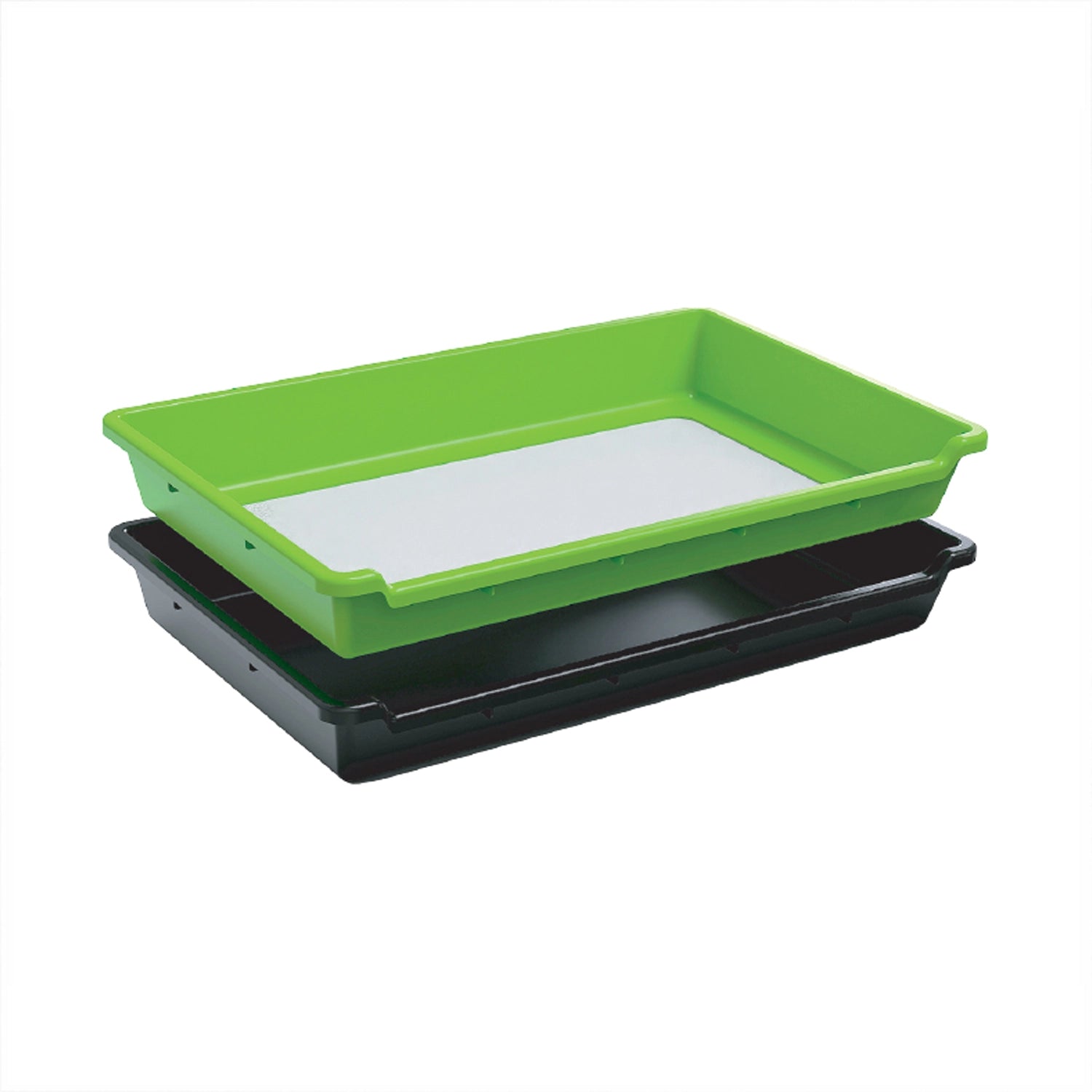
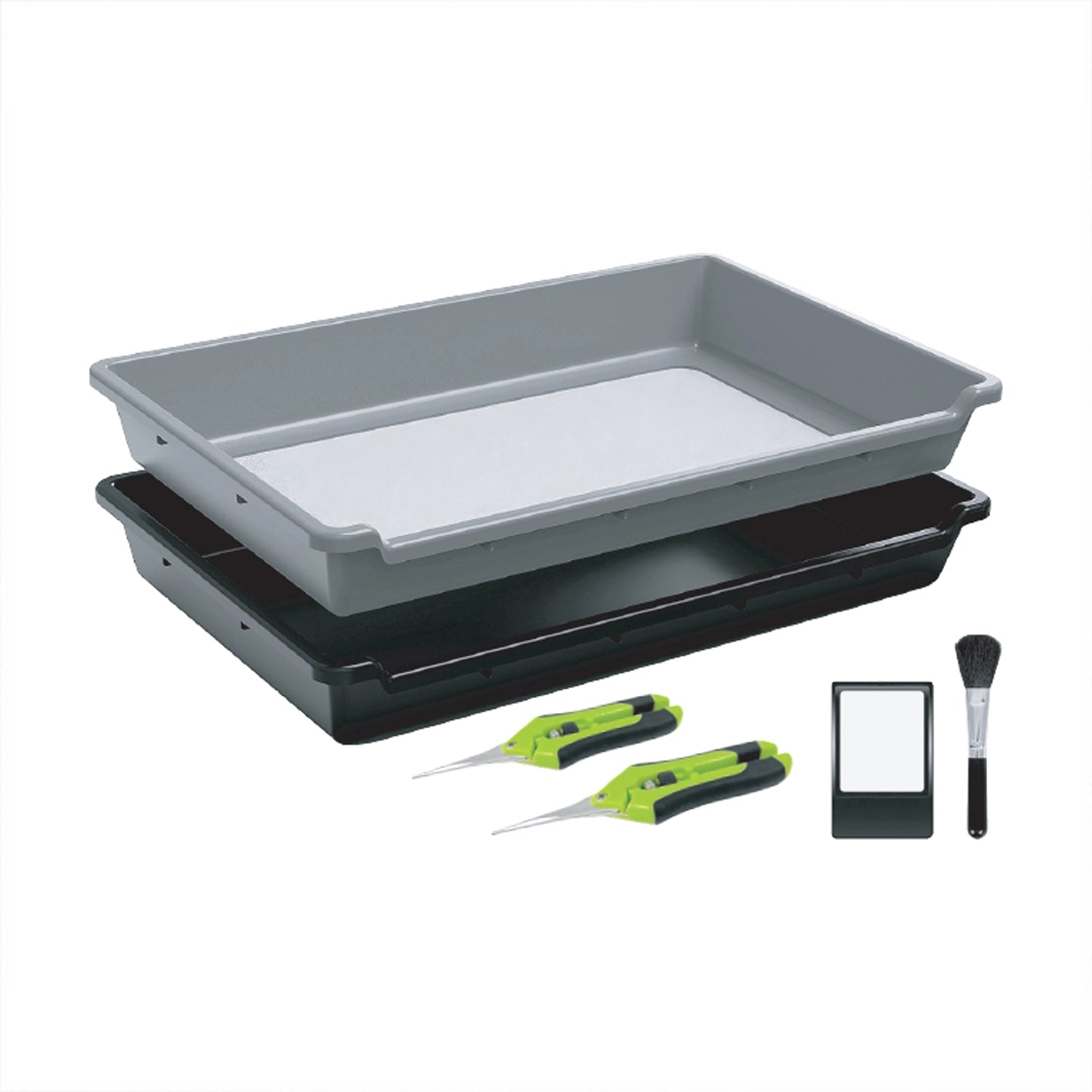
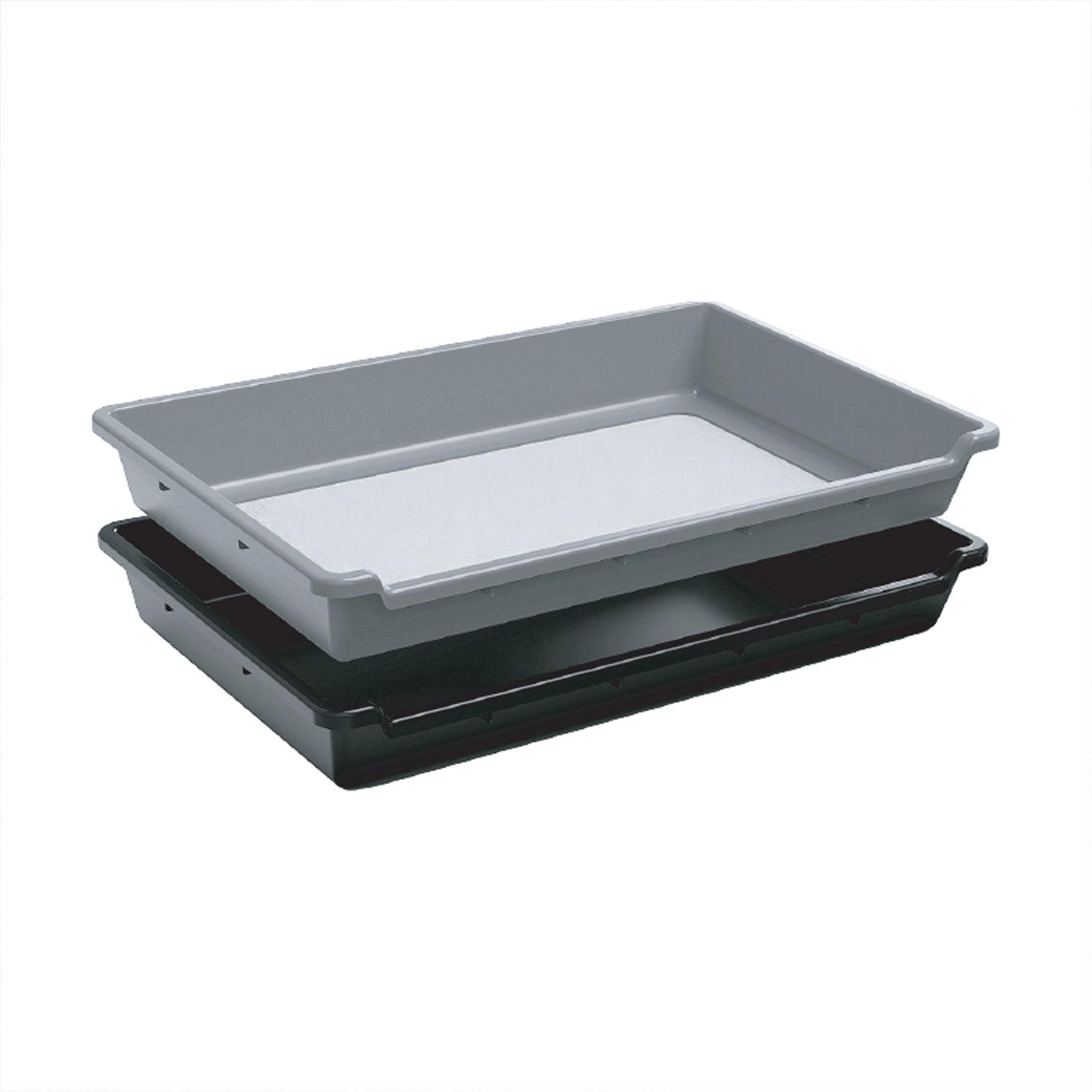
Hand trimming kits bundle the essential tools for manual post-harvest processing into a single organized purchase - typically including trimming scissors (straight and curved blade options), finger guards or gloves to protect against repeated scissor contact and resin buildup, blade cleaning solution, and a trim tray for catching material below the work area. For home growers and small operations where hand trimming produces the best quality finish, a complete kit provides everything needed without sourcing each component separately. For commercial operations where machine trimming handles the bulk work, hand finishing kits support the quality-touch pass on premium product after machine pre-trimming.
Scissor Types for Trimming
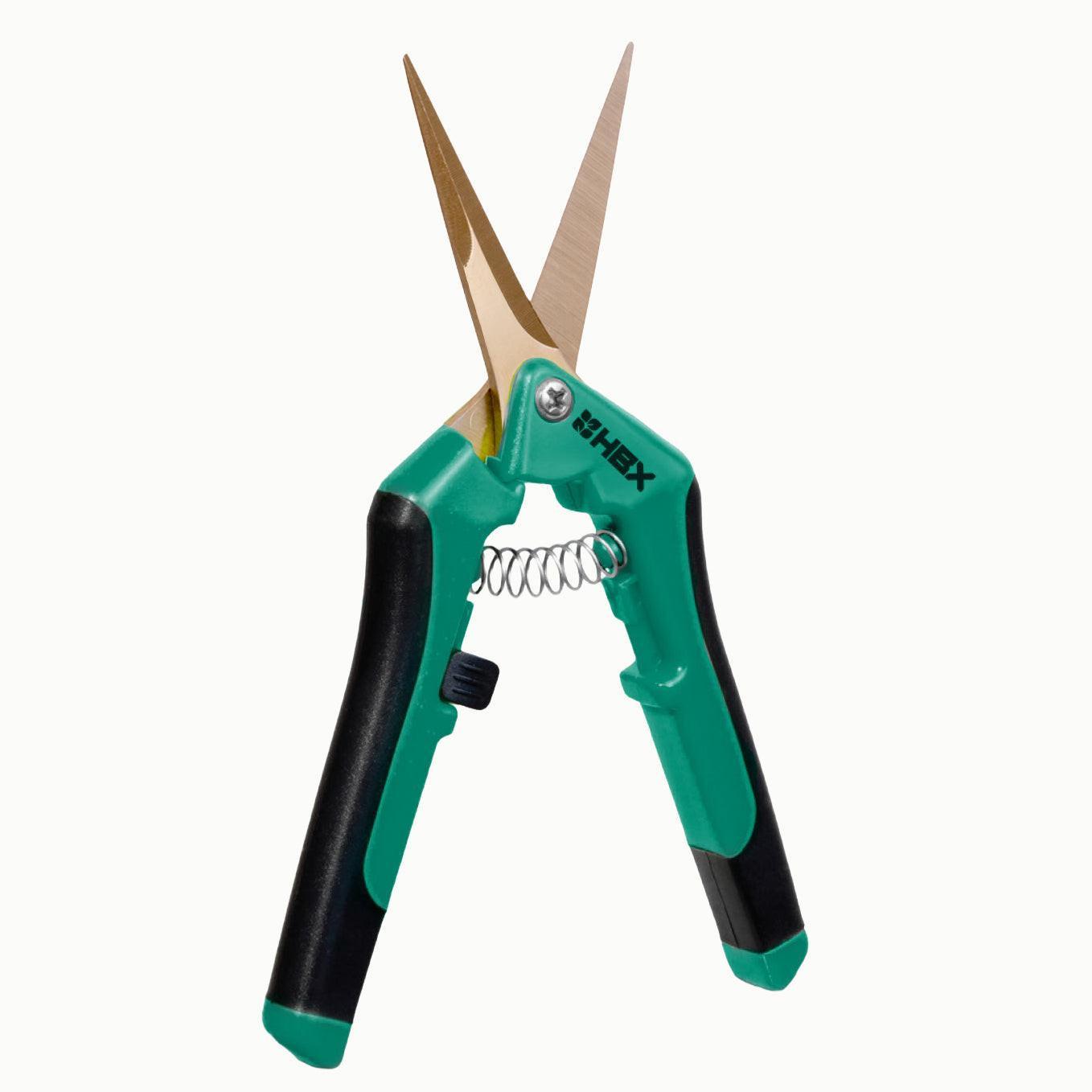
Two scissor designs serve distinct roles in hand trimming. Straight-blade scissors provide precise control for detailed work - snipping individual small leaves and stems close to the surface without disturbing adjacent structures. Curved-blade scissors (like the Chikamasa B-500SRF and similar models) are the ergonomic standard for sustained trimming sessions - the curved blade geometry maintains a more natural wrist angle during the repetitive opening and closing motion, reducing fatigue significantly compared to straight blades over long sessions. Most experienced trimmers use curved blades as the primary tool and straight blades for fine detail work. Browse our full trimming scissors collection for individual tools.
Ergonomics & Session Length
Hand trimming is physically demanding on the hands, wrists, and forearms - repetitive cutting motion combined with resin resistance builds fatigue quickly in untrained trimmers. Quality scissors with smooth action and appropriately sized finger loops reduce fatigue significantly compared to cheap scissors with stiff pivots. Take regular breaks (5-10 minutes per hour), alternate hands where possible, and stretch finger and wrist flexor muscles between sessions. Nitrile gloves or dedicated trimming finger guards reduce direct resin contact and the skin irritation that develops during extended sessions. Clean scissors every 30-45 minutes to maintain cut quality and reduce the finger fatigue of working with sticky, resin-coated blades. Fast shipping.
Hand Trimming Kits FAQ
What does a hand trimming kit include?
A complete hand trimming kit typically includes two scissor types (straight and curved blade), nitrile gloves or trimming finger guards, blade cleaning solution or isopropyl alcohol wipes, and sometimes a small trim tray or collection bin. Premium kits add a storage case for the scissors, a sharpening stone, and replacement finger guard material. The specific contents vary by brand and price tier - check the kit contents list before purchasing to confirm the included items match your needs.
What scissors does a professional trimmer use?
Most professional and experienced trimmers use curved-blade scissors as their primary tool - the Chikamasa B-500SRF (spring-loaded, curved blade) and similar models are industry standards. The spring-loaded mechanism opens the scissors automatically after each cut, reducing the hand effort of the opening stroke and making sustained trimming significantly less fatiguing. Curved blades maintain a more natural wrist angle during the cutting motion compared to straight blades. For detail work and finishing, straight-blade micro-tip scissors provide precision for small leaves and tight spaces. Titanium-coated blades stay sharper longer and resist resin adhesion better than standard stainless.
How do I prevent hand fatigue during long trimming sessions?
The most effective fatigue reducers: use spring-loaded scissors that eliminate the opening stroke effort; ensure the scissor finger loop size fits your fingers without requiring gripping to keep them in place; keep blades clean (sticky blades require more force per cut); take 5-10 minute breaks every hour; and stretch wrist flexors and finger extensors between breaks. Ergonomically, work at a height where your forearms are roughly parallel to the work surface - working too high or too low adds shoulder and wrist strain. Switching between straight and curved blade scissors periodically changes the muscle recruitment pattern slightly, distributing fatigue.
How often should I clean scissors during a trimming session?
Clean blades every 30-45 minutes of active trimming, or whenever the blade action becomes noticeably sticky and requires more force per cut. Resin buildup between the blade faces and around the pivot creates resistance that accelerates hand fatigue and reduces cut precision. Quick cleaning method during a session: dip scissor tips in 91%+ isopropyl alcohol for 15-30 seconds, wipe with a lint-free cloth, and return to use. Full post-session cleaning: soak full blade in isopropyl for 5 minutes, wipe clean, dry, and store. Alternatively, freeze scissors for 30 minutes before cleaning - cold makes the resin brittle and easier to wipe off.
Is there a quality difference between cheap and expensive trimming scissors?
Yes - a significant quality difference exists between budget and quality trimming scissors. Key differentiators: pivot smoothness (cheap scissors develop rough, sticky pivot action quickly from resin exposure; quality scissors maintain smooth action longer); blade steel hardness (harder steel holds an edge longer, requiring less frequent sharpening); blade coating (titanium-coated blades resist resin adhesion and stay sharper); and spring quality in spring-loaded models (cheap springs fatigue quickly, reducing the opening assist that prevents hand fatigue). For a single annual harvest, budget scissors are adequate. For regular production trimming where scissors are used weekly, quality scissors pay for themselves quickly in longevity and reduced hand fatigue.