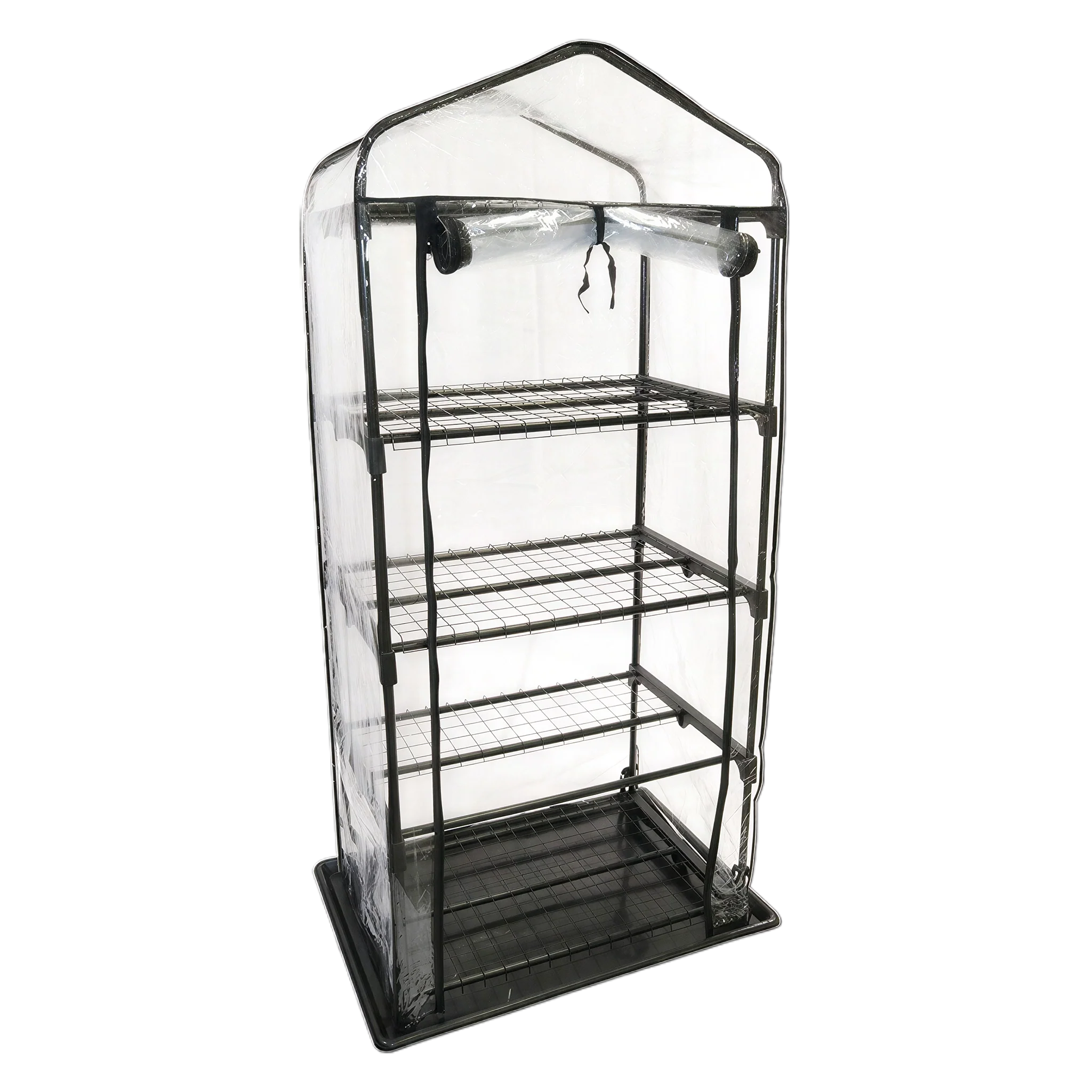
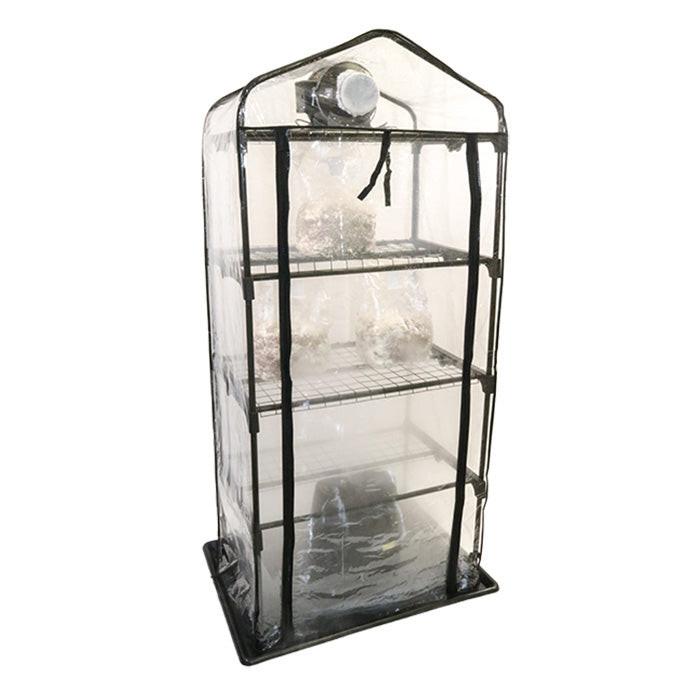
Mushroom Grow Tents for Indoor Cultivation
Grow tents provide a controlled, contained environment for mushroom fruiting that is easy to manage and clean between grows. While mushrooms have fundamentally different environmental requirements than plants - they need high humidity (85-95% RH), fresh air exchange (CO2 below 1,000 PPM for most species), low-intensity indirect light, and cooler temperatures (55-75 degrees F depending on species) - the same basic tent infrastructure used for plant growing adapts well to mushroom fruiting chambers with appropriate equipment choices.
Setting Up a Tent Fruiting Chamber
For a mushroom fruiting chamber in a grow tent: a 2x2 ft or 2x4 ft tent is adequate for most hobby production. Humidity maintenance at 85-95% RH requires frequent misting (2-4 times daily with a hand mister, or automated with an ultrasonic ultrasonic humidifier on a timer). Fresh air exchange is critical - CO2 builds up rapidly in a sealed tent as mycelium respires, and elevated CO2 causes elongated, thin, poor-quality fruiting bodies. A small clip-on fan running on intervals (30 seconds on, 30 minutes off) provides air exchange without desiccating the fruiting substrate. Indirect diffused light for 12 hours per day provides the light orientation signal that directs fruiting body development.
Temperature Considerations
Mushroom species have specific temperature requirements that differ from most plant growing environments. Oyster mushrooms fruit well at 60-75 degrees F; shiitake at 55-70 degrees F; lion's mane at 65-75 degrees F. Most mushroom fruiting temperatures are cooler than standard plant growing environments - using a tent in a cool basement or temperature-controlled room is typical rather than running dedicated cooling for a warm room. Browse our full mushroom growing supplies collection for all mushroom cultivation products. Fast shipping.
Mushroom Grow Tents FAQ
Can I use a standard plant grow tent for mushrooms?
Yes - standard grow tents work well as mushroom fruiting chambers with appropriate equipment. The key differences from plant setups: mushrooms need much higher humidity (85-95% RH vs. 50-60% for flowering plants), lower light intensity (indirect diffused light rather than high-intensity grow lighting), more frequent fresh air exchange (CO2 control is critical), and cooler temperatures. Replace the high-intensity grow light with a simple LED strip or T5 bar providing indirect light, add a humidifier or misting schedule, and include a small fan on intervals for air exchange.
What size tent do I need for mushroom growing?
A 2x2 ft tent accommodates 4-6 standard fruiting blocks or bags and is manageable for hobby production. A 2x4 ft tent doubles capacity and allows a more commercial-scale hobby program. Larger tents (4x4 ft and above) are appropriate for small commercial mushroom production, with a dedicated humidification system and automated air exchange. Match tent size to your substrate production capacity - a fruiting chamber that exceeds your ability to keep it stocked with colonized blocks runs at low efficiency.
How do I maintain 90% humidity in a mushroom grow tent?
Options for maintaining fruiting-level humidity (85-95% RH): ultrasonic humidifiers (connected to a humidity controller or timer) produce a cold mist that raises RH effectively in an enclosed tent; hand misting with a spray bottle 3-5 times per day is adequate for small operations; and automated foggers provide fine droplet mist for the most consistent humidity without large water droplets on fruiting bodies. Monitor humidity with a digital hygrometer inside the tent - ambient room humidity is not representative of tent conditions with the door closed.
Why do my mushrooms have long thin stems and small caps?
Elongated, thin fruiting bodies (pins) with small caps are the most common sign of insufficient fresh air exchange and elevated CO2. As mycelium respires, it produces CO2 - in a sealed or poorly ventilated fruiting chamber, CO2 accumulates to levels that stimulate elongated growth as the mushroom tries to "reach" above the high-CO2 zone near the substrate. Solution: increase air exchange frequency (more fan cycling or more tent opening events per day) to keep CO2 below 1,000 PPM. A small clip-on fan running on 30-second cycles every 20-30 minutes provides adequate air exchange for most hobby fruiting chambers.
What light do mushrooms need in a grow tent?
Mushrooms do not photosynthesize and do not need high-intensity grow lighting - they use light as a directional and developmental signal, not as an energy source. Low-intensity indirect light (100-500 lux, equivalent to a dim room) for 12 hours per day is sufficient to direct fruiting body development upward and initiate pinning in many species. A simple LED strip, T5 fluorescent, or even ambient room light through the tent door during daily checks is adequate. Some cultivators grow mushrooms in complete darkness without issue for species that are not light-dependent for pinning.