Portable Air Conditioners for Grow Rooms & Tents
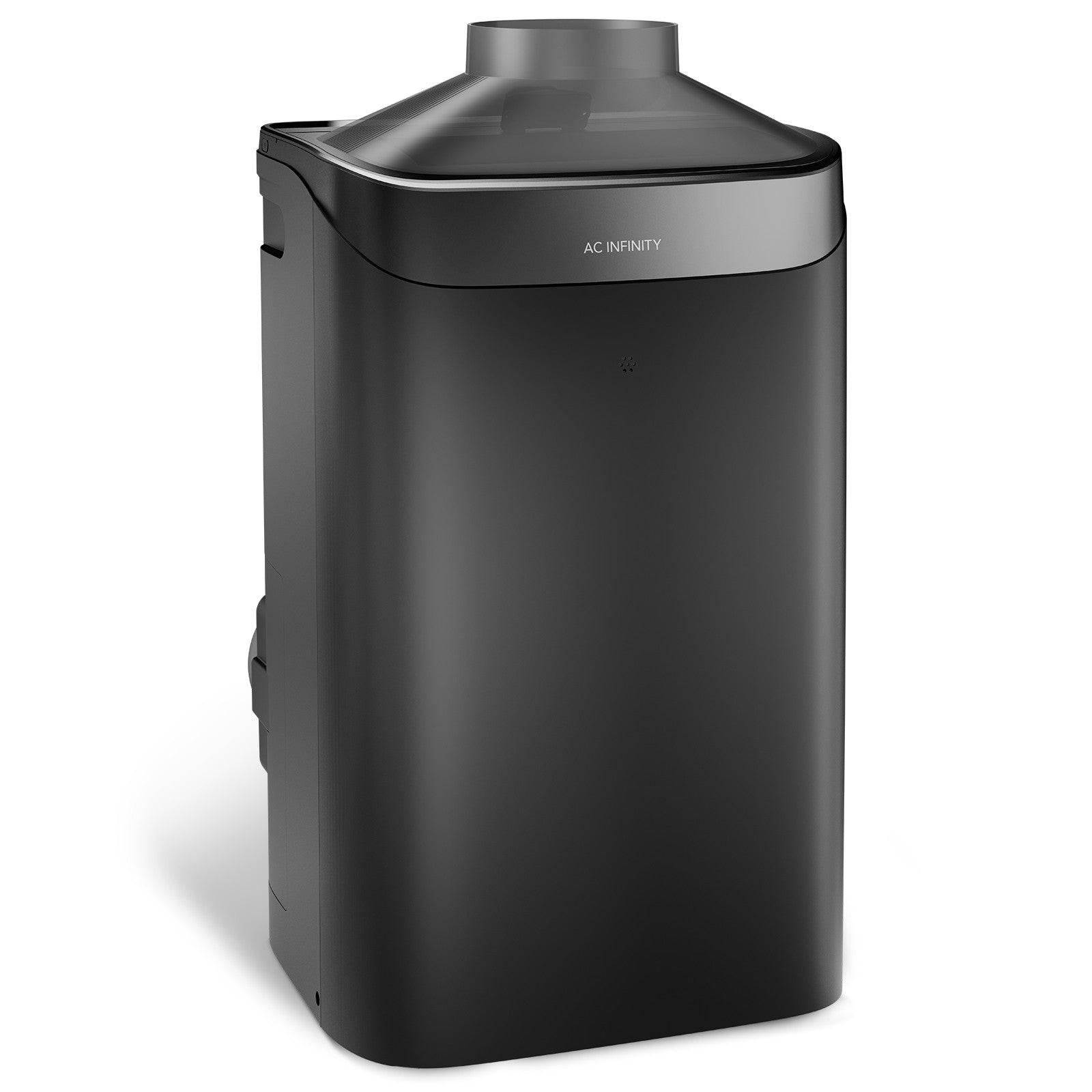
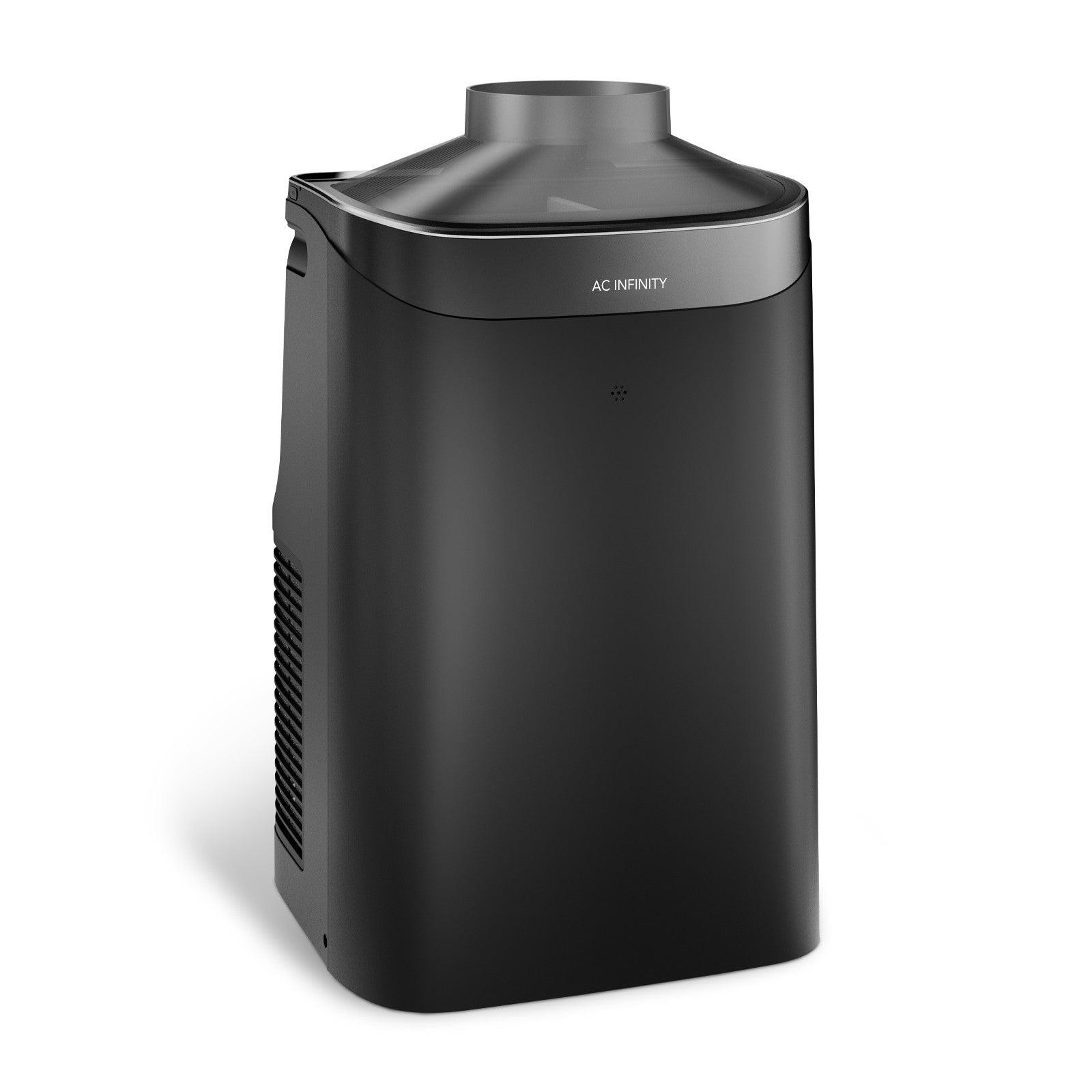
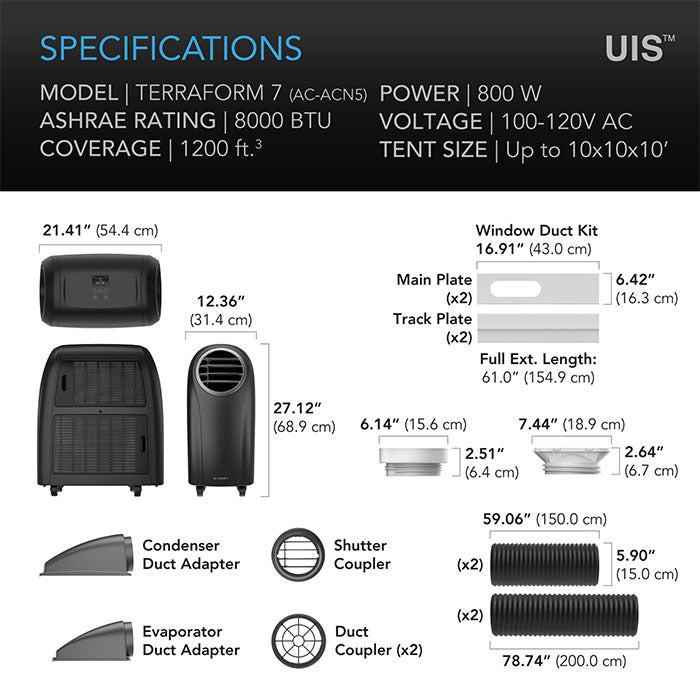
Portable air conditioners are self-contained cooling units that can be installed in grow rooms and repositioned without permanent ductwork or refrigerant lines - plugging into a standard electrical outlet and venting hot exhaust through a flexible duct routed out a window, ceiling tile, or through a grow tent vent port. For grow rooms and tents where a mini-split or central AC is impractical due to rental restrictions, building limitations, or budget constraints, portable AC provides effective cooling with no permanent installation required. Available from compact 8,000 BTU units for small tents through 14,000+ BTU floor units for rooms up to 500+ sq ft.
Single-Hose vs. Dual-Hose Portable AC
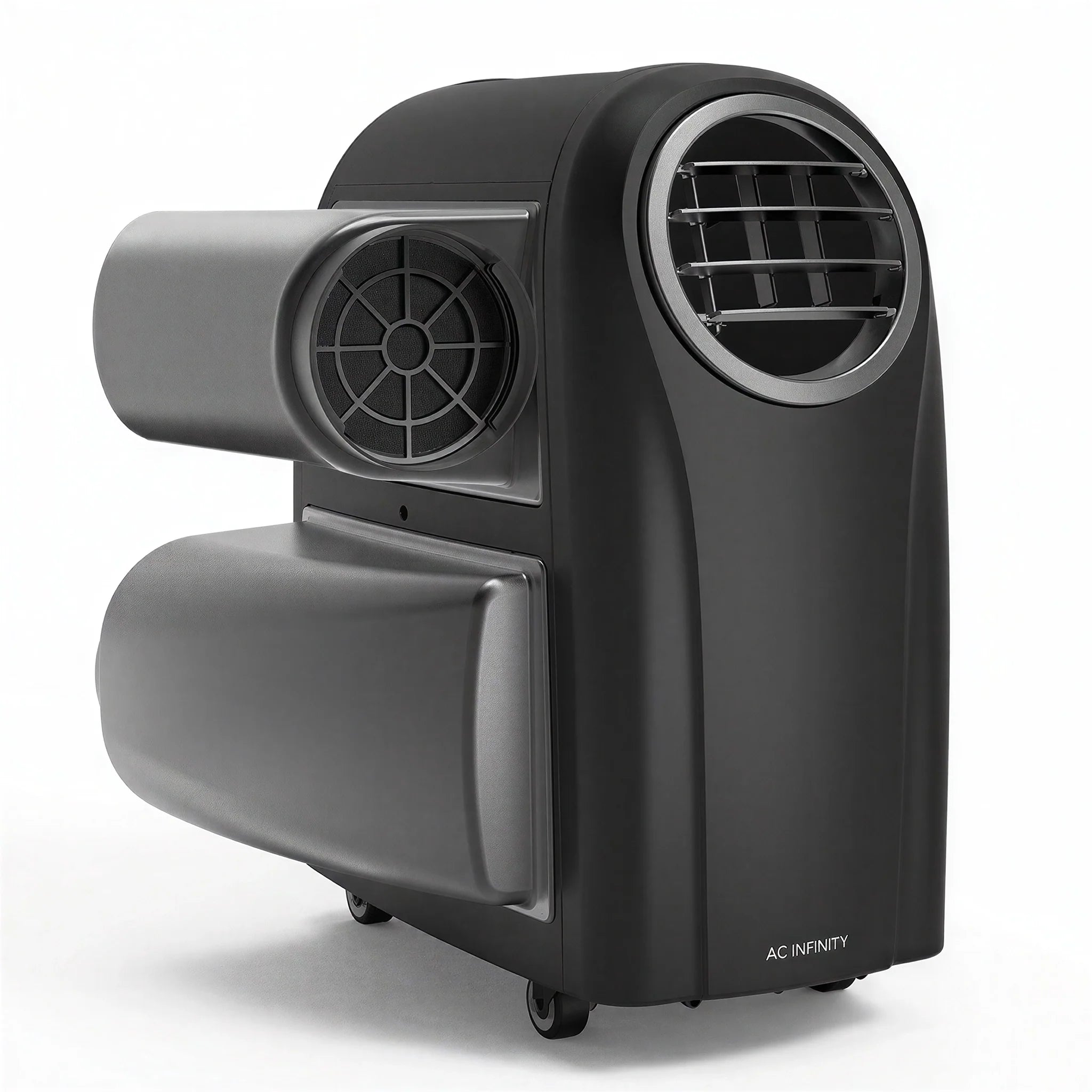
Single-hose portable AC units exhaust hot air through one duct but draw replacement air from the cooled room - creating negative pressure that pulls unconditioned outside air into the space through gaps and cracks, partially offsetting the cooling effect. Dual-hose units use a second duct to draw outside air directly for the condenser, preventing the negative pressure problem and running more efficiently in well-sealed spaces like grow tents and dedicated grow rooms. For grow tent applications where the tent is sealed for CO2 enrichment and negative pressure would draw unfiltered outside air in, dual-hose portable AC is the better choice. Single-hose units work adequately in less-sealed spaces where the negative pressure effect is minimal. For permanently installed grow room cooling, browse our complete grow room air conditioning collection.
Sizing Portable AC for Grow Rooms
Portable AC sizing depends on room square footage, heat load from lighting and equipment, and how well-insulated the space is. Rule of thumb: 20 BTU per sq ft for a well-insulated interior room; add 1,000 BTU per 300W of grow light heat load in the space. A 4x4 ft tent with a 600W LED (total heat load approximately 200 BTU/hr from lighting plus 100 BTU from circulation fans) in a climate-controlled room typically needs a 6,000-8,000 BTU portable unit. For commercial rooms above 500 sq ft, a mini-split or commercial spot cooler provides more cost-effective cooling than stacking portable units. Expert support available.
Portable Air Conditioners FAQ
Can I use a portable AC in a grow tent?
Yes - portable AC units work in grow tent applications with a few considerations. Route the exhaust duct through a tent vent port (most 4-inch or 6-inch tent ports accommodate standard 5-inch portable AC exhaust ducts with a simple adapter). For CO2-enriched sealed tents, use a dual-hose portable AC to avoid drawing in outside air through the negative pressure a single-hose unit creates. Position the unit outside the tent with cold air directed in through a vent port for maximum efficiency - running the whole unit inside the tent adds its heat dissipation directly to the cooled space.
What BTU portable AC do I need for a grow tent?
For a 4x4 ft tent (96 sq ft footprint, approximately 576 cu ft): an 8,000 BTU portable unit provides adequate cooling for 400-600W LED grows in climate-controlled indoor environments. For 1,000W+ lighting or hot outdoor environments: 10,000-12,000 BTU. For 5x5 or 4x8 tents with high-intensity lighting: 12,000-14,000 BTU. These estimates assume the tent is in an air-conditioned indoor space; in garages and outdoor structures exposed to summer heat, size up by 2,000-4,000 BTU over the indoor estimate to account for the additional ambient heat load penetrating the tent structure.
How do I vent a portable AC in a grow room without a window?
Options for rooms without windows: (1) vent through a drop ceiling tile - route the exhaust duct up through a ceiling tile into the plenum space, which typically connects to building HVAC return air; (2) vent through an exterior wall using a through-wall vent kit (requires drilling); (3) vent into an adjacent room or hallway if temperature management there is not critical; (4) use a mini-split system instead, which requires only a small penetration for refrigerant lines and drain rather than a large exhaust duct. None of these options work well for exhausting directly into an attic or enclosed space without airflow - heat will accumulate and reduce cooling efficiency rapidly.
Is a portable AC the same as a mini-split for grow rooms?
No - they are fundamentally different systems. Portable AC units are self-contained, require no installation, and exhaust heat through a duct to the outside. Mini-split systems split the components between an indoor air handler and outdoor condenser unit, connected by refrigerant lines - they are more efficient, quieter, and permanent, but require installation by an HVAC technician. For grow rooms where long-term cooling is needed, mini-splits provide better efficiency and reliability at higher installation cost. Portable AC is best for temporary setups, rental situations where permanent installation is not permitted, or as supplemental cooling alongside existing HVAC.
How often should I drain a portable AC unit?
Portable AC units collect condensate (water removed from the air during cooling). Most units have an internal tank that requires manual draining every 8-24 hours in humid environments - more frequently in high-humidity grow rooms where dehumidification load is significant. Many units have a continuous drain option: connect a gravity drain hose to the drain port and route it to a floor drain or collection bucket for automatic passive draining. In grow rooms where the AC runs continuously, the continuous drain configuration is highly recommended - forgetting to drain the tank causes the unit to shut off on overflow protection, interrupting temperature control.