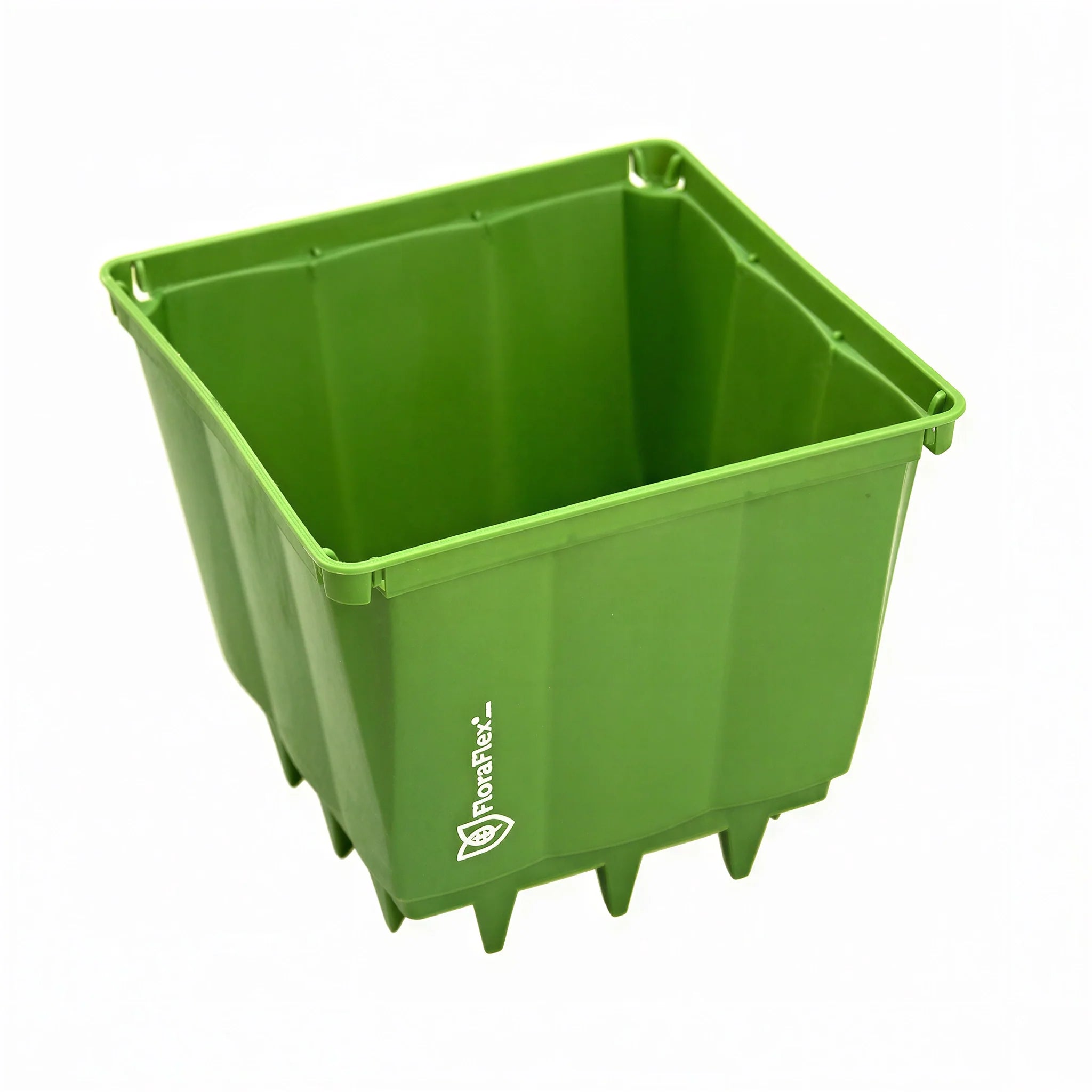
Plastic Nursery Pots & Plant Containers for Indoor Growing
Plastic nursery pots and grow containers are the most widely used plant container format in both hobby and commercial indoor growing - inexpensive, durable, available in every size from seedling cells to 100-gallon containers, and compatible with all growing media from soil to coco coir to hydroponic perlite mixes. Container selection affects root zone air pruning, drainage rate, moisture retention, and how much root volume is available to support plant development - all of which directly affect plant performance and yield potential.
Container Sizes: Matching Pot Size to Plant & Method
Container size determines how much growing medium root volume is available and how frequently irrigation is needed. For sea-of-green (SOG) programs with many small plants and short vegetative periods: 1-gallon pots are standard. For single-plant training methods (SCROG, LST) with longer vegetative phases: 3-7 gallon containers provide the root volume needed for large canopy development. Commercial coco and rockwool production typically uses 3-5 gallon containers or purpose-built grow bags for most flowering crops. Container depth matters for root zone temperature management in warm climates - deeper containers insulate the root zone from surface heat better than shallow pots of equivalent volume. For container grows using coco coir or perlite-based media, standard plastic nursery pots with adequate drainage holes are the commercial standard. Browse alongside net pots and mesh cups for hydroponic applications, and hydroponic growing media to fill them.
Drainage & Saucers
All containers used in indoor growing must have adequate drainage holes - retained water at the pot base creates anaerobic conditions that promote root disease. Standard nursery pots include pre-drilled drainage holes; verify hole size and distribution are adequate for your growing medium's drainage rate. In drip-irrigated container programs, saucers or flood trays collect runoff for drain-to-waste removal or recirculation. Elevating containers off the saucer surface (using pot risers or platforms) prevents roots from sitting in collected runoff between irrigation events. For ebb and flow applications, use open-bottom net pots or specifically designed flood-and-drain containers rather than sealed-bottom nursery pots that prevent proper drainage. Fast shipping.
Plastic Pots & Nursery Containers FAQ
What size pot do I need for indoor growing?
Match pot size to your vegetative phase length and plant training method. For sea-of-green with 1-2 week veg: 1-gallon pots. For 2-4 week veg with moderate training: 3-gallon pots. For 4-8 week veg with SCROG or full LST: 5-7 gallon containers. For very large single plants with extended veg: 10-15 gallon containers. Oversizing pots (too much media volume for the plant's root mass) creates overwatering risk in hand-watered programs - the excess media stays wet too long between irrigations. Undersizing limits root volume and nutrient uptake capacity at peak growth stages. For coco coir grows, err slightly larger rather than smaller - coco's faster drainage makes larger containers more forgiving than in soil.
Should I use plastic pots, fabric pots, or net pots for hydroponics?
For hydroponic growing media (coco coir, perlite, clay pebbles), plastic pots with drainage holes are the most common and practical choice - simple, inexpensive, and available in every size. Fabric pots (air-pruning pots) promote more fibrous root development through air-pruning at the container walls but lose moisture faster than plastic, requiring more frequent irrigation - better suited to soil than coco. Net pots (mesh cups) are specifically designed for DWC and ebb and flow systems where root access to nutrient solution or maximum drainage is required - not appropriate for container media grows. For drip-irrigated coco or perlite, standard plastic nursery pots with adequate drainage holes are the standard commercial choice.
Do I need saucers under my grow pots?
In drip-irrigated and hand-watered programs that produce runoff, saucers or flood trays collect drainage for management. Whether to remove runoff immediately or allow limited collection depends on your irrigation program - for coco coir programs where 10-20% runoff at each irrigation event is standard practice, runoff collection and removal (drain-to-waste) is standard. For programs where runoff is recirculated, a tray connected to a return line handles collection. Avoid leaving collected runoff to pool under containers for extended periods - standing water at the saucer creates the anaerobic root zone conditions that favor pathogens. Empty saucers promptly after irrigation events or use a recirculating collection system that removes runoff automatically.