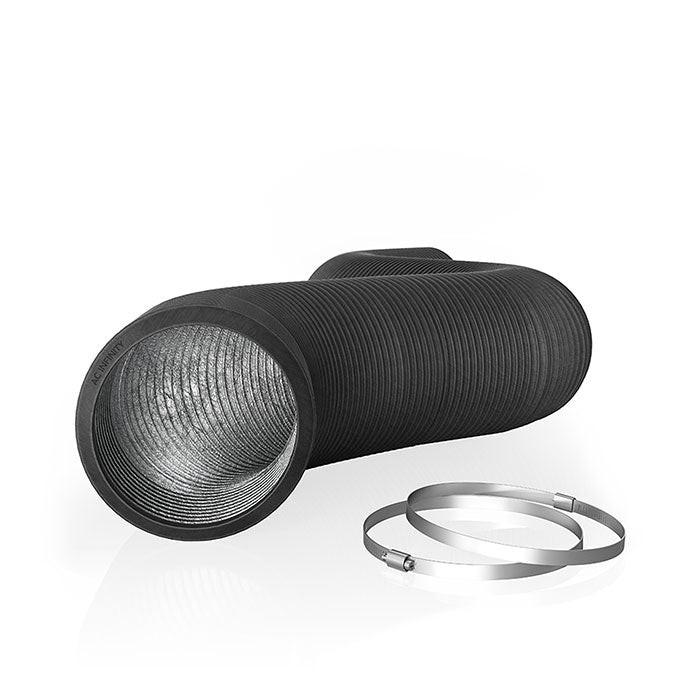
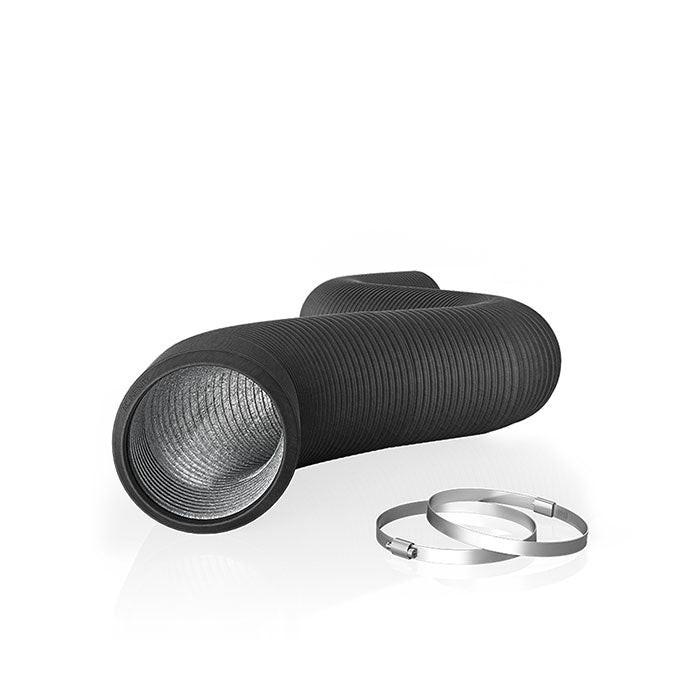
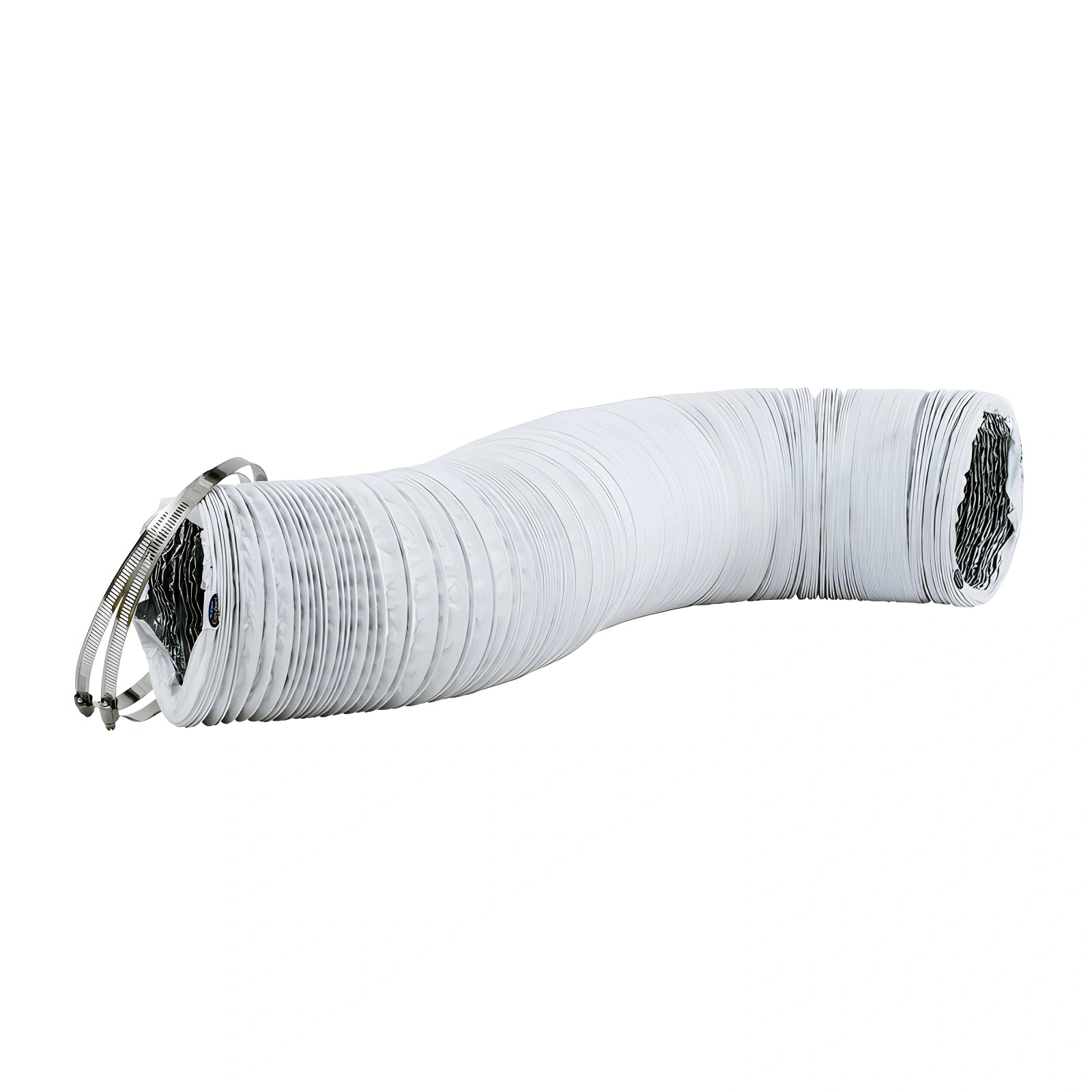
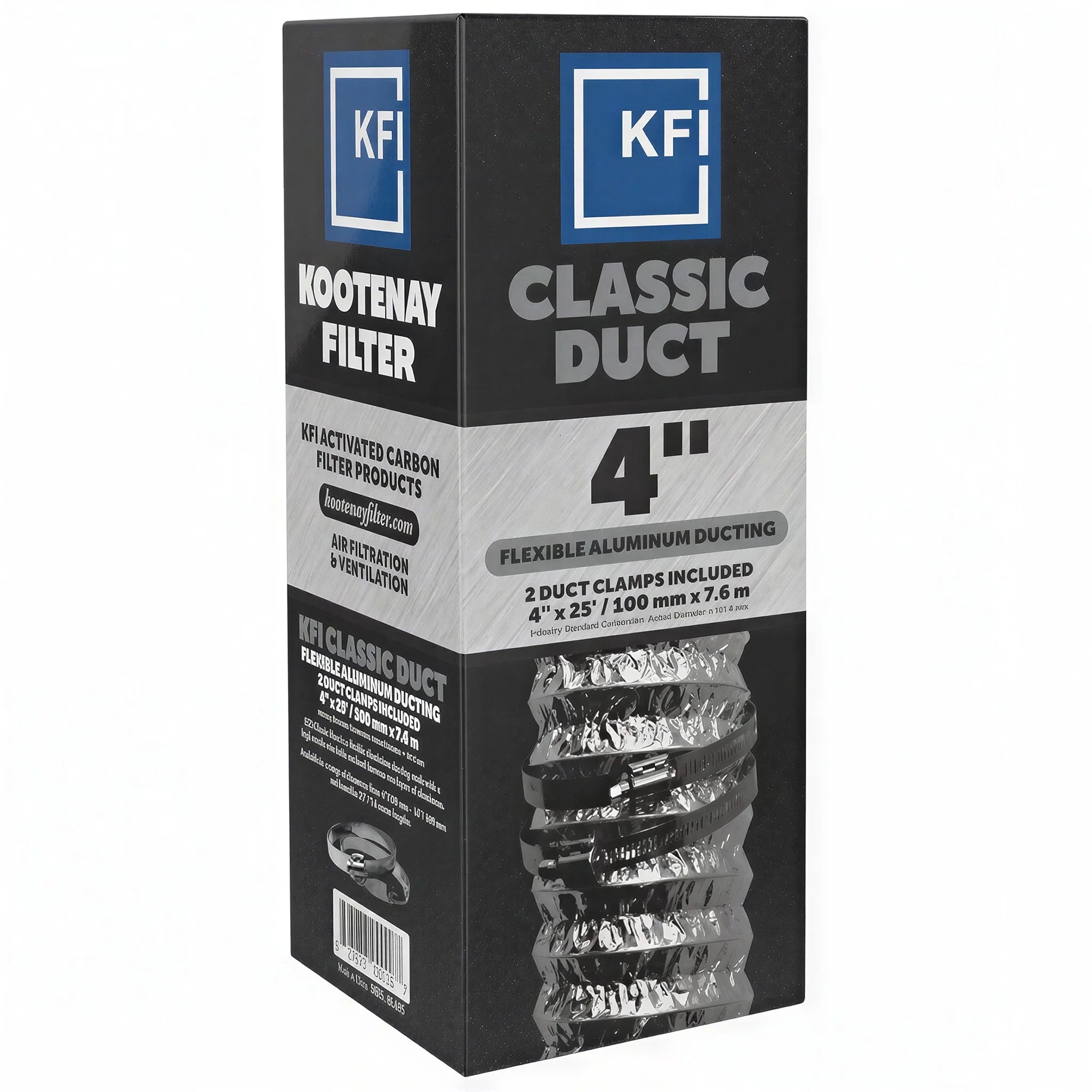
Flexible Ducting & Duct Hose for Grow Room Ventilation
Flexible ducting connects inline fans, carbon filters, grow tent exhaust ports, and external exhaust points into a complete ventilation system - the airway through which the fan moves air. The diameter, length, and installation quality of the ducting directly affect how much of the fan's rated CFM actually moves through the system: every bend, every length of duct, and every restriction adds static pressure resistance that reduces delivered airflow below the fan's rated capacity. Understanding these losses and minimizing them through smart duct routing is the difference between a ventilation system that maintains target temperature and one that struggles despite an adequately-sized fan.
Ducting Types
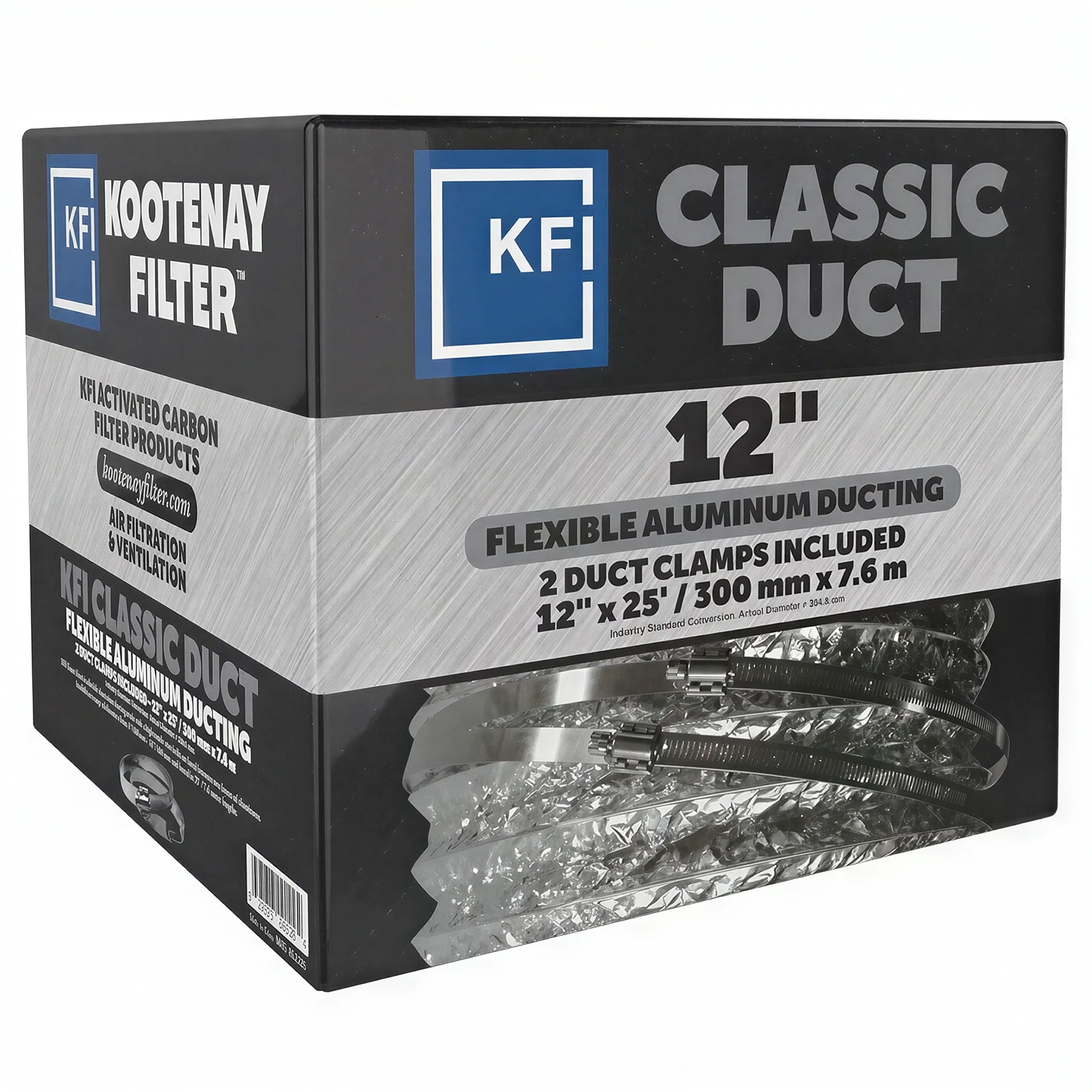
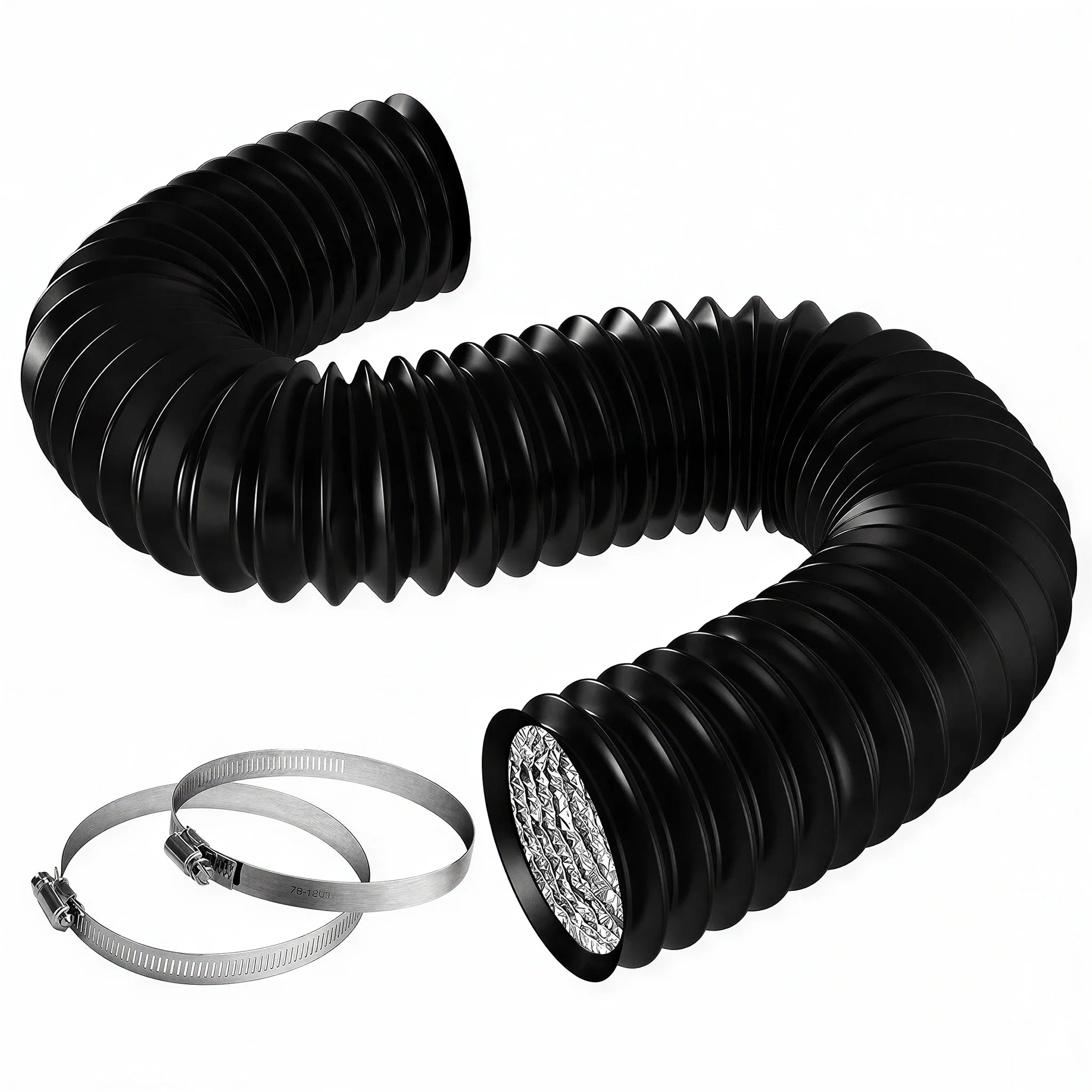
Non-insulated aluminum flex duct is the standard for most indoor tent and room ventilation - lightweight, flexible, and adequate for most grow room applications where condensation on the duct exterior is not a concern. Insulated flex duct (aluminum flex wrapped in fiberglass insulation and an outer jacket) prevents condensation on the duct exterior in situations where the ducted air temperature is significantly cooler than the ambient room temperature it passes through - relevant when running air-cooled reflector ducts through warm rooms or when routing cold AC ducting through humid growing spaces. Rigid metal duct provides lower flow resistance per foot than flex duct and is used in permanent installations where the lower pressure drop justifies the reduced flexibility. Browse our complete ventilation collection for fans and ducting alongside accessories.
Minimizing Flow Resistance
Keep duct runs as short and straight as possible - every 90-degree bend in flex duct adds the equivalent of approximately 5-10 feet of straight duct resistance. Fully extend flex duct rather than leaving it compressed or coiled; compressed flex duct has dramatically higher resistance than fully extended duct of the same diameter. Connect to fans and filters with proper flanges and seal all connections with foil tape. Fast shipping.
Flexible Ducting FAQ
What diameter ducting do I need?
Match duct diameter to the fan and carbon filter port size - using smaller-diameter duct than the fan port creates an immediate restriction that reduces airflow. Standard inline fan and carbon filter sizes: 4-inch for fans up to 200 CFM; 6-inch for fans 300-500 CFM; 8-inch for fans 600-800 CFM; 10-12 inch for fans 800+ CFM. If you need to transition between sizes, use a proper tapered reducer rather than crimping the larger duct to fit a smaller opening.
Does duct length affect my fan performance?
Yes - every foot of flex duct adds friction resistance that reduces the actual CFM delivered compared to the fan's rated zero-static-pressure CFM. Rule of thumb: allow 10-15% CFM reduction per 10 feet of flex duct run for typical installation conditions. A 400 CFM fan with 30 feet of 6-inch flex duct and two 90-degree bends might deliver 300-320 CFM at the exhaust point. Keep duct runs under 25 feet where possible and route with the fewest possible bends for the best system performance. Oversize the fan by 25-30% of the calculated room requirement to account for duct losses.
Should I use insulated or non-insulated flexible duct?
Use insulated flex duct when: the duct carries air significantly cooler than the ambient air it passes through (air-cooled light ducts exhausting through warm rooms; AC supply ducts); or when condensation on the duct exterior would create moisture problems on surfaces the duct passes through. For most grow tent exhaust applications where the duct carries warm room air to the outside, non-insulated aluminum flex duct is adequate and easier to work with. Insulated duct costs more, is harder to route, and the insulation can harbor pests if the outer jacket is punctured.
Can I reuse flexible ducting between growing cycles?
Yes - aluminum flex duct can be reused for many cycles if handled carefully. Aluminum flex duct is fragile to kinking - once kinked, the aluminum foil tears and the restriction at the kink is permanent. Store flex duct by hanging it in a straight run or loosely coiling it around a large diameter (at least 3-4x the duct diameter). Inspect for tears, holes, and kinks before reuse. The inner wire coil can push through damaged foil if the duct is compressed - inspect the interior surface by shining a light through the duct from one end.
How do I seal duct connections to prevent air leaks?
Use aluminum foil tape (HVAC-grade, not standard gray duct tape) to seal all duct connections. Wrap the foil tape completely around the connection point where the flex duct meets the fan flange, filter collar, or tent port - at least 2-3 overlapping wraps of tape. Air leaks at connections reduce system efficiency (air bypasses the fan rather than being moved by it) and in odor-controlled systems allow unfiltered air to escape before passing through the carbon filter. Gray duct tape adhesive degrades rapidly in the temperature and humidity of a growing environment and is not appropriate for permanent duct connections.