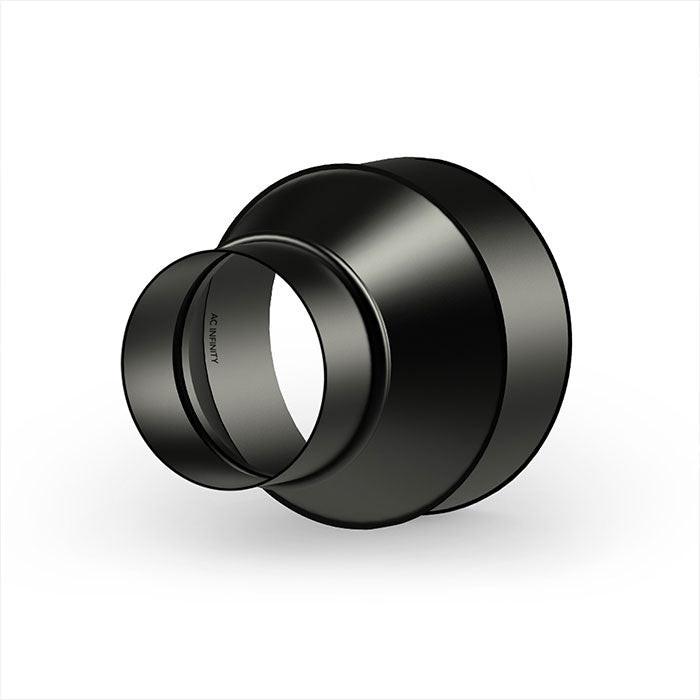
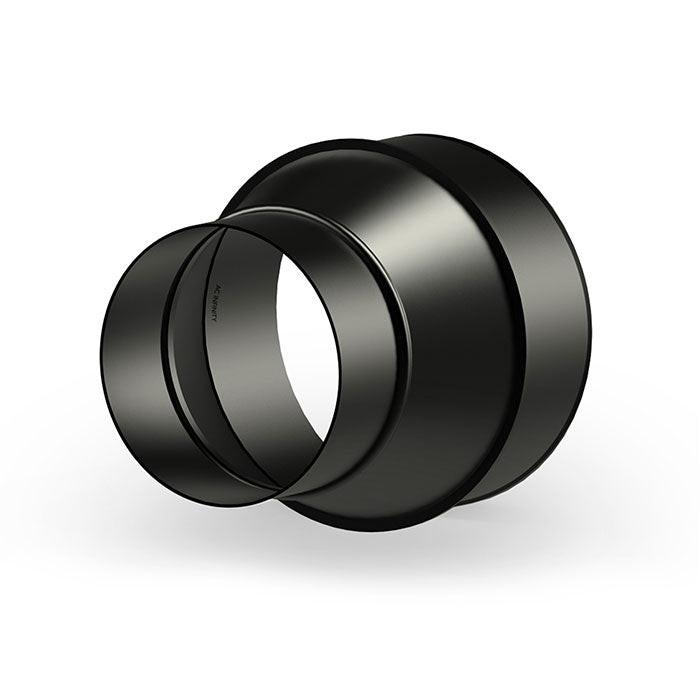
Duct Reducers & Duct Size Adapters for Grow Room Ventilation
Duct reducers (also called duct size adapters or reducing couplings) transition between two different diameter duct sections in a ventilation system - connecting a larger-diameter fan port to a smaller-diameter duct run, or stepping down duct size between a main trunk duct and branch distribution ducts. In grow room ventilation, reducers are most commonly needed when a fan and a carbon filter have different port diameters, when a tent duct port does not match the fan's rated diameter, or when the available duct diameter does not match the intended fan size due to equipment from different manufacturers in the same system.
Using Reducers Correctly
A reducer introduces additional static pressure resistance into the duct system - the cross-sectional area reduction creates a restriction that the fan must work against, reducing delivered CFM. To minimize this penalty: use the largest available duct diameter for as much of the system as possible and only reduce at the final connection points where the equipment port requires it; avoid reducing by more than one standard size (6-inch to 4-inch is acceptable; 8-inch to 4-inch compounds restriction significantly). When possible, select fan and filter combinations that use the same port diameter to avoid needing reducers entirely. Browse our complete ventilation collection with inline fans, flexible ducting, and duct flanges.
Expandable vs. Fixed Reducers
Fixed metal reducers provide a rigid, low-resistance transition between two specific duct sizes. Expandable (flexible) reducers use a short section of flex duct with different-diameter cuffs at each end - they allow some angular misalignment between connected components but add more flow resistance than rigid reducers due to the flex duct material. For permanent installations, use rigid metal reducers; for temporary or adjustable setups, flexible reducers provide more positional flexibility. Fast shipping.
Duct Reducers FAQ
When do I need a duct reducer?
You need a duct reducer when: your inline fan has a different port diameter than your carbon filter; the fan port size does not match the flex duct diameter you have; or you are connecting a larger main trunk duct to a smaller branch duct serving a grow tent port. The most common scenario: a 6-inch inline fan paired with a 4-inch carbon filter port (or vice versa) requires a 6-to-4-inch reducer to connect the two components in the same duct run.
Does using a reducer hurt my fan performance?
Yes - any reduction in duct cross-sectional area increases static pressure resistance and reduces fan CFM output. A 6-to-4-inch reducer in a 6-inch fan system reduces the effective duct area by 56%, creating significant additional resistance. Where possible, run the larger diameter throughout the entire system and only reduce at the very end where a smaller connection is unavoidable. If a reducer is necessary, account for the reduced delivered CFM in your fan sizing calculation by selecting a fan rated 20-30% above the minimum required CFM.
Can I use a reducer to connect an 8-inch fan to a 6-inch carbon filter?
Yes - an 8-to-6-inch reducer connects these components, but recognize the flow restriction penalty. The 6-inch filter port becomes the system bottleneck - the filter's rated maximum airflow at its 6-inch port determines the maximum CFM regardless of the fan size. If the filter is rated for 400 CFM at its 6-inch port, using an 800 CFM fan with a reducer does not produce 800 CFM through the system; it produces approximately what the 6-inch filter port can pass at the increased static pressure the larger fan creates. Match fan and filter sizes for maximum system efficiency.
What is the difference between a reducer and a duct booster?
A reducer is a passive fitting that changes duct diameter without adding any airflow energy - it only transitions between sizes. A duct booster (inline duct booster fan) is an additional fan installed within a duct run to increase airflow in a specific duct section that is not being adequately served by the primary fan. Reducers reduce airflow; duct booster fans increase it. These are used for different purposes and are not interchangeable - do not confuse them when sourcing parts for a ventilation system.
Can I connect a flex duct reducer to a rigid duct system?
Yes - flexible reducers with metal cuffs at each end can connect flex duct to rigid duct of a different diameter. Seal all connections with foil tape. For permanent installations where the rigid duct and flex duct connection needs to be airtight and pull-out resistant, add hose clamps over the flex duct cuffs at both ends of the reducer. Flexible reducers allow angular misalignment between components that rigid reducers do not accommodate - useful when the fan and filter ports are not perfectly aligned.