Hydroponic Drip Systems & Irrigation Kits
Drip irrigation is the most widely used nutrient delivery method in commercial hydroponic production. A submersible or inline pump delivers nutrient solution from a central reservoir through a mainline to individual drip stakes or emitters positioned at each plant site. Plants receive a precise, programmable volume of solution at each irrigation event - either draining away (drain-to-waste) or recirculating back to the reservoir. Drip systems are the dominant method in commercial coco coir and rockwool slab production precisely because they offer the per-plant precision and irrigation frequency flexibility that high-performance crop steering programs require.
Drain-to-Waste vs. Recirculating Drip Systems
Drain-to-waste (DTW) drip systems deliver fresh nutrient solution at each irrigation event; excess runoff (typically 10-20% of delivered volume) drains away and is discarded. DTW eliminates the salt accumulation and pH drift that can occur in recirculating reservoirs over time - each irrigation delivers fresh, correctly formulated solution. It does use more water and nutrients per cycle, and requires managing runoff disposal. Recirculating drip systems return excess solution to the reservoir, reducing water and nutrient consumption - more economical for large operations, but requiring more active reservoir management (pH and EC drift as plants feed selectively from the recirculating solution). For coco coir growing with crop steering, drain-to-waste is the commercial standard - irrigation precision and fresh solution at every event outweigh the water efficiency tradeoff. For larger operations where water cost and nutrient cost are significant, recirculating with an automated pH and EC dosing system makes the recirculating approach economically practical.
Drip System Components
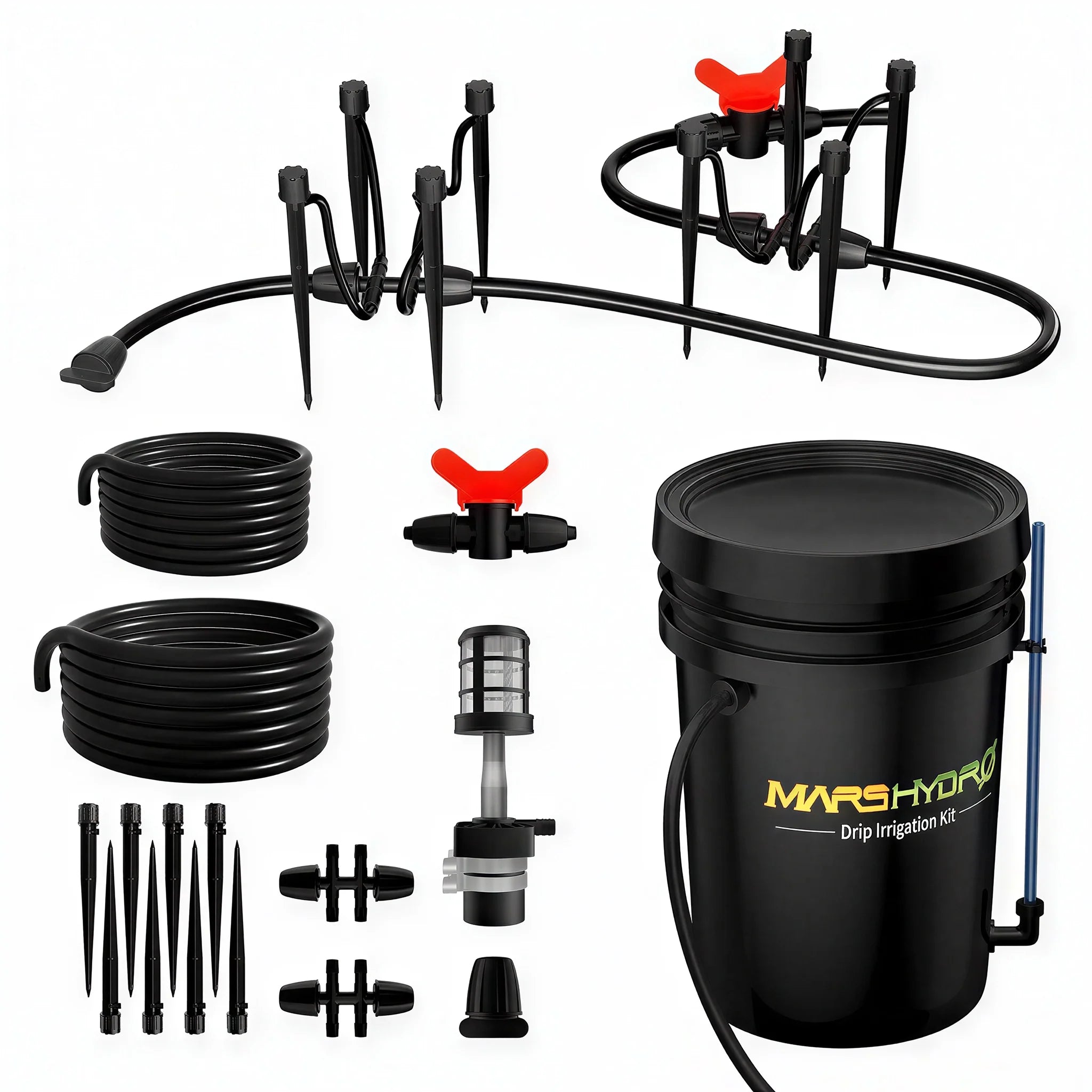
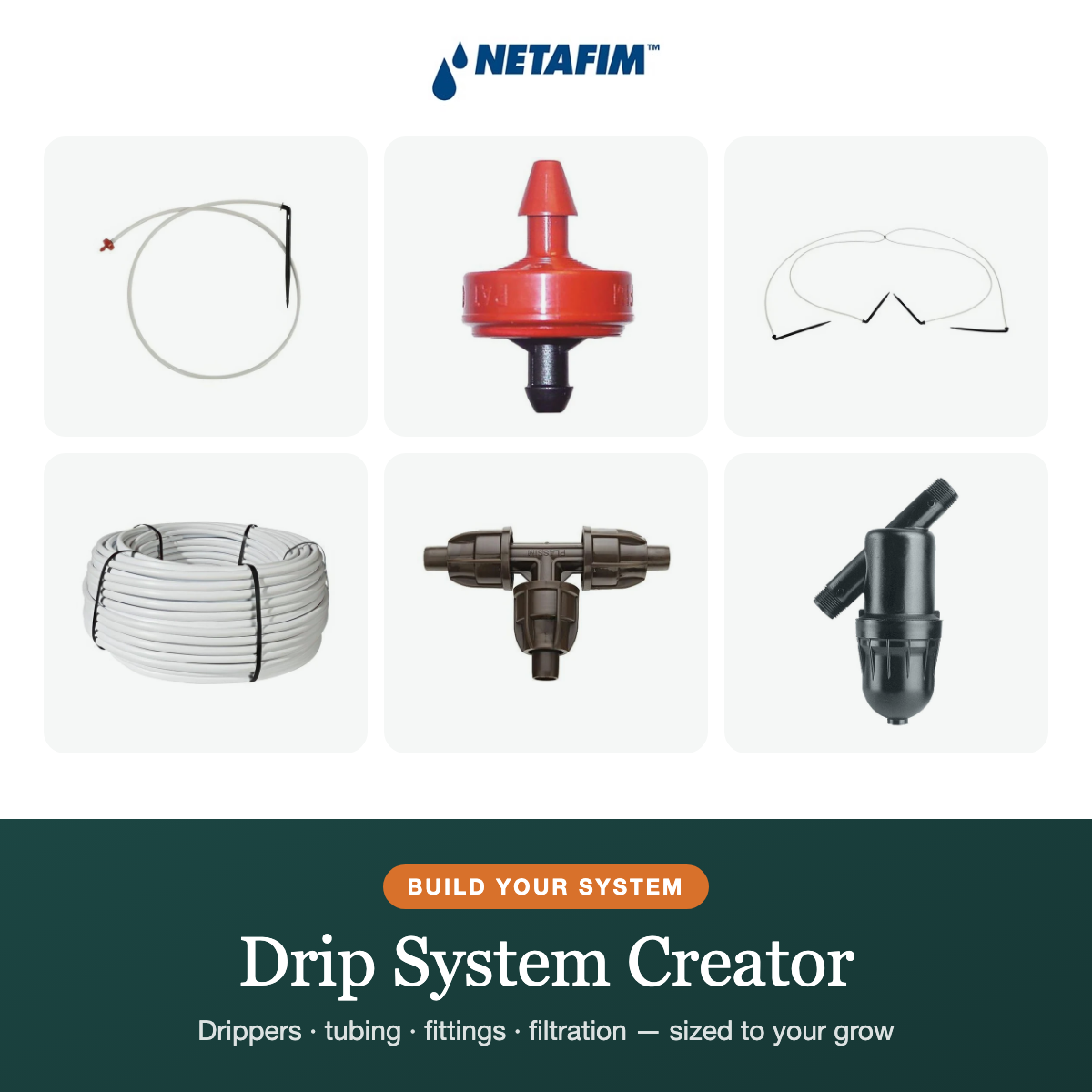
A complete drip system requires: a reservoir, a submersible or inline pump with adequate GPH for the total emitter count, mainline poly tubing (typically 17mm Bright White PE from Netafim or equivalent), individual drip emitters or drip stakes at each plant site, a timer or fertigation controller for irrigation scheduling, and a filter to protect emitters from mineral and organic buildup. Netafim's Woodpecker drip stakes are pressure-compensating - they deliver a consistent GPH regardless of where in the mainline run they sit, ensuring uniform delivery to every plant from first to last site. FloraFlex provides complete drip irrigation kits including manifolds, caps, and tubing for coco bag and container setups. Active Aqua produces cost-effective drip kits for hobby to mid-scale operations.
Irrigation Frequency & Crop Steering
Drip system flexibility in irrigation frequency is one of its core advantages over ebb and flow or DWC. Commercial coco grows using crop steering principles run 6-16 short irrigation events per day during the light period - each delivering a precise volume to maintain target moisture content in the medium rather than a single large flood. This high-frequency, low-volume approach drives the specific root zone conditions (dry-back percentage, water content) that steer plants toward vegetative or generative growth as production goals require. See our updated irrigation and fertigation for crop steering guide for complete irrigation scheduling guidance. Expert support available.
Hydroponic Drip Systems FAQ
What is a hydroponic drip system and how does it work?
A drip system delivers nutrient solution from a central reservoir through tubing to individual drip stakes or emitters at each plant site on a timer-controlled schedule. The pump turns on, fills the mainline with solution, and each emitter delivers a precise flow rate to its plant site. Excess solution either drains away (drain-to-waste) or returns to the reservoir (recirculating). The precision of per-plant delivery and the flexibility to run multiple irrigation events per day make drip systems the dominant format in commercial coco coir and rockwool production, where high-frequency irrigation schedules are fundamental to crop steering programs.
What growing media work best with a drip system?
Drip systems work well with any well-draining growing medium. Coco coir (with 30-40% perlite) is the most common pairing in commercial indoor production - its consistent drainage rate suits the high-frequency, drain-to-waste drip approach, and its physical properties (aeration, water retention balance) align well with crop steering irrigation programs. Rockwool slabs are the other dominant commercial drip medium - high air porosity, fast drainage, and structural stability in long-term slab systems. Perlite-only systems are also used in commercial drip operations. Soil and heavily water-retentive media are less suited to high-frequency drip - the slow drainage creates waterlogging risk between events.
How many drip emitters do I need per plant?
For most container-grown crops in coco or rockwool, 1-2 pressure-compensating drip stakes per container provides adequate distribution for containers up to 5 gallons. For containers larger than 5 gallons or for rockwool slabs where uniform wetting across the full surface matters, 2-4 emitter sites per container/slab improves coverage. For high-frequency irrigation programs (6-12+ events per day at low volume per event), a single stake per container is usually sufficient - frequent short pulses distribute evenly through well-structured coco or rockwool. For low-frequency programs (1-2 irrigations per day at higher volume), 2 stakes per container improve distribution consistency.
How do I prevent drip emitters from clogging?
Install a disc or mesh filter at the head of every drip zone to remove particles before they reach emitters. Use a filter with 120-155 mesh rating - fine enough to catch particles that would block drip orifices (typically 0.3-0.8mm diameter). Change reservoir water on schedule and keep the reservoir covered to minimize algae and organic debris entering the system. Flush the full drip line with clean water between reservoir changes to remove any salt buildup in the tubing. If using powder-based nutrients (Athena Pro Line), ensure they are fully dissolved before introducing to the irrigation line - undissolved particles are a common clogging cause. Netafim pressure-compensating stakes are less susceptible to clogging than non-PC emitters because their internal pressure-regulation valve design handles small particles more tolerantly.