Air Manifolds & Dividers for Hydroponic Air Systems
Air manifolds split a single air pump output into multiple distribution lines, allowing one pump to serve multiple reservoirs, buckets, or air stone locations simultaneously. Without a manifold, running multiple air stones from one pump requires daisy-chaining lines together with tee fittings - a less organized approach that makes flow adjustment and line isolation impractical. A dedicated manifold with individual outlet valves allows adjusting air flow to each zone independently, isolating individual lines for maintenance without shutting off the entire system, and expanding the air distribution without replumbing the main supply line.
Manifold Types
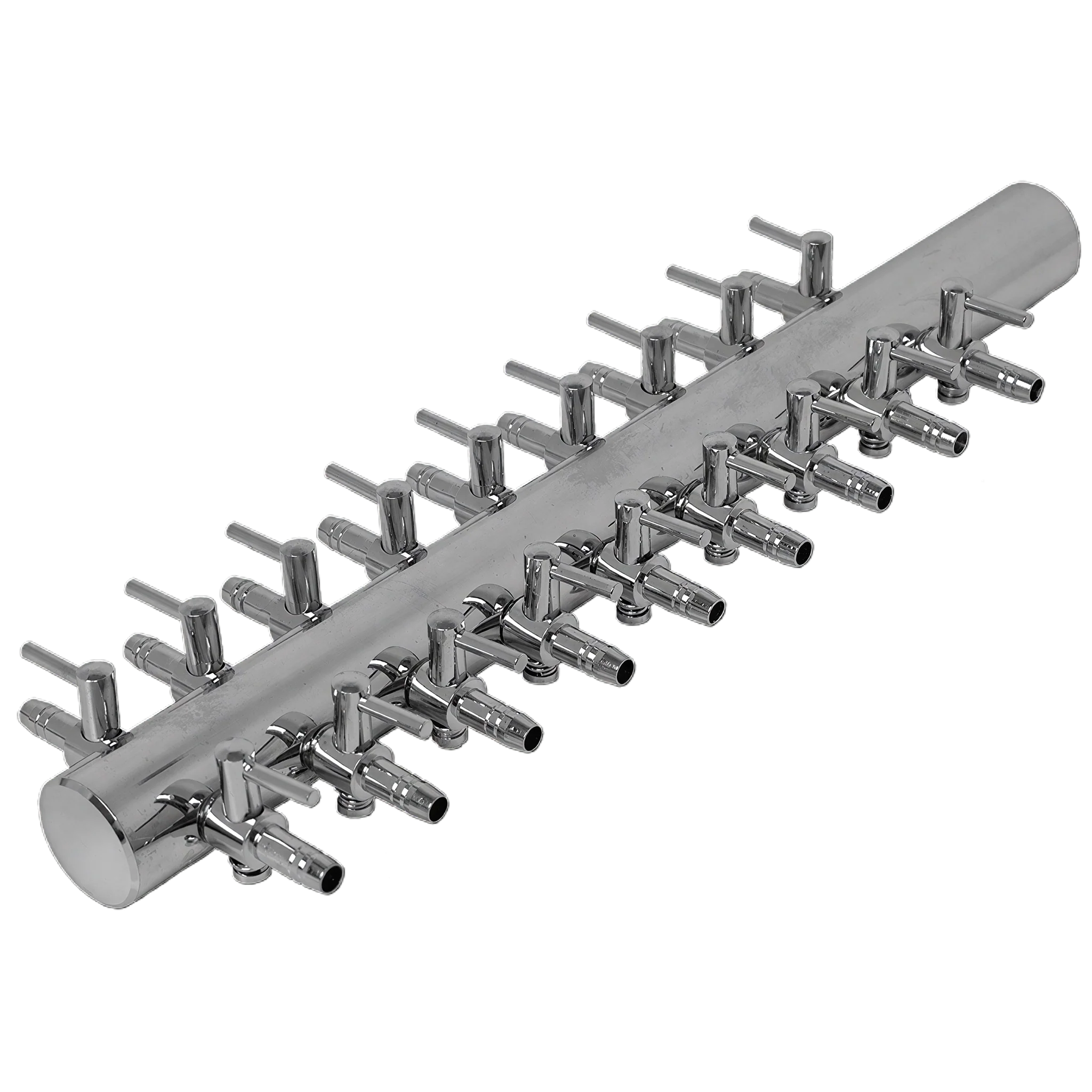
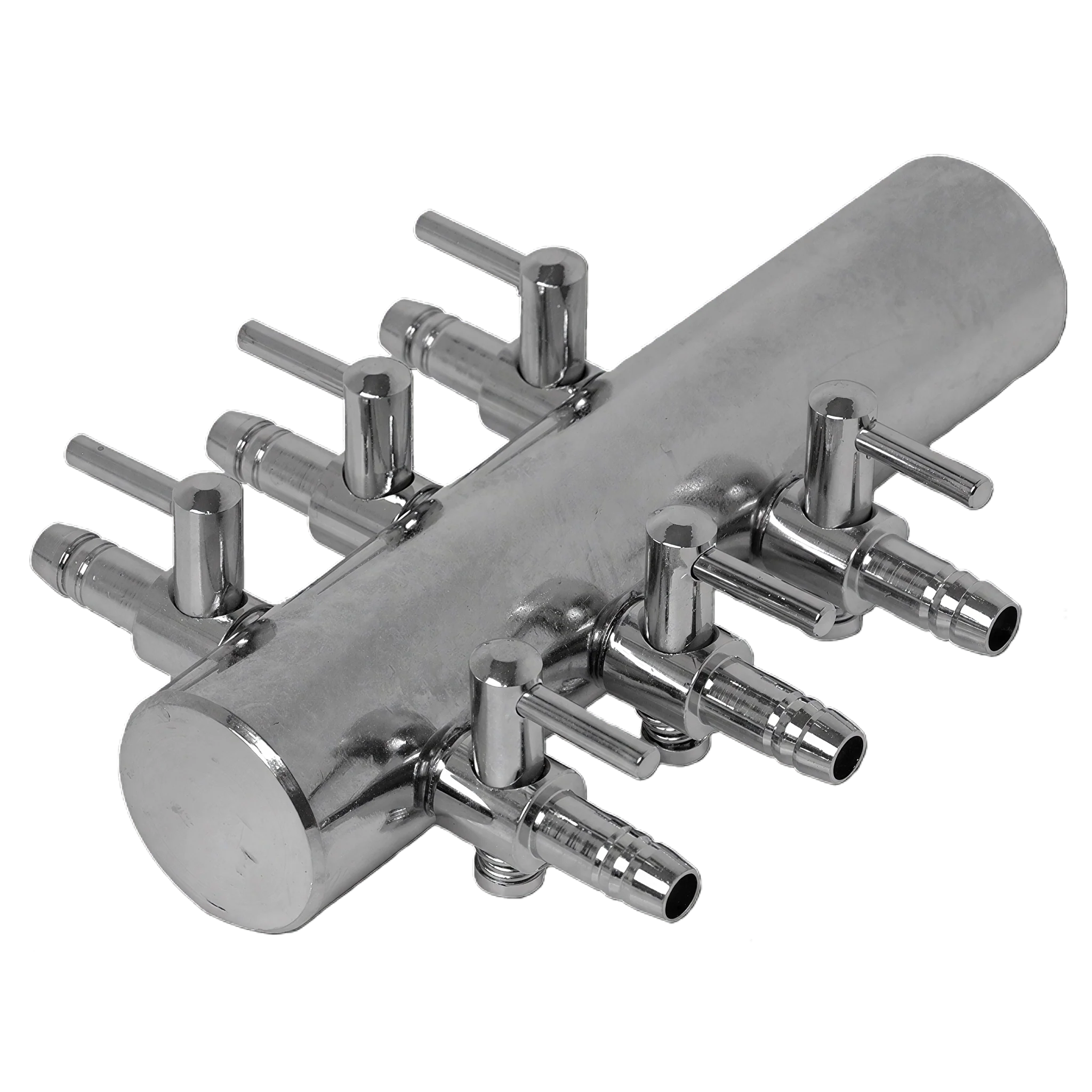
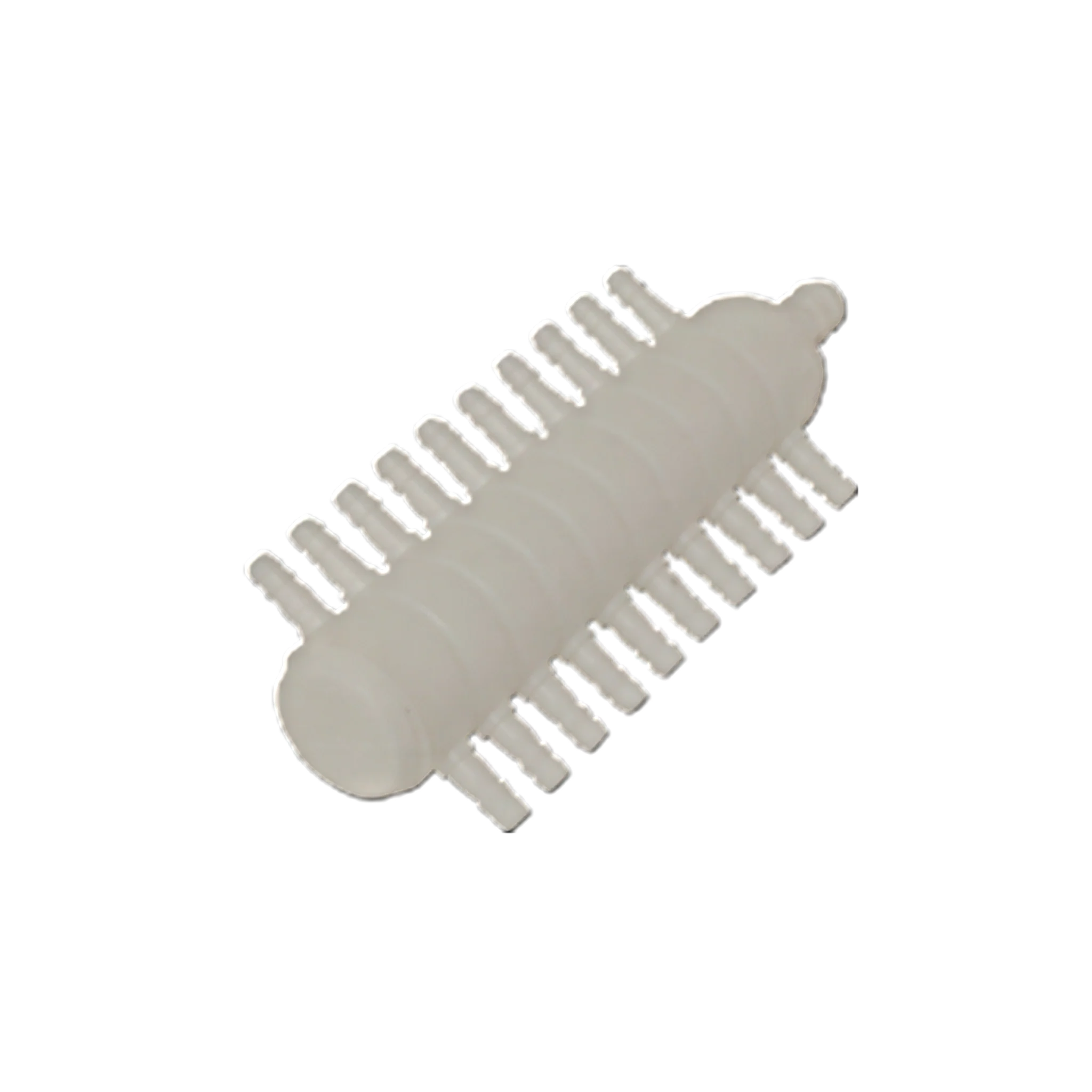
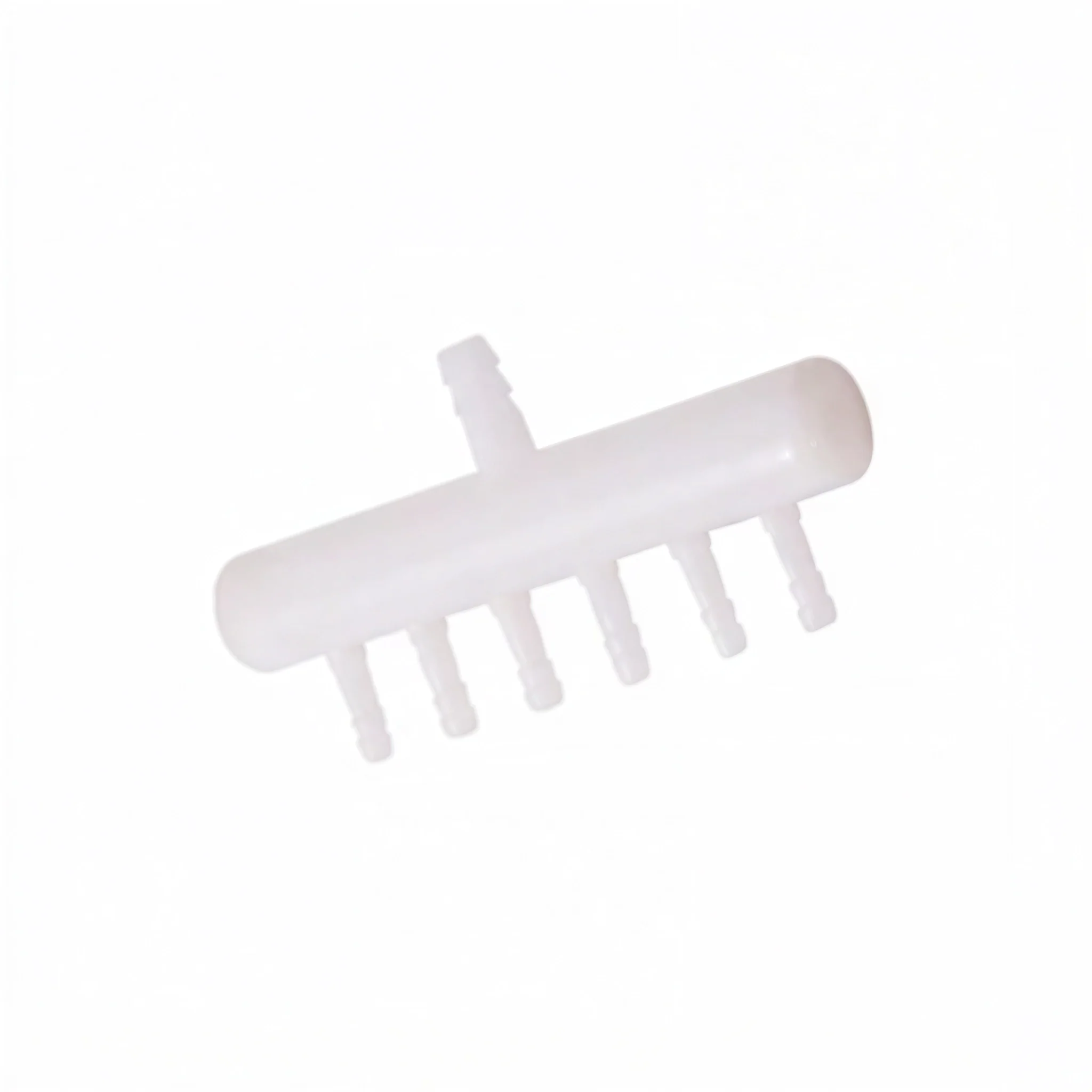
Basic gang valves are the simplest format - a linear manifold with multiple barb outlets, each controlled by an individual needle valve or slide valve. Gang valve sizes range from 2-outlet through 12-outlet configurations to accommodate systems of different sizes. For large RDWC and multi-reservoir systems, heavier-duty air manifolds with larger main supply ports and higher flow capacity handle the air demands of 10-20+ reservoir zones from a single high-output pump. Manifold material should be chemical-resistant plastic or acrylic - verify the manifold is rated for continuous wet air service in the chemical environment of a nutrient solution grow space. Browse our complete air pumps and air stones collection for pumps and diffusers alongside manifolds.
Flow Balancing
When one pump serves multiple air stone lines of unequal length, the shorter lines deliver more air than the longer lines - pressure drop in the longer tubing reduces flow. Individual needle valves on each manifold outlet allow throttling the high-flow short lines to balance delivery across all outlets. For critical applications where uniform oxygenation across all reservoirs is important, balance the manifold outlets until all lines produce equivalent bubble volume at the air stone. Fast shipping.
Air Manifolds FAQ
What is an air manifold used for in hydroponics?
An air manifold splits a single air pump outlet into multiple distribution lines, allowing one pump to supply air to multiple reservoirs, DWC buckets, or diffuser locations simultaneously. Each outlet on the manifold typically has an individual valve for flow adjustment. This is more organized and flexible than daisy-chaining air lines with tee fittings - individual outlet valves allow adjusting air to each zone, isolating a line without shutting down the whole system, and expanding the distribution without replumbing the main supply.
How many outlets do I need on my air manifold?
One outlet per air stone or air stone cluster in the system. For a 4-bucket RDWC with one air stone per bucket: a 4-outlet manifold handles the system. For a reservoir with 3 air stones plus 4 DWC buckets: a 7-outlet manifold. Purchase a manifold with one or two more outlets than currently needed - adding outlets later requires replacing the manifold, while capping unused outlets on an oversized manifold is trivial.
How do I balance air flow across all manifold outlets?
With all air lines connected and air stones submerged at their operating depth, observe the bubble rate at each air stone. Lines with fewer or smaller bubbles than others are receiving less flow - adjust their manifold needle valve to open wider. Lines with excess bubbles have the needle valves opened too far - throttle them slightly. Work iteratively, adjusting one outlet at a time and allowing a minute for the bubble rate to stabilize before the next adjustment. The goal is visually consistent bubble volume across all lines, not perfect scientific balance.
Can I use a manifold with any air pump?
Air manifolds are compatible with any air pump that uses standard 3/16-inch or 1/4-inch air tubing connections - which covers the vast majority of aquarium and hydroponic air pumps. The main consideration is whether the pump has enough output to supply all manifold outlets at adequate flow rate simultaneously. Each additional outlet adds air demand; verify the pump's rated LPM (liters per minute) output covers the total demand across all connected lines, ideally with 20-30% reserve capacity.
Should I use a manifold or separate air pumps for each reservoir?
Both approaches work. A single pump with a manifold is simpler infrastructure - one electrical connection, one device to maintain. Separate pumps per reservoir provide redundancy - failure of one pump affects only one zone rather than the entire system. For commercial operations where air supply interruption to any zone is unacceptable, individual pumps per zone (or per pair of zones) with a backup pump on standby is the more reliable approach. For hobby setups where simplicity is the priority, a single appropriately-sized pump with a manifold is practical.