Plant Seed Feminization Products
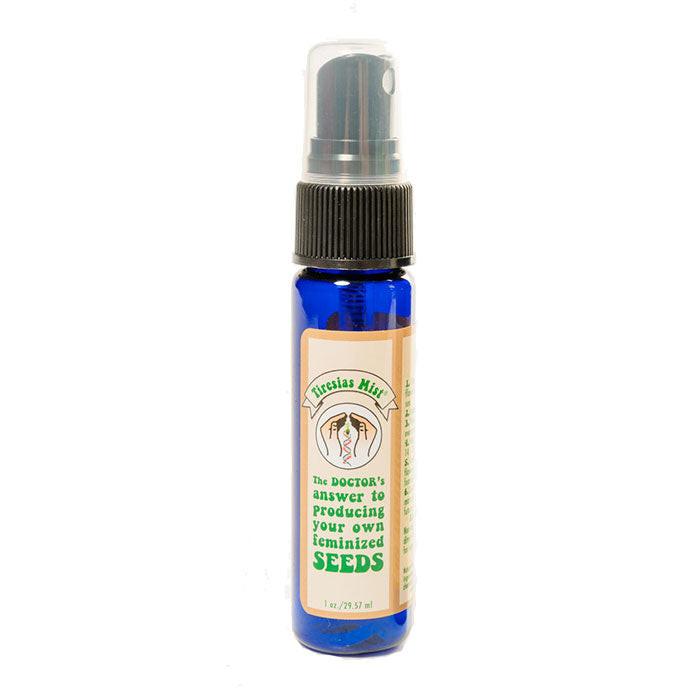
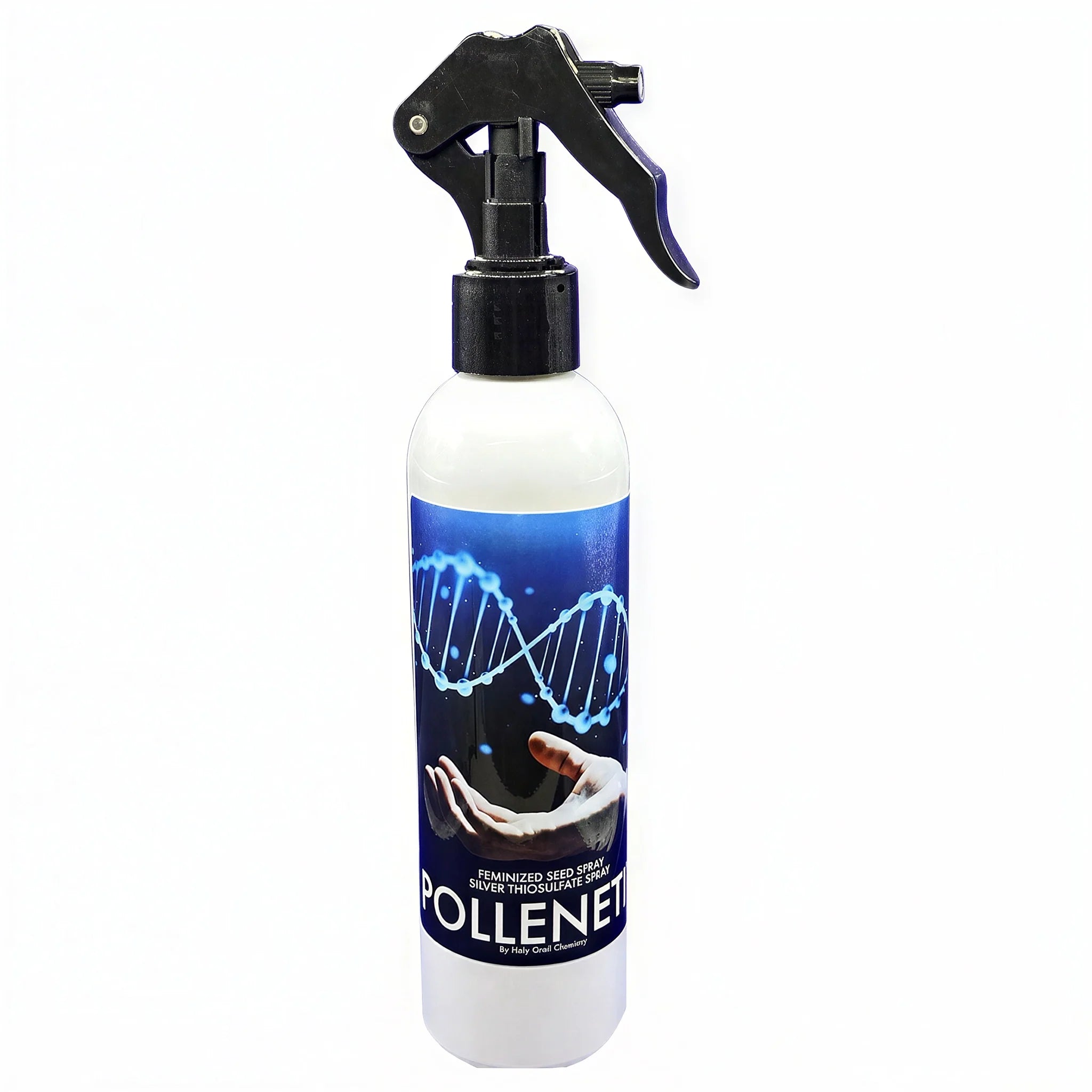
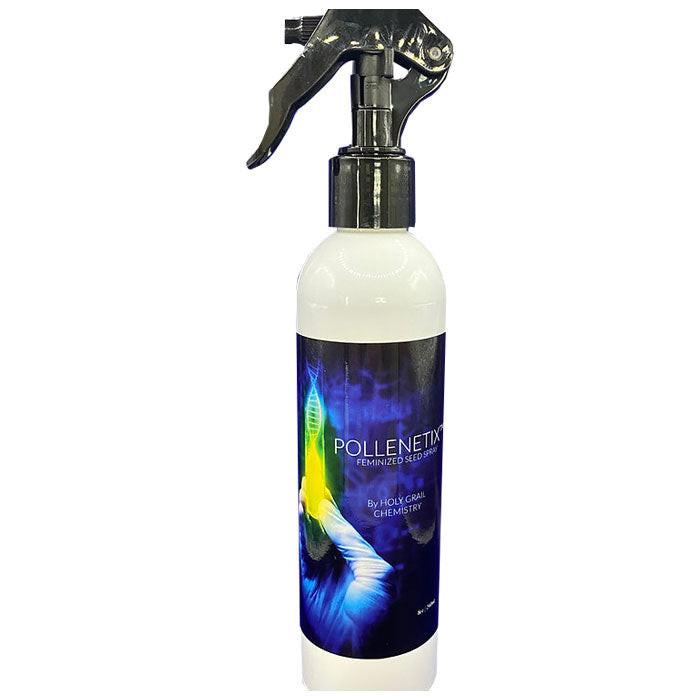
Seed feminization products are used in plant breeding to induce female plants to produce pollen, which is then used to pollinate other female plants and generate seeds that carry two copies of the X chromosome - producing seeds that germinate as female plants. This technique is used by breeders and seed producers working with dioecious plant species to create feminized seed lines. The products in this collection - Tiresias Mist and Holy Grail Chemistry POLLENETIX - are foliar sprays that, when applied to specific branches of a female plant, suppress ethylene production and trigger the formation of pollen-bearing male flowers on an otherwise female plant.
Tiresias Mist and POLLENETIX
Tiresias Mist Seed Feminizer Spray is available in 1 oz, 4 oz, and larger formats. It is applied as a targeted foliar spray to the section of plant intended to produce the reverse-sex pollen, following the manufacturer's application schedule. Holy Grail Chemistry POLLENETIX serves the same function through a different formulation approach. Both products describe their mechanism of action on the product label - follow label instructions precisely for the target species and application timing as results vary with deviations from the recommended protocol.
Breeding Applications
Feminization techniques are used in plant genetics research and commercial breeding programs to accelerate the production of stable feminized seed lines without the unpredictability and labor of conventional manual pollination with male plants. For growers interested in the broader plant science of breeding and seed production, browse cloning and propagation supplies for related propagation inputs. Fast shipping.
Seed Feminization FAQ
How does seed feminization work?
Seed feminization exploits the biology of plant sex determination in dioecious species. Normally, female plants produce seeds when pollinated by male plants - these seeds carry both X and Y chromosomes, producing both male and female offspring. Feminization involves using a chemical spray (typically a silver-based compound) on a section of a female plant to suppress ethylene production, which triggers the development of male flowers (pollen sacs) on that portion of the plant. The pollen produced by these chemically induced male flowers carries only X chromosomes. When used to pollinate another female plant, the resulting seeds have two X chromosomes and germinate as female plants with very high reliability.
What is the difference between Tiresias Mist and colloidal silver?
Both Tiresias Mist and colloidal silver work through similar mechanisms - silver ions suppress ethylene and induce the reverse-sex pollen response in female plants. Colloidal silver is a DIY approach using a homemade suspension of silver particles in distilled water, typically produced with a colloidal silver generator. Tiresias Mist is a commercially formulated product with a standardized concentration and specific application protocol - it provides more consistent results than homemade colloidal silver preparations where concentration can vary significantly between batches. For breeders prioritizing reproducible results, a commercial product with a known concentration and documented application schedule is preferable to a homemade preparation.
Is seed feminization safe for plants?
Applied correctly and only to the target branch or section of the plant, feminization sprays do not harm the overall plant or the resulting seeds. The treatment affects only the sprayed section - other branches continue to develop normally as female flowers. The sprayed section is not used for consumption or seed production intended for eating - the silver compounds used make treated plant material unsuitable for those uses. Seeds produced through the feminization process are genetically stable and safe for normal germination and growing purposes.