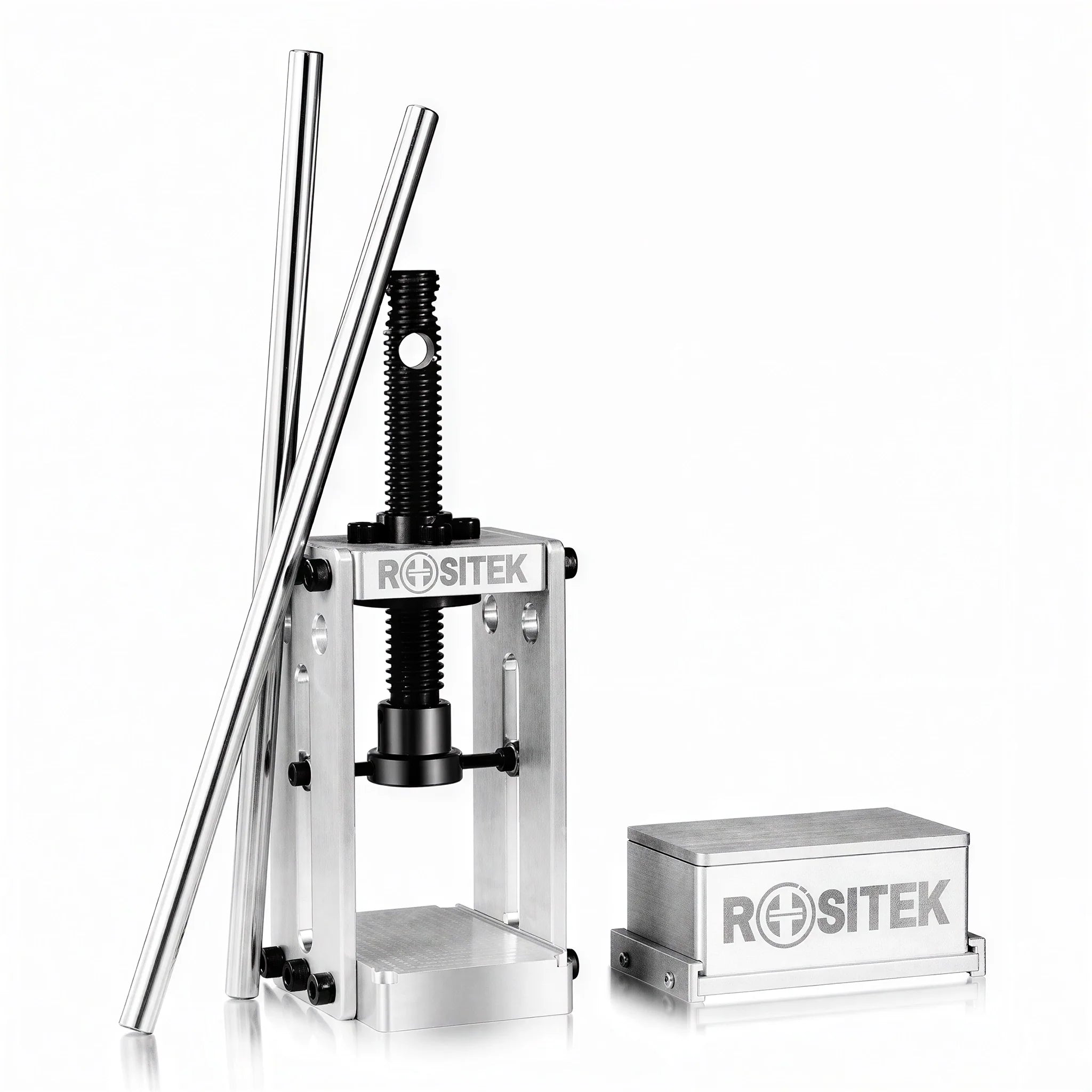
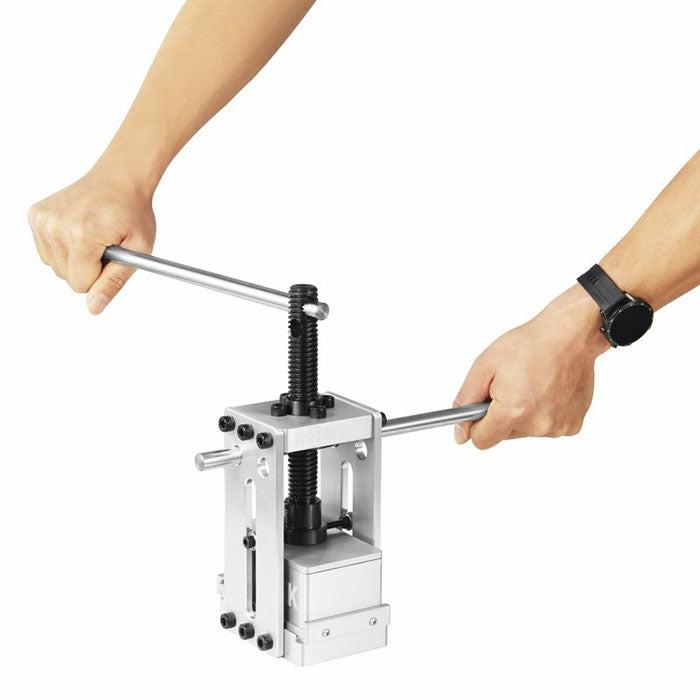
Manual Rosin Presses & Lever Presses
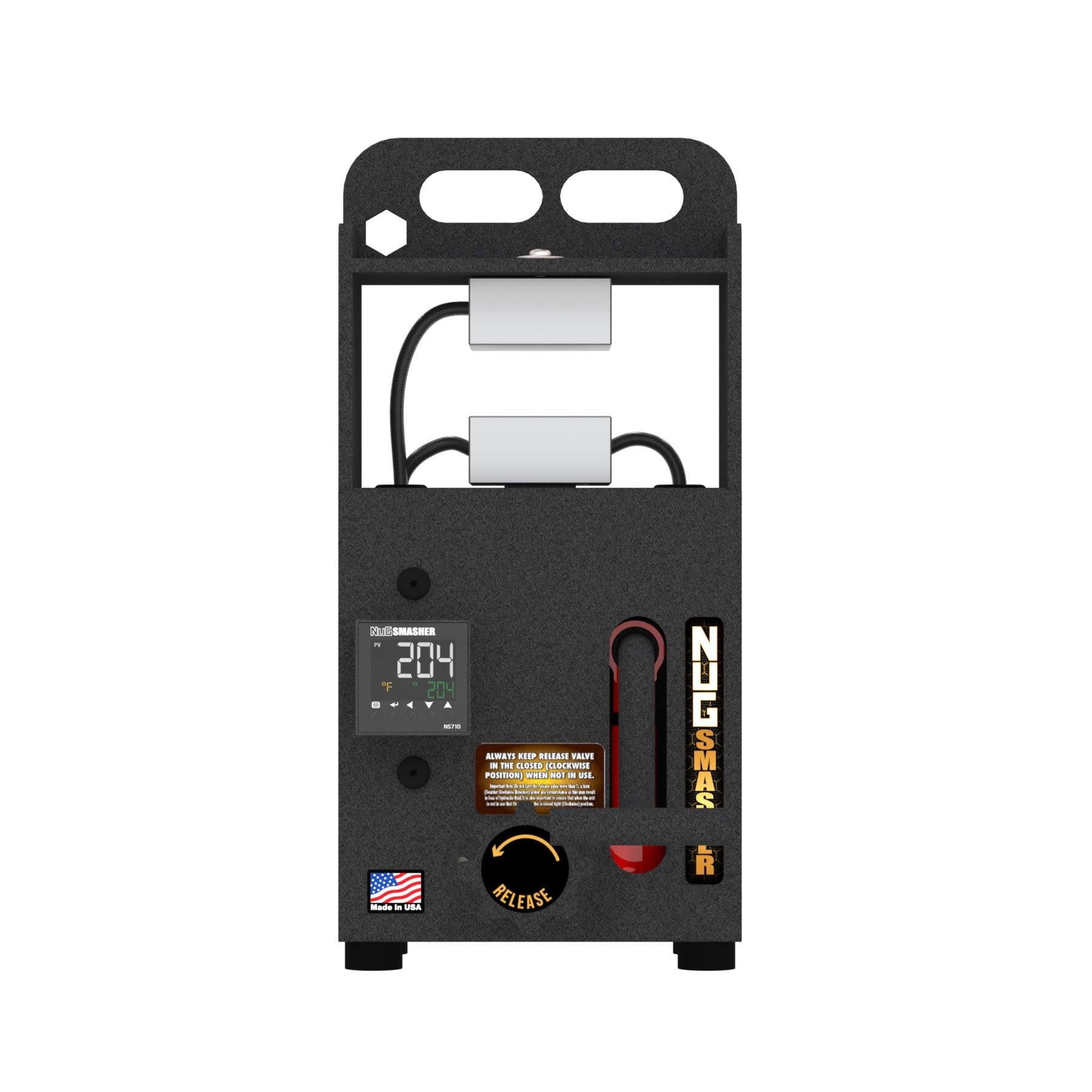
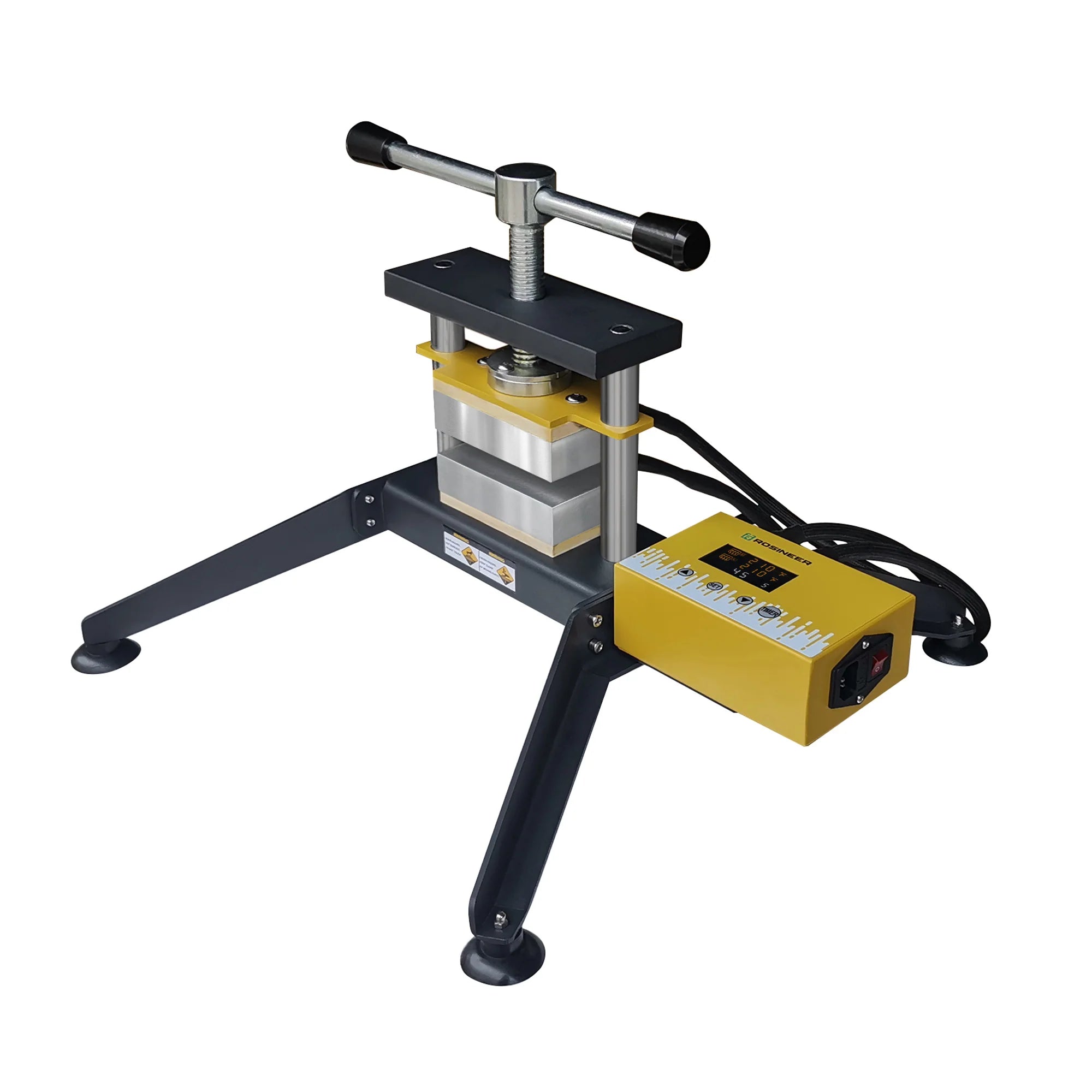
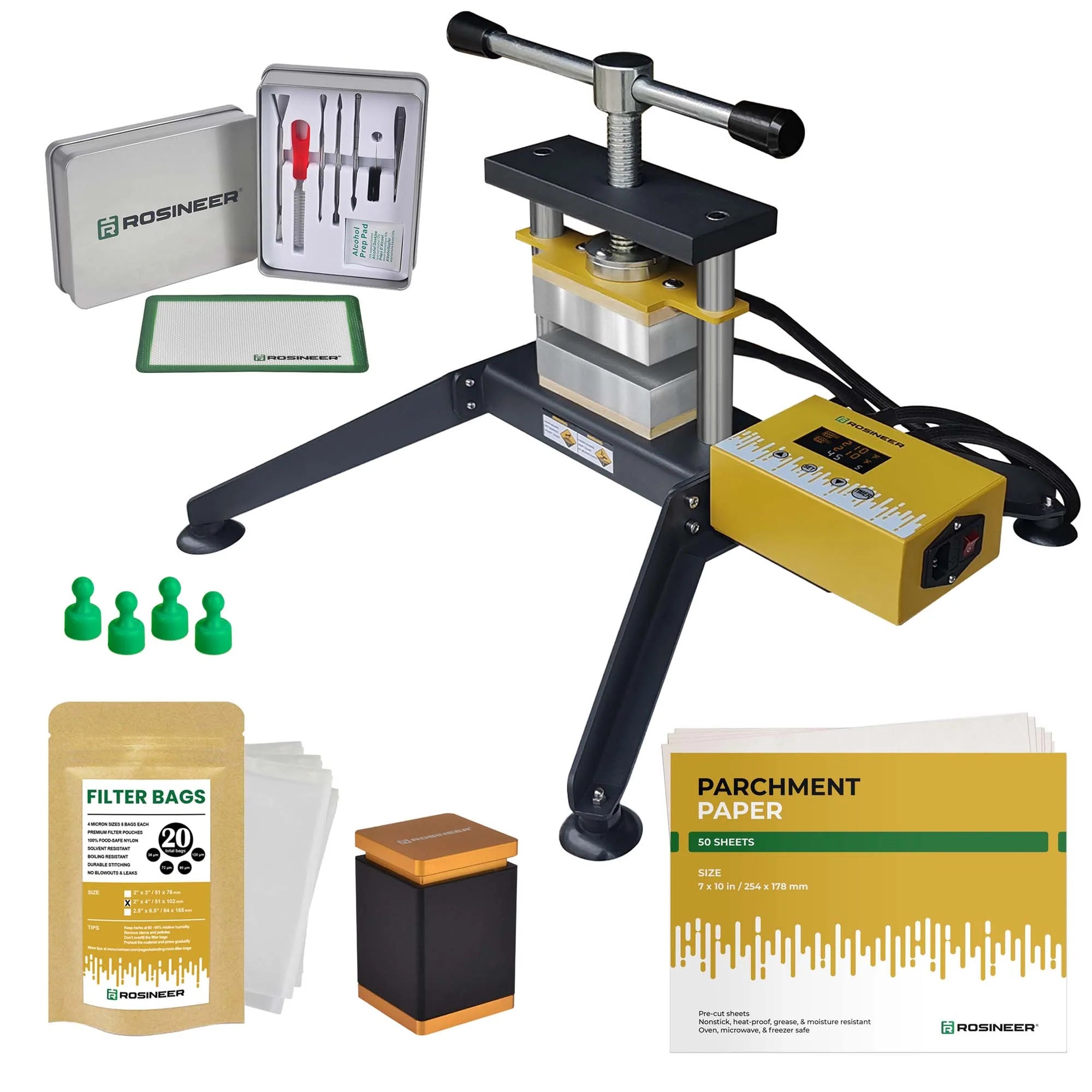
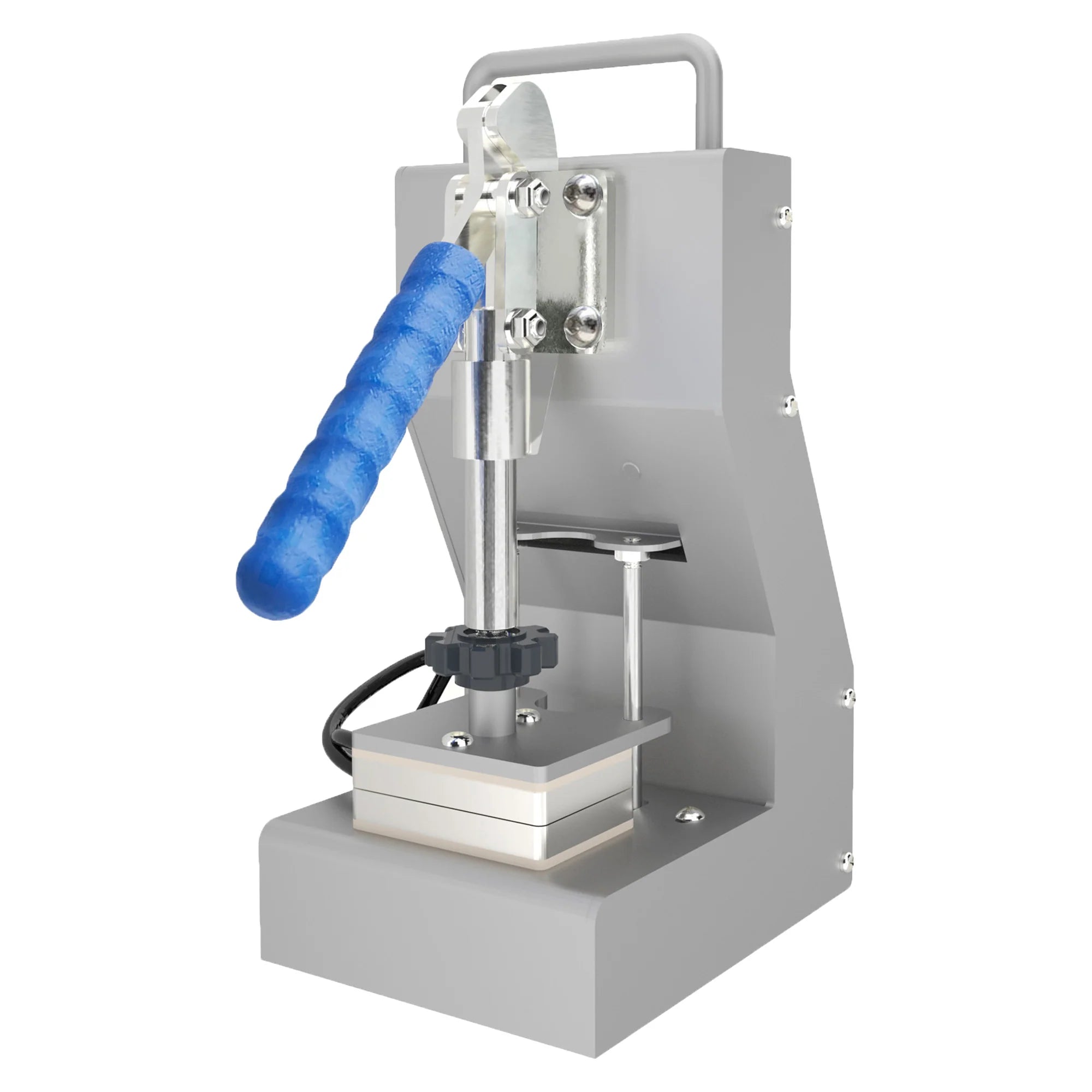
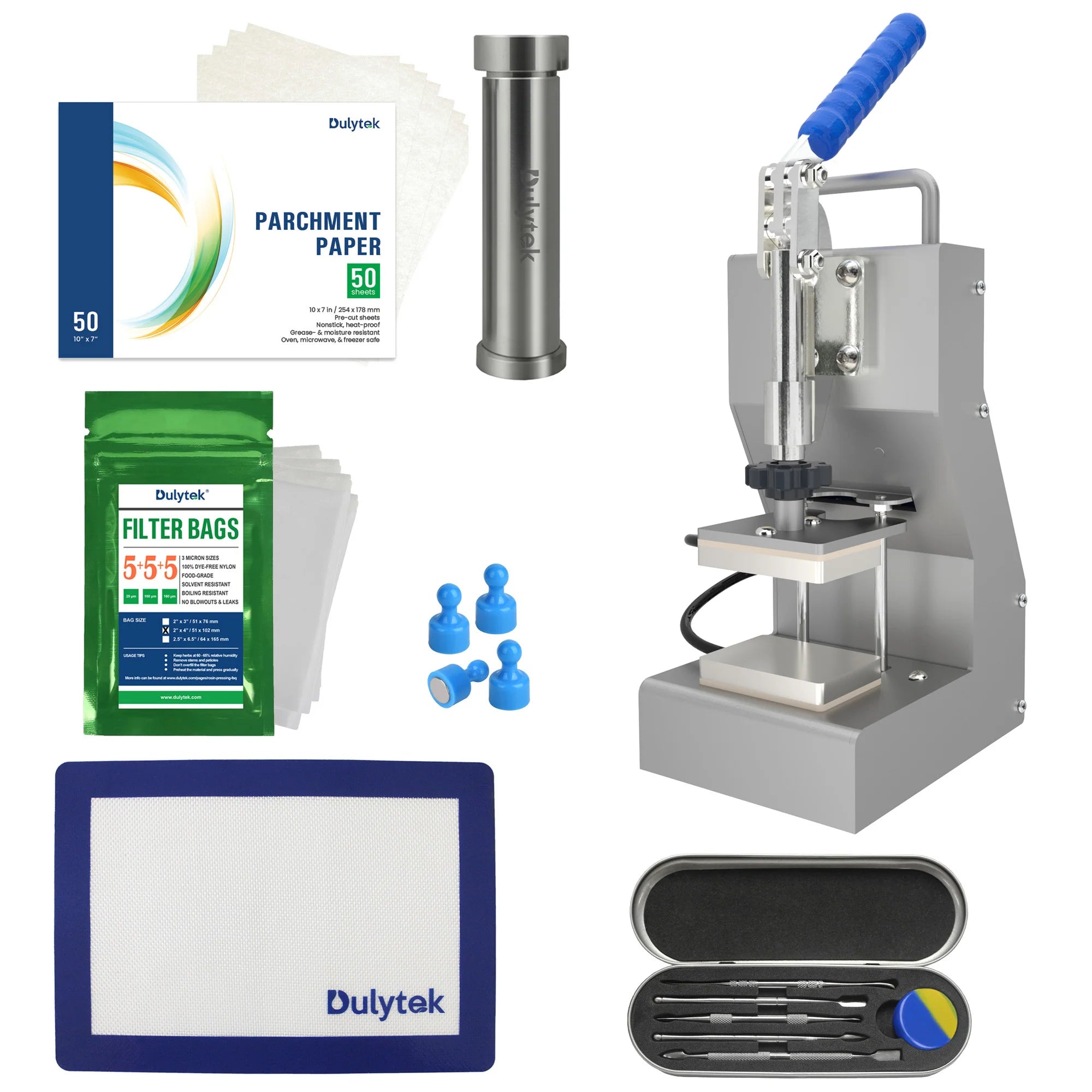
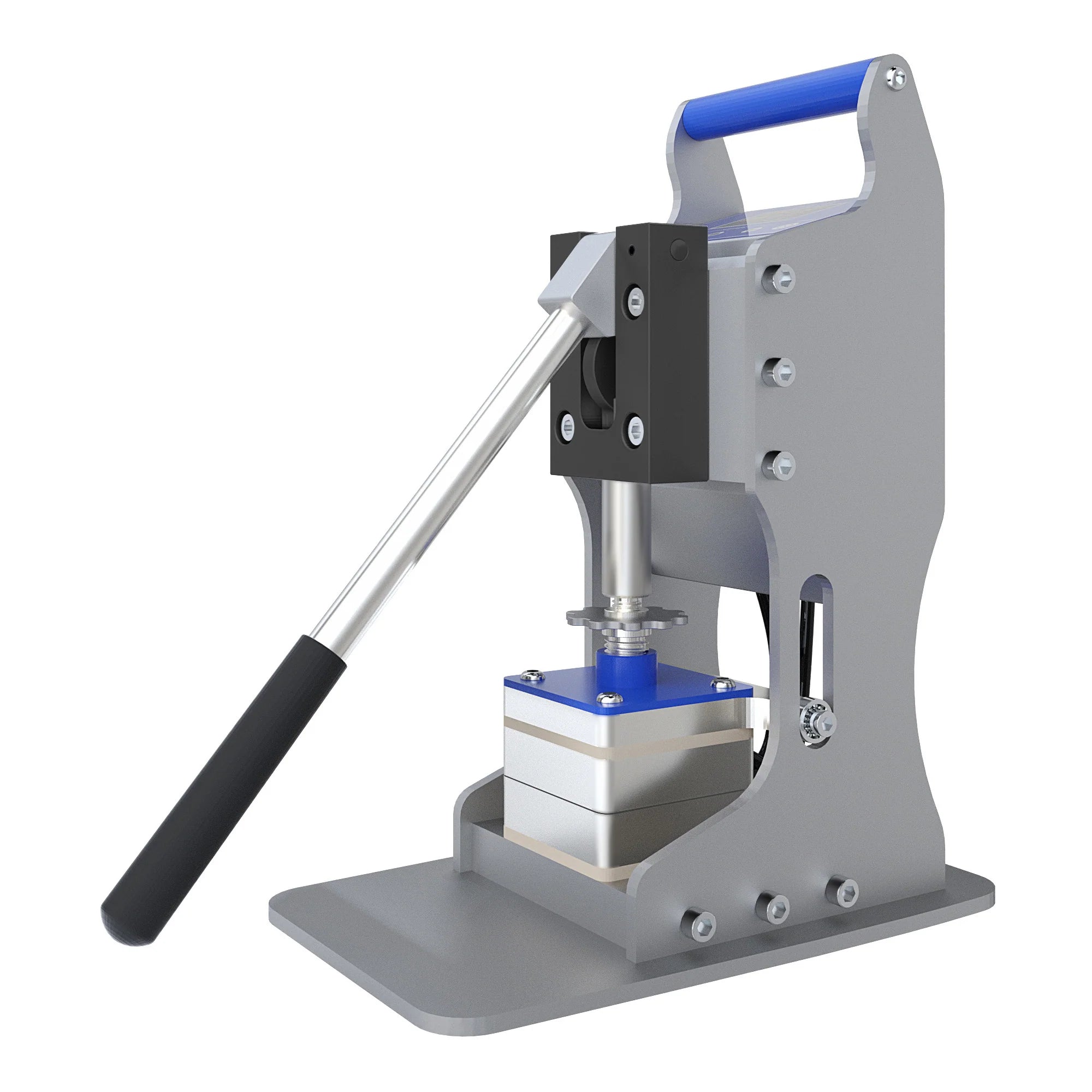
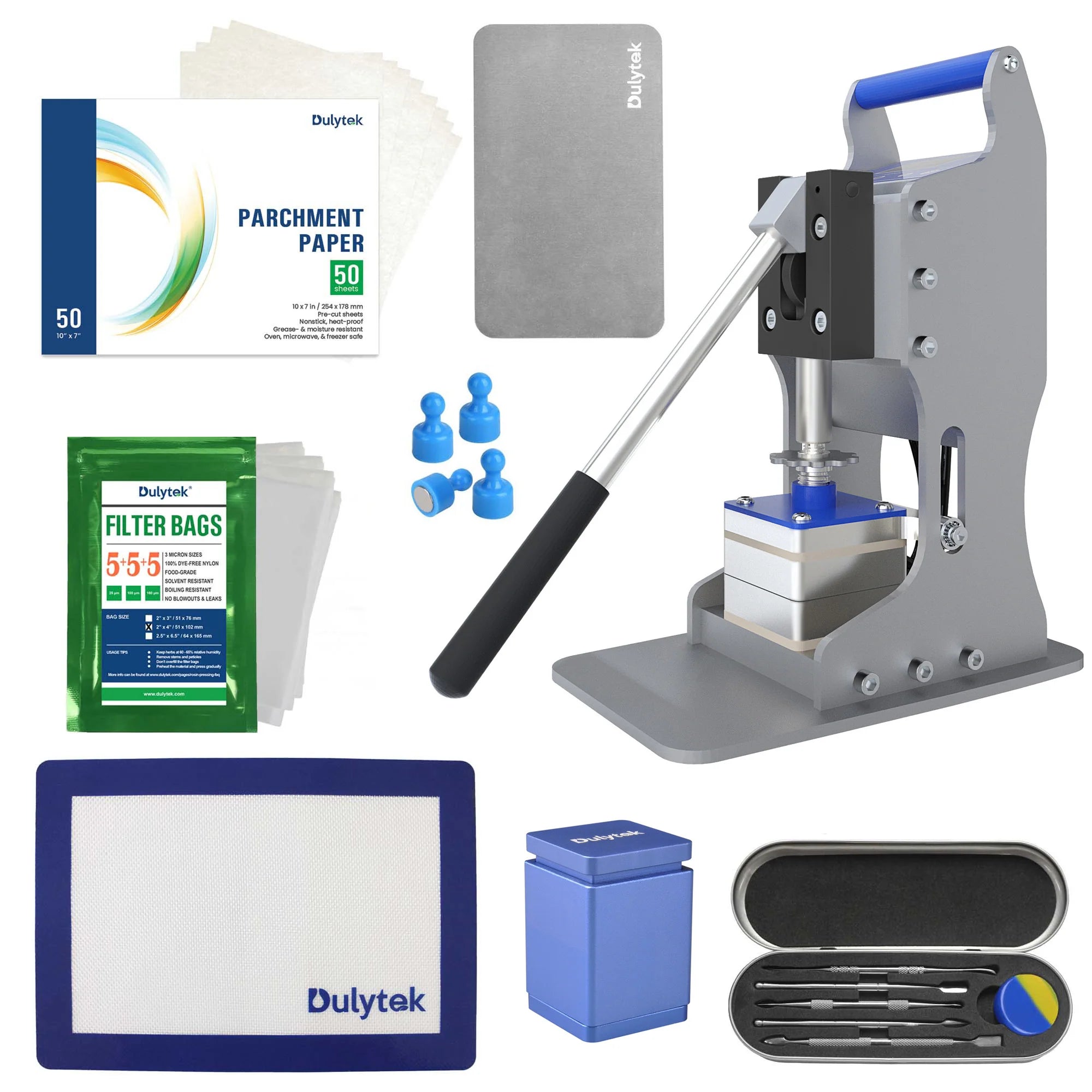
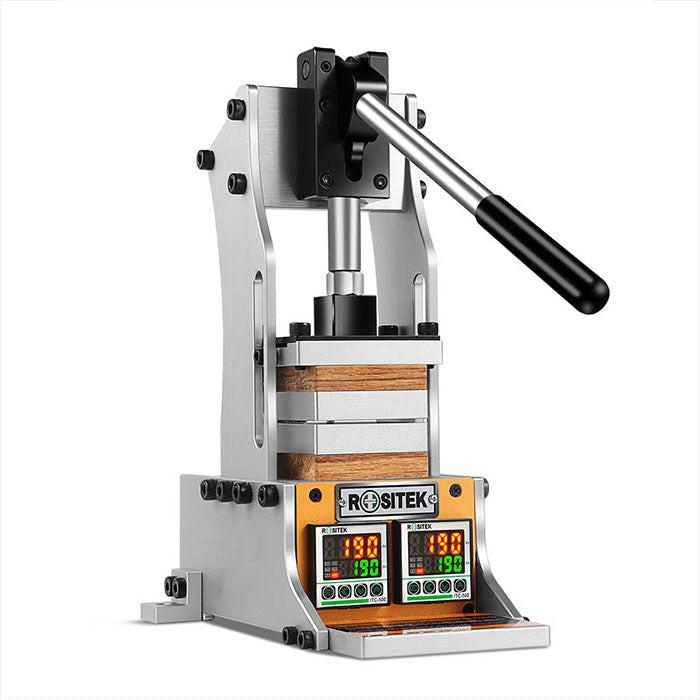
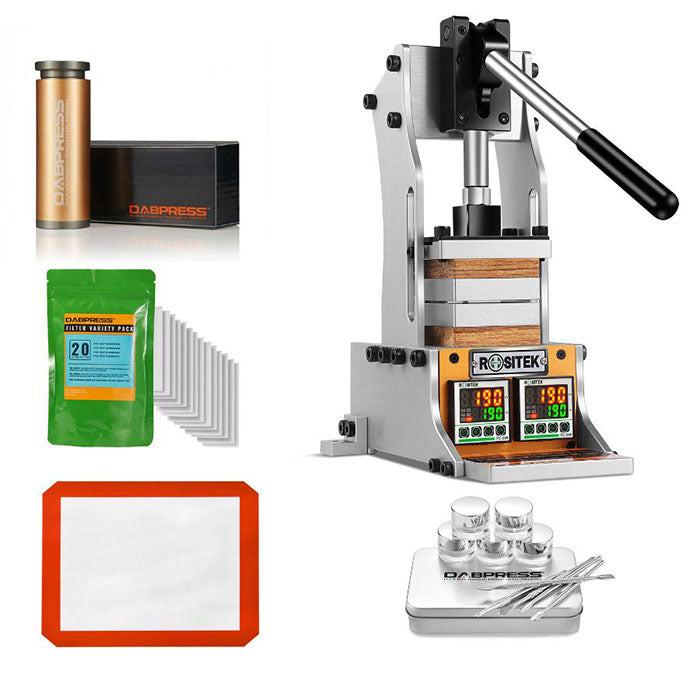
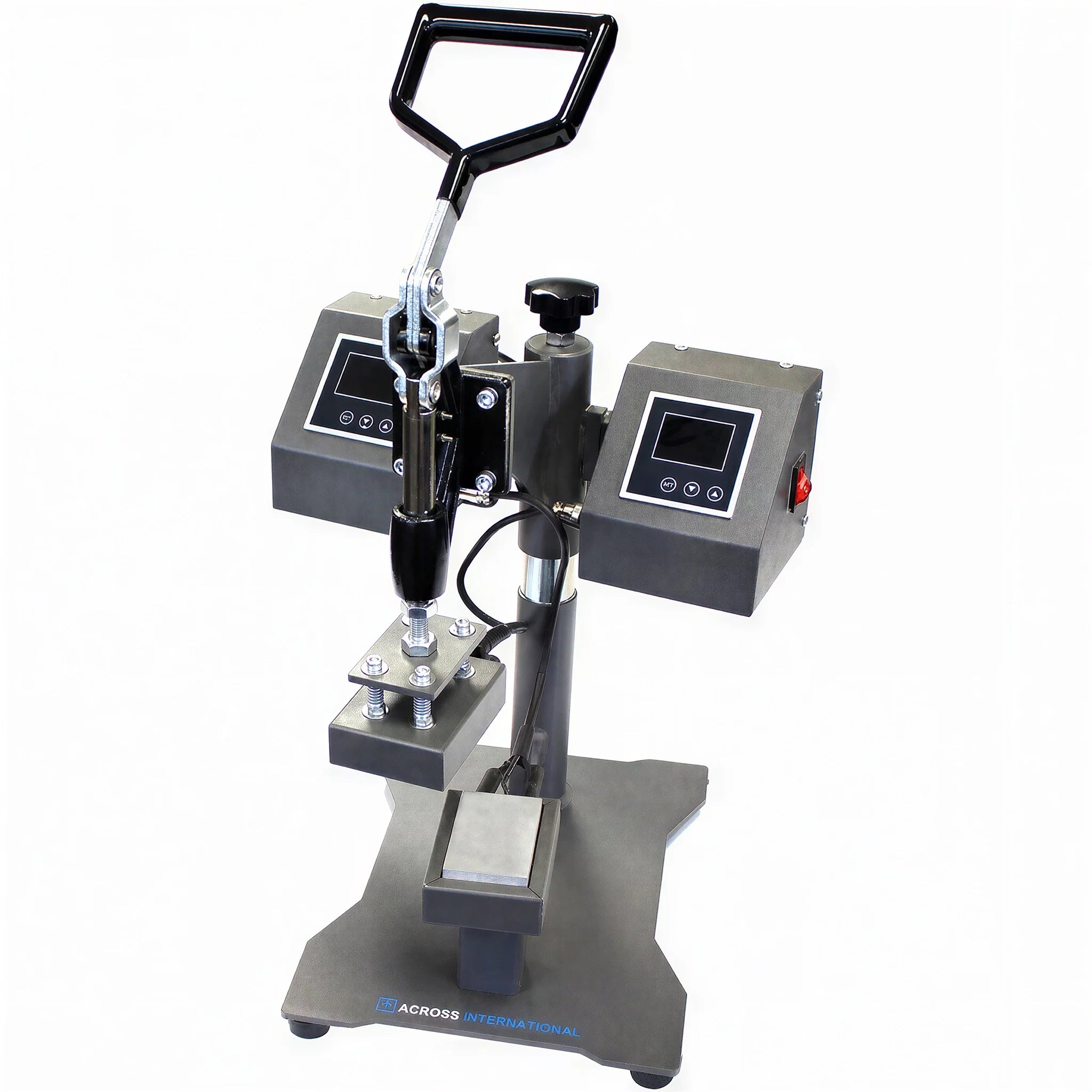
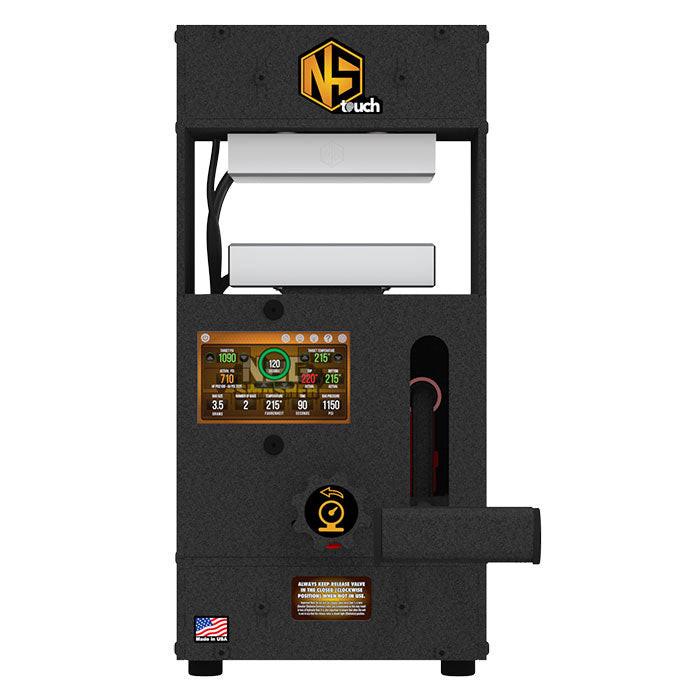
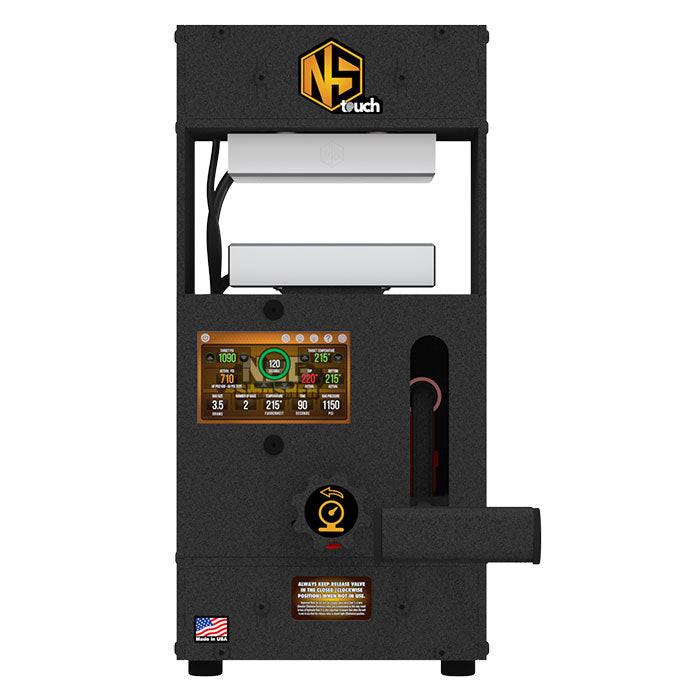
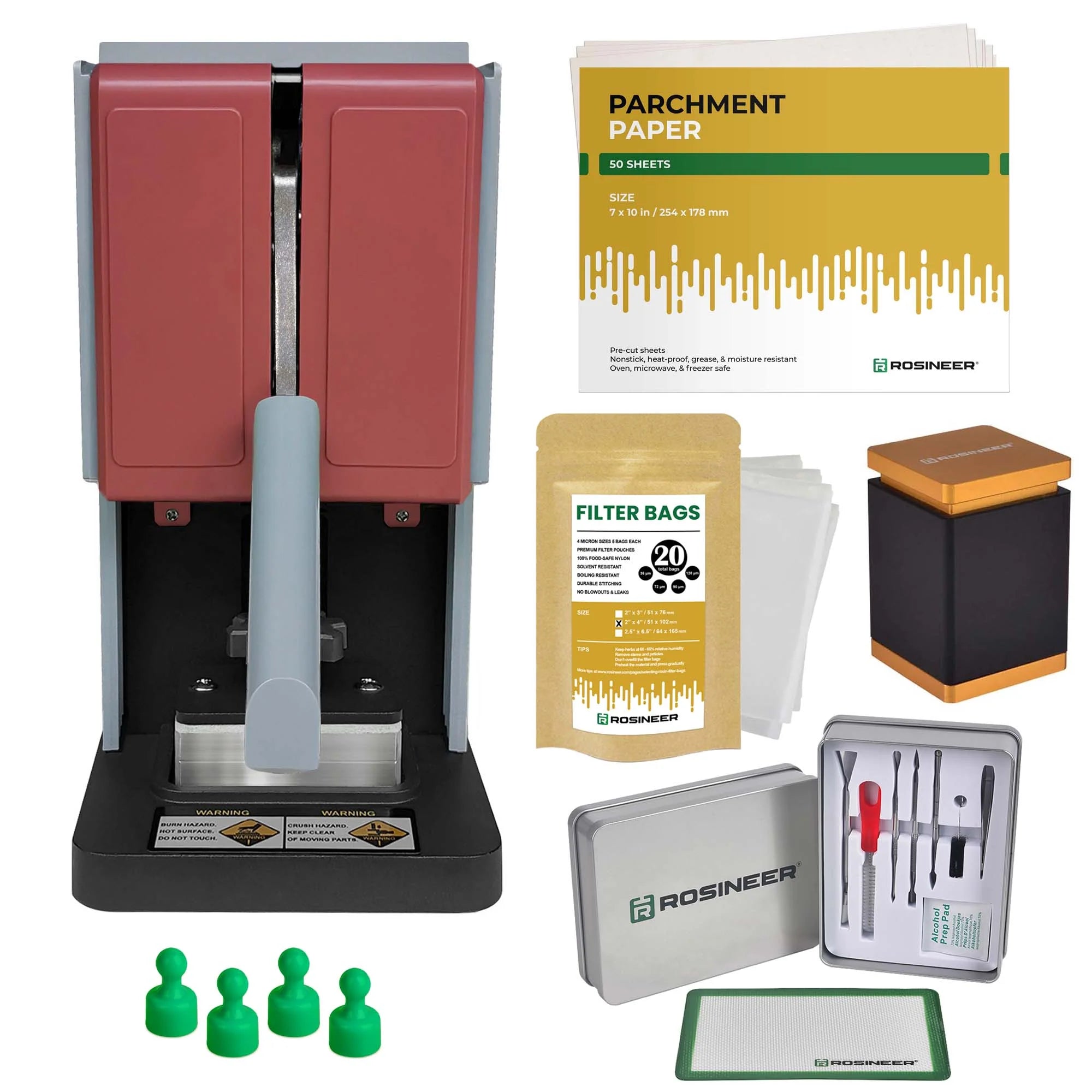
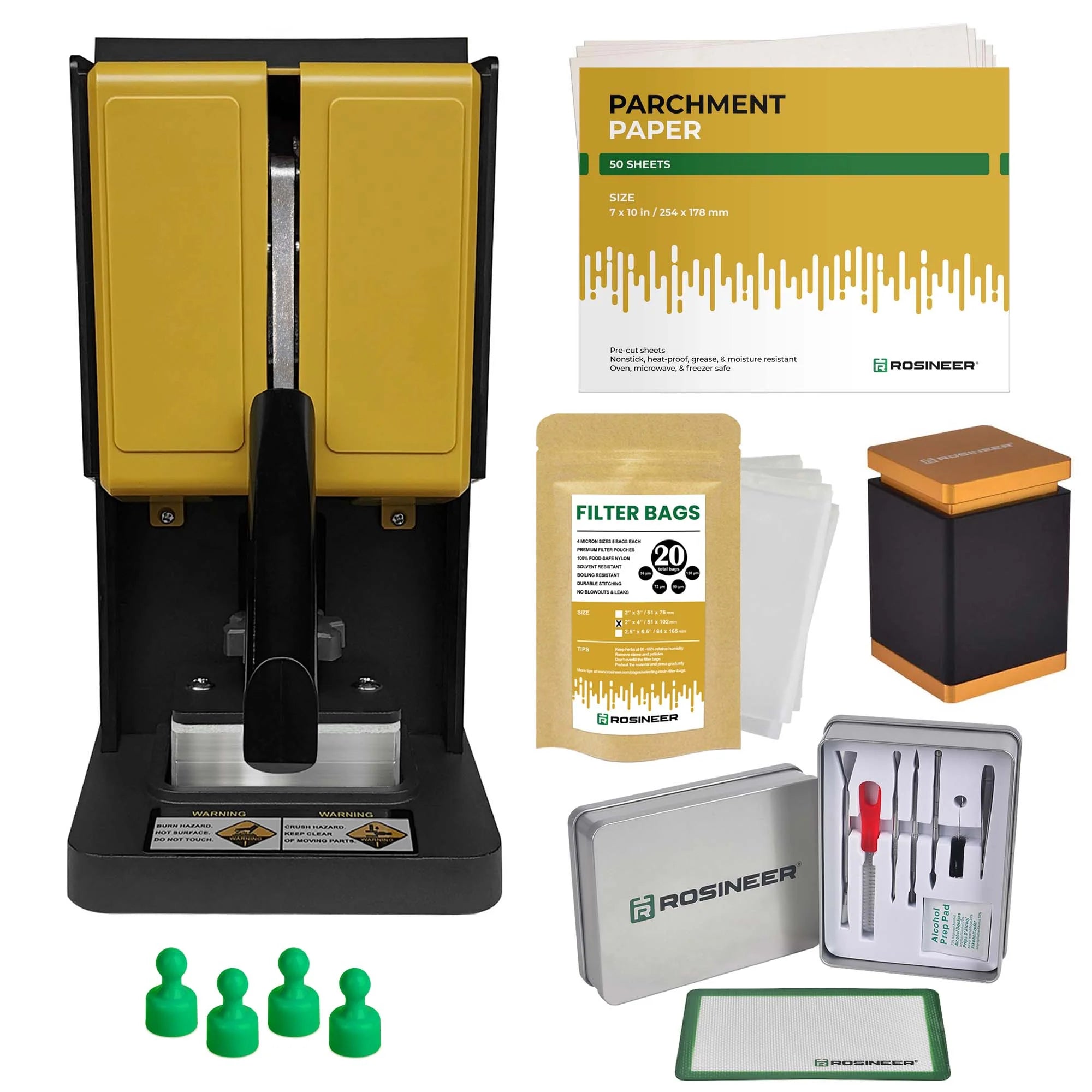
Manual rosin presses use human-generated force - through a lever arm, hand crank, or hand-pump hydraulic jack - to close two heated plates and extract botanical oil without solvents or electricity beyond the plate heating elements. For personal-scale extraction where batch sizes are small and the simplicity of a mechanical setup is valued over the throughput of pneumatic or electric systems, a quality manual press produces excellent results at a fraction of the cost of commercial automated units. The lever-action and hand-crank formats are the most compact and portable press designs available - no compressor, no electric motor, no hydraulic pump unit beyond a simple bottle jack in hand-pump hydraulic designs.
Lever vs. Hand-Crank vs. Hand-Pump Hydraulic
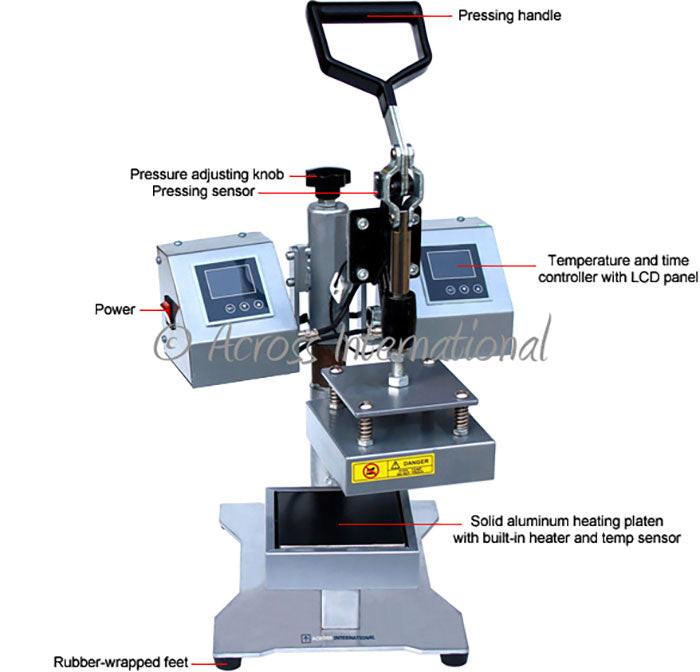
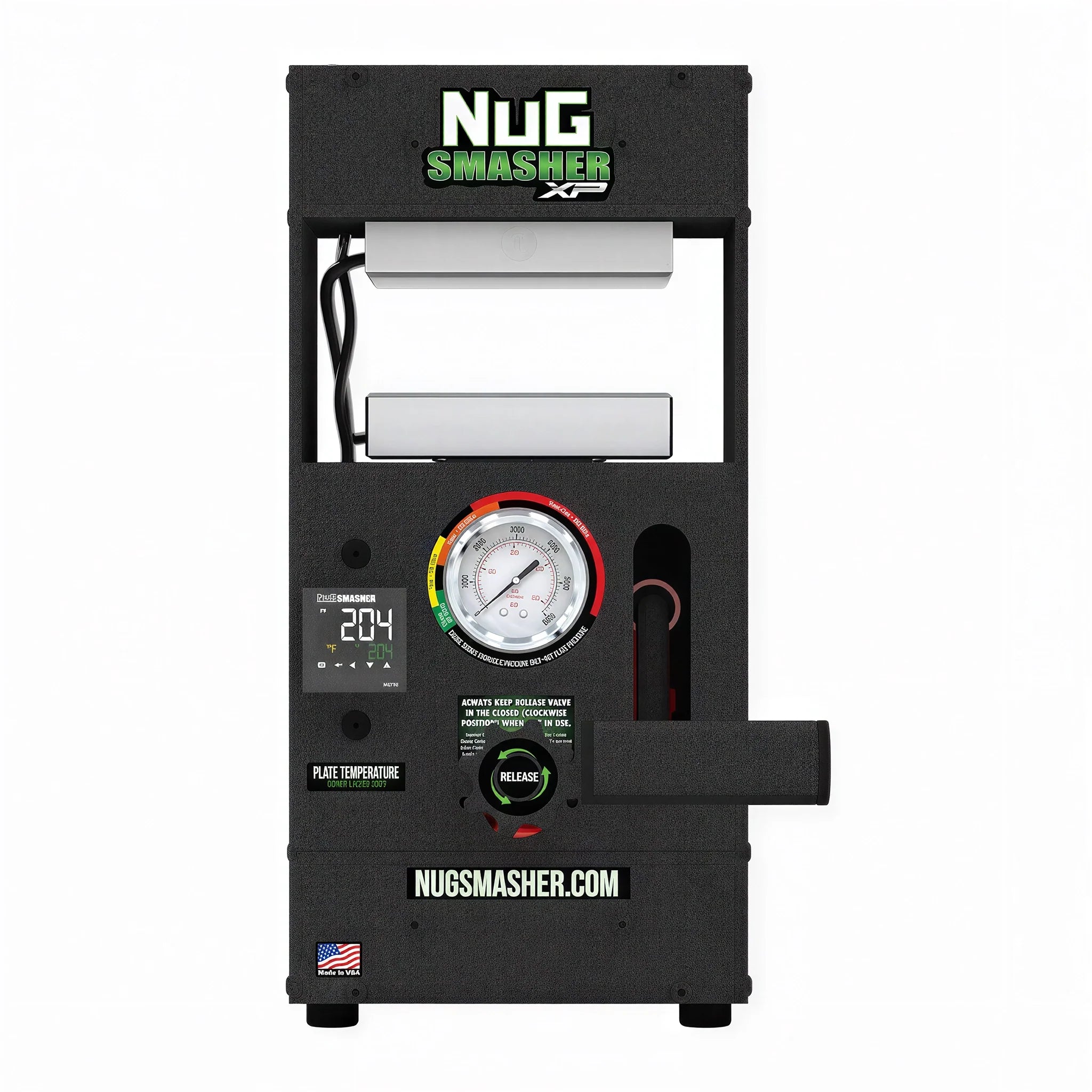
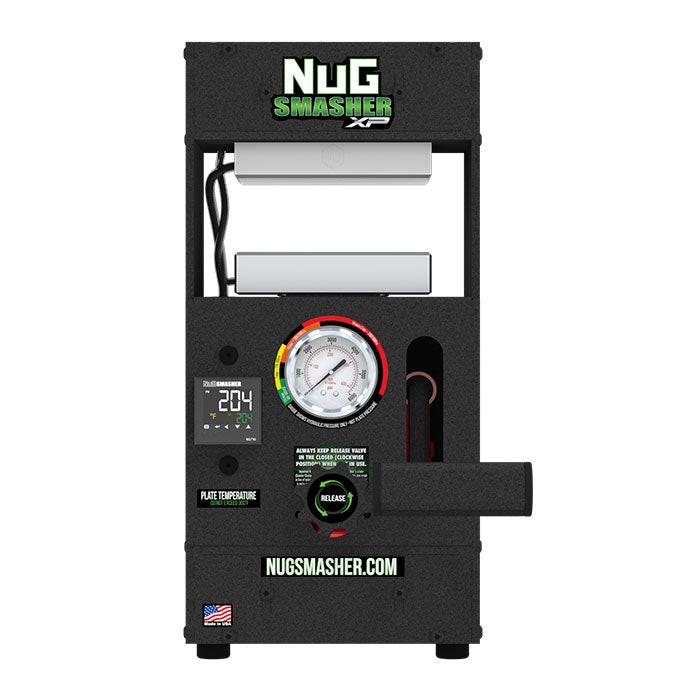
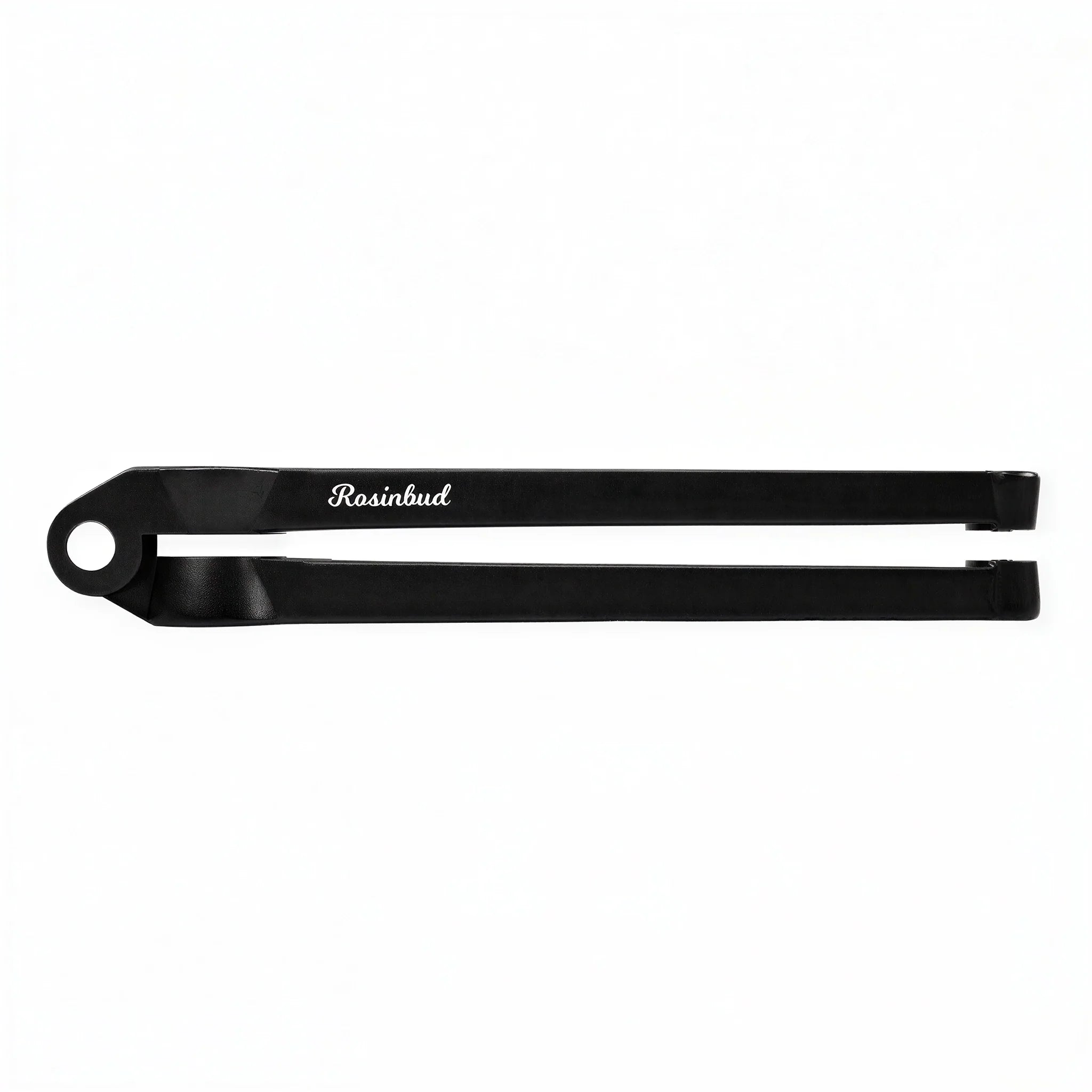
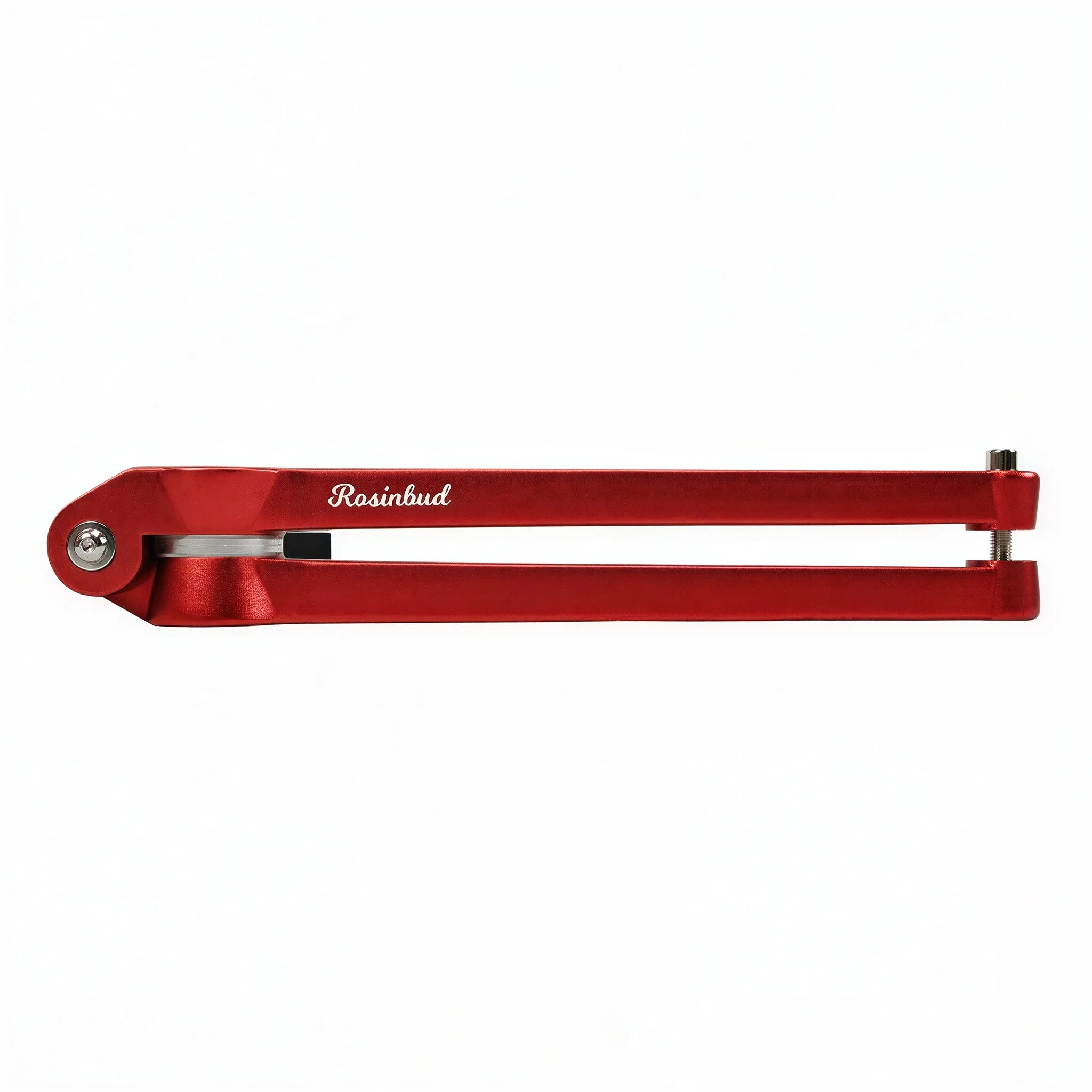
Lever-action presses use a long handle to mechanically multiply hand force - the longer the lever arm, the more plate pressure achievable. Simple and immediate, but pressure varies with operator effort and fatigue during the press cycle. Hand-crank presses use a threaded screw mechanism that advances the top plate with each handle rotation - more precise plate gap control than lever action, but slower pressure buildup and maximum pressure limited by thread pitch and handle torque. Hand-pump hydraulic designs use a small bottle jack to generate hydraulic pressure - the most capable of the manual formats, reaching 5-12 tons with relatively modest operator effort and holding pressure steadily without continuous effort. See our full rosin press collection for all actuation types including electric and hydraulic presses.
Plate Sizing for Manual Presses
Manual presses are best matched to small plate sizes (2x4 inch to 3x5 inch) that are appropriate for personal batch quantities. The limited force of manual actuation means that larger plates require proportionally higher force to achieve the same plate surface pressure - a 6x12 inch plate at 10 tons delivers only 139 PSI, far below the 500-1,000 PSI needed for effective extraction. Keep plate sizes modest to match the force available from manual actuation. Fast shipping.
Manual Rosin Presses FAQ
Who should use a manual rosin press?
Manual presses are ideal for personal-scale extraction where batch sizes are small (under 7-10 grams per press cycle), where portability or minimal equipment footprint matters, or where budget limits the investment in electric or pneumatic systems. For commercial or semi-commercial production where consistency and throughput matter, manual presses cannot match the pressure precision and cycle speed of electric or pneumatic alternatives. Manual presses are also a good starting point for learning the rosin extraction process before investing in larger commercial equipment.
How much pressure can a manual rosin press generate?
Lever-action manual presses: typically 1-3 tons depending on lever arm length and operator strength - adequate for small personal plates (2x4 inch) but insufficient for larger plate sizes. Hand-crank screw presses: similar range, 1-4 tons maximum. Hand-pump hydraulic manual presses: 5-12 tons depending on bottle jack size - significantly more capable and the recommended format for anyone serious about extraction quality from a manual setup. In terms of plate surface pressure, a 10-ton hand-pump hydraulic press with a 2x4 inch plate (8 sq in) delivers approximately 2,500 PSI - well within the effective extraction range.
Can I use a manual press for regular production runs?
Manual presses work for regular personal production at small batch sizes, but the physical effort required limits practical throughput. A manual lever or hydraulic hand-pump press cycling every 3-5 minutes - reasonable for personal use - produces roughly 10-20 cycles per hour at the cost of sustained physical effort. For production volumes above a few dozen cycles per session, operator fatigue becomes a real constraint. If you find yourself regularly pressed against the physical limits of manual operation, it is time to consider an electric or pneumatic press for the throughput and consistency they provide without operator fatigue.
What size filter bags work with manual presses?
Match filter bag dimensions to your plate size. For the 2x4 inch and 3x5 inch plates most common on manual presses, bags in the 2x4 inch and 3x5 inch pre-cut sizes are standard. Fill bags to approximately 60-70% capacity - a modest amount of material that the manual press can apply adequate pressure across. Overfilling bags beyond the plate area means the outer portions of the bag receive no plate contact and contribute no yield. 37-90 micron mesh is standard for quality botanical material; choose the micron rating based on starting material quality and desired output characteristics.
Is a manual press safe to use at home?
Manual rosin presses are among the safest extraction setups for home use - no compressed air, no electric motor generating high continuous forces, and the speed of plate closure is controlled entirely by the operator. The primary safety considerations are the same as all press designs: heated plates reach 160-220 degrees F and retain heat after the cycle (use heat-resistant gloves); the plate gap closes during pressing (keep hands clear); and standard electrical safety for the plate heating elements. A manual press in good working condition with appropriate heat-resistant gloves and attention to plate gap clearance is a safe personal-use tool.