Micro Sprinklers & Overhead Irrigation
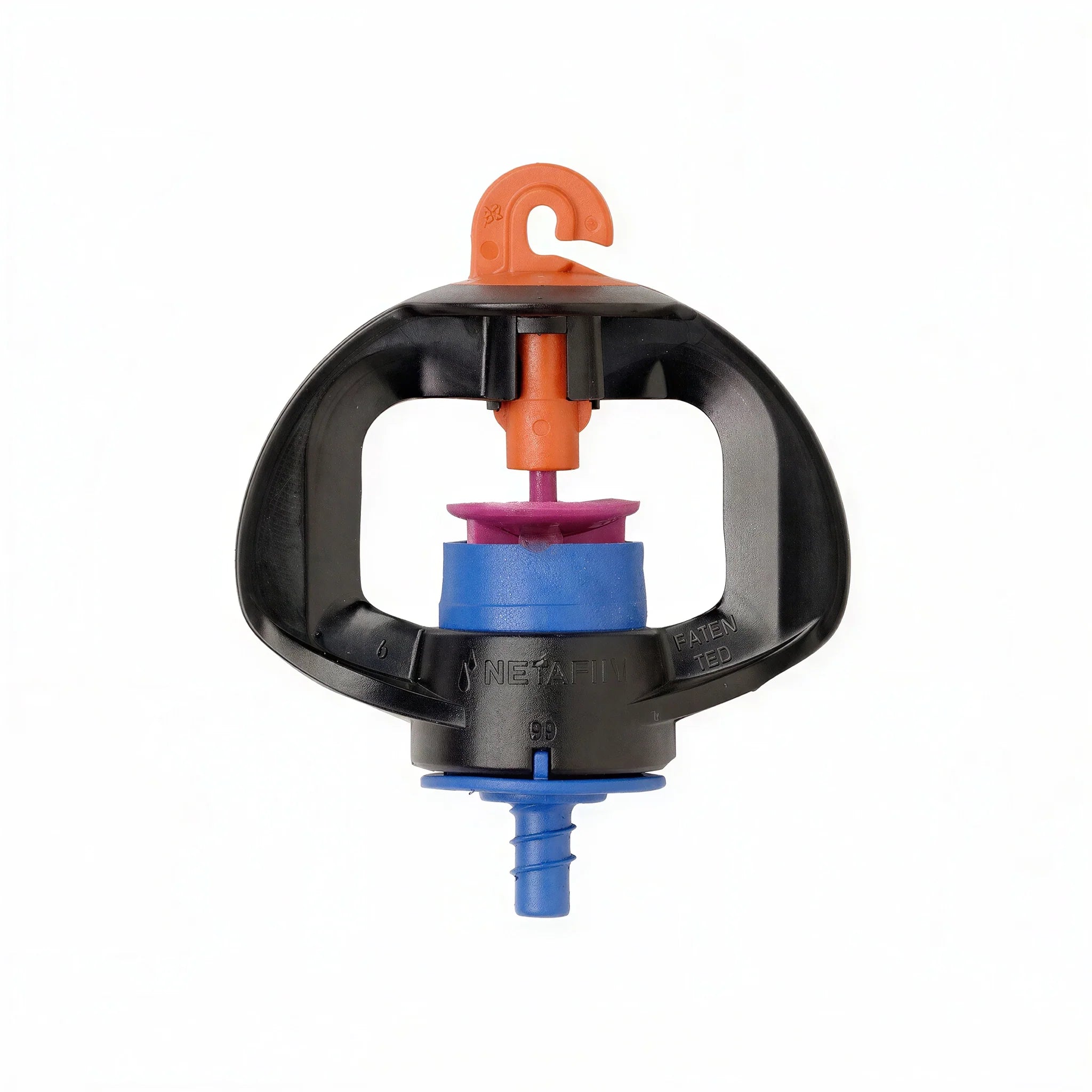
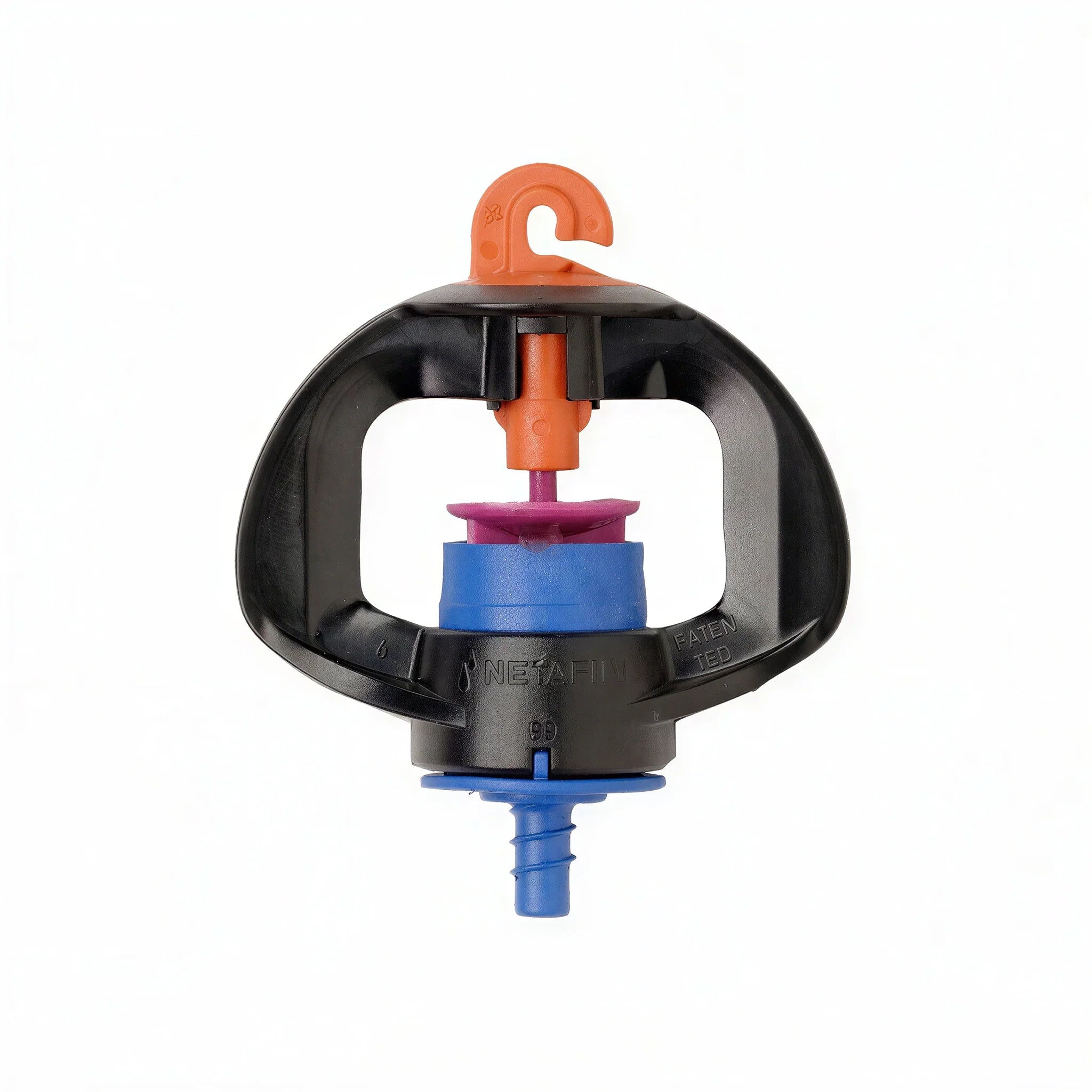
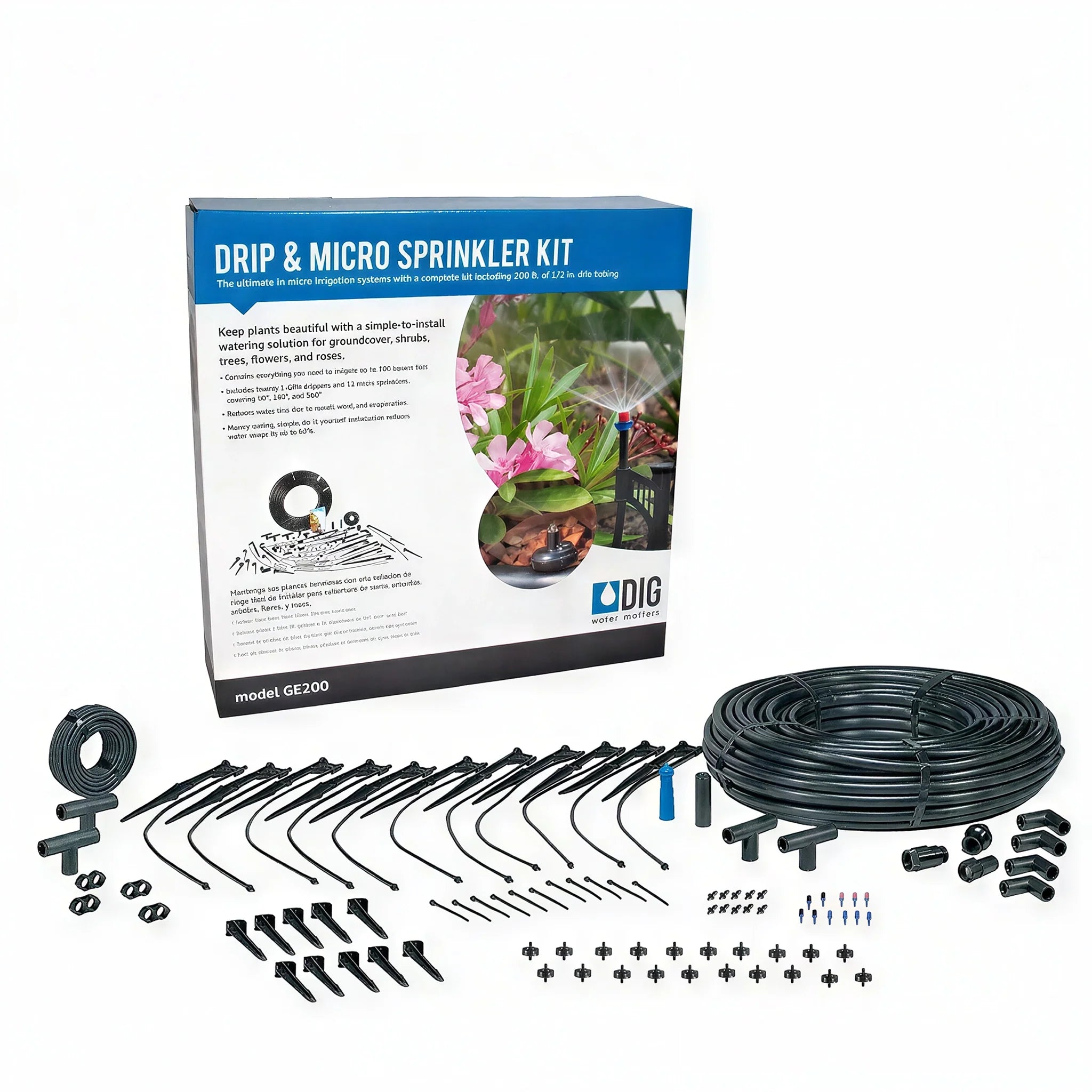
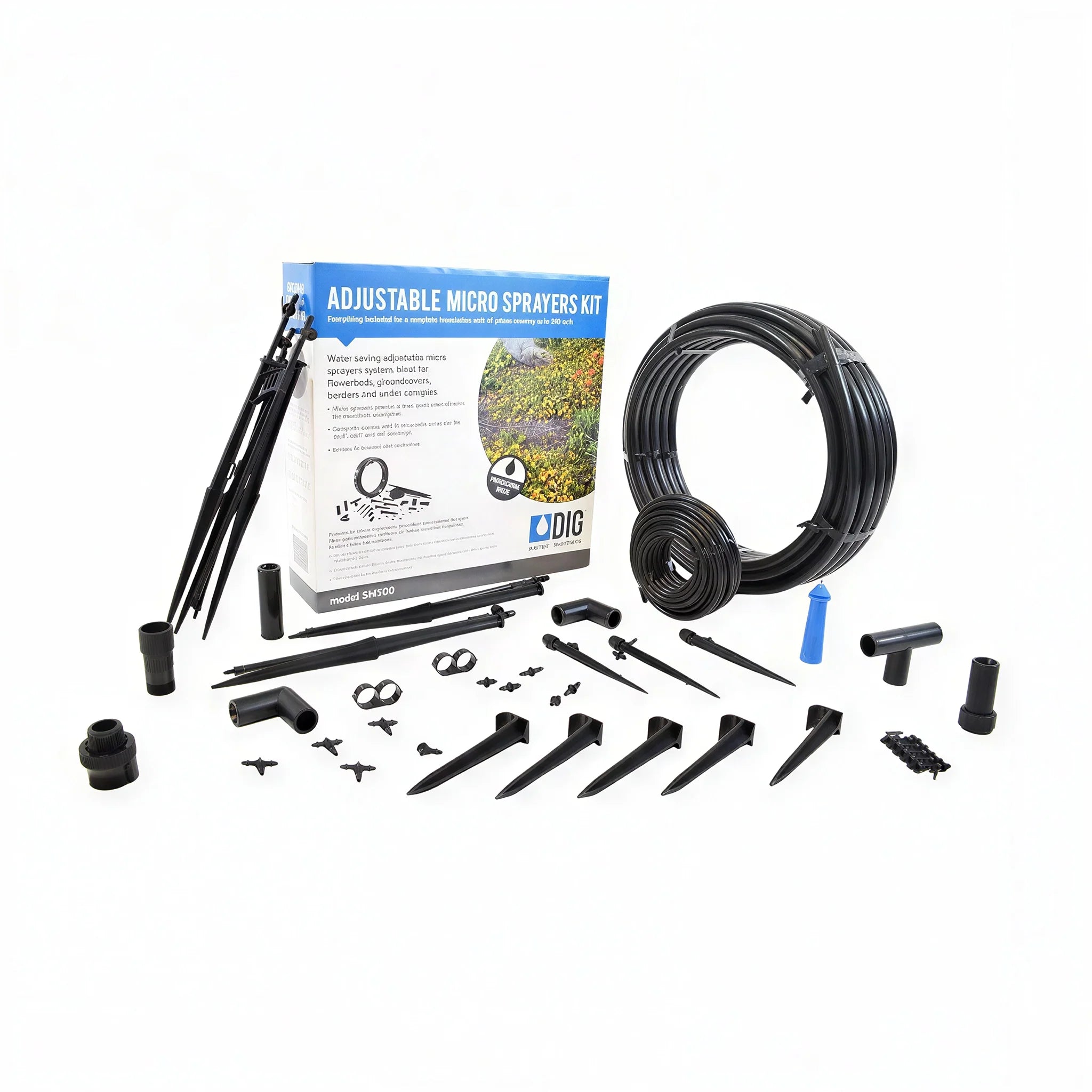
Micro sprinklers and overhead irrigation systems distribute water across a larger area than drip emitters - appropriate for broadcast irrigation of greenhouse benches, nursery production areas, seedling beds, and outdoor growing zones where wetting a full growing surface (rather than individual root zones) is the goal. Netafim and DIG produce the primary micro sprinkler and overhead irrigation product lines at Hydrobuilder, covering adjustable spray head assemblies, fixed-pattern micro sprinklers, and complete overhead kit configurations.
Netafim and Dramm Overhead Systems
Netafim produces micro-sprinklers in the SuperNet, NetJet, and VibroNet series - stake-mounted overhead irrigation heads for greenhouse bench and container yard applications. Dramm produces the ColorStorm line of impulse sprinklers, whirling sprinklers, and multi-pattern turret sprinklers for garden, nursery, and greenhouse use. The ColorStorm format uses a standard threaded hose connection that attaches to a garden hose or pressurized distribution line, making it a practical overhead irrigation option for smaller greenhouse and garden applications without dedicated drip infrastructure. Adjustable spray heads in DIG's micro-irrigation line allow spray pattern customization for different planting configurations.
Micro Sprinklers vs. Drip Emitters
Micro sprinklers wet a larger area than drip emitters (typically 2-6 foot radius vs. a concentrated single-point drip) and are better suited to broadcast irrigation of ground beds, potting benches, and areas where uniform surface coverage is more important than precise root zone targeting. Browse all irrigation supplies or see drip stakes and risers for direct root zone delivery. Fast shipping.
Micro Sprinklers FAQ
What is the difference between micro sprinklers and standard drip emitters?
Standard drip emitters deliver water at a single point - typically 0.5-2 GPH - directly at the base of one plant. They are designed for root zone precision irrigation with minimal surface wetting. Micro sprinklers distribute water across a circular spray pattern (2-6 feet diameter) at higher flow rates (5-30 GPH) - wetting the entire growing surface within their coverage area. Micro sprinklers are appropriate for ground bed growing, broadcast irrigation of potting benches, and greenhouse crop production where root zones are distributed across the soil surface. For container growing where precision root zone targeting is preferred, drip emitters provide more efficient water use and reduce the wet foliage and surface humidity that promotes fungal disease in enclosed growing environments.
How do I size a micro sprinkler system for a greenhouse?
Determine the area you need to irrigate and the desired application rate (inches per hour). A standard greenhouse irrigation target for vegetable production is 0.5-1 inch per hour of water application. Select micro sprinklers with a coverage radius that tiles your growing area efficiently with minimal overlap or gaps - overlapping coverage is acceptable and often desirable for uniform distribution. Calculate total flow demand (all sprinklers running simultaneously) and size your pump and mainline to deliver adequate pressure and volume to that flow rate. For greenhouse bench irrigation, a 30-50 PSI mainline pressure with matching pressure-compensating sprinkler heads maintains consistent flow across the full length of a long distribution run.
Can I use Dramm ColorStorm sprinklers in a greenhouse?
Yes. Dramm ColorStorm sprinklers connect to standard 3/4-inch garden hose thread - compatible with garden hoses, hose manifolds, and threaded irrigation pipe fittings. The impulse, whirling, and turret spray patterns cover different distribution needs: impulse sprinklers cover large circular areas suitable for open bench irrigation; whirling sprinklers provide gentle, uniform wetting appropriate for seedlings and sensitive transplants; turret sprinklers with adjustable pattern selection offer versatility for different bed configurations. In a greenhouse, mount Dramm sprinklers on risers at appropriate height above the canopy and connect to a hose manifold or pressurized distribution header for convenient multi-zone management.