Extraction Filters, Funnels & Lab Filtration Supplies
Post-extraction filtration removes particulate matter, plant material fragments, and suspended solids from botanical extracts and solutions - clarifying the extract and removing material that would affect the quality, appearance, or downstream processing of the final product. Gravity filtration through filter paper in a Buchner or conical funnel is the simplest method; vacuum-assisted filtration through a Buchner funnel speeds the process significantly for larger volumes; inline filter assemblies integrate filtration into transfer lines for continuous-flow extraction workflows.
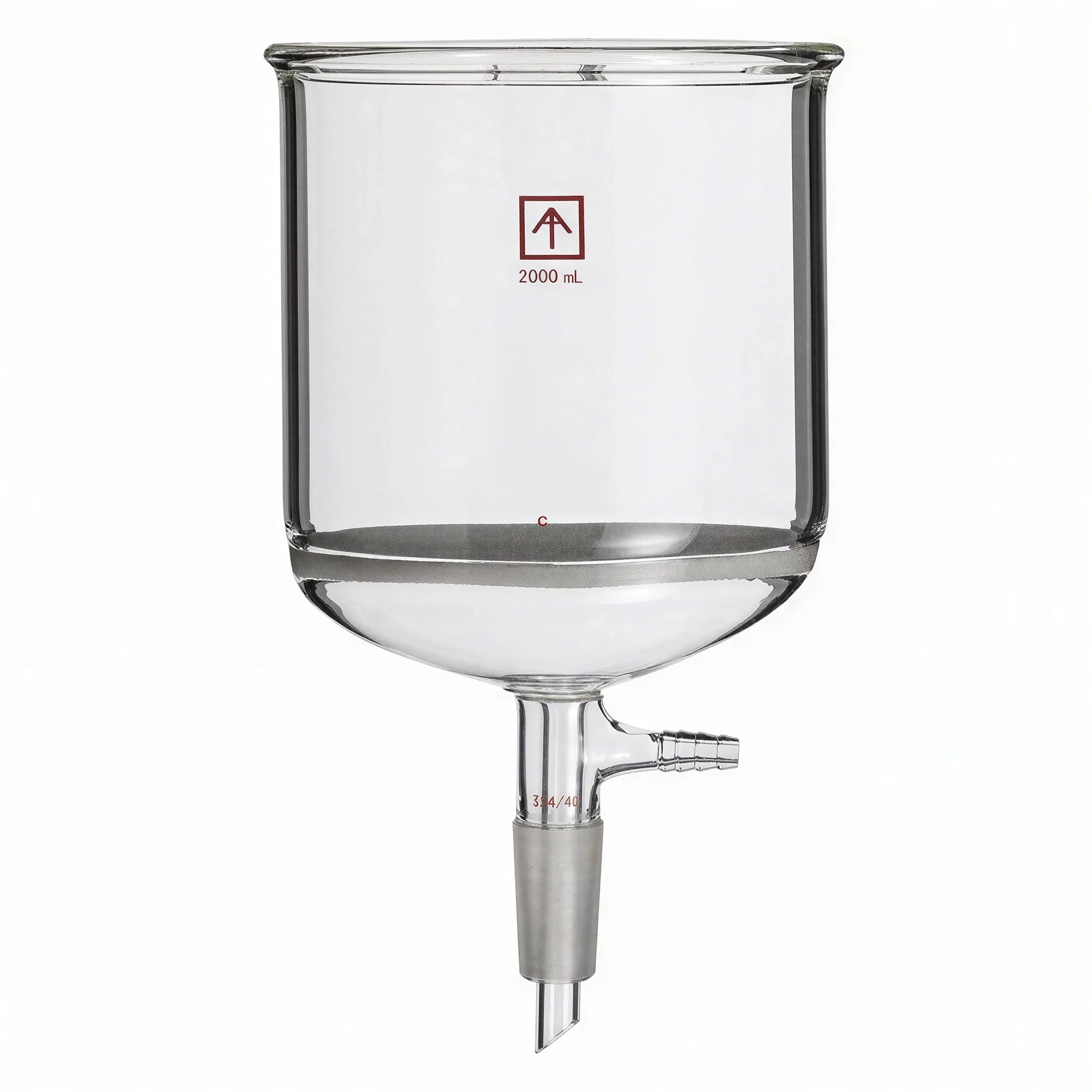
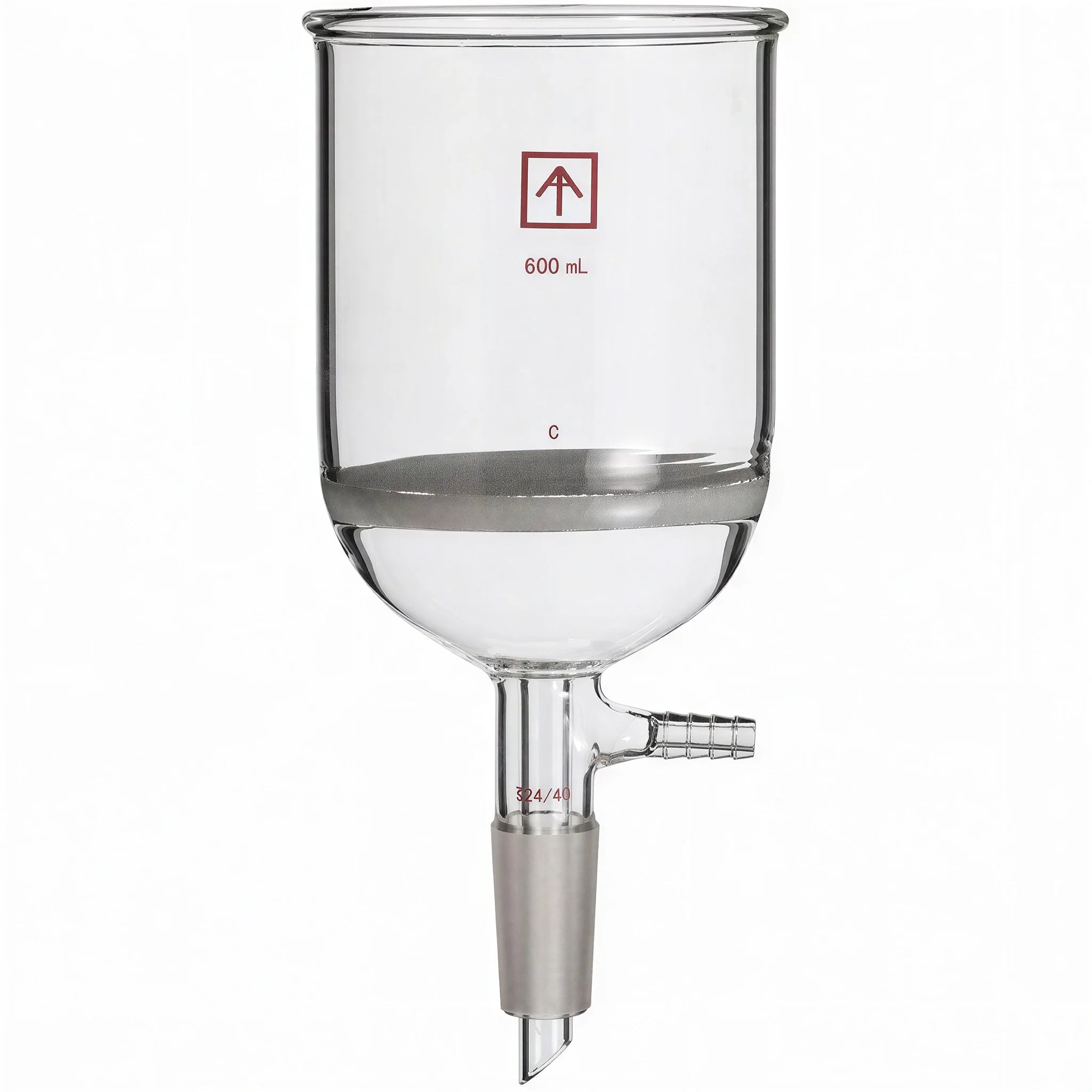
Buchner Funnels & Filter Paper
Buchner funnels are flat-bottomed funnels with a perforated plate that supports circular filter paper - designed for vacuum-assisted filtration where suction below the filter accelerates solution flow through the paper. Standard filter paper grades for botanical extract filtration: Grade 1 (11 micron particle retention) for general clarification; Grade 4 (20-25 micron) for faster flow through coarser materials; Grade 541 (Whatman hardened, 22 micron) for pressure and vacuum filtration requiring a stronger paper. Connect the Buchner funnel to a vacuum flask and vacuum pump for significantly faster filtration than gravity alone. Alternatively, coffee filters (paper or reusable stainless mesh) provide inexpensive coarse filtration for applications where fine particle removal is not the priority.
Inline Filter Assemblies
Inline filter housings installed in transfer lines allow continuous filtration during liquid transfer - the extract passes through a replaceable filter element as it moves from vessel to vessel without a separate filtration step. This is particularly useful in distillation and jacketed reactor workflows where multiple vessel transfers occur during a production run. Inline filter elements are available in a range of micron ratings from 0.5 to 100+ micron for different filtration requirements at different stages of the extraction process. Fast shipping.
Extraction Filters & Funnels FAQ
What filter paper do I need for botanical extract filtration?
Grade 1 Whatman or equivalent (11 micron particle retention) is the standard starting point for clarifying botanical extracts - it removes most visible plant particles and fine debris while allowing liquid to pass at a reasonable gravity flow rate. For faster flow with less fine particle retention: Grade 4 (20-25 micron) passes more particles but drains faster. For vacuum filtration applications requiring a stronger paper that does not tear under suction: Whatman Grade 541 hardened paper (22 micron) is the lab standard. Match paper diameter to your funnel size - standard diameters are 55mm, 90mm, 110mm, 125mm, and 150mm.
What is the difference between a Buchner funnel and a conical funnel?
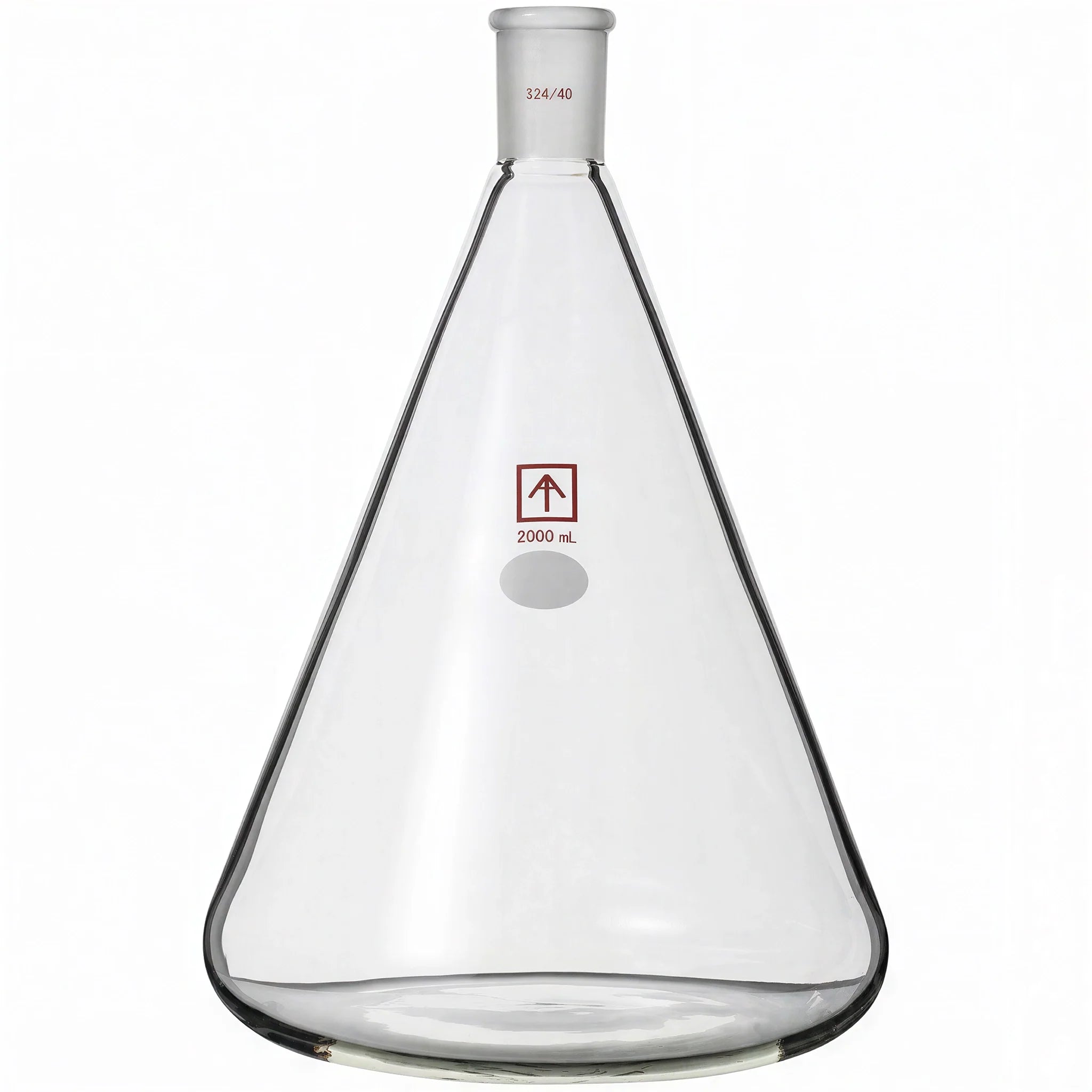
A Buchner funnel has a flat perforated plate at the bottom that supports filter paper horizontally - designed for vacuum filtration where suction below the paper accelerates flow. A standard conical (stemmed) funnel holds filter paper in a cone shape at the bottom - designed for gravity filtration without vacuum assistance. Buchner funnels require a vacuum source and a vacuum flask (Erlenmeyer flask with a side-arm for vacuum connection) to function; conical funnels work without any additional equipment but drain slowly for viscous or fine-particle solutions. For production use where filtration speed matters, a Buchner funnel with vacuum is significantly more practical.
Can I use coffee filters for extract filtration?
Standard paper coffee filters provide coarse filtration (approximately 10-15 micron for standard drip filters, coarser for cone-type filters) that removes large visible particles but allows fine suspended material to pass through. They are adequate for applications where complete clarification is not required - initial coarse filtration of a crude extract before more refined processing steps. For clearer, more refined extract output, laboratory filter paper in a Buchner funnel provides more consistent and finer filtration. Reusable stainless mesh coffee filters (150-200 micron) work for very coarse pre-filtration of material with large particle loads.
What micron rating should my inline filter be?
The appropriate inline filter micron rating depends on the stage of processing and the particle size of concern. For removing gross plant material fragments during initial extract transfer: 50-100 micron. For general clarification during post-extraction processing: 10-25 micron. For very fine clarification before final product packaging: 1-5 micron (note that fine filters require more pressure to push liquid through - verify your transfer pump or pressure can overcome the increased flow restriction at fine micron ratings). Using too fine a filter at early stages plugs the element quickly with heavy particle loads; a staged filtration approach (coarse first, fine last) is more practical.
How do I clean and reuse filtration equipment?
Buchner funnels and conical funnels (porcelain or glass): rinse with appropriate solvent to dissolve and remove extract residue, then wash with warm water and laboratory glassware detergent, rinse thoroughly, and allow to dry. For porcelain Buchner funnels with ceramic frits, periodic backflush with solvent and ultrasonic cleaning restores flow rate through the frit pores. Reusable stainless mesh filter elements: soak in solvent, brush gently with a soft brush, rinse, and dry. Filter paper is single-use - discard after each filtration. Inline filter housings: disassemble, soak body in solvent, replace the disposable filter element.