
Picked up a used Twister T6 for $400 and replaced the gear box for $100 and now its like new again.
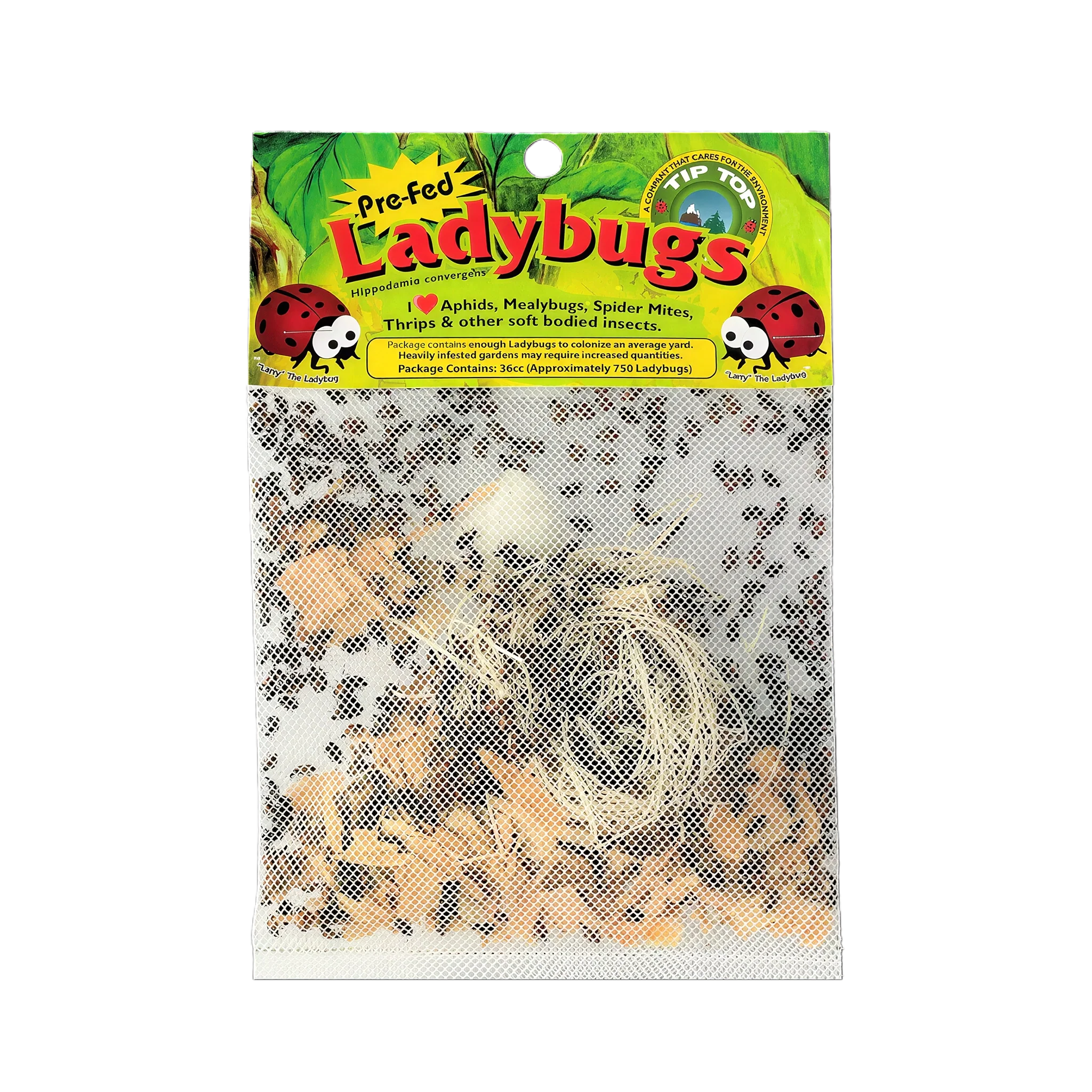

Tip Top Bio-Control Product Documents
LadyBug Release RateThese Beneficial Insects Have An Insatiable Appetite For Aphids and Other Small Insects
Live insects from Tip Top Bio Are Expedited To Ensure Your Insects Arrive Quickly & Safely.
Ladybugs are general predators that feed on a variety of slow-moving insects, but they are best known for feeding on aphids. During the adult and larval stages it is a predator. Adults are shiny, hemispherical beetles, often reddish-orange or yellow, with black markings. Larvae are black, with conspicuous legs and orange spots on their backs. They move from plant to plant on leaves. Larvae pupate on the upper leaf surfaces, plant stems and twigs. Eggs are yellowish-orange ovals, laid on end in clusters of 10 to 50.
Convergent ladybird beetles (Hippodamia convergens) are shipped as adults in containers and cloth bags. Storing the beetles can be done at a temperature of 40°F to 60°F for 1 - 3 weeks. Ideally ladybugs should be released in the evening or very early morning when it is cool or overcast so they move more slowly. To improve performance, mist foliage beforehand. Ladybug beetles can begin reproducing immediately with ample food and moisture. Several generations may occur during one season.
Lifespan And Benefits
- From egg to adult takes 3 - 4 weeks in summer, 6 weeks in spring.
- When released, adult ladybugs should mate and lay eggs within 8-10 days.
- The eggs will hatch into larvae in 5 days.
- Temperature and food availability will determine the timing of each stage and reproductivity.
- One female can lay up to 1,500 eggs over their 100 - day lifetime.
- One larvae can eat about 400 aphids until it pupates.
- One adult may eat over 5,000 aphids!
Strategic Considerations:
Pesticides and even wetting agents and spreader-stickers may adversely affect ladybugs survival. Broad spectrum and systemic insecticides are toxic to ladybugs.
| Brand | Tip Top Bio-Control |
|---|---|
| SKU | LBM-750 |
| Weight (lb.) | 0.9000 |
| Width (in.) | |
| Prop 65 | false |
| Height (in.) | |
| Length (in.) | |
| Hazardous Material | false |
| Shipping Restrictions | AK, HI |
| Lead Time | 2-3 |
| ETL Listed | No |
| UL Listed | No |
| Case/Pack/Pallet Amount | 750 |
| Bug Type | Aphids, Gnats, Grasshoppers, Scale, Spider Mites, Thrips, Whiteflies |
| Application Type | ["Release"] |
| Product Type | Beneficial Insects |
| Beneficial Insect Type | Ladybugs |
What pests do Tip Top Bio-Control Pre-Fed Ladybugs help control?
Tip Top Bio-Control Pre-Fed Ladybugs help control aphids, gnats, grasshoppers, scale, spider mites, thrips, and whiteflies. The description also says ladybugs feed on aphids and other small insects.
How are Tip Top Bio-Control Pre-Fed Ladybugs applied?
Tip Top Bio-Control Pre-Fed Ladybugs are released as beneficial insects. The description recommends release in the evening or very early morning when conditions are cool or overcast.
How many ladybugs are in each pack of Tip Top Bio-Control Pre-Fed Ladybugs?
Each pack of Tip Top Bio-Control Pre-Fed Ladybugs includes 750 ladybugs.
Can Tip Top Bio-Control Pre-Fed Ladybugs be stored before release?
Tip Top Bio-Control Pre-Fed Ladybugs can be stored at 40°F to 60°F for 1 to 3 weeks before release. The description says live insects ship expedited for quick, safe arrival.
What beneficial insect species does Tip Top Bio-Control Pre-Fed Ladybugs contain?
Tip Top Bio-Control Pre-Fed Ladybugs are ladybugs, also identified in the description as convergent ladybird beetles (Hippodamia convergens).