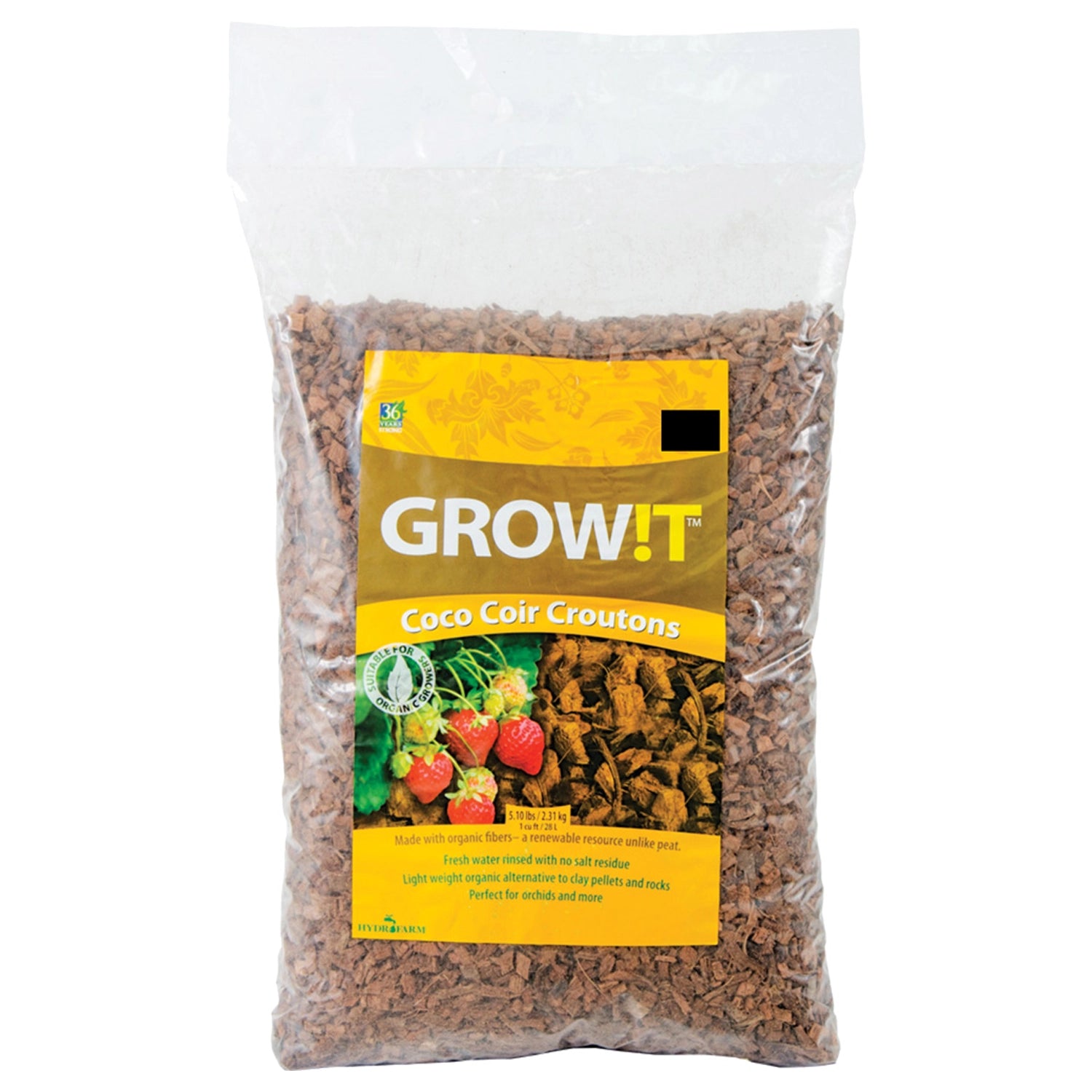
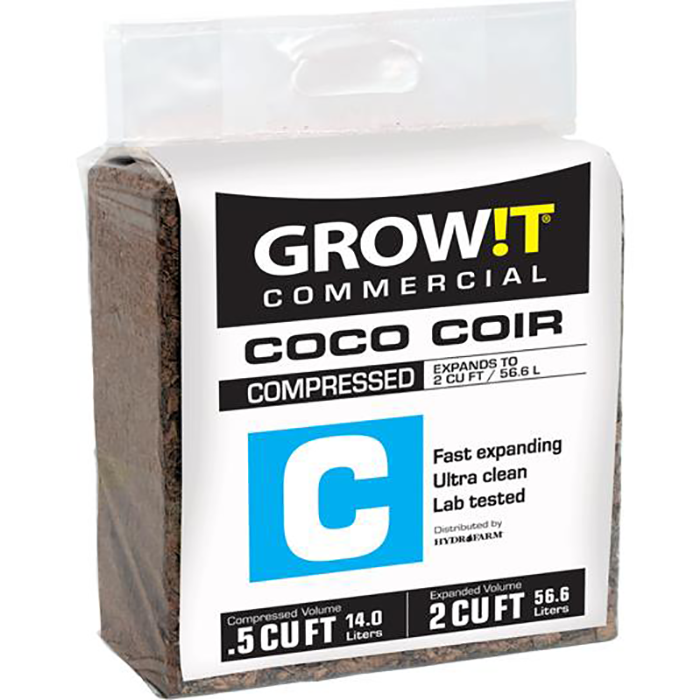
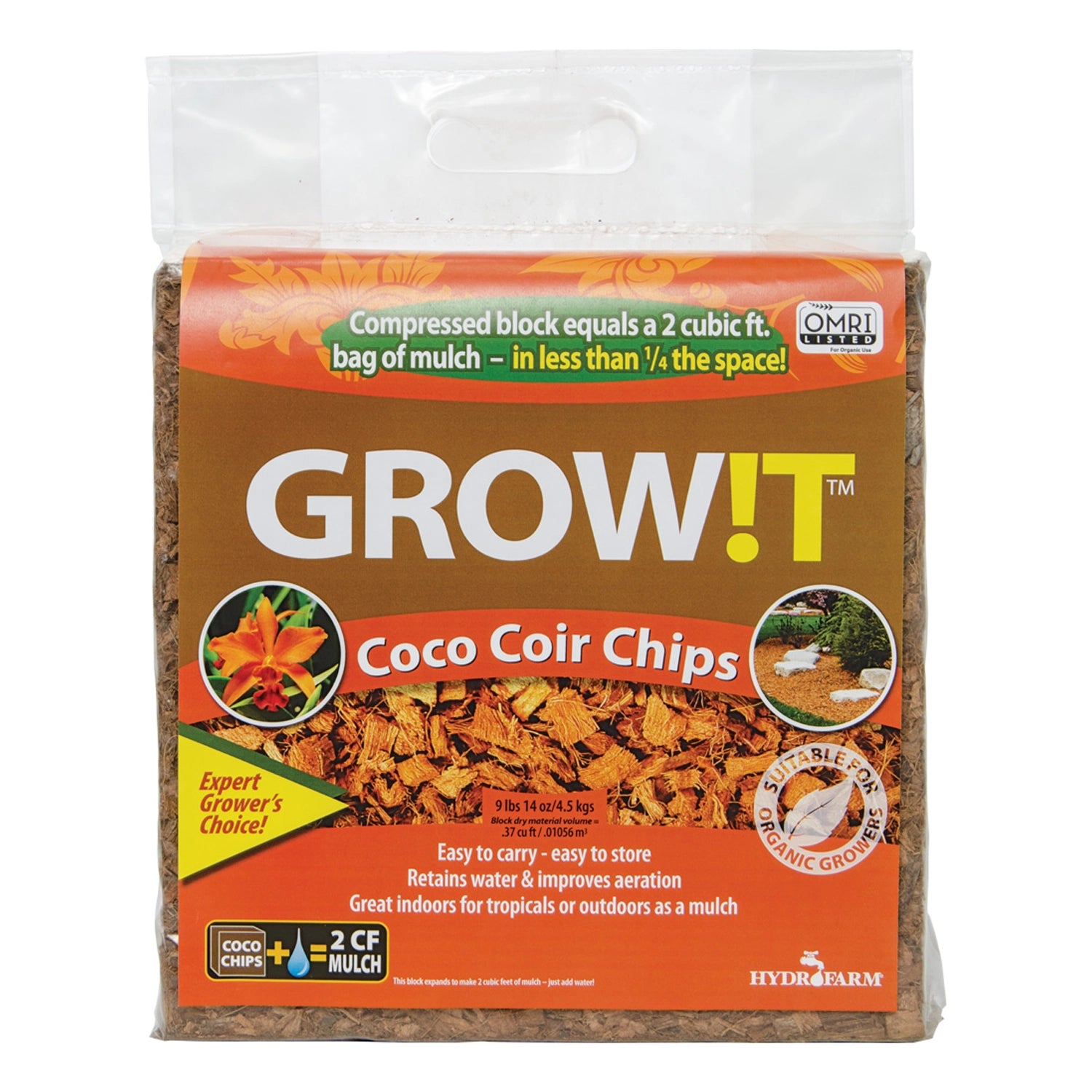
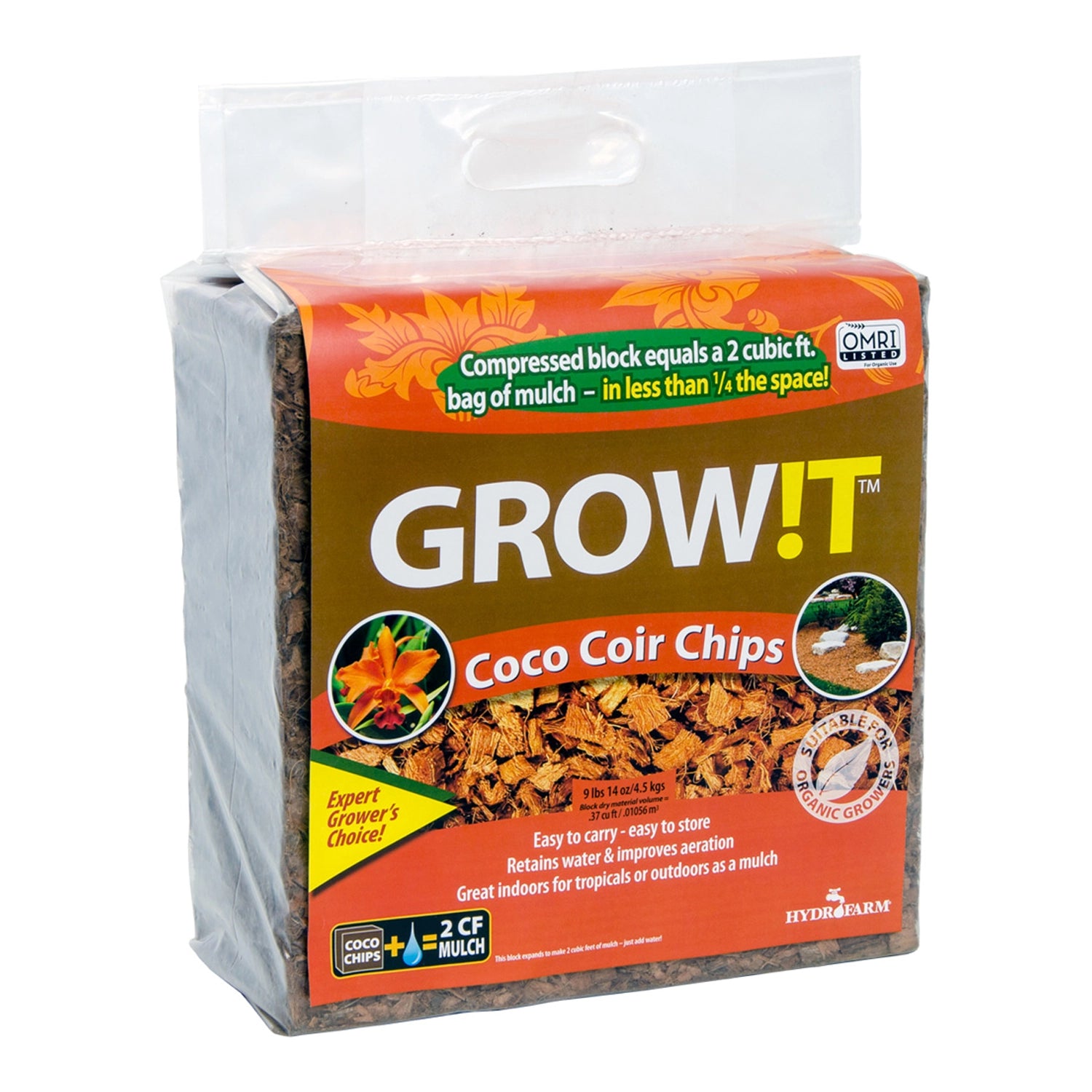
Coco Coir Growing Media -- Bags, Blocks & Mats
Coco coir is the processed fiber extracted from coconut husk -- a renewable, pH-stable, high-drainage growing substrate that has become one of the most widely used media in commercial and hobby controlled environment agriculture. Unlike peat moss (which is mined from finite sphagnum peat deposits), coco is a byproduct of coconut processing that would otherwise be discarded, giving it a significantly better environmental profile. The physical properties of quality processed coco -- excellent drainage, high air-filled porosity, good water retention, and pH near neutral -- make it an ideal substrate for high-frequency drip irrigation programs and crop steering approaches used in modern commercial production.
Coco Product Formats
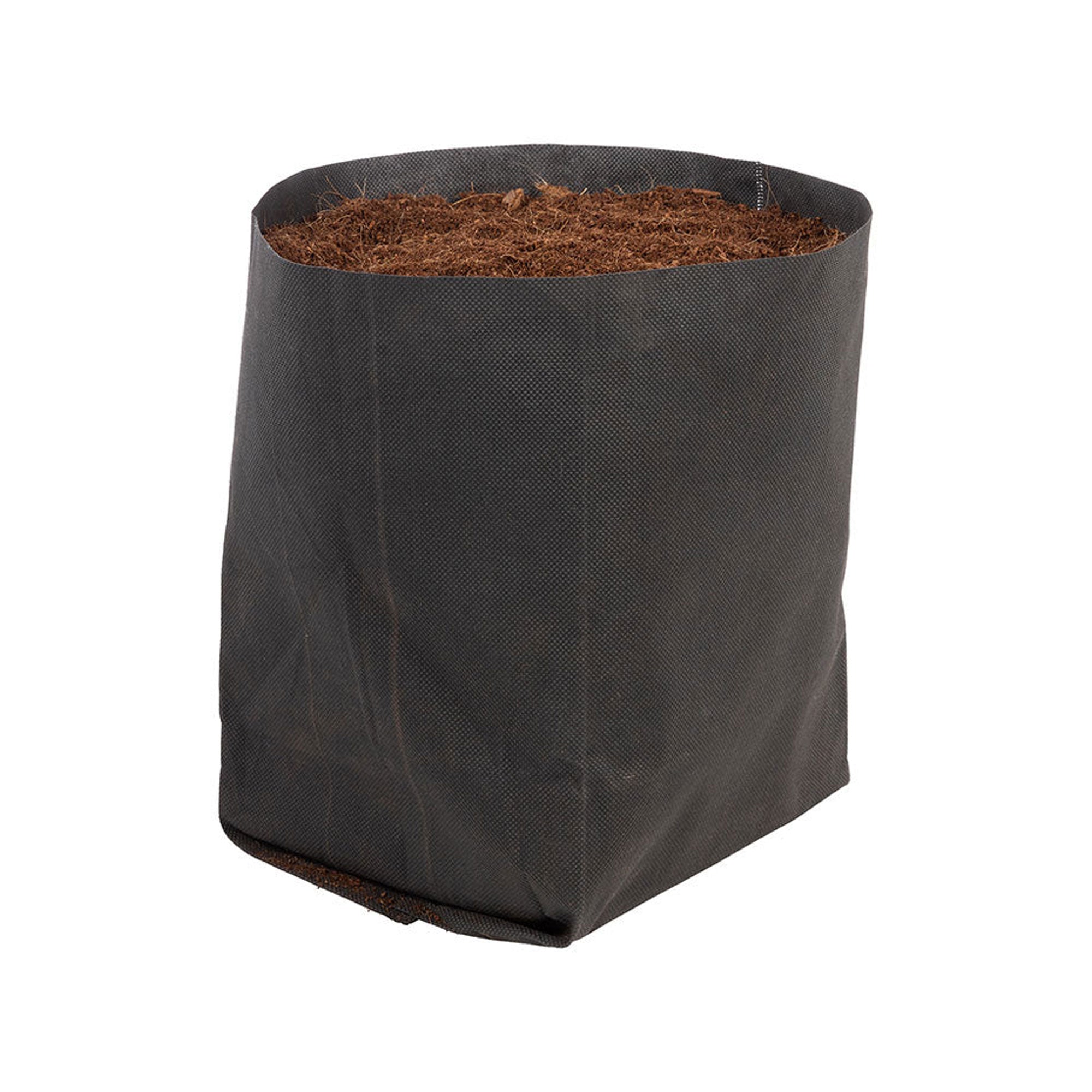
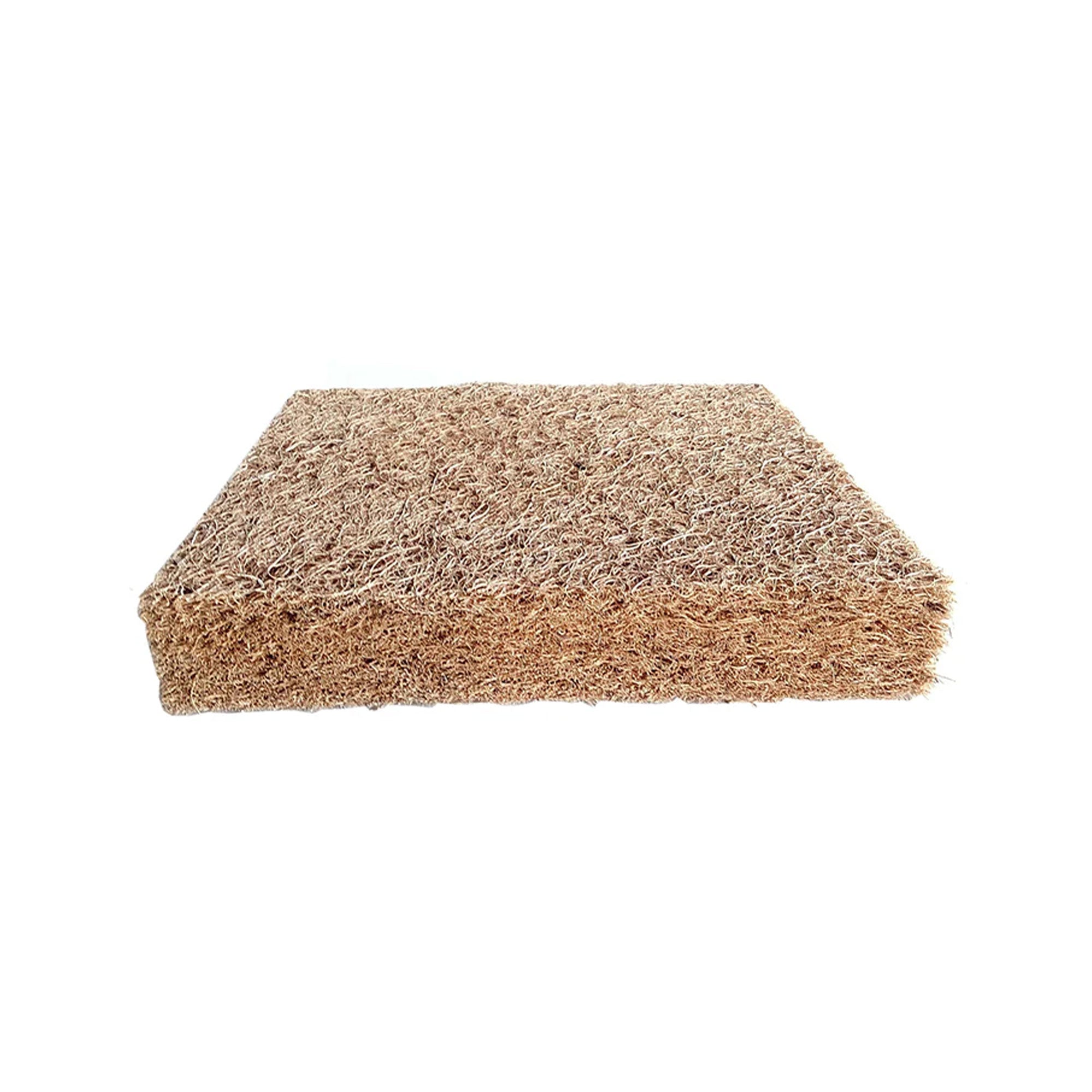
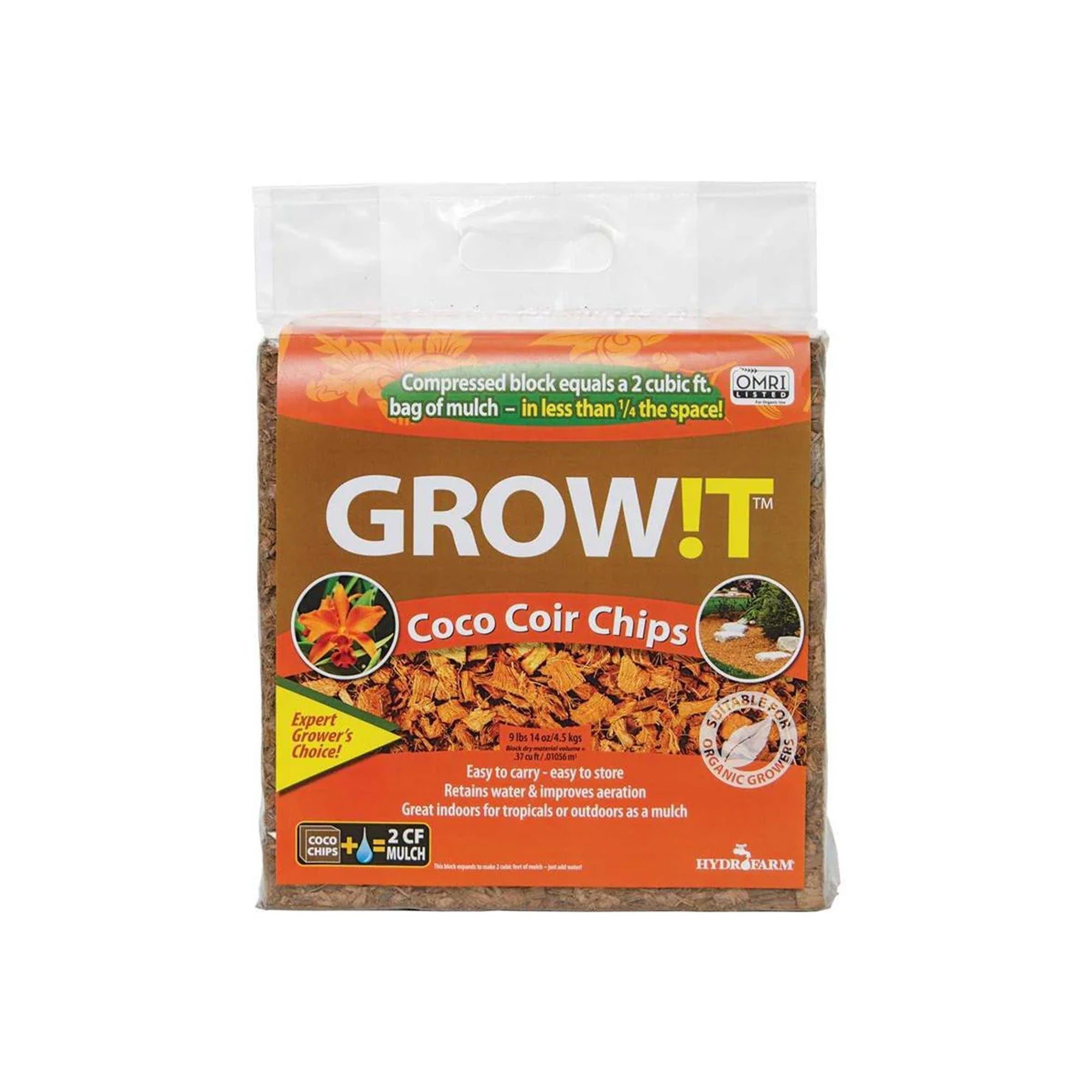
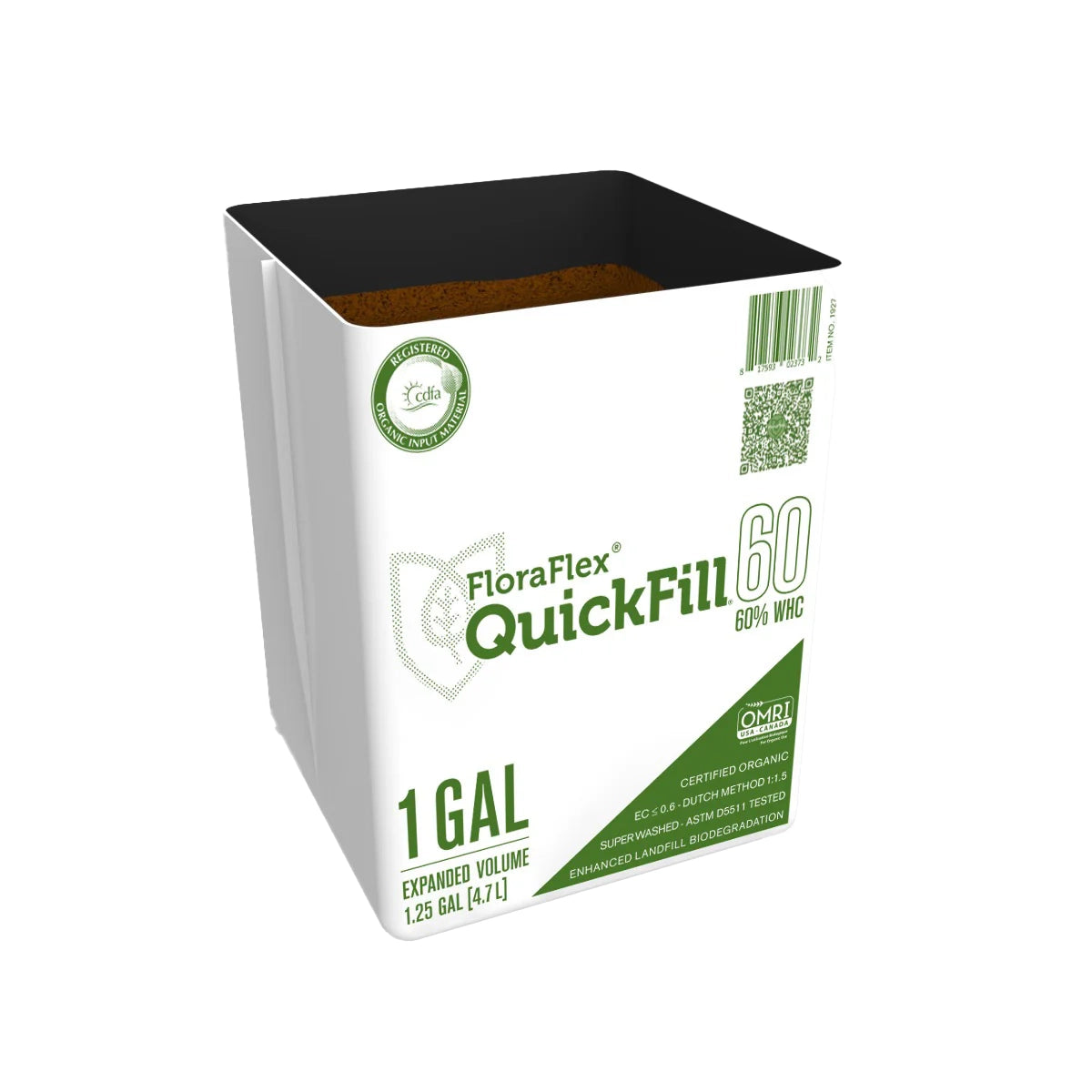
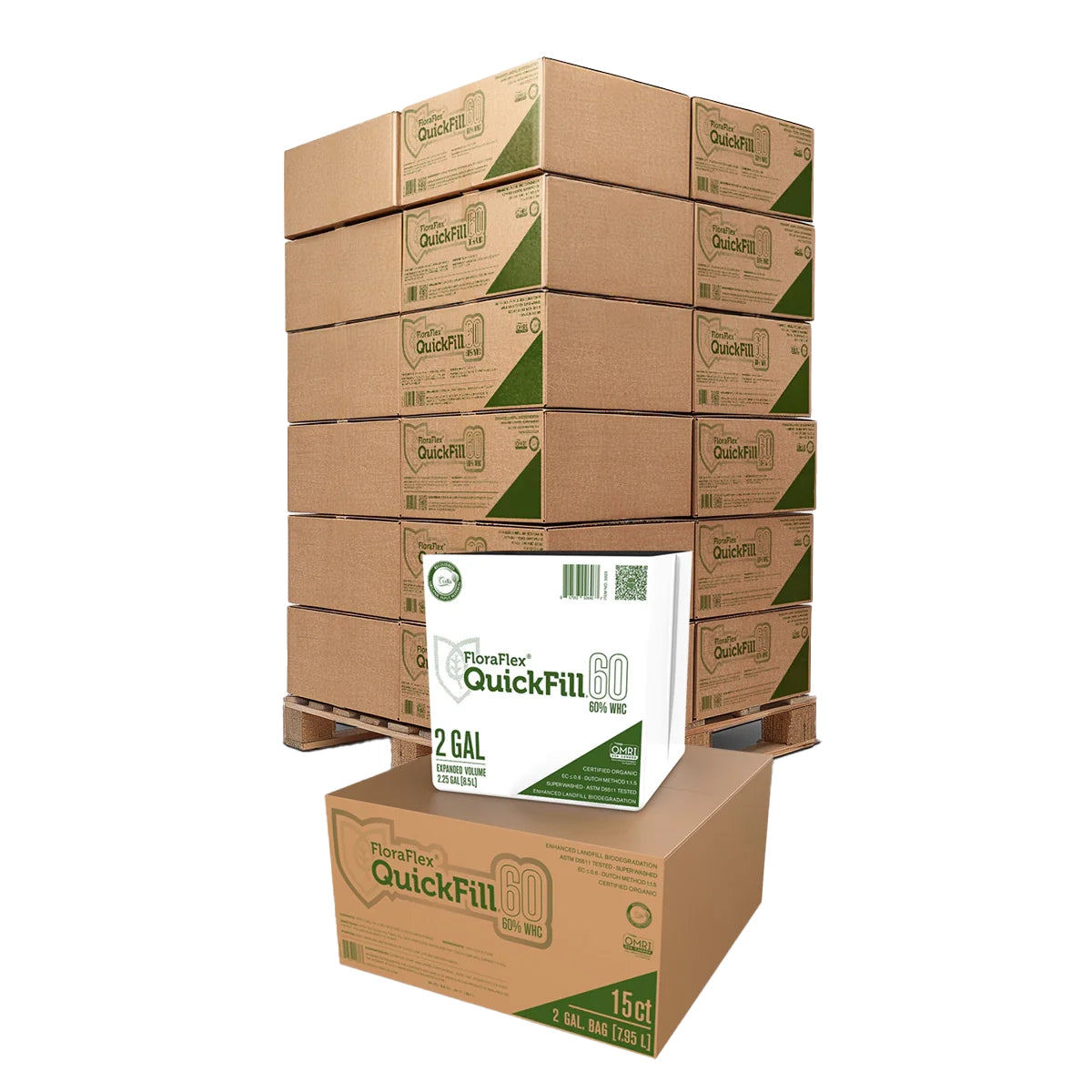
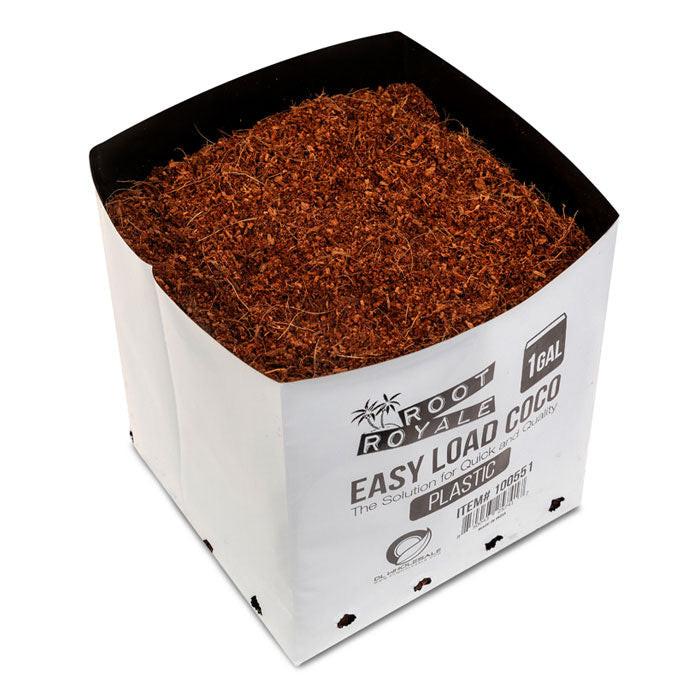
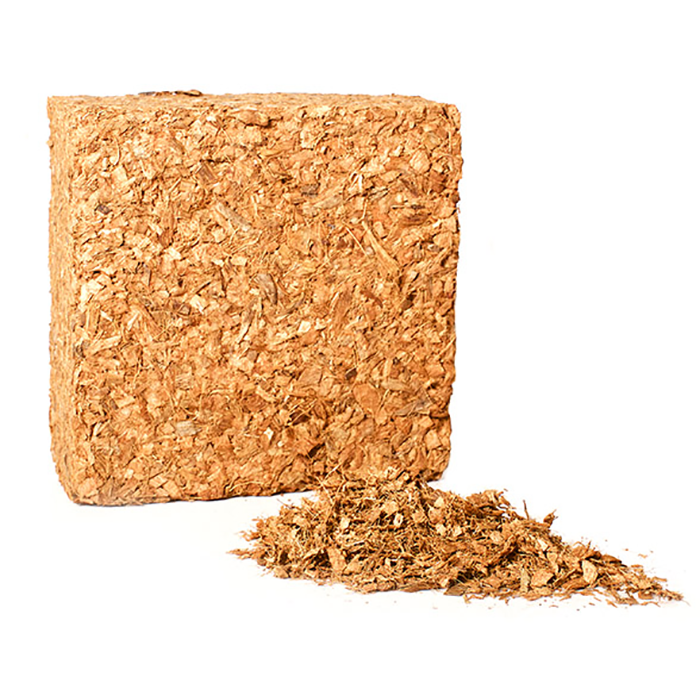
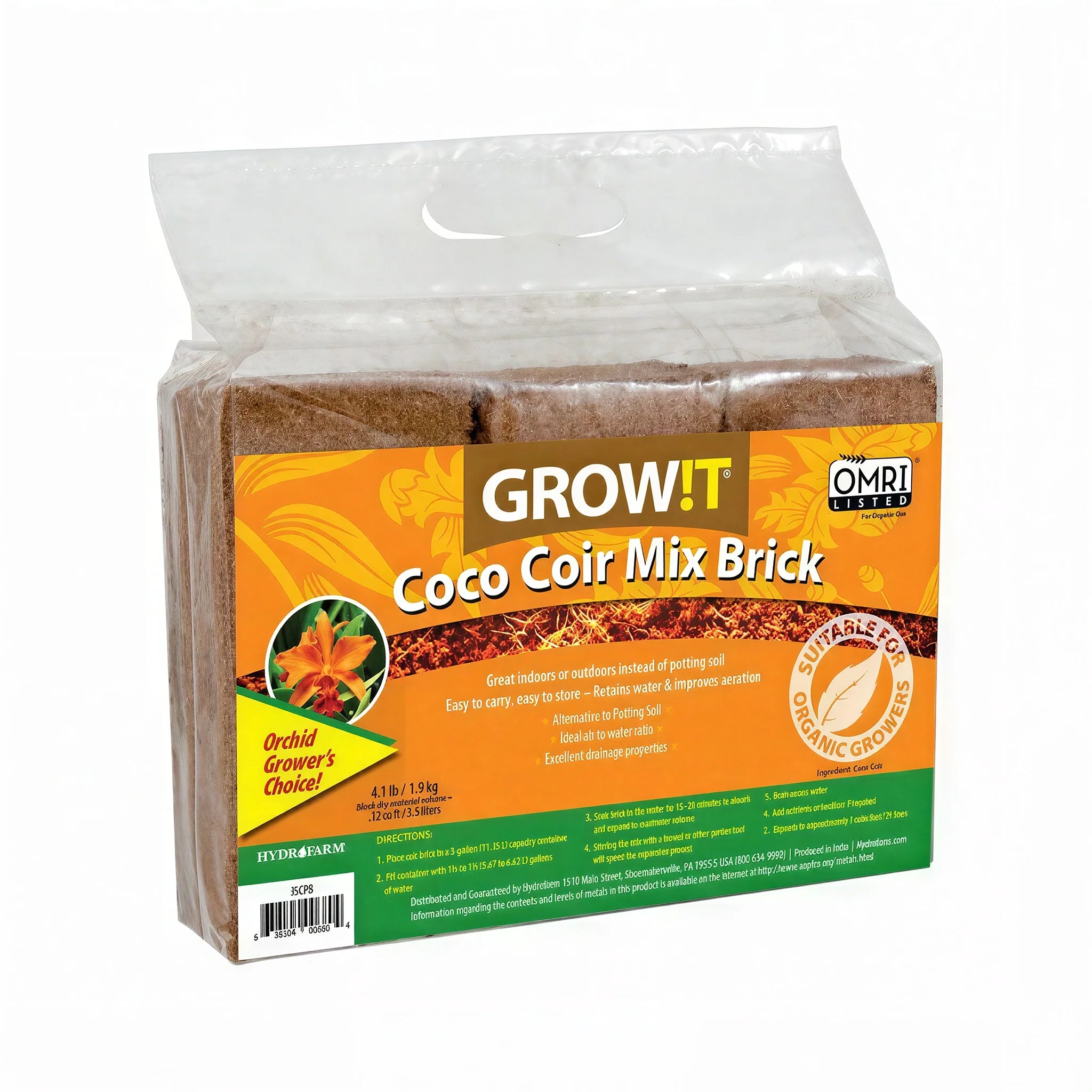
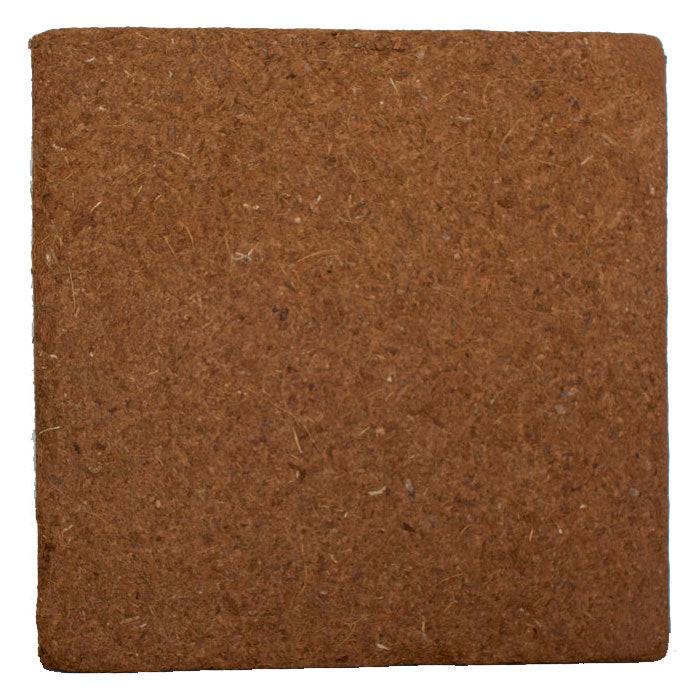
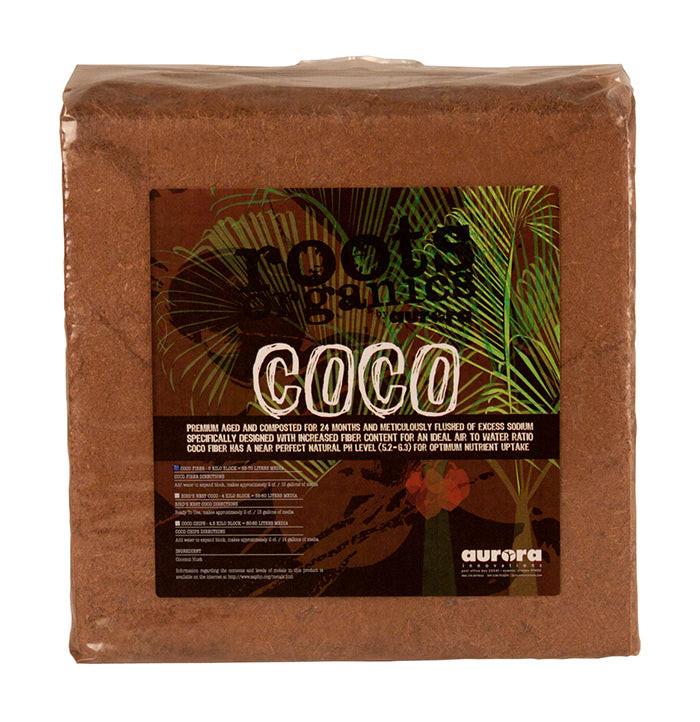
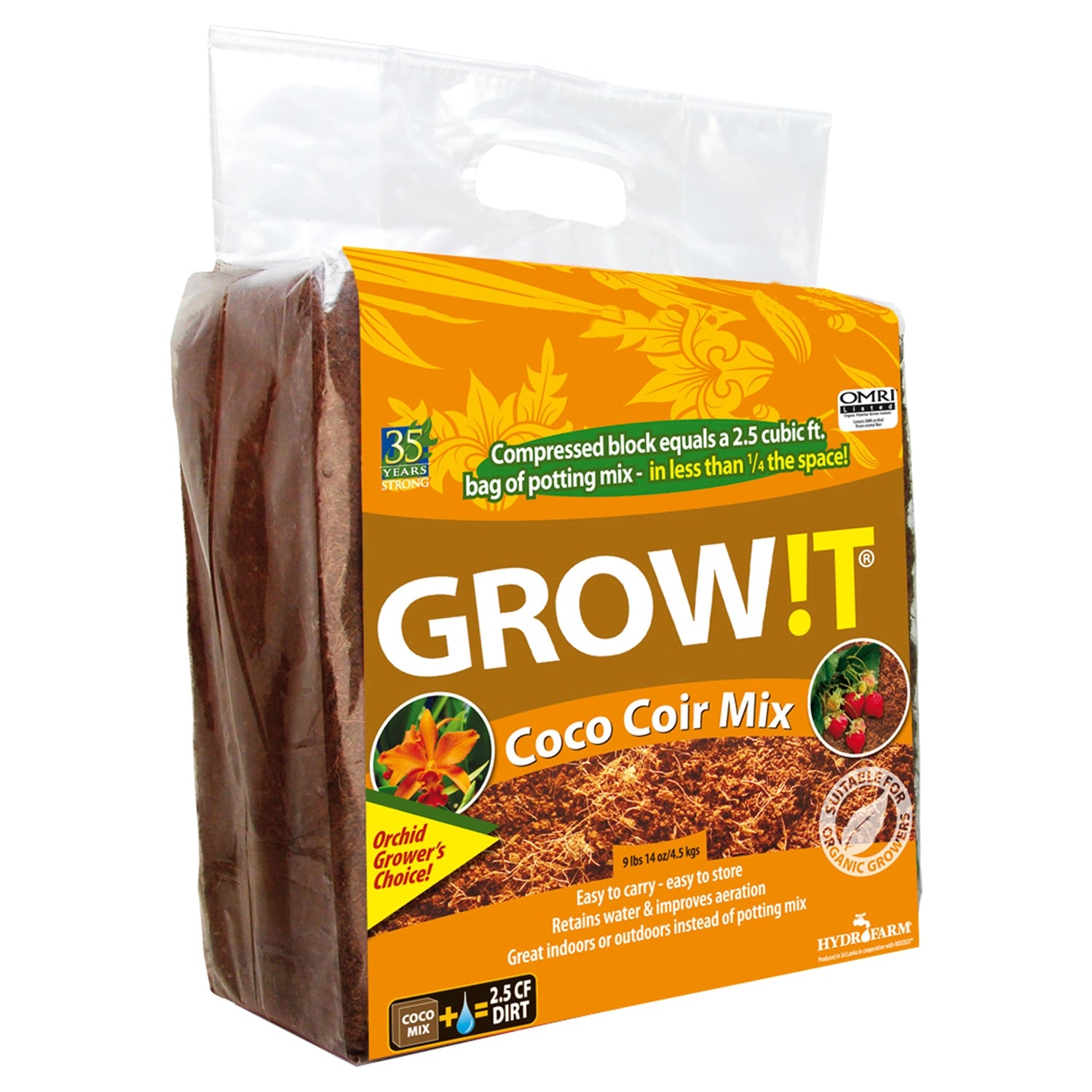
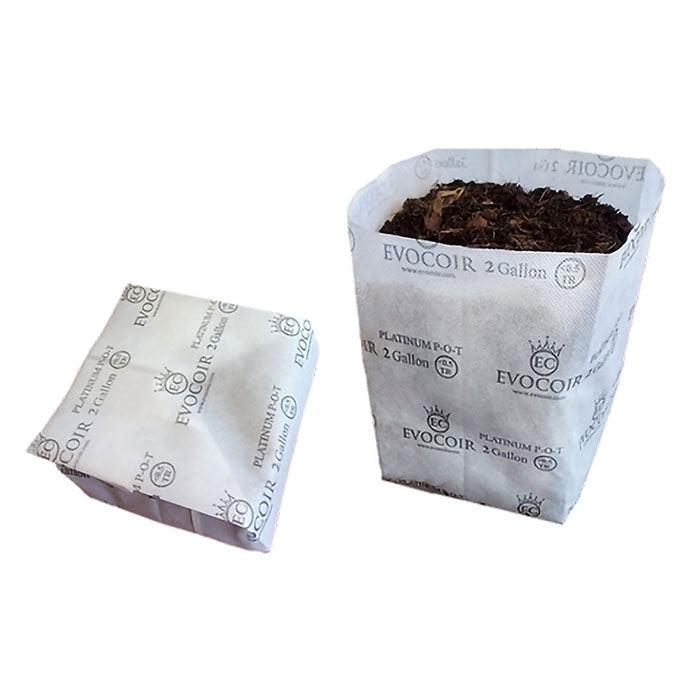
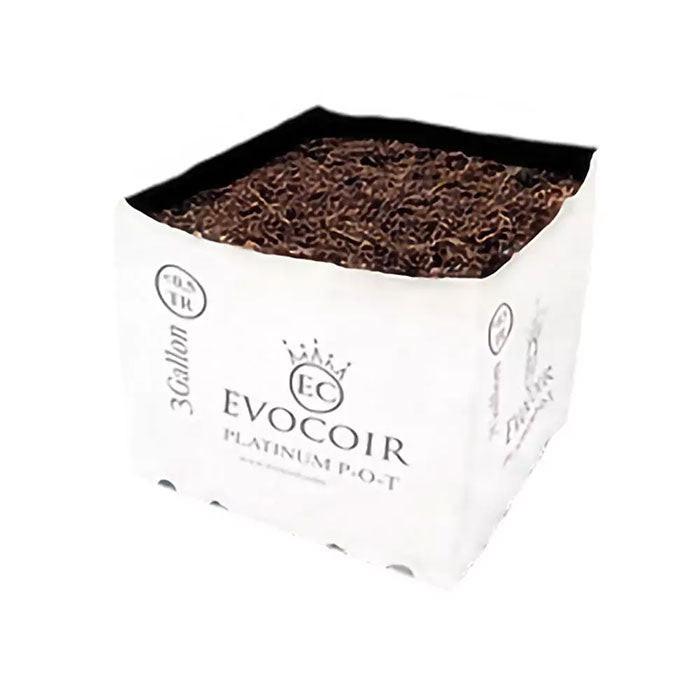
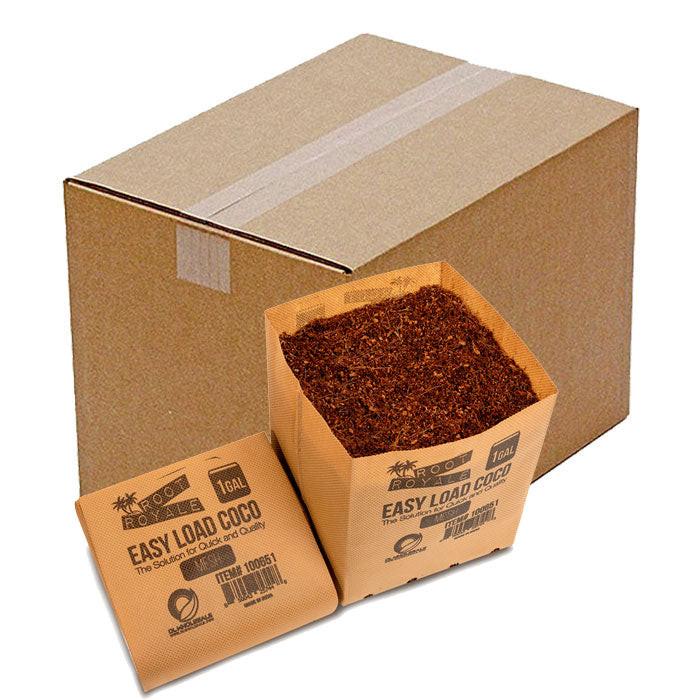
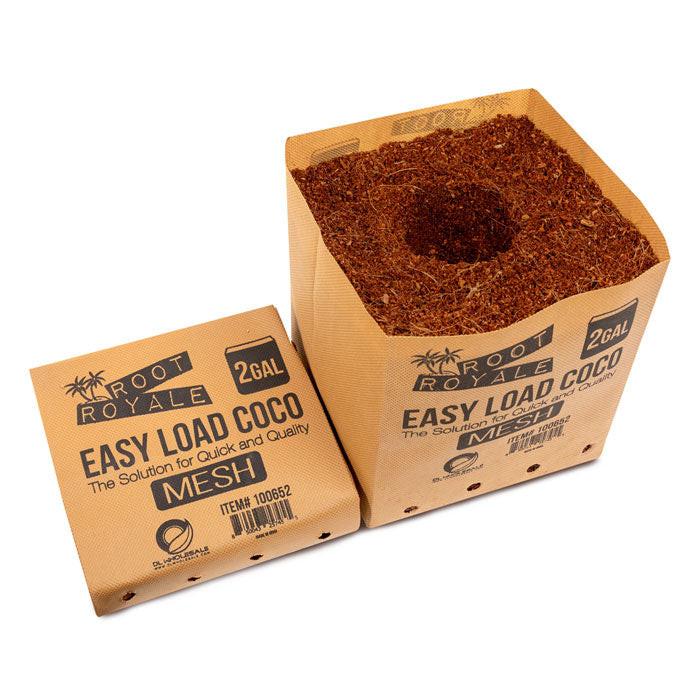
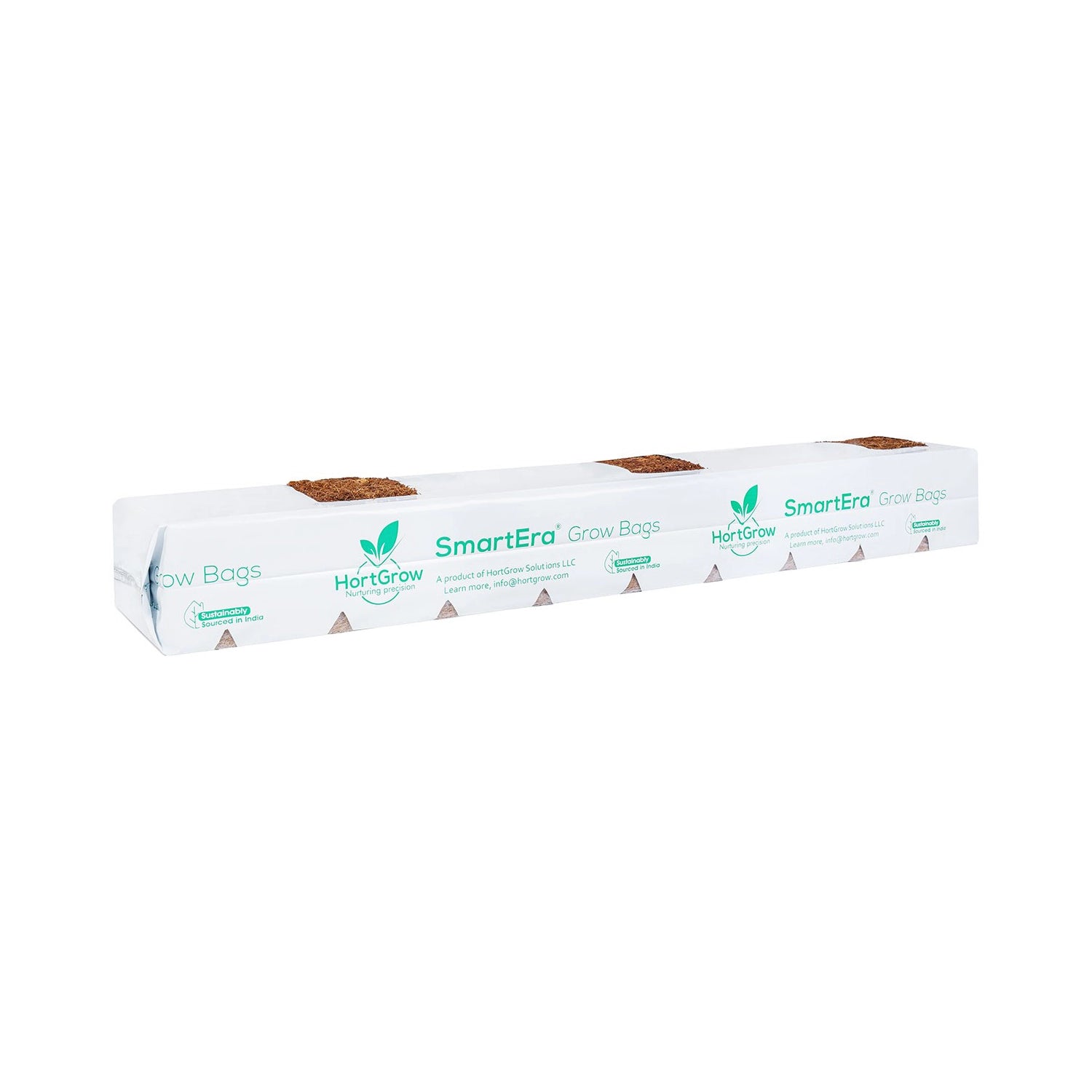
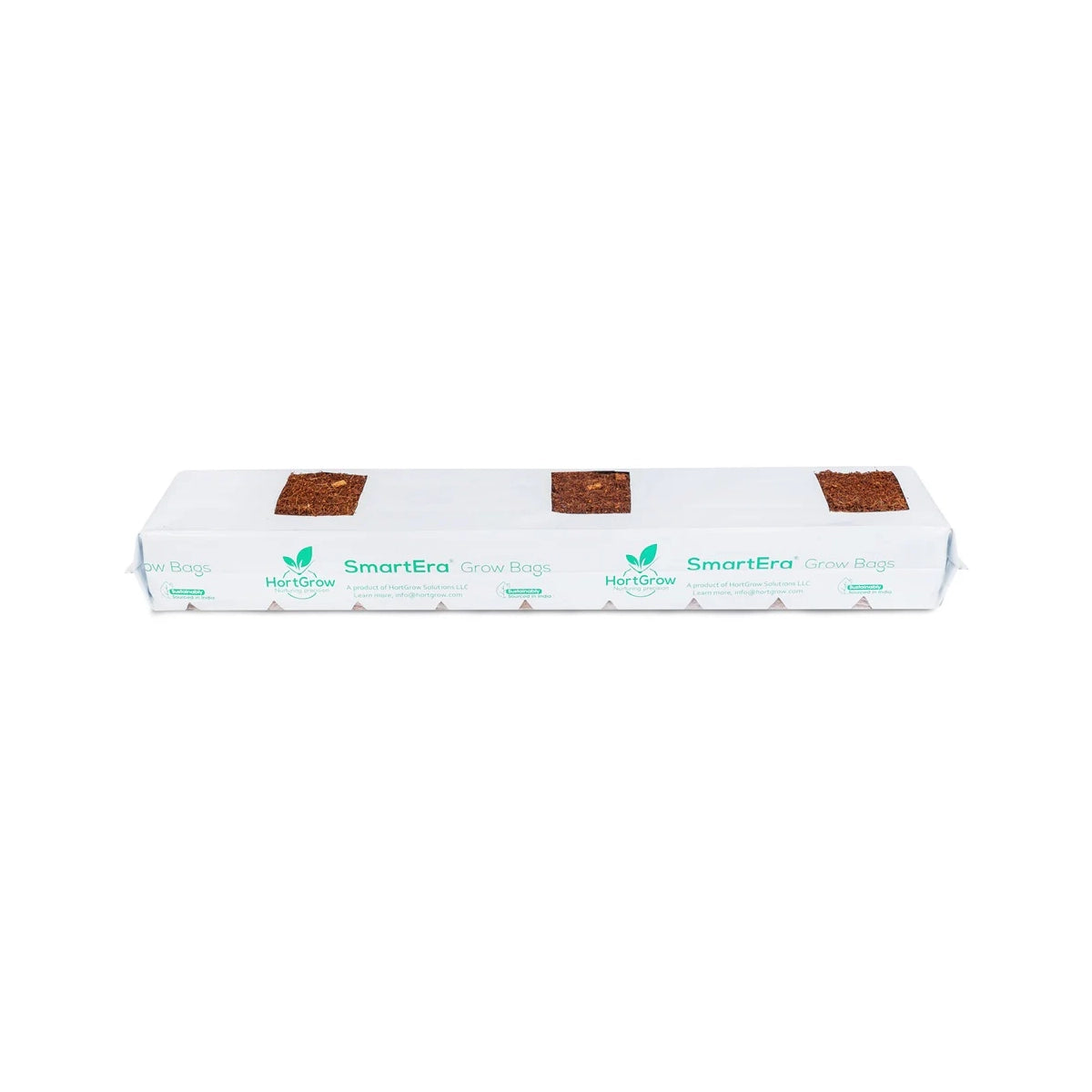
Grow bags are the commercial greenhouse standard -- pre-filled, sealed bags of buffered coco coir (typically 25-50 liter volume) that are opened, slits are cut for planting, and drip stakes are inserted for direct-to-bag irrigation. Coco grow bags are used for single-cycle high-wire tomato, cucumber, and pepper production in commercial greenhouses and increasingly in hobby growing rooms. Compressed coco blocks expand 5-8x their compressed volume when hydrated, providing an economical way to fill custom-sized containers and raised beds. Browse our full hydroponic growing media collection for coco alongside rockwool and other substrates, and our coco husk and coco mix collection for loose coco formats.
Buffering & Preparation
New coco must be properly buffered before use -- raw coco has a natural affinity for calcium and magnesium ions (cation exchange sites filled with sodium and potassium from the coconut processing) that will strip Ca and Mg from nutrient solution if the coco is not pre-charged. Buffer by soaking in a calcium-magnesium solution (500-1000 ppm Ca+Mg) before planting or purchasing pre-buffered product. Quality commercial coco products from established suppliers are supplied pre-buffered and washed. Fast shipping.
Coco Coir FAQ
What is buffering and why does coco need it?
Raw coco coir has cation exchange sites naturally occupied by sodium and potassium from the salt water environment where coconut palms grow and from the processing water used in coir production. When unbuffered coco contacts nutrient solution, it releases the held sodium and potassium while absorbing calcium and magnesium from the solution -- stripping Ca and Mg from the root zone and elevating sodium levels. Buffering pre-saturates these exchange sites with calcium and magnesium before planting, so the coco does not strip these critical elements from the nutrient solution during production. Always verify buffering status of coco products before use -- unbuffered coco in an unmanaged system causes severe calcium and magnesium deficiencies.
What is the difference between coco grow bags and compressed blocks?
Coco grow bags are factory-filled, sealed bags of processed and buffered coco -- ready to use after cutting planting slits, with no preparation beyond cutting open the bag. They are the commercial standard for single-use, drain-to-waste growing programs in greenhouse production. Compressed coco blocks are dried, compressed coco that expands 5-8x in volume when rehydrated -- more economical per liter of finished media than grow bags, suitable for filling containers and raised beds, and requiring rehydration and buffering before use. Grow bags suit production programs where consistency and convenience per unit cost is worth a premium; compressed blocks suit programs where custom container sizes or large volumes favor the lower per-liter cost of compressed product.
Can I reuse coco coir between growing cycles?
Yes -- coco can be reused for 2-4 cycles with proper preparation between each cycle. After each cycle: remove root residue, rinse the coco with clean water to remove accumulated salts, treat with dilute hydrogen peroxide solution for sanitation, re-buffer with calcium-magnesium solution, and test EC and pH before reuse. Coco that has been used for multiple cycles without intermediate flushing accumulates salt deposits and compacts over time, reducing the drainage and air porosity that makes fresh coco perform well. After 3-4 cycles, the physical structure degrades enough that replacement with fresh coco is the better choice for production quality.
What EC and pH should I target for coco growing?
Target pH 5.8-6.2 for coco programs -- slightly lower than soil programs because coco's cation exchange properties differ from organic soil. EC targets vary by crop and growth stage: seedling/early veg 1.0-1.5 mS/cm, established veg 1.5-2.0 mS/cm, early flower 2.0-2.5 mS/cm, peak flower 2.5-3.0 mS/cm. Monitor both feed EC (what you apply) and runoff EC (what drains out) -- the ratio of feed to runoff EC indicates salt accumulation in the substrate. Runoff EC significantly above feed EC indicates salt buildup requiring a flush.
How often should I water coco coir?
Coco responds best to high-frequency, moderate-volume irrigation rather than infrequent heavy watering. The goal is maintaining substrate volumetric water content (VWC) in the 60-75% range with controlled daily dry-back to 40-50% VWC as a crop steering signal. In established plants under high-intensity lighting: 4-15 irrigation events per day depending on VWC targets, growth stage, and canopy size. Each event delivers 5-15% of container volume. Automated drip systems with a substrate moisture sensor or programmed by daily evapotranspiration calculations produce the most consistent coco irrigation management.