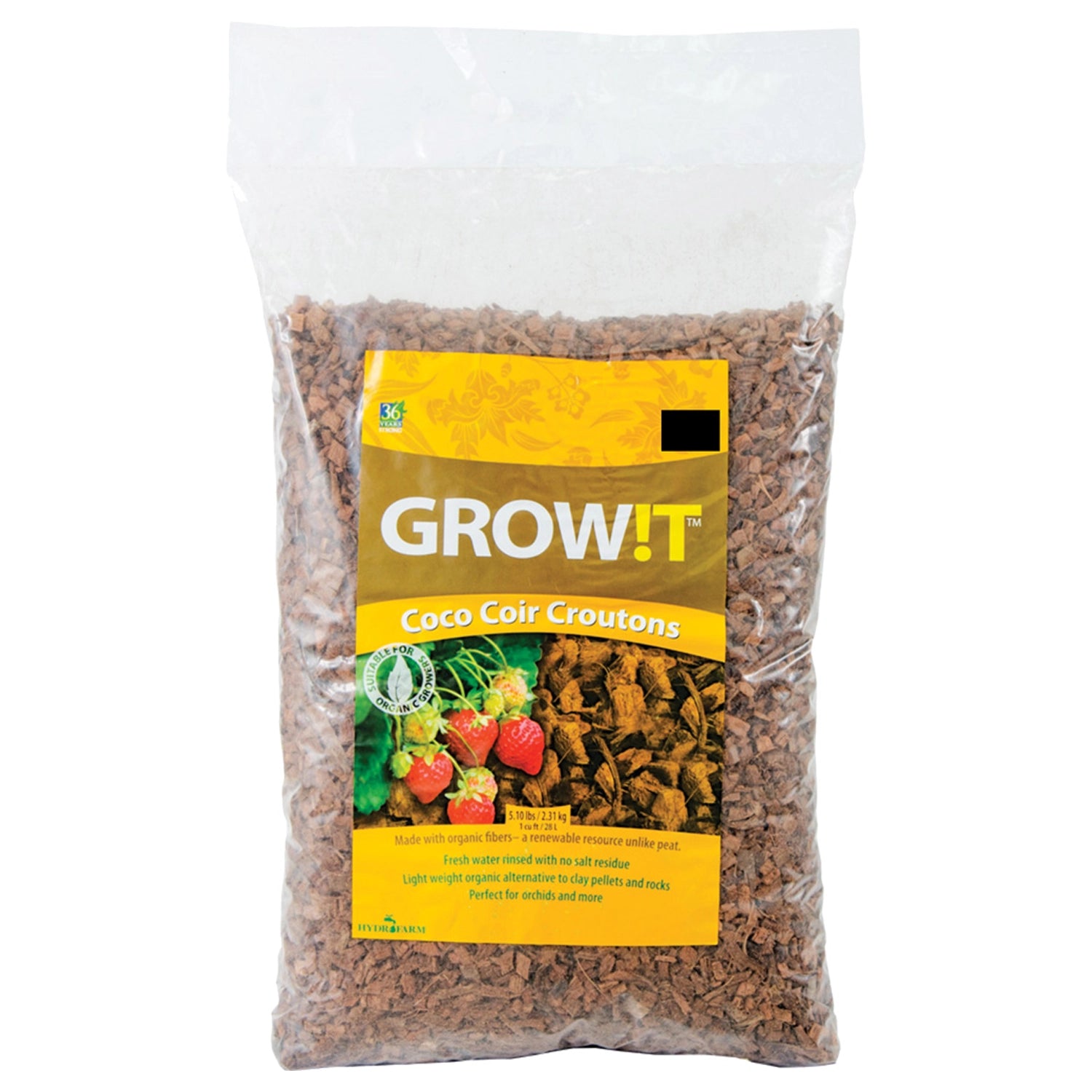
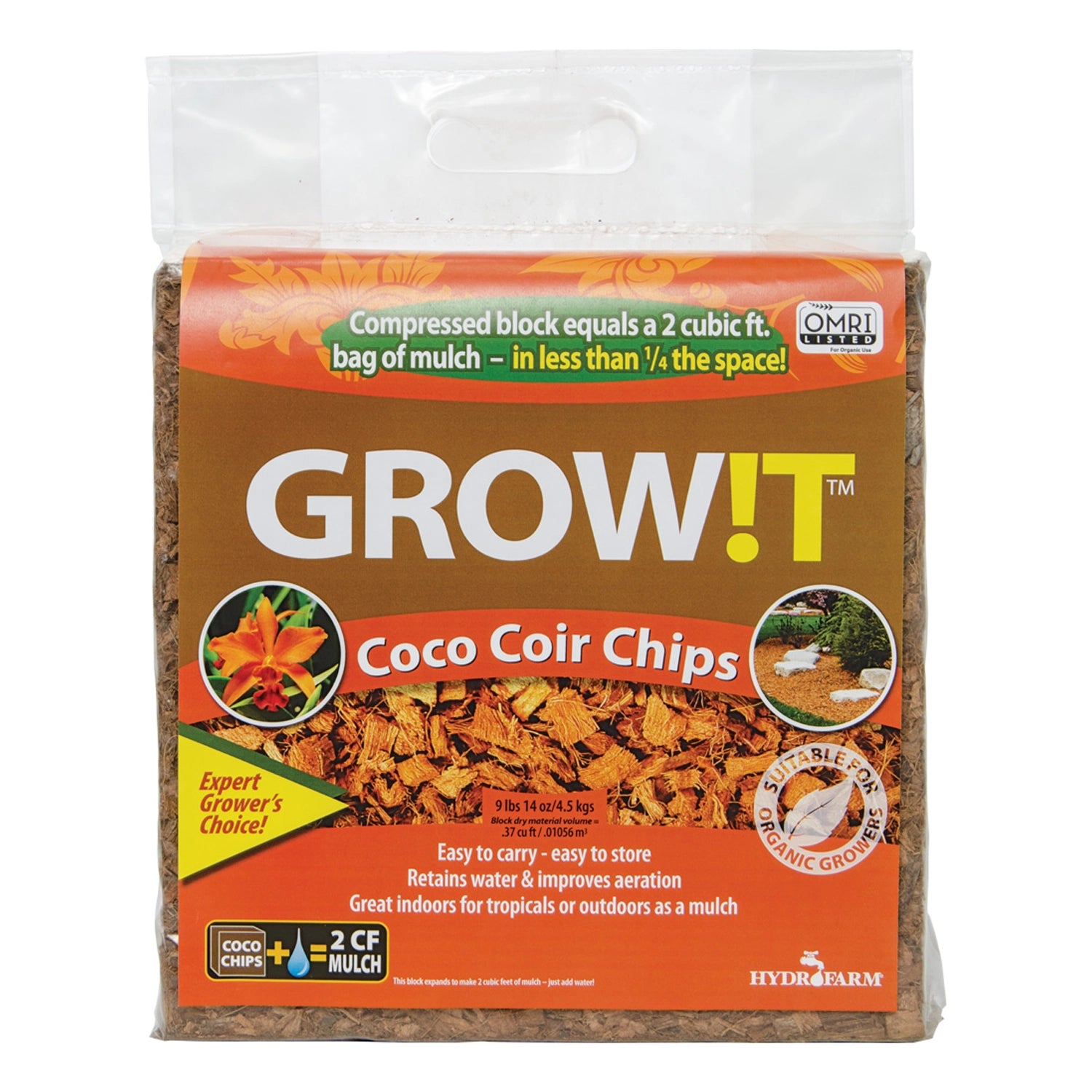
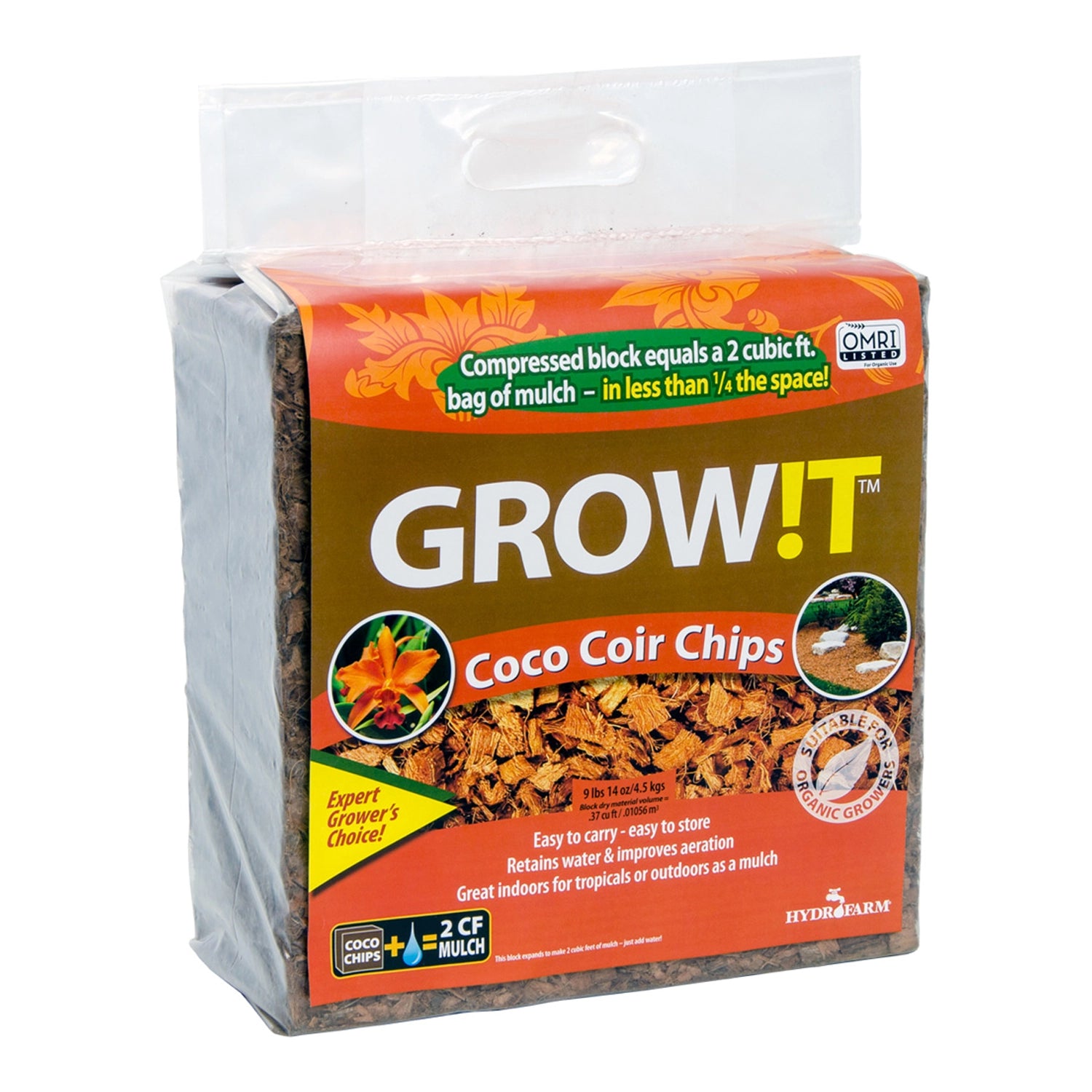
Coco Coir Chips & Coco Croutons for Hydroponic Growing
Coco coir chips and coco croutons are coarse-format coco husk products - the larger particle size fraction of processed coconut husk that is separated from fine coco coir fiber during manufacturing. Unlike fine coco coir fiber (which has small particles with high water retention and capillary action), coco chips and croutons are large, chunky pieces (typically 1-4 cm across) with low water retention and high air pore space. This coarse texture makes them valuable for specific applications where drainage and aeration take priority over moisture retention - orchid growing mixes, the drainage layer at the base of deep containers, and blended media where large air pockets alongside fine fiber particles create a structured, well-aerated root environment.
Uses in Hydroponic & Container Growing
Coco chips are the standard component in orchid growing media for good reason - their low moisture retention and large air space prevent the root rot that most orchid species are susceptible to in moisture-retentive media. For indoor food crops, coco chips serve several roles: blended with fine coco coir fiber (typically 20-30% chips by volume) to open the structure and improve drainage in large containers; layered at the base of containers above drain holes to prevent fine media from blocking drainage without impeding water flow; and used alone in flood-and-drain applications where fast drainage and re-oxygenation between irrigation events is the priority. Browse our full coco coir growing media collection for fine coco coir, chips, blocks, and blended formats.
Coco Chips vs. Hydroton (Clay Pebbles)
Both coco chips and clay pebbles (hydroton) serve as coarse, well-draining growing media with high air pore space. Key differences: coco chips are organic and eventually break down over 1-3 years (providing some organic matter to the root zone as they decompose); clay pebbles are inorganic and permanent - reusable indefinitely with proper cleaning. Coco chips retain slightly more moisture than clay pebbles; clay pebbles drain faster and hold essentially no water. For permanent media in reusable systems, clay pebbles are the more practical choice; for amended coco mixes and organic programs, coco chips integrate more naturally. Fast shipping.
Coco Coir Chips FAQ
What are coco chips and how are they different from coco coir?
Coco chips (also called coco croutons or coco husk chips) are the large-particle fraction of processed coconut husk - chunky pieces 1-4 cm across. Fine coco coir fiber is the small-particle fraction from the same raw material, with high moisture retention and capillary action. Coco chips have low moisture retention and large air pore space compared to fine coir - they drain quickly and hold little water, making them useful for drainage layer applications, orchid media, and as a structural amendment mixed into fine coco programs to open the media and improve aeration.
What ratio of coco chips to fine coco coir should I use?
For a blended coco program: 20-30% coco chips by volume blended with 70-80% fine coco coir provides noticeably improved drainage and aeration compared to fine coco alone, while maintaining adequate moisture retention for most drip-irrigated programs. Higher chip ratios (40-50%) are appropriate for larger containers where drainage from the center mass is more challenging, or for high-transpiration crops in warm environments where faster dry-back between irrigations is desired. Start at 20% and adjust based on how quickly the medium dries between irrigation events relative to your target dry-back cycle.
Do coco chips need to be buffered before use?
Like fine coco coir, coco chips have cation exchange sites that bind calcium and magnesium from nutrient solution. Pre-buffering coco chips by soaking in a Cal-Mag solution (300-500 ppm calcium and magnesium) before use prevents the chips from depleting calcium and magnesium from your nutrient program during the initial weeks of use. The buffering requirement is less critical for chips used in small percentages in blended media than for fine coco used as the primary medium - a short soak in Cal-Mag solution when hydrating compressed chip formats is adequate for most applications.
Can I reuse coco chips after a crop cycle?
Yes - coco chips last 2-4 crop cycles before degrading to the point of losing their structural benefit. After each cycle: remove plant root residue, soak in dilute H2O2 solution for 30-60 minutes to sanitize, rinse thoroughly with clean water, and allow to dry before reuse. Chips that have degraded to a mushy, fibrous texture no longer provide meaningful aeration benefit and should be replaced. Chips used in the drainage layer at container bases (not in direct contact with the main root zone) last longer than chips blended into the primary growing medium, which are exposed to more root activity and irrigation events.
Are coco chips the same as coco perlite mix?
No - coco chips and perlite serve similar functions (opening media structure, improving drainage and aeration) but are different materials. Coco chips are organic coconut husk pieces that retain some moisture and gradually decompose over time. Perlite is an inorganic expanded volcanic glass that is completely sterile, permanent, and retains essentially no moisture. In blended coco media, perlite (typically 10-30% by volume) is more commonly used than coco chips for the aeration role because it is permanent, consistent in particle size, and does not affect the CEC of the medium. Coco chips provide more moisture retention than perlite at equivalent volumes.