Biochar & Char-Coir Growing Media Blends
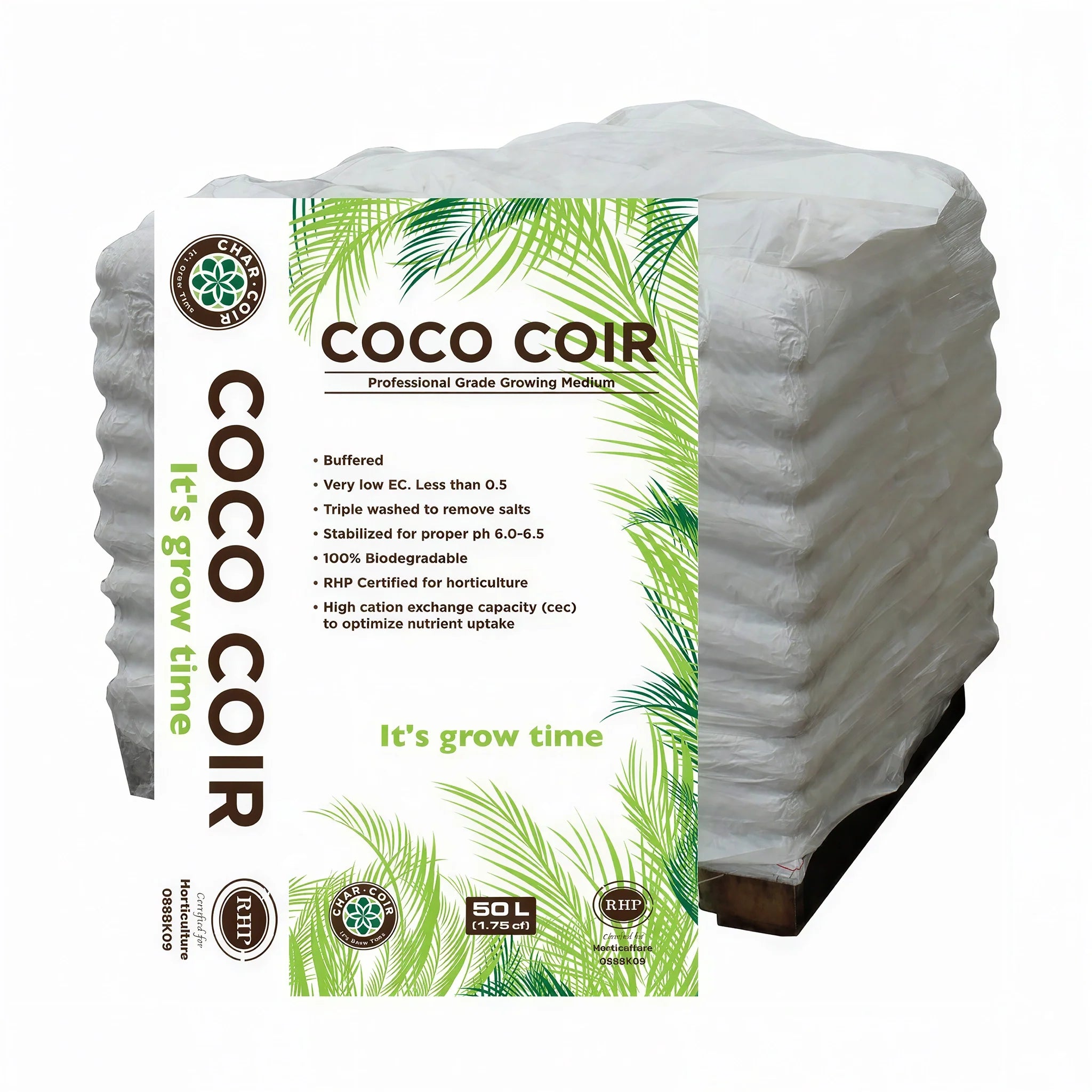
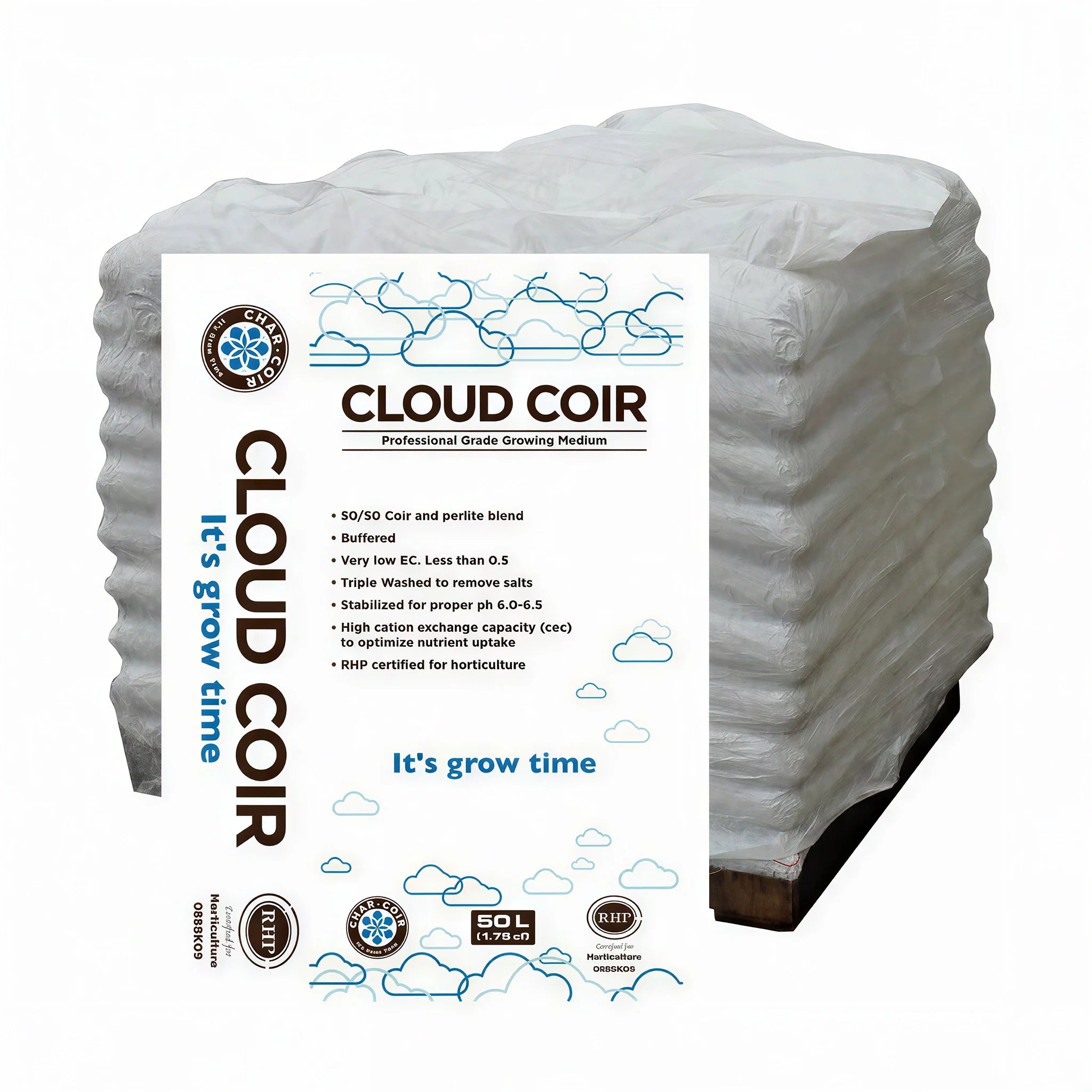
Biochar is a form of charcoal produced by pyrolysis - heating organic material (wood, agricultural waste, rice hulls) in a low-oxygen environment that converts it to a highly porous, stable carbon structure. When incorporated into growing media, biochar provides a physically and chemically stable amendment that improves cation exchange capacity (CEC), water retention, and beneficial microbial habitat in the root zone. Char-coir blends combine activated biochar with coco coir fiber to create a growing medium that benefits from coco's fibrous structure and drainage characteristics alongside biochar's long-term amendment benefits.
Benefits of Biochar in Growing Media
Biochar's highly porous structure provides several root zone benefits: high CEC that holds positively charged nutrient ions and releases them gradually to plant roots, reducing nutrient leaching between irrigation events; physical pore structure that provides habitat for beneficial bacteria and fungi; and moderated moisture fluctuations by holding water in its porous matrix and releasing it gradually. Biochar also provides long-term stability - it does not decompose like compost or organic matter, persisting in the growing medium indefinitely. Pair with a quality organic nutrient program to maximize the biological activity that biochar supports.
Char-Coir vs. Plain Coco Coir
Plain coco coir has excellent drainage and aeration but relatively low CEC compared to soil - nutrients applied in solution are quickly leached through. Biochar-amended coco increases CEC, slowing nutrient leaching and providing a buffer of held nutrients between irrigations. This benefits hand-watered or infrequently irrigated programs most significantly. For automated high-frequency drip programs where constant nutrient delivery makes high CEC less important, the difference between plain coco and char-coir blend is less significant. Fast shipping.
Biochar & Char-Coir FAQ
What is biochar and how does it improve growing media?
Biochar is a stable carbon material produced by pyrolyzing organic matter in a low-oxygen environment. In growing media, it contributes: high cation exchange capacity (CEC) that holds nutrient ions and releases them gradually to plant roots, reducing leaching; physical pore structure that provides habitat for beneficial bacteria and fungi; improved water retention in the porous matrix; and long-term stability (biochar does not decompose like compost or organic matter, persisting in the growing medium indefinitely).
How much biochar should I add to my growing mix?
For amendment of existing coco coir, peat, or potting mix: 5-15% biochar by volume is the commonly recommended range. Higher rates (above 20-25%) can negatively affect drainage and aeration in some media types. For pre-blended char-coir products, use as directed at the manufacturer's recommended ratio. When incorporating biochar into an existing program, introduce at modest rates first (5-10%) and observe plant response - biochar's high CEC can affect how quickly applied nutrients are available, which may require slight nutrient program adjustment.
Does biochar work in hydroponic systems?
Biochar's benefits are most pronounced in soil and heavily amended organic programs where its CEC and microbial habitat properties interact with the existing growing ecosystem. In sterile inert hydroponic media (straight perlite, rockwool, hydroton), biochar provides less incremental benefit because the sterile environment does not have the microbial community that biochar's porous structure supports. In coco coir programs with beneficial bacteria inoculants, biochar provides a favorable habitat for those organisms, potentially improving their establishment and persistence.
Is biochar the same as activated carbon?
No - they are related but different materials with different applications. Biochar is produced at lower pyrolysis temperatures (350-700 degrees C) without the steam or chemical activation process used for activated carbon. Biochar is used as a growing media amendment for CEC, water retention, and microbial habitat benefits. Activated carbon is produced at higher temperatures with an activation step that maximizes surface area - it is used for water filtration and air filtration (carbon filters). Biochar is not an effective filter; activated carbon is not an appropriate growing media amendment.
Can I make my own biochar for growing?
Yes - biochar can be produced from wood or other carbon-rich organic materials through pyrolysis in a low-oxygen environment (typically 350-700 degrees C for 2-4 hours in a retort or modified container that excludes oxygen during heating). Before using DIY biochar in growing applications, charge it by soaking in compost tea, liquid nutrients, or vermicompost - fresh biochar has a high surface area that initially adsorbs nutrients from the solution rather than contributing them. Charging saturates these sites before the biochar contacts plant roots.