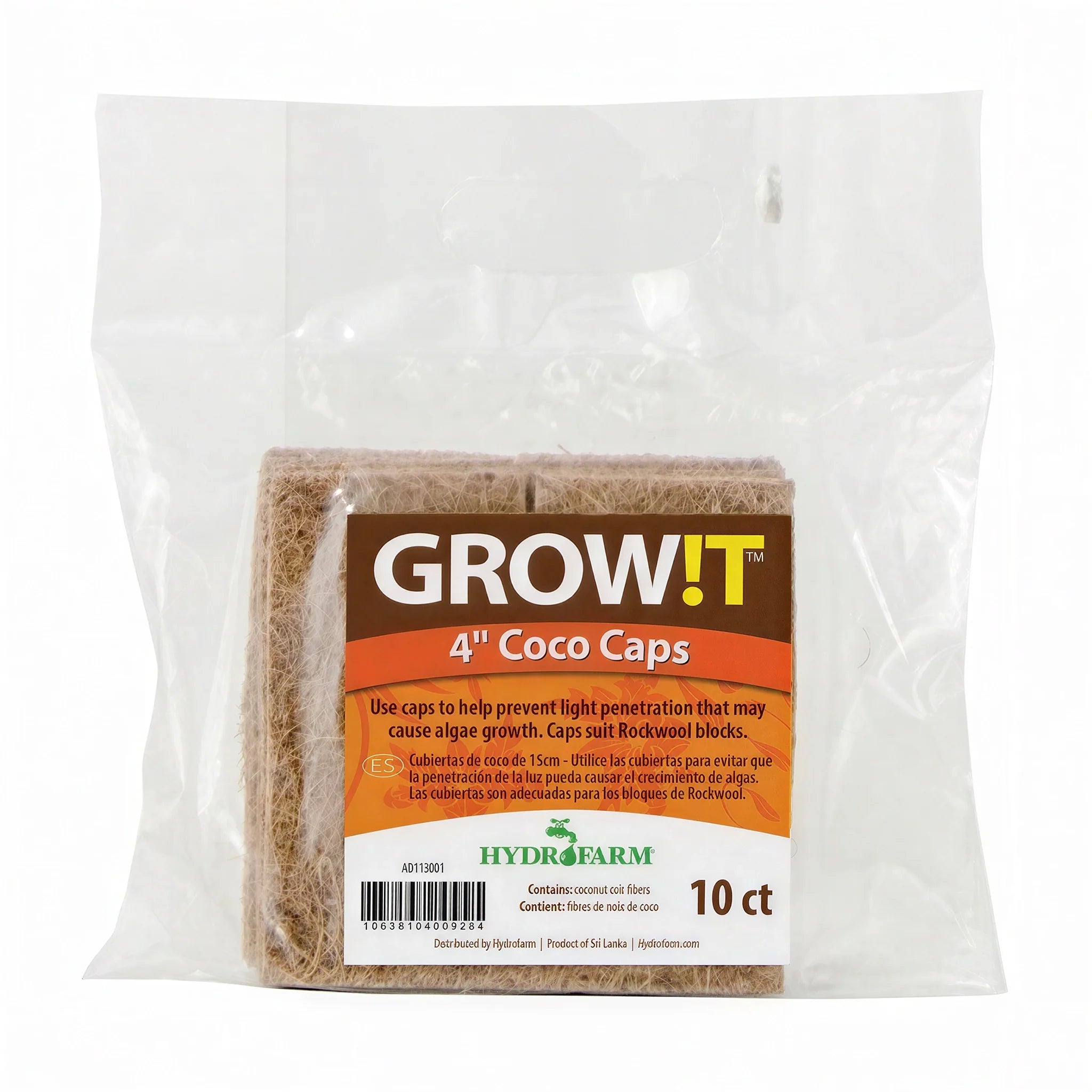
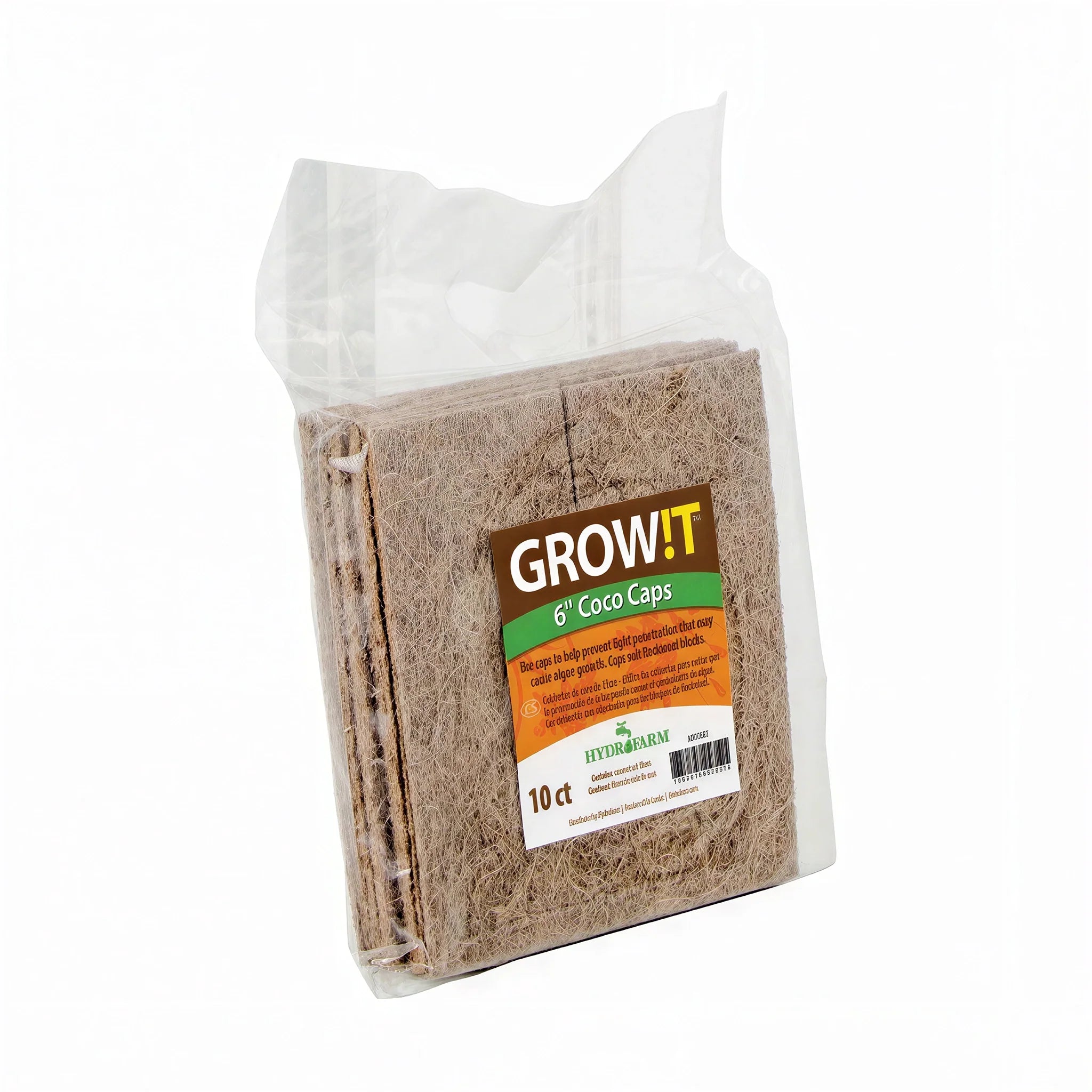
Coco Block Covers & Rockwool Slab Wraps
Block covers and slab wraps are opaque plastic sleeves or foil-backed covers that enclose coco grow bags, rockwool slabs, and other substrate blocks in commercial drip-irrigated slab growing systems. The primary function is light exclusion - exposed coco or rockwool slab surfaces under grow lights develop algae rapidly, particularly in the moist, nutrient-rich growing environment around the plant stem. Algae growth on the substrate surface is not directly harmful to plants but creates conditions that promote fungus gnats, shore flies, and other substrate-surface pest populations, and consumes dissolved oxygen in the root zone over time.
Light Exclusion Benefits
Beyond pest management, substrate covers also reduce evaporative water loss from the slab surface - an uncovered coco slab under intense grow lighting evaporates moisture continuously from the exposed surface, creating a moisture gradient from the dry top of the slab to the wetter interior. This gradient affects root distribution and can mislead container-level moisture assessments. Covered slabs lose moisture primarily through plant transpiration rather than surface evaporation, producing a more uniform moisture distribution throughout the substrate profile and more accurate substrate moisture readings. Browse our complete coco coir growing media collection for slabs and bags alongside covers.
Installation & Sizing
Covers are sized by the grow bag or slab dimensions they enclose - verify the bag or slab dimensions before ordering covers to ensure correct fit. Standard commercial greenhouse slab sizes (100x15x7.5 cm is common for tomato and cucumber production) have corresponding cover sizes. Covers are typically applied before the slab is placed on the bench, with slits cut through both the cover and bag for planting and drip stake insertion. White-top, black-bottom covers reflect grow light from the top surface (reducing heat at the substrate) while blocking light transmission through the opaque black underside. Fast shipping.
Coco Block Covers FAQ
Why do I need a cover on my coco grow bag?
Grow bag covers serve two practical purposes. First, light exclusion: exposed coco or rockwool surfaces under grow lights develop algae rapidly. Algae on the substrate surface harbors fungus gnats and shore flies, competes for dissolved oxygen, and produces organic debris that can clog drip emitters. Second, evaporation reduction: an uncovered slab under intense lighting loses significant moisture directly from the surface rather than through plant uptake, creating dry surface layers over wet interiors that mislead substrate moisture assessments and waste irrigation water.
Can I make my own grow bag covers?
Yes - black polyethylene film or white-on-black poly sheeting (white exterior, black interior) cut to the bag dimensions works as a functional cover. White-top poly is preferred for high-intensity lighting environments where light reflection from the cover surface contributes meaningfully to under-canopy light levels. Cut a strip of poly wide enough to wrap around the slab circumference with overlap, secure at the underside with tape or clips, and cut planting and stake insertion slits through the cover and bag simultaneously. Purpose-made covers are more convenient and precisely sized for commercial bag formats.
Do I need covers for both coco bags and rockwool slabs?
Both coco bags and rockwool slabs benefit from covers for the same reasons - light exclusion and evaporation reduction. Rockwool slabs are perhaps more commonly sold with purpose-fit covers because the uniform rectangular dimensions of commercial rockwool slab formats make standardized covers practical. Coco grow bags vary more in size and shape between manufacturers, which can make finding exact-fit covers slightly more difficult. Both substrate types develop the same algae, fungus gnat, and moisture management issues when left uncovered under production lighting conditions.
Does the cover color matter?
The interior (facing the substrate) must be black or opaque to block light. The exterior color affects light reflection back into the canopy: white exterior covers reflect light upward and to the sides, contributing to under-canopy PAR levels and increasing light use efficiency in the growing space. Black exterior covers absorb light rather than reflecting it, providing no reflective benefit. In commercial production under HPS or LED lighting where every reflective surface contributes to canopy light distribution, white-top covers are the standard choice for their combined light reflection and light blocking function.
How do I cut planting holes through the cover and bag?
Mark the planting position on the cover surface, then use a sharp utility knife or purpose-made hole-cutting tool to cut through both the cover and the bag simultaneously. Standard planting hole size is matched to the rockwool starter cube or coco plug being transplanted - typically a 3x3 inch or 4x4 inch square. Cut a cross (+) or square opening rather than removing a circle - the flaps of the cross cut can be folded inward and under the transplant plug to maintain tight contact around the stem. Cut drip stake slots as narrow slits rather than wide holes to minimize the exposed substrate surface around each stake.