VidaWool Rockwool Growing Media
VidaWool is a US-manufactured rockwool (mineral wool) growing media brand producing propagation cubes, transplant blocks, and commercial grow slabs for hydroponic, greenhouse, and CEA production. As a domestic alternative to Grodan -- the imported Dutch category leader -- VidaWool offers comparable horticultural performance with the supply chain advantages of US manufacturing: shorter lead times, reduced shipping cost and carbon footprint, and domestic customer service. VidaWool is produced to horticultural specification with controlled fiber density and drainage characteristics suited to professional greenhouse and indoor production programs.
VidaWool Product Line
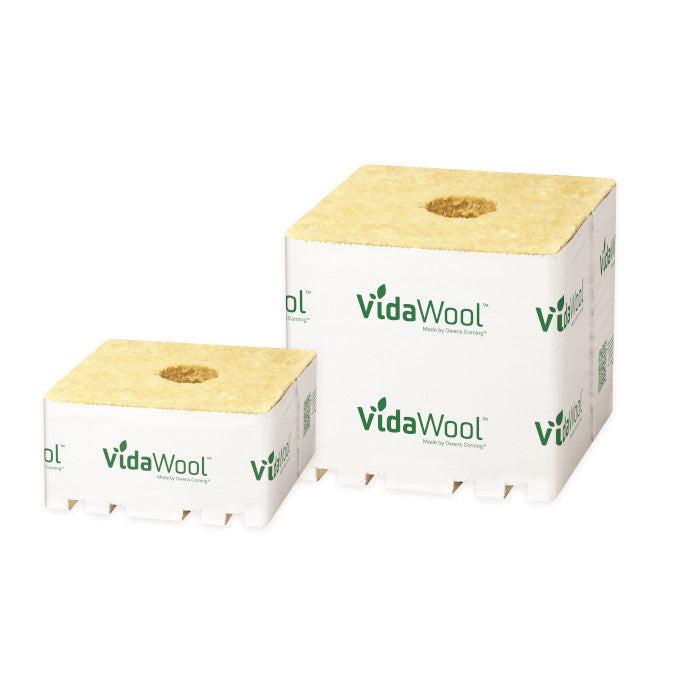
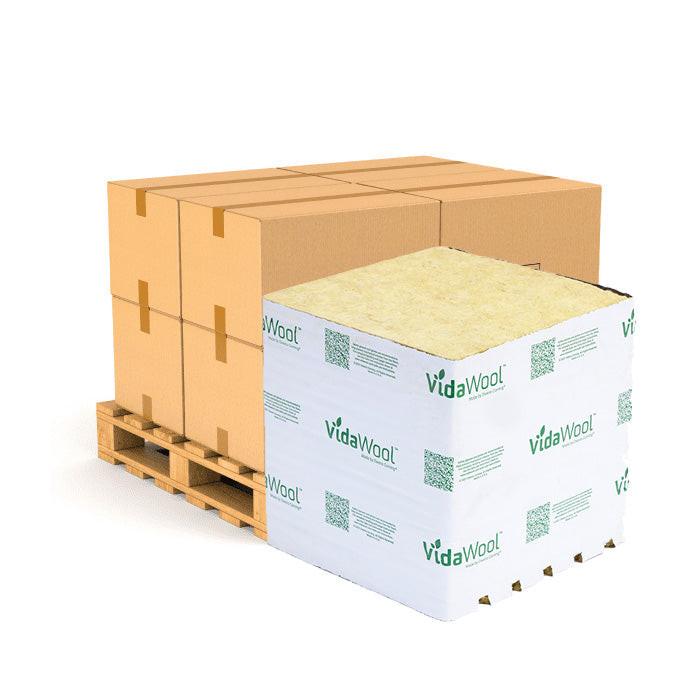
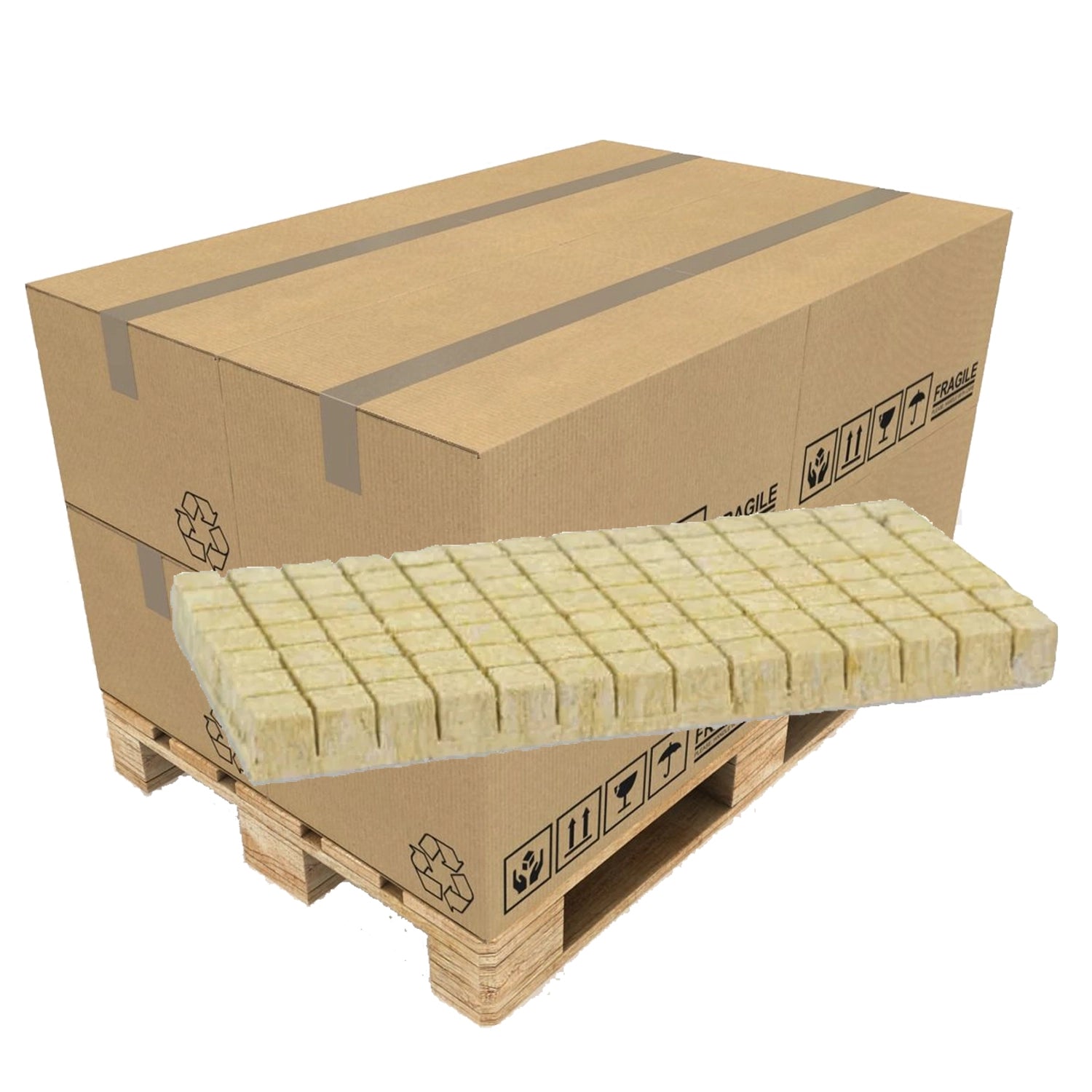
VidaWool produces the complete range of rockwool formats used in professional horticulture. Propagation cubes (1-inch and 1.5-inch) are used for seed germination and clone rooting in humidity domes and aeroponic cloners. Transplant blocks (3-inch and 4-inch) receive established propagation cubes for continued vegetative development. Grow slabs (standard 6-inch x 36-inch and 8-inch x 36-inch commercial formats) are the production-stage medium for long-cycle crops -- tomatoes, cucumbers, peppers, and similar high-value commercial vegetables. All VidaWool formats require the same pre-soak preparation as any rockwool: soak in pH 5.5 water for 1-2 hours to buffer the naturally alkaline mineral binder chemistry before seeding or transplanting. For a complete comparison of VidaWool and Grodan rockwool performance characteristics, see our updated rockwool growing guide.
VidaWool for Commercial CEA Production
VidaWool's slab line is designed for commercial CEA operations running high-intensity drip irrigation programs on long-cycle crops. Their slabs provide consistent drainage rates and air porosity across the full slab volume -- the predictable physical properties that commercial irrigation programs rely on to maintain crop steering targets. Commercial operations considering VidaWool as an alternative to Grodan for new builds or production cycle transitions should run a small-scale side-by-side comparison in their specific crop and irrigation system before full-scale changeover -- physical and drainage characteristics are comparable but not identical, and irrigation parameters may require minor recalibration. Expert support available.
VidaWool FAQ
What is the difference between VidaWool and Grodan?
VidaWool and Grodan are both horticultural-specification rockwool products made from the same basic material -- molten basaltic rock spun into fibers. Grodan is the Dutch-manufactured category benchmark with the most extensive commercial production data and the most widely referenced performance specifications in the greenhouse industry. VidaWool is US-manufactured with comparable physical specifications, offering domestic supply chain advantages (shorter lead times, lower shipping cost). Physical performance is comparable for most production applications. Operations transitioning between brands should validate irrigation parameters in their specific system with a comparison run before full-scale production changeover.
How do I prepare VidaWool before use?
Pre-soak VidaWool in pH 5.5 water for 1-2 hours before seeding or transplanting. This buffers the naturally alkaline mineral binder chemistry (unbuffered pH is approximately 7-8) to a plant-safe range. After soaking, drain to field capacity -- VidaWool should feel moist when lifted but not dripping. Do not squeeze rockwool to remove excess water; compression permanently damages the fiber structure and reduces the air porosity that makes rockwool effective as a growing medium. Verify the soaked medium tests at pH 5.5-6.5 before use.
Can VidaWool be used for all crop types?
Yes -- VidaWool is suitable for all crops that grow well in rockwool, including vegetables (tomatoes, cucumbers, peppers, lettuce), herbs, ornamental crops, and any plant variety used in commercial CEA production. The inert nature of rockwool makes it compatible with any nutrient program and any crop without the specific nutrient interactions that organic growing media can create. Crop type primarily influences slab size and irrigation program parameters rather than rockwool brand selection.
Is VidaWool available in the same sizes as Grodan?
VidaWool produces propagation cubes, transplant blocks, and commercial grow slabs in the standard horticultural sizes used in professional production -- 1-inch and 1.5-inch propagation cubes, 3-inch and 4-inch transplant blocks, and 6-inch and 8-inch width grow slabs in standard 36-inch lengths. These match the most commonly used Grodan configurations. For specific size confirmation before purchasing for a production system designed around Grodan specifications, verify the exact VidaWool dimensions against your system's requirements -- slabs sized within a few millimeters differently can affect how they sit in drip trays and irrigation manifold configurations.
How is VidaWool different from other growing media like coco coir?
Rockwool and coco coir are both inert soilless growing media for hydroponic production, but with different physical properties and irrigation requirements. Rockwool has higher air porosity (95-97% when at field capacity) and faster drainage than coco coir, making it suited to very high-frequency irrigation programs and long-cycle slab production. Coco coir retains more moisture between irrigation events and has a more forgiving moisture buffer -- better suited to container growing with moderate irrigation frequency. Rockwool is the dominant commercial greenhouse substrate for high-value vegetable production; coco is the dominant substrate for container-based indoor growing programs. Neither is universally superior -- the best choice depends on your irrigation system, crop type, and production approach.