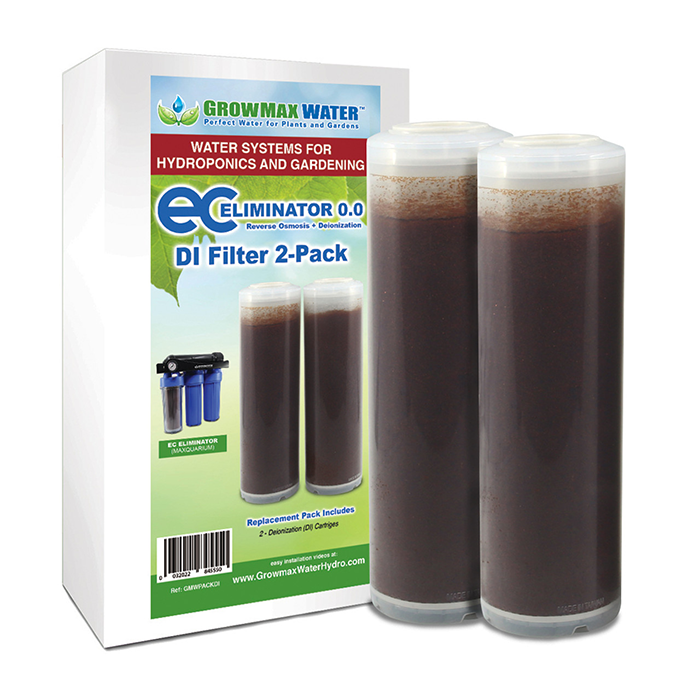
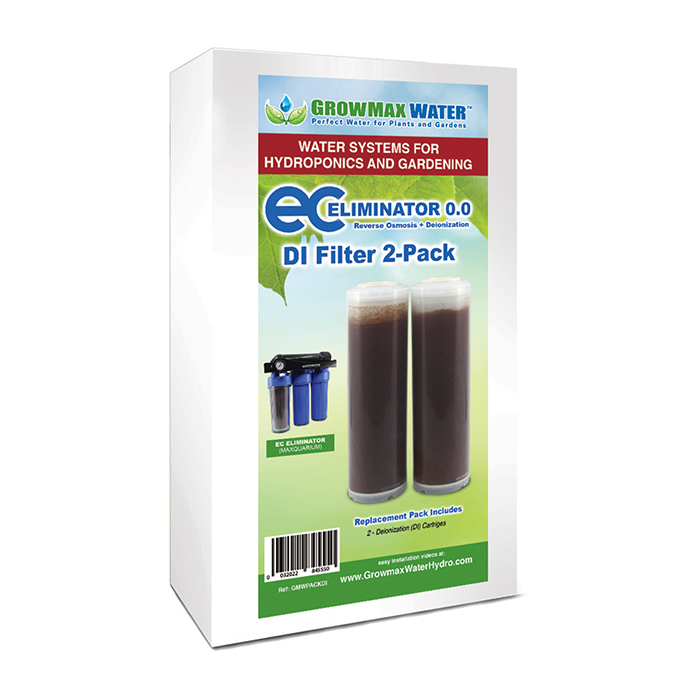
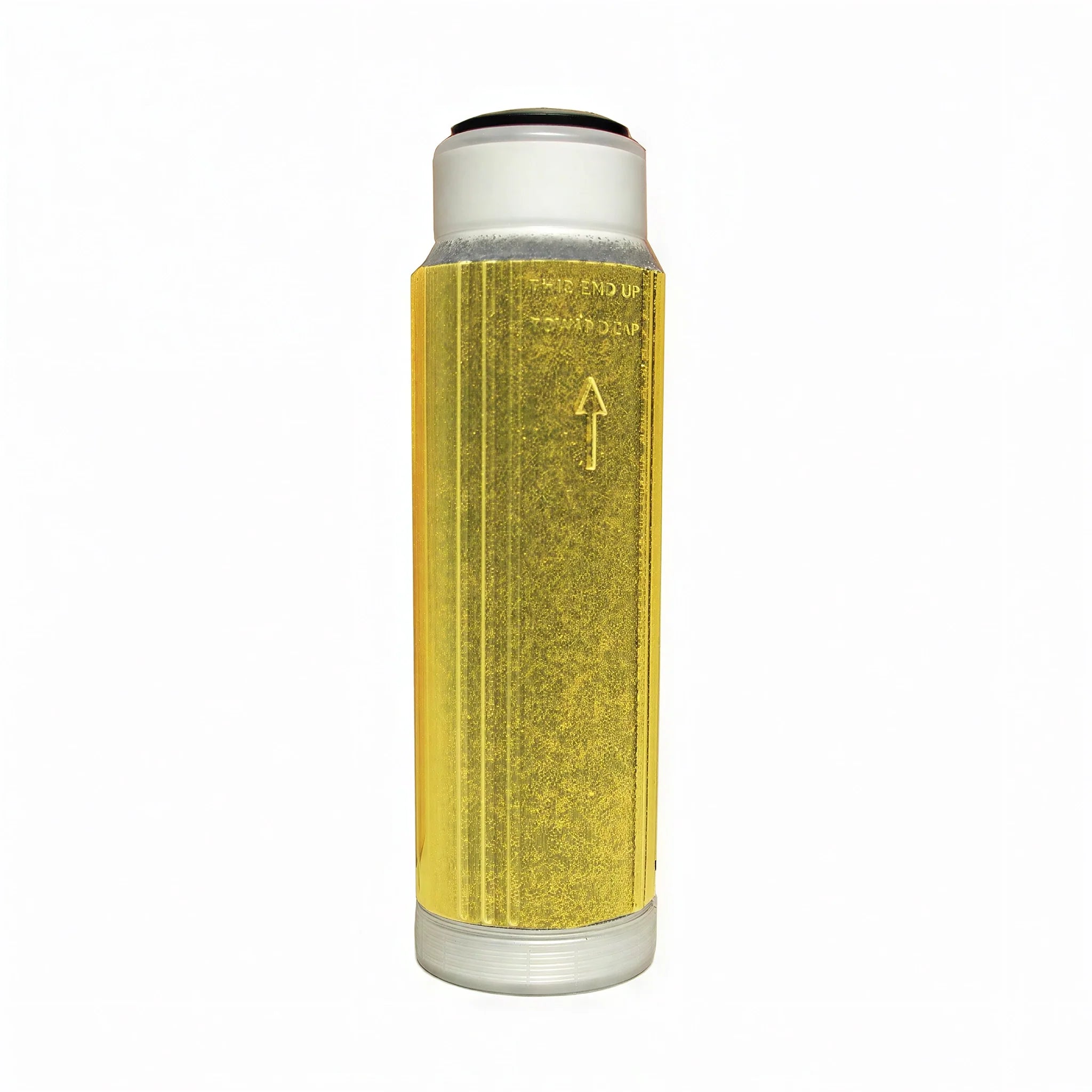
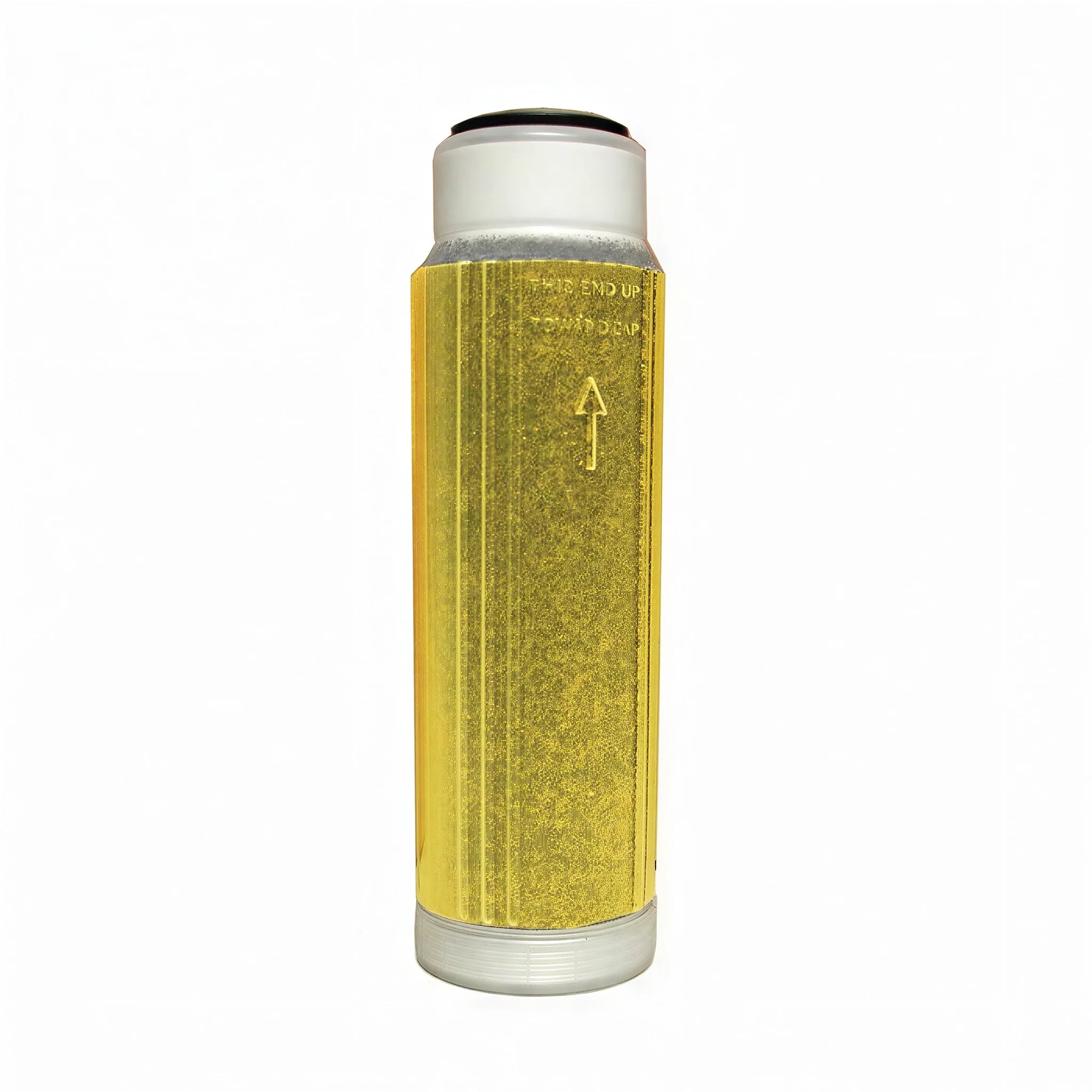
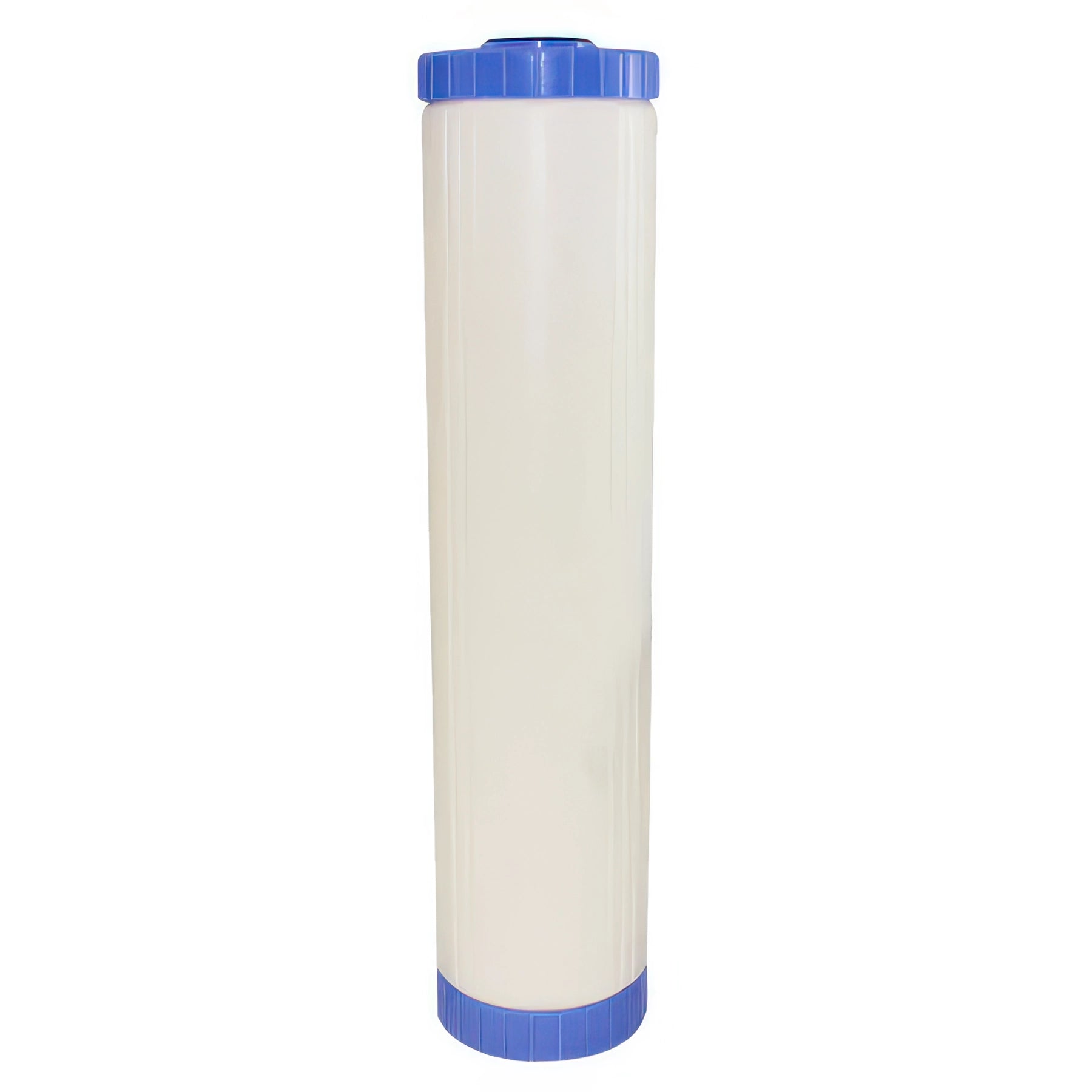
Replacement Deionization Filter Cartridges
Deionization (DI) filter cartridges use mixed-bed ion exchange resin to remove the remaining dissolved ions from reverse osmosis permeate, polishing RO water to near-zero TDS (0-10 ppm) that standard RO membranes cannot achieve alone. RO membranes reject 95-99% of dissolved solids, leaving product water at 10-50+ ppm TDS depending on source water conditions. For applications requiring ultra-pure water -- sensitive analytical testing, tissue culture, precision fertigation programs where absolute control over input mineral content is required -- a post-RO DI polisher cartridge removes the residual ions the RO membrane passed through.
How DI Resin Works
Mixed-bed DI resin combines cation exchange resin (in H+ form) and anion exchange resin (in OH- form) in a single cartridge. As water passes through, cation resin exchanges positively charged ions (calcium, magnesium, sodium) for H+ ions; anion resin exchanges negatively charged ions (chloride, sulfate, bicarbonate) for OH- ions. The H+ and OH- released combine to form H2O -- pure water with no net ion addition. The resin exhausts when all exchange sites are occupied by the captured ions and can no longer exchange H+ or OH-. Exhaustion is indicated by rising TDS in the DI output -- once output TDS rises above 10-15 ppm, the DI cartridge requires replacement. Browse the full water filtration collection for complete systems and all replacement cartridges.
Service Life & Replacement
DI cartridge service life depends entirely on the ion load entering the cartridge -- the residual TDS in the RO permeate fed to the DI stage. Higher-quality RO membranes producing lower TDS permeate extend DI cartridge life significantly. Monitor DI output TDS with an inline TDS meter and replace when output rises above 10-15 ppm. Fast shipping.
DI Filter Cartridges FAQ
Do I need a DI filter after my RO system?
A DI polisher after RO is needed only for applications requiring near-zero TDS water (0-10 ppm). For most hydroponic growing programs where the nutrient solution EC is 1.0-3.0 mS/cm (roughly 500-1,500 ppm TDS), the residual 10-50 ppm from a good RO membrane is negligible -- a DI stage is not necessary. DI polishers add meaningful benefit for: tissue culture and laboratory work requiring ultra-pure water; growing programs where the cultivar is extremely sensitive to specific mineral ions; and quality verification programs where input water mineral content must be below detection threshold for accurate analysis.
How do I know when my DI cartridge is exhausted?
Monitor the TDS of the DI unit output with an inline or handheld TDS meter. A fresh mixed-bed DI cartridge produces 0-5 ppm TDS from typical RO input. As the resin exhausts, output TDS rises -- replace the cartridge when output TDS exceeds 10-15 ppm. The exhaustion can be gradual or can happen relatively quickly once the resin capacity is reached. Installing a continuous TDS monitor on the DI output with a high-TDS alarm provides the earliest possible warning of cartridge exhaustion without requiring manual testing.
Can DI resin be recharged or regenerated?
Mixed-bed DI resin as used in cartridge form is designed for single-use service -- the combined cation and anion resin in a mixed cartridge cannot be easily regenerated by the end user because the two resin types require different regenerant chemicals (strong acid for cation resin, strong base for anion resin) that cannot be applied to the mixed bed simultaneously without separating the resins first. Bulk DI resin in laboratory systems is regenerable by trained technicians with the appropriate chemical handling facilities. For grow room applications: replace the exhausted cartridge with a fresh one rather than attempting regeneration.
What is the service life of a DI cartridge?
DI cartridge service life is measured in total ion load capacity (milliequivalents of ions per liter of resin) rather than time or gallons, because service life depends entirely on the ion concentration in the input water. A DI cartridge fed 50 ppm TDS RO permeate lasts approximately 4x longer than the same cartridge fed 200 ppm TDS input. Typical service life for a standard mixed-bed DI cartridge in a residential-scale grow room RO system producing 50-100 ppm permeate: 1,000-3,000 gallons before exhaustion. Track output TDS rather than gallons processed for the most accurate exhaustion indication.
Is DI water safe for plants?
DI water (0 ppm TDS) is safe for plants when complete hydroponic nutrients are added to bring the EC to the appropriate level for the crop. Plants need mineral nutrition -- pure water without any dissolved nutrients would cause severe deficiencies. DI water is used as the starting point for a precisely formulated nutrient solution, not applied to plants directly. The 0 ppm baseline provides maximum control over the final nutrient solution composition because there is no variable background mineral content to account for in the nutrient formulation, unlike tap water or even standard RO water that may have 10-50 ppm residual minerals.