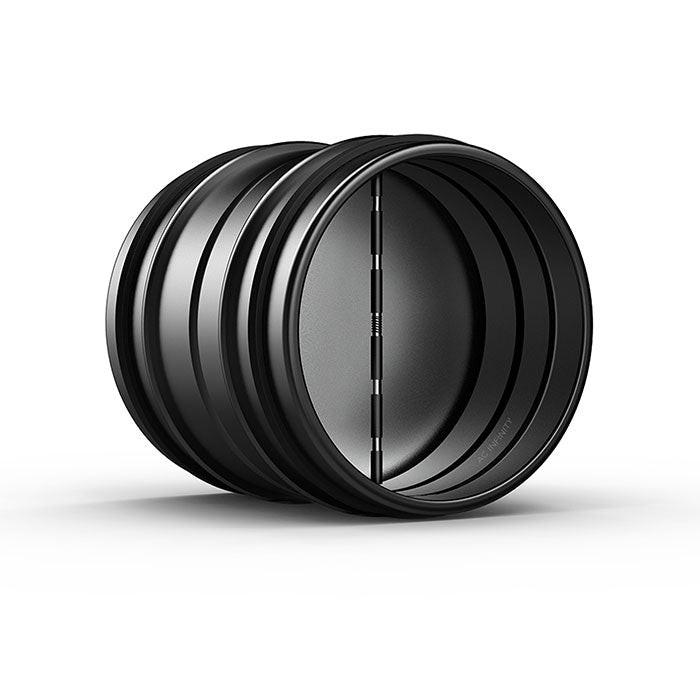
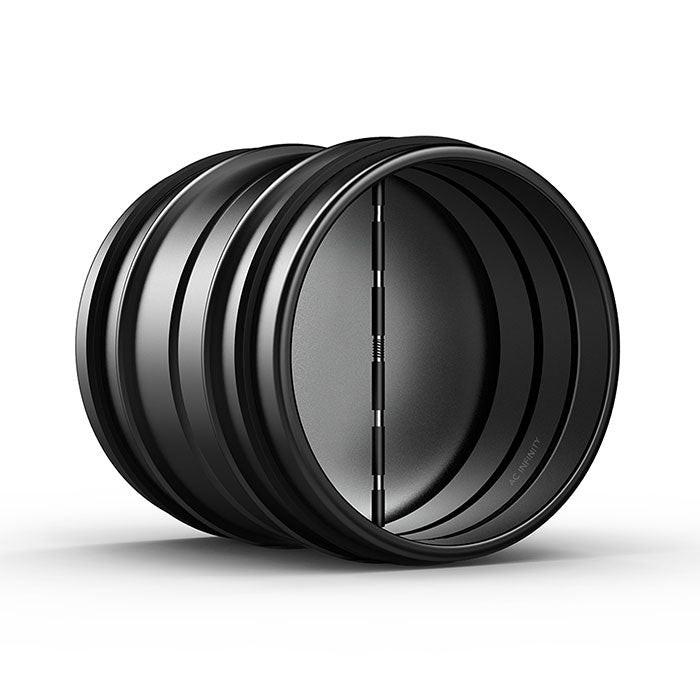
Duct Dampers & Backdraft Dampers for Grow Room Ducting
Duct dampers are valves installed in ductwork that control, restrict, or stop airflow through the duct -- most importantly preventing the reverse airflow that occurs through inactive exhaust ducts when pressure differentials, wind, or natural convection would otherwise push air backward through the ventilation system. A backdraft damper (the most common type in growing applications) uses a lightweight flapper, spring-loaded vane, or gravity-actuated plate that opens freely in the intended flow direction and closes automatically when forward flow stops, preventing reverse airflow without any active control.
Why Backdraft Dampers Matter in Growing Environments
Reverse airflow through an inactive exhaust duct introduces untreated outside air into the growing environment -- bypassing intake filters, introducing temperature and humidity fluctuations, and potentially carrying pest insects, spores, and pathogens from outside. In CO2-enriched growing environments, reverse airflow through exhaust ducts dilutes the enriched CO2 atmosphere between fan cycles. In multiple-room setups where rooms are connected through shared ducting, back pressure from one room's exhaust system can push odorous or pathogen-laden air from one room into another through inactive shared duct sections. A backdraft damper in each exhaust duct prevents all of these cross-contamination and efficiency problems. Browse complete fan and filter kit options and our full inline fans collection.
Manual Dampers
Manual butterfly dampers (a rotating plate in the duct controlled by an external lever) allow manually adjusting airflow restriction in a duct -- useful for balancing airflow in multi-branch ventilation systems where one branch receives more than its share of airflow due to shorter path length or lower resistance. Fast shipping.
Duct Dampers FAQ
What is a backdraft damper and do I need one?
A backdraft damper is a one-way valve in the duct that allows airflow in the intended exhaust direction and closes automatically to prevent reverse airflow when the fan is off. You need one in any exhaust duct where: reverse airflow would introduce untreated outside air into the growing environment; CO2 enrichment makes air infiltration between fan cycles costly; multiple rooms share a duct system where back pressure from one room could push air into another; or where exterior wind pressure would push air backward through an unsealed exhaust opening.
Does the grow tent port have a built-in damper?
Most grow tent duct ports are simple openings without backdraft dampers -- they rely on the inline fan to block reverse airflow, which fans do not effectively do when stopped. An inline fan with stopped blades offers minimal resistance to reverse airflow. Install a separate backdraft damper in the exhaust duct between the tent port and the fan outlet, or use a fan-integrated backdraft damper if the fan includes one. This prevents outside air from flowing backward through the stopped fan and into the tent environment.
What type of damper should I use in my grow room ductwork?
Backdraft dampers for grow room applications: spring-loaded dampers work in any duct orientation (horizontal, vertical, angled); gravity-flap dampers require horizontal duct installation where the flap can fall closed under gravity when flow stops. For inline fan exhaust ducts in grow tents: a spring-loaded backdraft damper at the tent port or immediately after the fan outlet is the most practical installation. For greenhouse shutter fans: the integrated motorized or spring shutters on the fan housing serve the backdraft damper function and additional duct dampers are not typically needed.
Can a damper reduce noise from my ventilation system?
Backdraft dampers do not significantly reduce fan noise. Duct silencers (acoustic insulation-lined duct sections) are the appropriate noise reduction tool for grow room ventilation systems. Some backdraft dampers produce a metallic rattling sound from the flapper plate vibrating in the airflow -- this is a sign the damper is slightly oversized for the duct airflow velocity, or that the flapper is not properly balanced. Select a damper rated for the actual duct diameter and fan CFM rather than the next size up.
How do I install a backdraft damper in my ventilation duct?
Install the damper in-line in the exhaust duct in the correct flow direction -- an arrow on the damper body indicates the intended airflow direction, which must match the fan exhaust direction. Position the damper after the fan outlet (on the exhaust side of the fan, not the intake side) for most applications. Secure the damper into the duct run using foil tape at both connections -- the damper housing flanges typically slip into the flex duct ID or slip over the duct OD like other inline fittings. Verify the damper flap moves freely in the forward flow direction and closes fully under gravity or spring tension when flow stops.