Coco Coir & Coco Growing Media for Hydroponics & Soil Grows
Coco coir -- derived from the fibrous husk between the outer shell and inner seed of a coconut -- is one of the most widely used growing media in modern commercial horticulture. It is 100% natural, renewable, and biodegradable. As a growing medium, coco excels at holding both moisture and oxygen simultaneously in the root zone -- its fibrous structure provides excellent aeration while retaining 30-40% of its volume in water. This combination of air porosity and water retention makes it well-suited to both hand-watering schedules and high-frequency automated drip irrigation programs used in crop steering production methods.
Coco Coir Formats: Loose Bags, Compressed Bricks, Grow Bags & Slabs
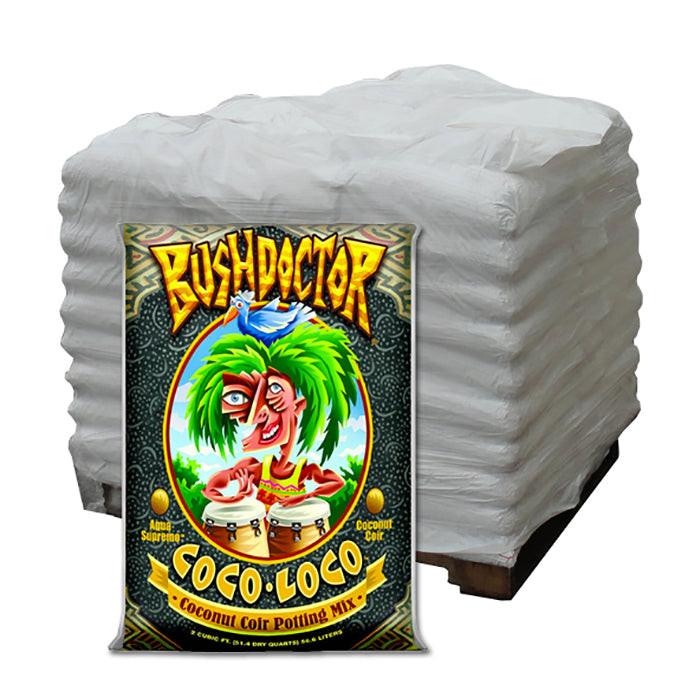
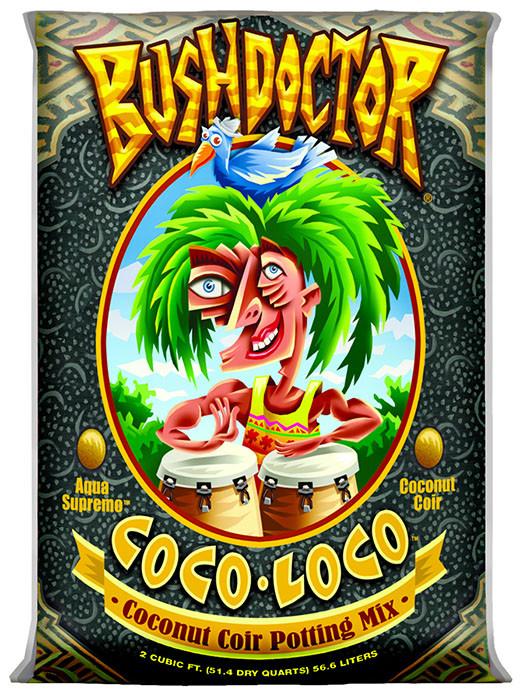
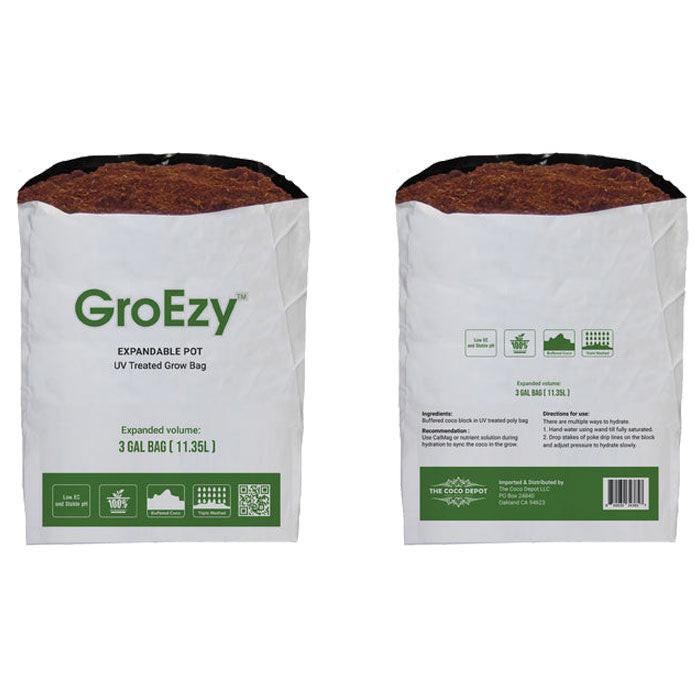
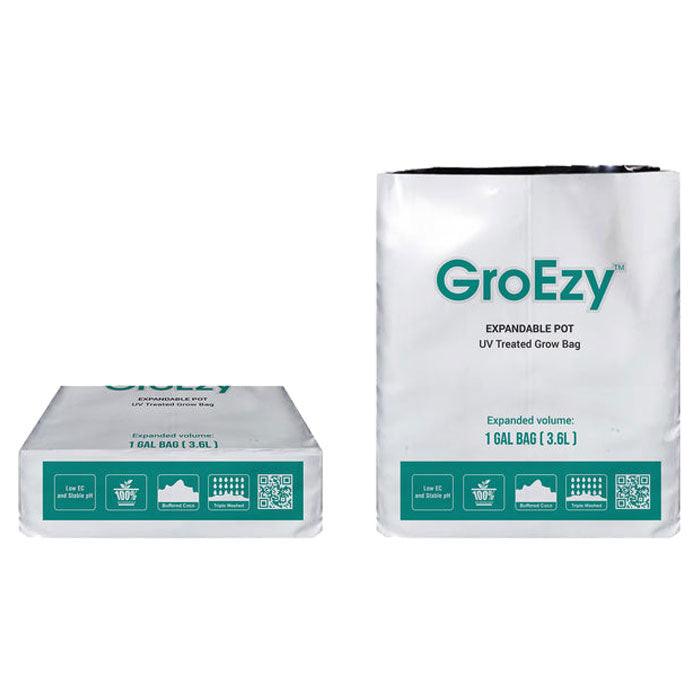
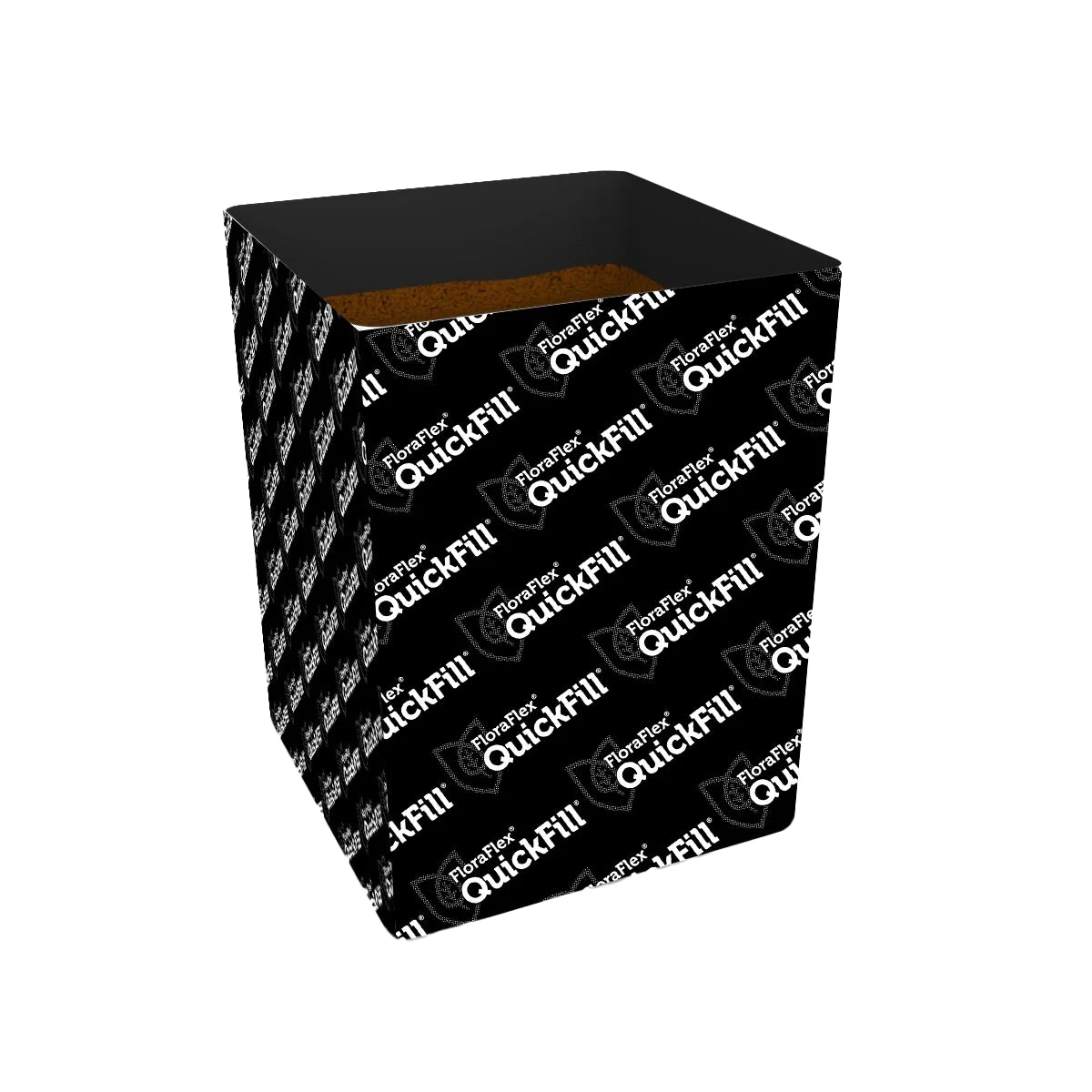
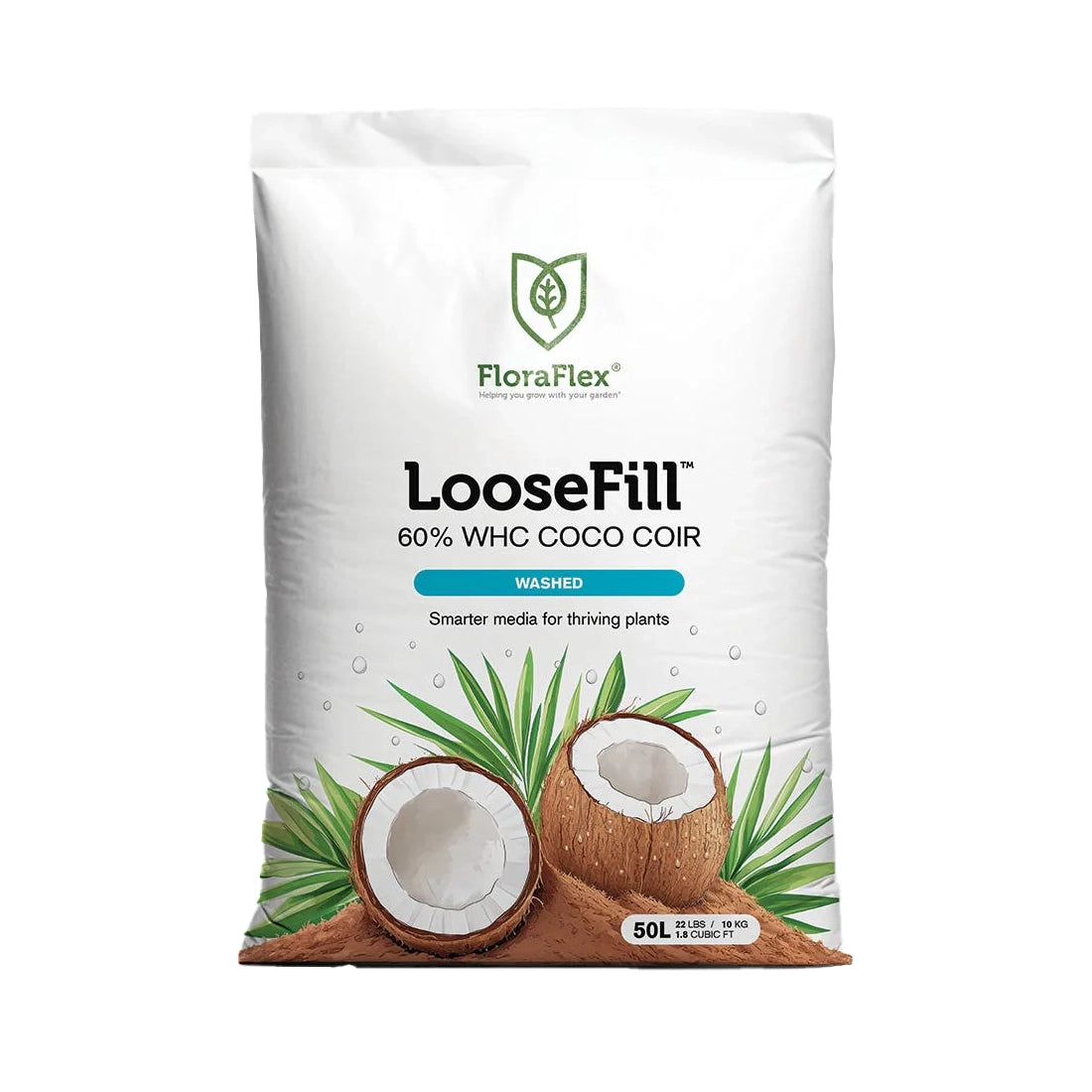
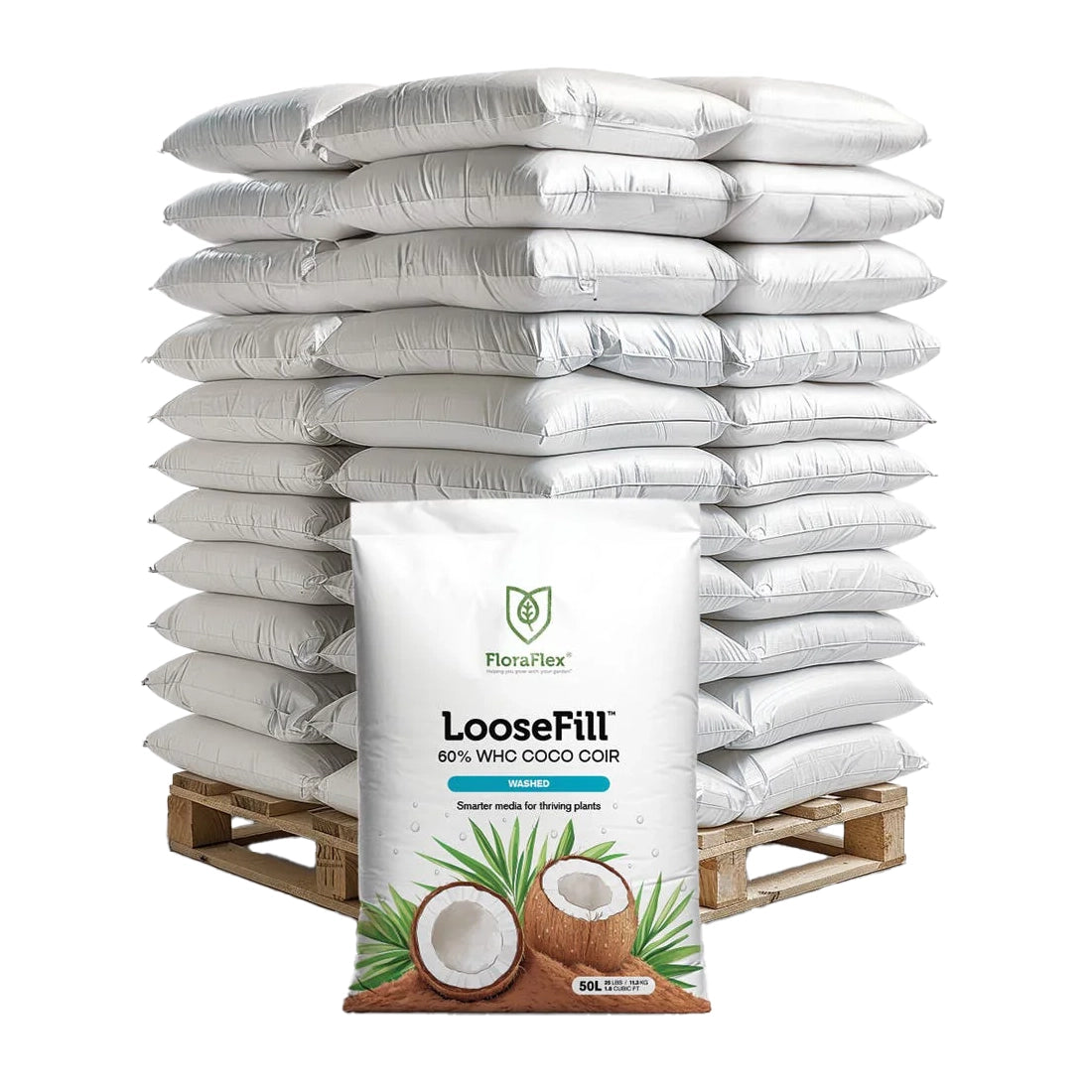
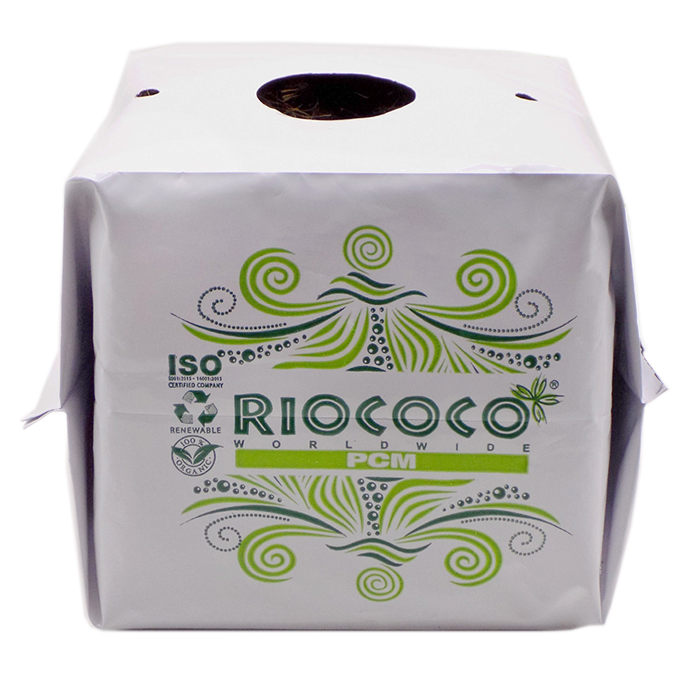
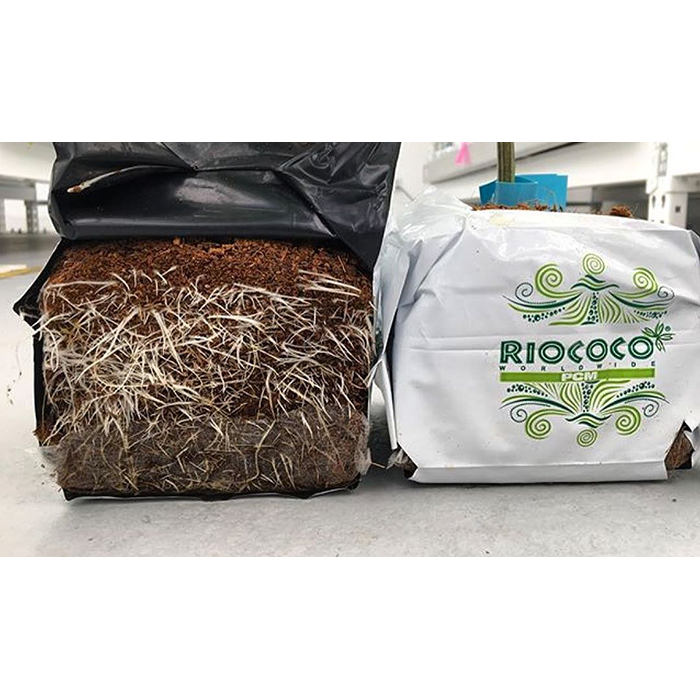
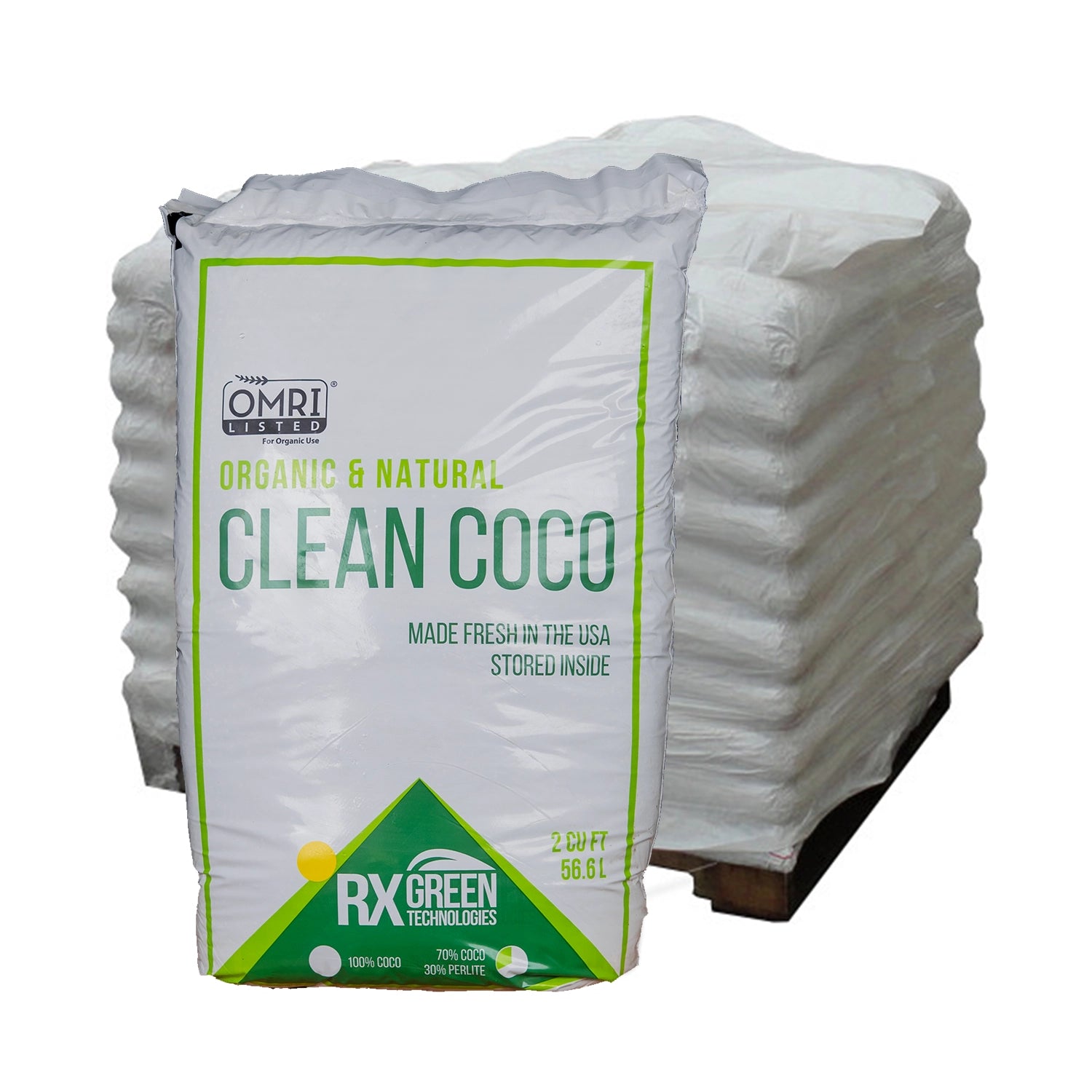
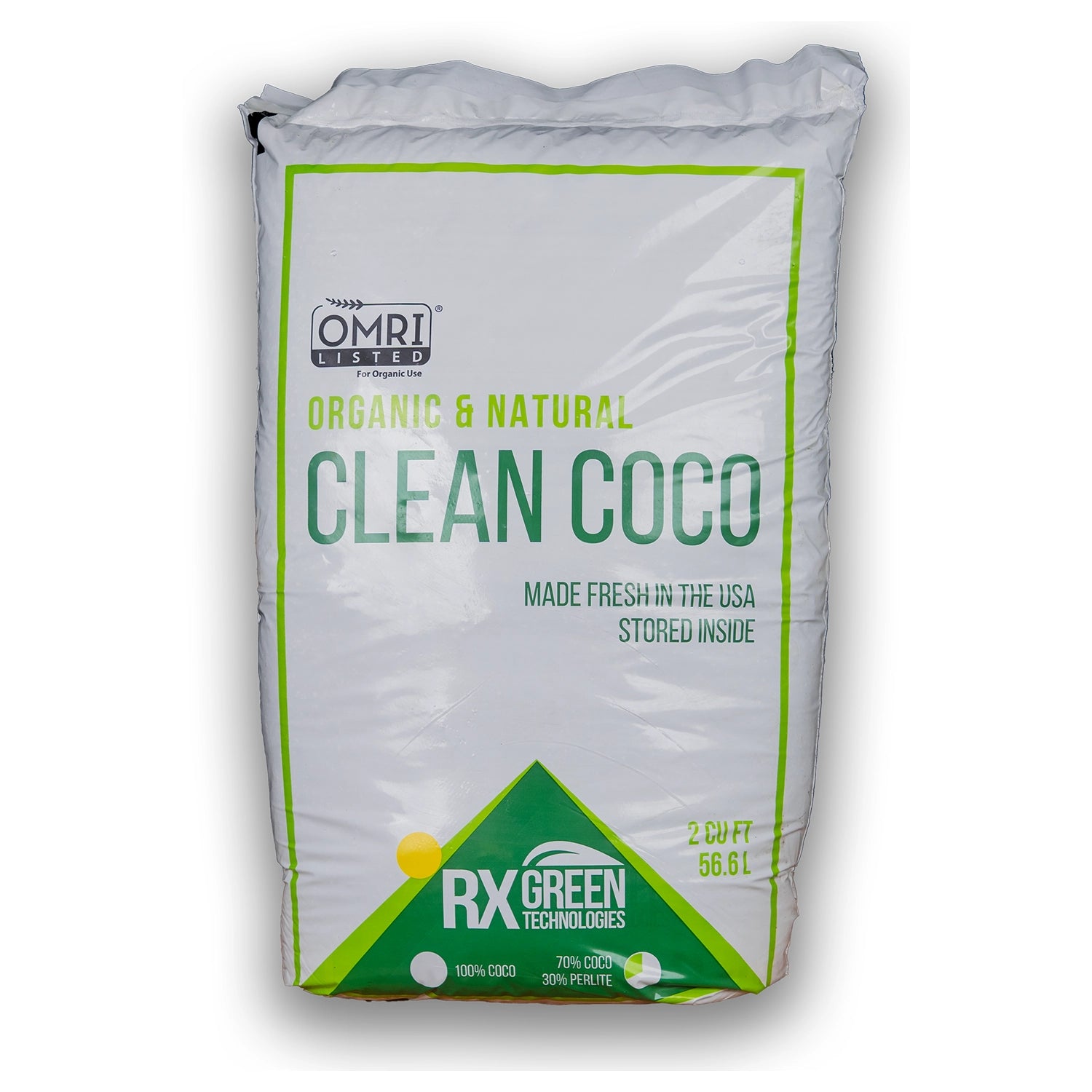
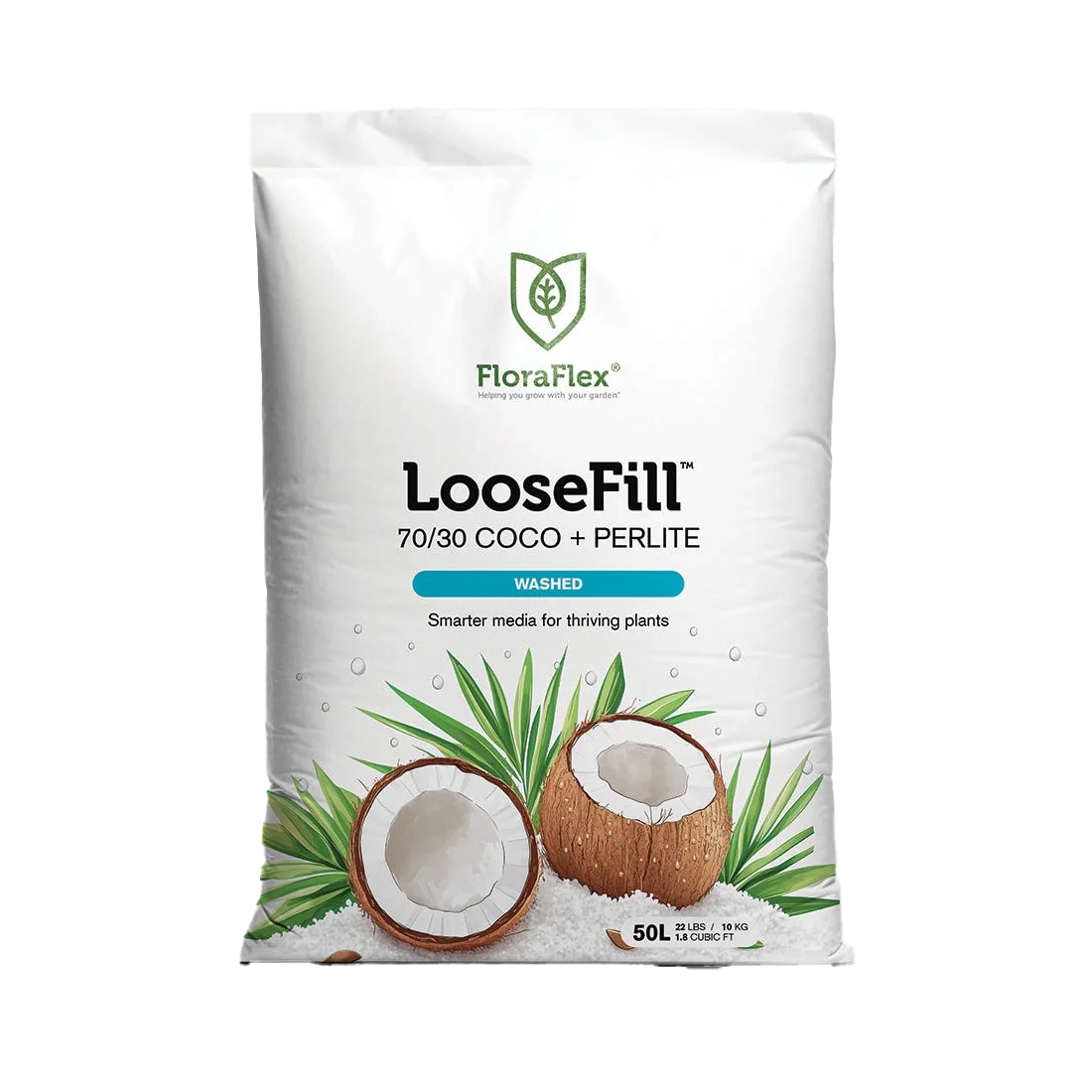
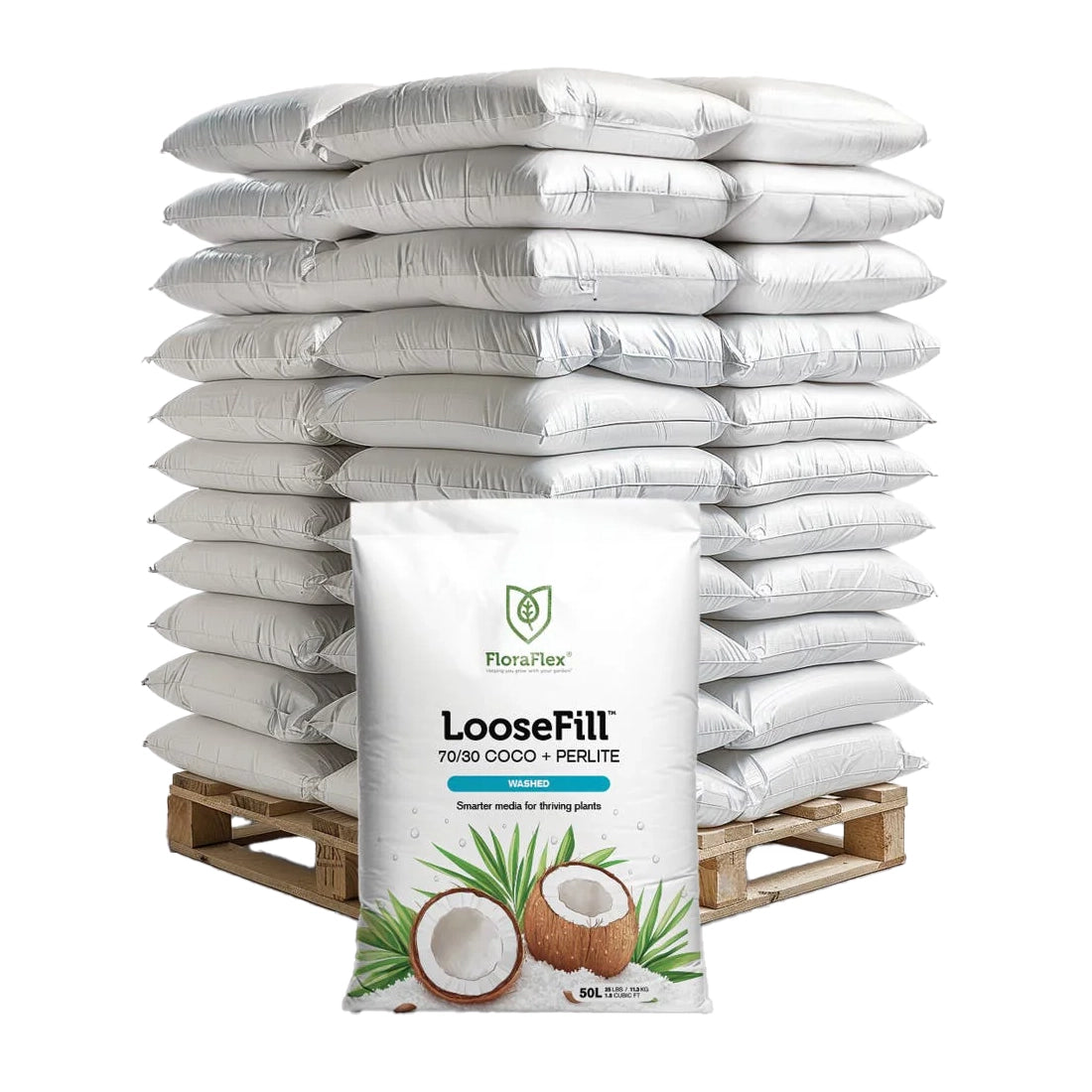
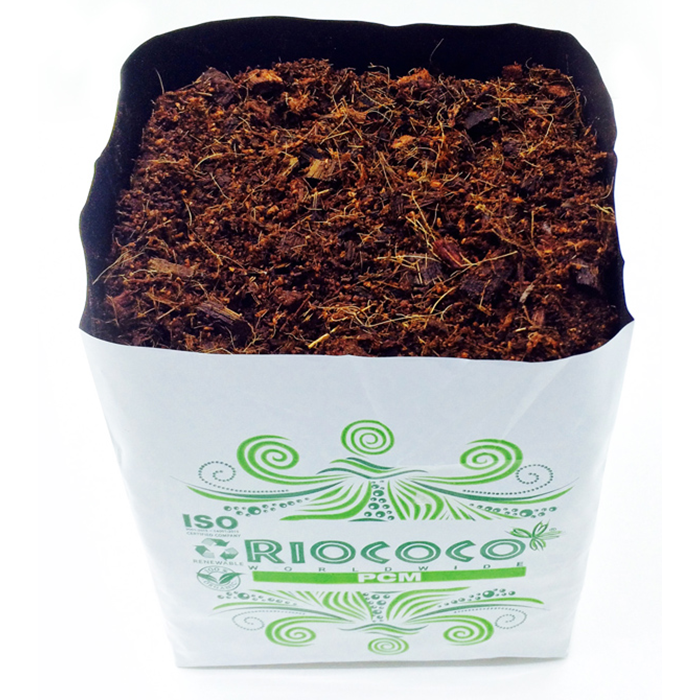
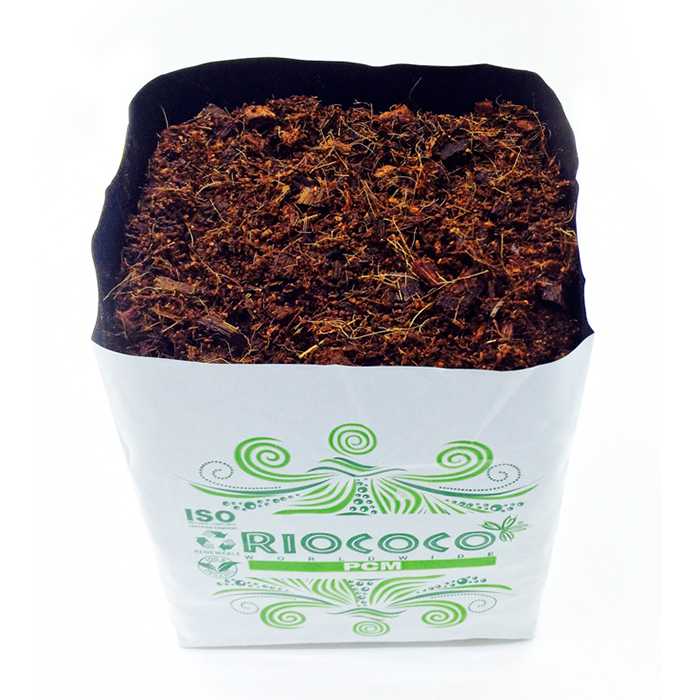
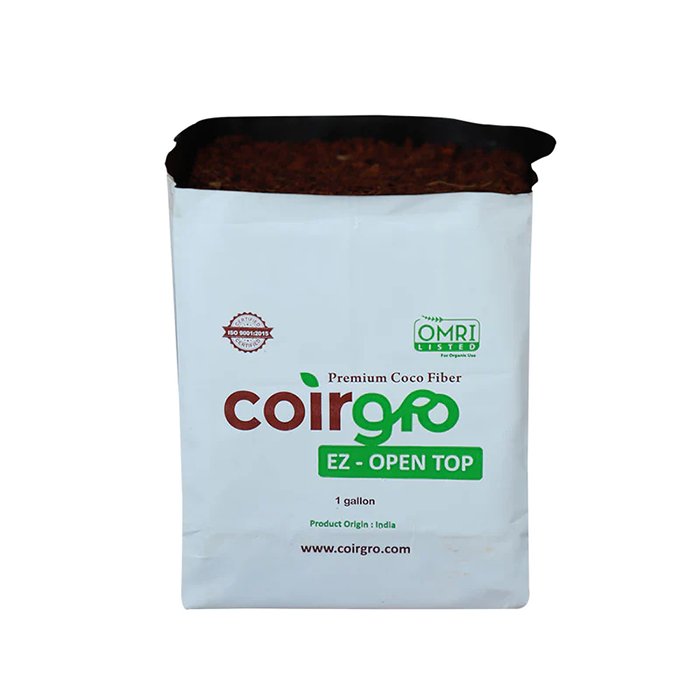
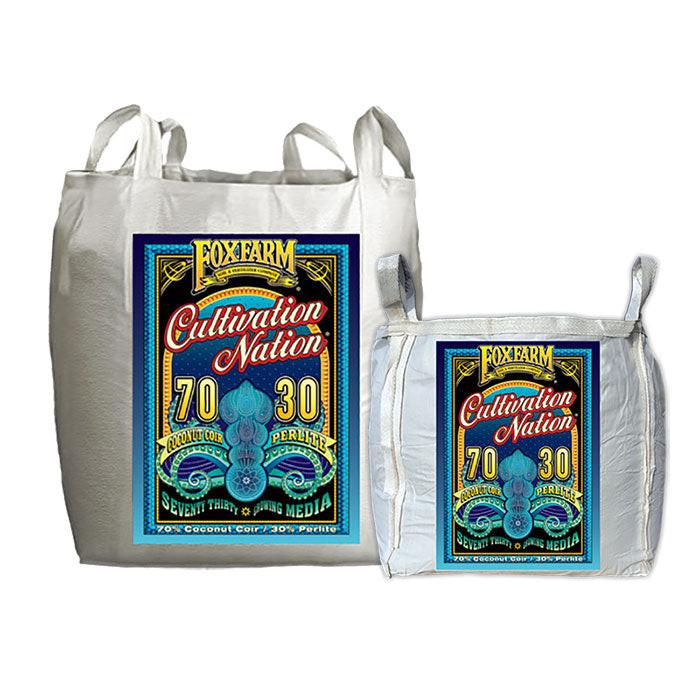
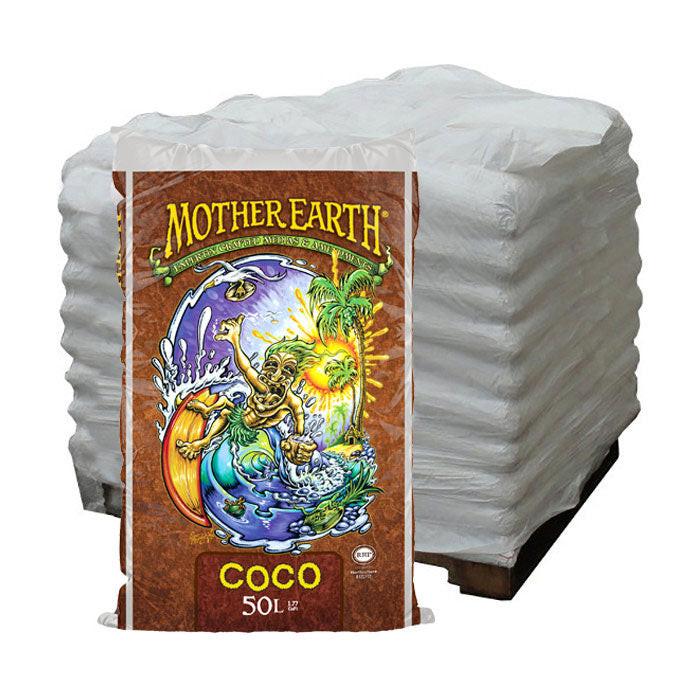
Coco coir is available in multiple formats for different grow applications. Loose coco in bags (typically 50-liter blocks or bags) is the most common format for transplanting into containers -- fill any size pot or tray for hand-watered or drip-irrigated container growing. Compressed bricks expand when hydrated (typically 1 kg brick expands to 15-20 liters of loose coco) and are useful for storage and shipping efficiency. Coco grow bags are pre-filled, sealed bags used directly in drip irrigation setups -- the grower cuts slits in the top for plants and drip emitters without ever needing to fill containers manually. Coco slabs are a variation of grow bags, longer and flatter, used extensively in commercial greenhouse production of tomatoes, cucumbers, and peppers on elevated growing systems.
Buffered vs. Unbuffered Coco Coir
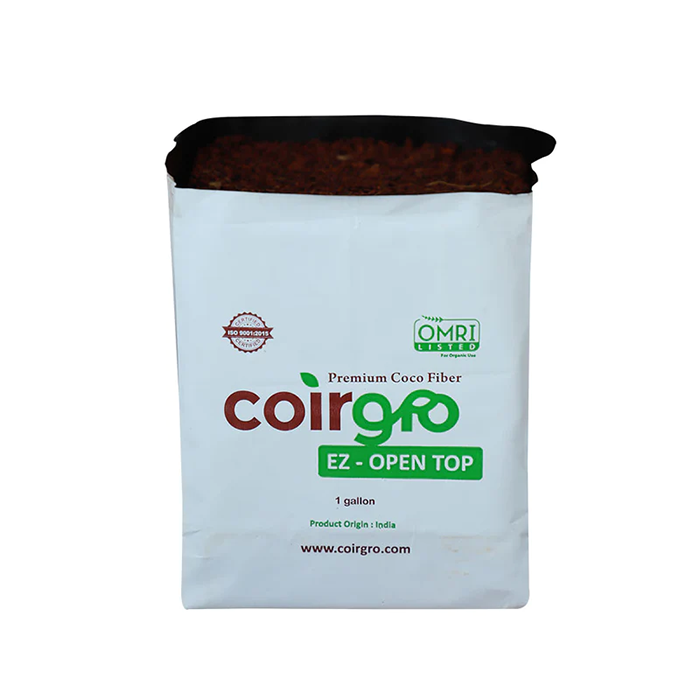
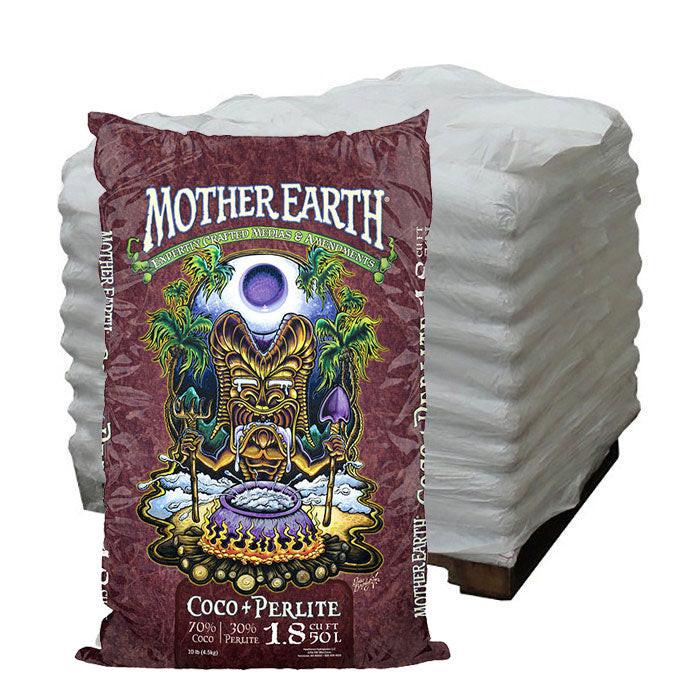
Raw coco coir contains naturally high levels of potassium and sodium, and has a strong natural affinity for calcium and magnesium ions. Unbuffered coco will pull calcium and magnesium out of your nutrient solution and exchange them for potassium and sodium, causing severe Ca-Mg deficiency in the first few weeks of use even when you are supplementing with Cal-Mag. Buffered (pre-washed and pre-buffered) coco has been treated with calcium and magnesium to saturate the cation exchange sites before the grower uses it -- the exchange issue is effectively neutralized. All premium coco products from Coirgro, Mother Earth, and other qualified brands at Hydrobuilder are pre-buffered and ready to use. If you are ever uncertain whether a coco product is buffered, the safe practice is to flush it thoroughly with a Cal-Mag solution (5 ml/gallon) before first use.
Coco Coir Nutrient Management
Despite being inert (no inherent nutrient content), coco coir requires specific nutrient management practices. Because of coco's calcium and magnesium buffering behavior, a dedicated Cal-Mag supplement at 3-5 ml/gallon should be included in every feed throughout the grow cycle. EC targets in coco are typically run slightly higher than equivalent hydroponic system targets to compensate for the nutrient-buffering activity. Coco should be irrigated to runoff at each feed event -- 10-20% runoff prevents salt buildup and nutrient stratification in the medium. See our updated complete guide to growing in coco coir for a full nutrient program, irrigation frequency guidance, and EC management by growth stage.
Coco Coir vs. Rockwool vs. Perlite
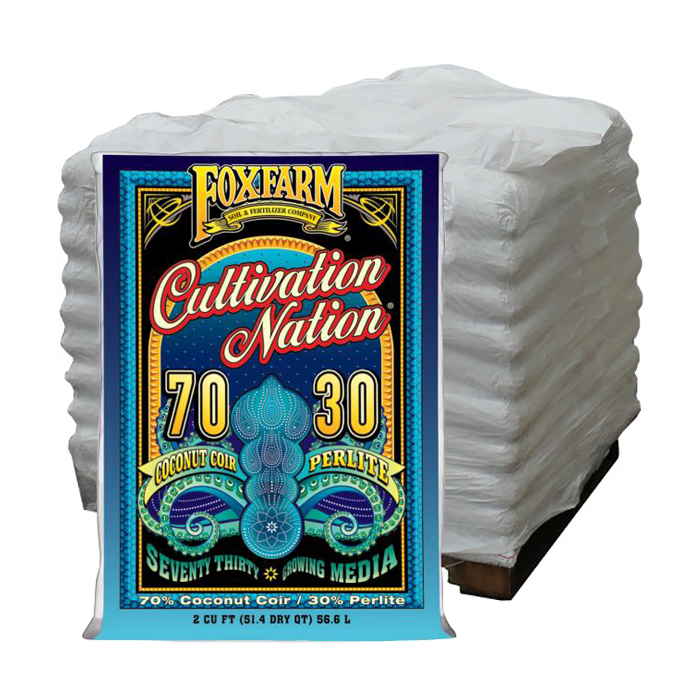
Coco coir is the most popular soilless medium for both hobby and commercial growers due to its balance of water retention and air porosity, organic origin, and versatility across container sizes and system types. Rockwool (mineral wool) offers even higher air porosity and excellent structural stability in slab form -- the dominant format in commercial Dutch-style greenhouse production of tomatoes and cucumbers. Perlite (volcanic glass) is used as an amendment added to coco (typically 30-40% by volume) to increase drainage and aeration -- most commercial coco programs use a coco:perlite blend rather than straight coco. Browse our rockwool collection and perlite and amendments to compare.
Coco Coir FAQ
What is coco coir and is it good for growing plants?
Coco coir is the fibrous material from the husk between the outer shell and inner seed of a coconut -- a natural, renewable byproduct of coconut processing. As a plant growing medium, it combines good water retention (30-40% of volume) with excellent air porosity, creating a root zone environment that stays moist between irrigations without becoming waterlogged. It is pH neutral (5.5-6.5), free of pests and pathogens, and compatible with all liquid nutrient programs designed for hydroponics. Coco coir is widely used in both hobby and commercial indoor cultivation and is one of the most versatile growing media available -- it works in containers, grow bags, slabs, and as an amendment with perlite or other materials.
How do I prepare coco coir for planting?
If using pre-buffered coco from a quality supplier (Coirgro, Mother Earth, etc.), simply hydrate it with pH-adjusted water (pH 5.8-6.2) and it is ready to use -- no additional preparation needed. If using a compressed coco brick, break it apart after hydration and fluff the fibers before filling containers. If using unbuffered or uncertain-origin coco, flush thoroughly with a Cal-Mag solution at 5 ml/gallon before use to pre-saturate calcium and magnesium exchange sites. Most commercial growers mix coco with 30-40% perlite by volume for improved drainage and aeration -- particularly in high-frequency automated drip programs. Pre-wet the medium before transplanting so roots contact moist media immediately.
Do I need Cal-Mag when growing in coco?
Yes -- Cal-Mag supplementation is essentially mandatory in coco coir grows. Coco fiber has a strong natural affinity for calcium and magnesium ions, pulling them out of nutrient solution and making them temporarily unavailable to plant roots. Even with high-quality pre-buffered coco, this buffering effect continues throughout the grow -- adding Cal-Mag at 3-5 ml/gallon at every feeding is standard practice in professional coco programs. Without adequate Cal-Mag supplementation, calcium and magnesium deficiency symptoms (brown spots on new growth, interveinal chlorosis on lower leaves) will typically appear within the first 1-2 weeks, even when using a complete base nutrient program.
How often should I water plants in coco coir?
Watering frequency in coco coir depends on plant size, pot size, environment, and your production method. For hand-watered hobby grows in 3-5 gallon containers, watering to 10-20% runoff once or twice per day during peak growth is typical. For automated commercial drip programs using crop steering techniques, 6-16 irrigation events per day during the light period is common -- coco coir's air porosity means roots can handle high-frequency irrigation without becoming anaerobic. The key principle is always to irrigate to runoff (10-20% drainage from the container) to prevent salt accumulation and ensure fresh nutrient solution reaches all parts of the root zone. See our updated guide to growing in coco coir for irrigation scheduling guidance by growth stage.
What is the difference between coco coir, coco peat, and coco husk?
Coco coir (also called coco peat) refers to the fine, fibrous material that makes up the standard growing medium -- the brown, soil-like material that most growers picture when they think of coco. Coco husk chips (also called coco chips) are the coarser, chunky material from the same coconut husk -- larger pieces that provide significantly higher air porosity and lower water retention compared to fine coco coir. Coco husk chips are used as a drainage amendment in potting mixes or on their own for high-drainage applications like orchid growing. Most hydroponic coco growing uses fine coco coir (the main product in this collection) with added perlite for drainage.