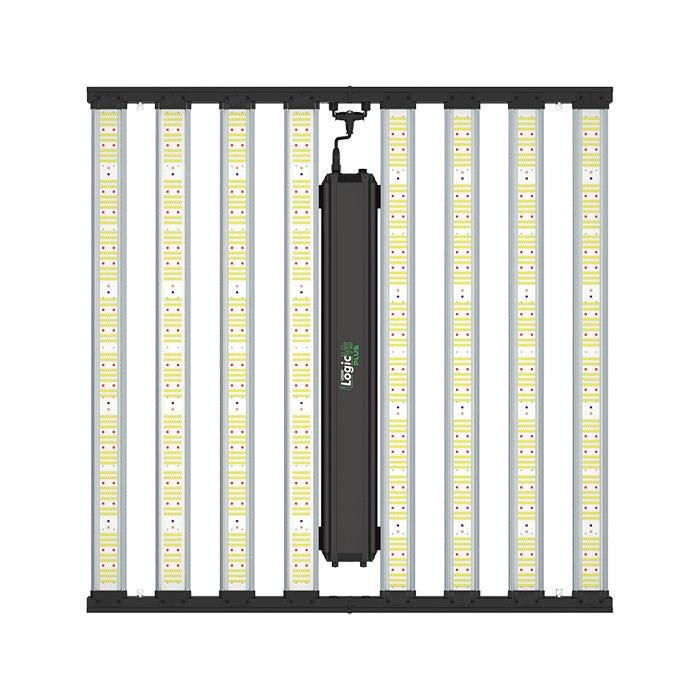
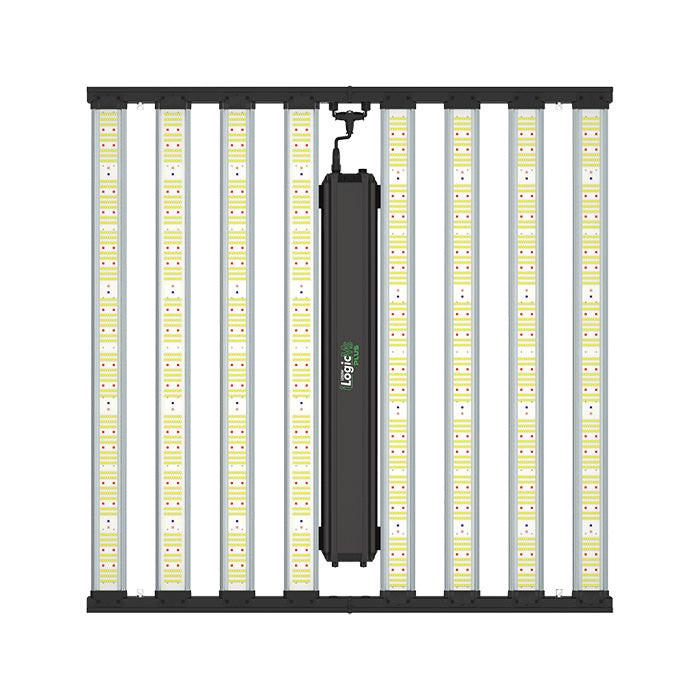
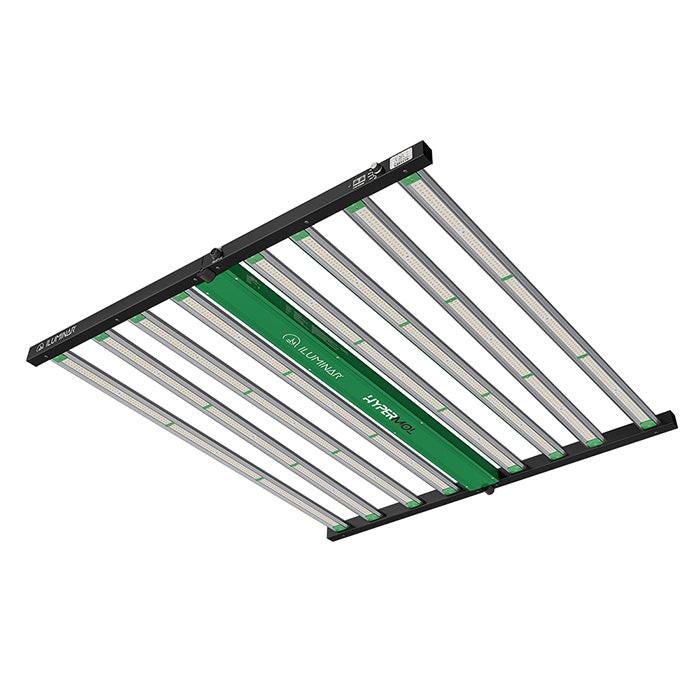
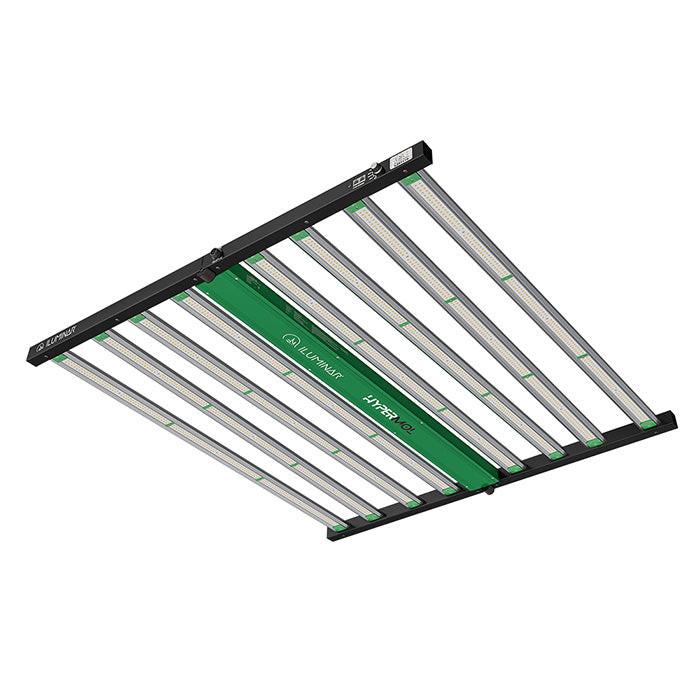
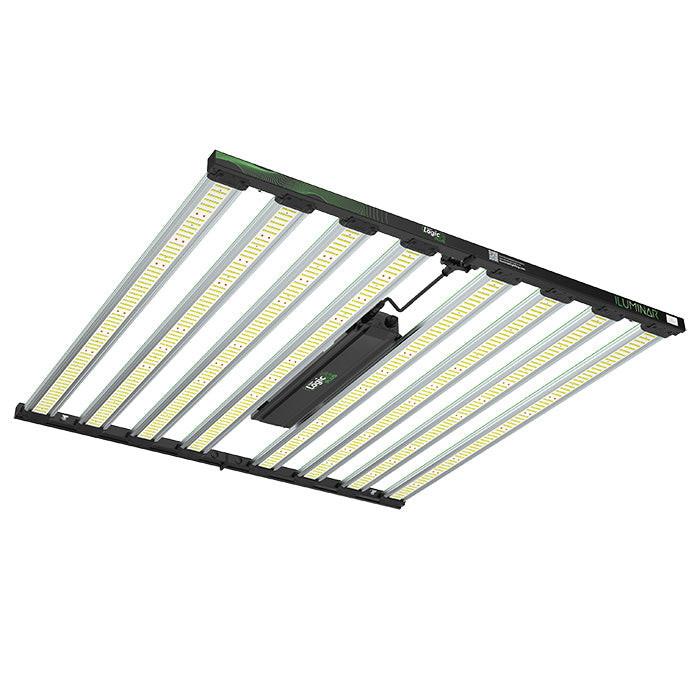
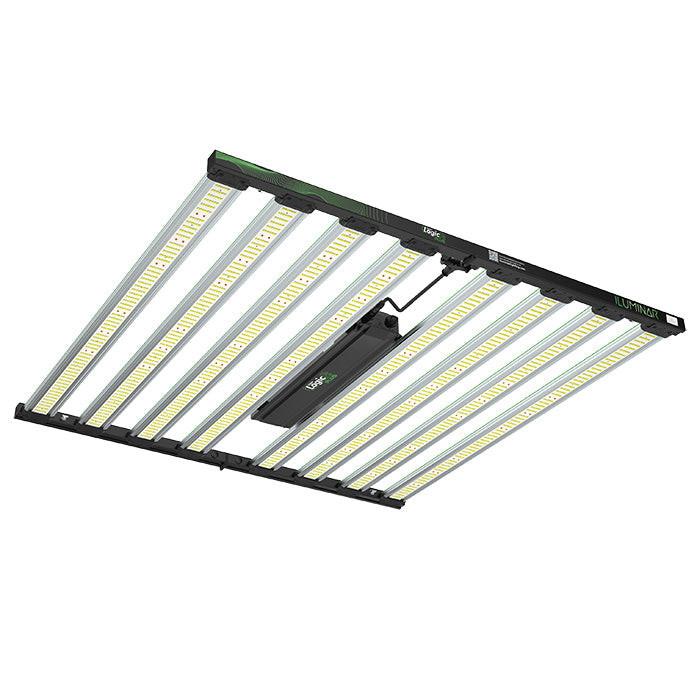
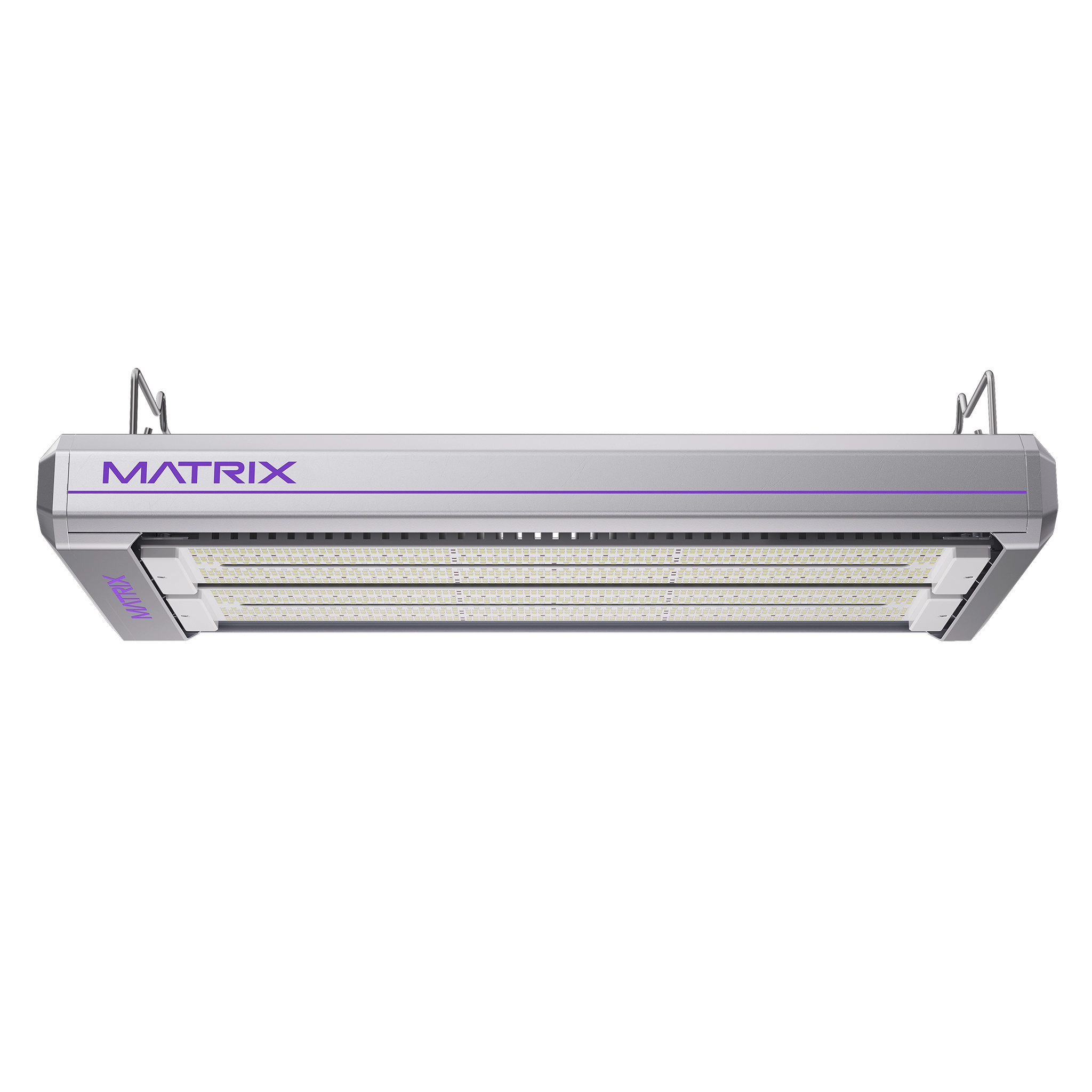
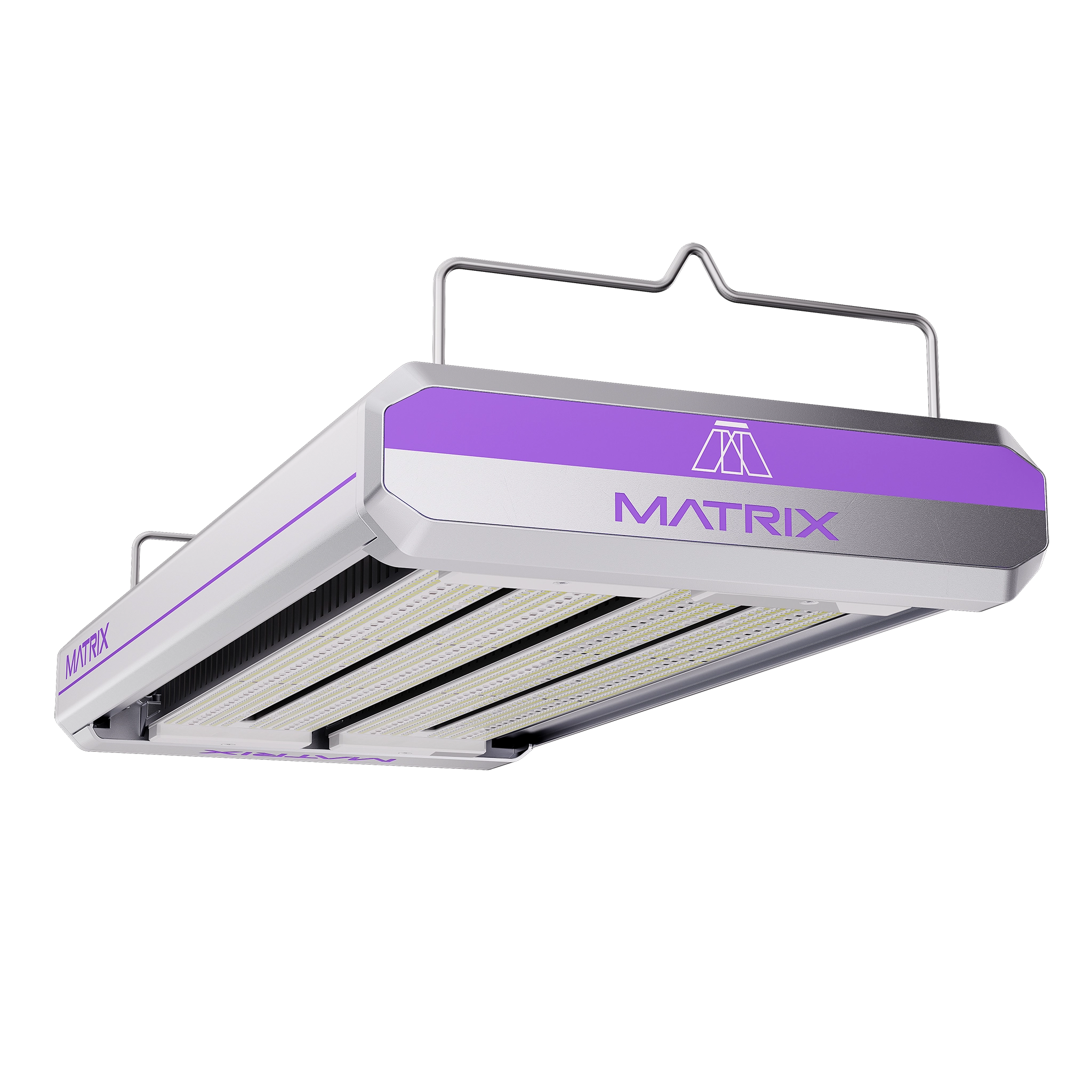
1000 Watt LED Grow Lights for Large Canopy Indoor Growing
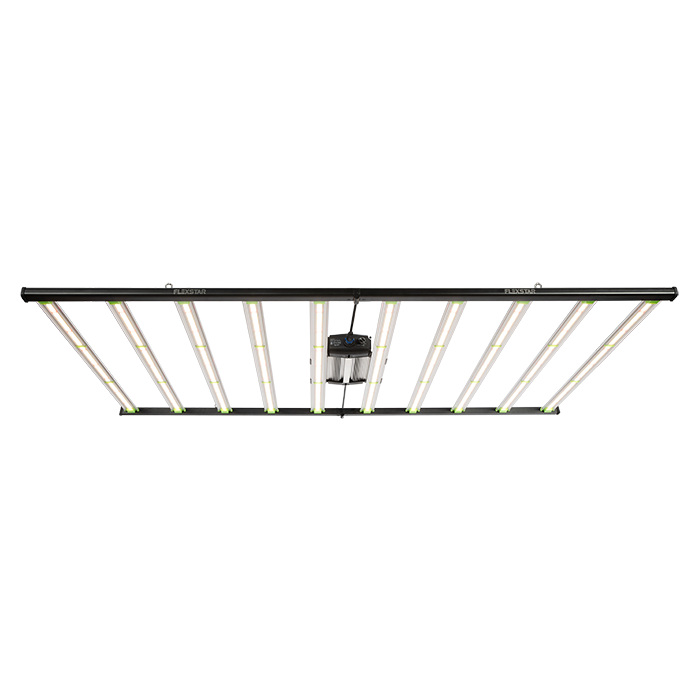
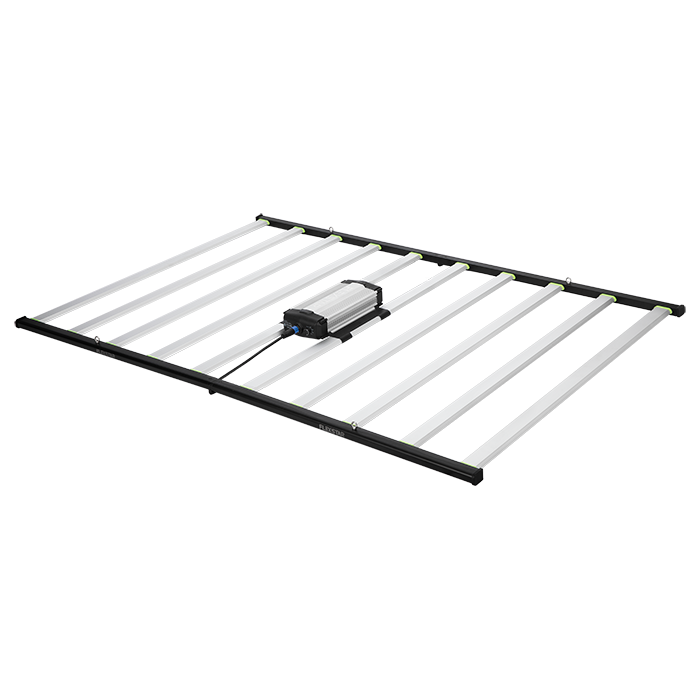
1000W LED grow lights are designed for large canopy applications -- 5x5 ft to 6x6 ft flowering footprints where a single high-output fixture replaces two 600W lights or a traditional double-ended 1000W HPS. Modern 1000W LED bar arrays from Gavita, Growers Choice, and Faven deliver photon output equivalent to or exceeding double-ended 1000W HPS at roughly 40-50% lower heat output, significantly reducing cooling costs and air conditioning load for large-canopy production rooms. For commercial operations transitioning from HPS to LED, 1000W LED fixtures offer a nearly 1-for-1 replacement of DE HPS 1000W units with minimal fixture count changes and substantial energy savings.
Efficiency at 1000W: What to Look For
At the 1000W class, fixture efficiency (umol/joule -- the amount of photosynthetically active light produced per watt of electricity) is the most important specification beyond raw output. Premium 1000W LEDs from Gavita, Growers Choice, and Faven achieve 2.7-3.1+ umol/joule using Samsung LM301H or equivalent high-efficiency white diodes. At these efficiency levels, a 1000W fixture delivers 2,700-3,100+ umol/s of total photon output -- enough to achieve 1,200-1,600+ umol/m2/s PPFD across a 5x5 canopy with appropriate hanging height. A 1000W LED at 3.0 umol/joule produces approximately 30% more photons per watt than a 1000W DE HPS at 2.1 umol/joule -- meaning it outperforms HPS even at equivalent wattage, not just at lower wattage. Avoid 1000W LED claims from unknown brands without published photometric data -- actual performance varies dramatically between manufacturers.
1000W LED Brands: Gavita, Growers Choice & Faven
Hydrobuilder carries 1000W and near-1000W LED grow lights from Gavita, Growers Choice, and Faven Lighting -- all qualified brands with verified grower adoption and real-world performance data. The Gavita Pro 1700e LED (645W at full power, rated for a 5x5 canopy) is one of the most widely deployed commercial LED fixtures in North American indoor production, generating approximately 1,700 umol/s at full output. The Growers Choice ROI-E720 (720W) covers 4x5 to 5x5 canopies with 2,016 umol/s output. For true 1000W class output, Gavita's higher-wattage bar arrays and Faven's commercial line cover the 5x5 to 6x6 canopy range. See our updated best LED grow lights guide for specific model comparisons including 1000W class fixtures.
1000W LED vs. 1000W Double-Ended HPS
Side-by-side comparisons in commercial production environments consistently show modern 1000W LED bar arrays matching or exceeding double-ended 1000W HPS yield on the same canopy, while consuming 35-50% less electricity and producing significantly less radiant heat. In a climate-controlled facility, the combined electricity savings from the fixture itself and the reduced cooling load typically result in 40-60% total energy cost reduction per fixture replaced. For a 10-light HPS room, this often represents $8,000-$15,000+ in annual electricity savings depending on utility rates and hours of operation. Use our Electricity Cost Calculator to model the exact economics for your facility and electricity rate before committing to a retrofit investment.
Browse the full LED grow lights collection across all wattages, compare HPS and MH alternatives, or use our PPFD & Light Coverage Calculator to size any fixture to your canopy. Commercial accounts available.
1000 Watt LED Grow Light FAQ
What size canopy does a 1000W LED cover?
A quality 1000W LED bar array from Gavita, Growers Choice, or Faven covers a 5x5 ft to 6x6 ft flowering canopy, delivering 800-1,200+ umol/m2/s PPFD across the full footprint at appropriate hanging height (18-24 inches above canopy). At lower PPFD targets for vegetative growth (400-600 umol/m2/s), a 1000W LED can cover a slightly larger area. The exact coverage area depends on fixture efficiency and beam distribution -- always use the manufacturer's published PPFD map for your specific fixture at the target hanging height rather than assuming from wattage alone.
Is a 1000W LED equivalent to a 1000W HPS?
Modern 1000W LED bar arrays from premium brands deliver equivalent or greater photon output compared to double-ended 1000W HPS, at 35-50% lower electricity consumption and significantly less radiant heat. A 1000W LED at 3.0 umol/joule produces approximately 3,000 umol/s of photosynthetically active photons -- compared to roughly 2,100 umol/s from a 1000W DE HPS at 2.1 umol/joule. The LED is more efficient per watt and delivers more total photons. The operational tradeoffs are: LED has higher upfront cost, produces less radiant heat (which can require supplemental heating in cold climates), and requires no ballast replacements. HPS has lower upfront cost and leverages existing infrastructure in retrofit scenarios.
How far should a 1000W LED be from plants?
Most 1000W LED bar arrays hang 18-24 inches above the canopy for full-canopy flowering coverage at target PPFD (900-1,200+ umol/m2/s). Higher hanging increases coverage area but reduces PPFD; lower hanging concentrates photons but risks light saturation and reduces coverage uniformity at canopy edges. Always verify PPFD at canopy level with a PAR meter, or use the manufacturer's published PPFD map for your specific fixture and target hanging height. Fixtures with dimming capability allow you to reduce output and hang closer, which can improve uniformity in some configurations.
Can I use a 1000W LED in a grow tent?
Yes -- a 1000W LED is appropriate for a 5x5 or larger grow tent. For a 4x4 tent, a 1000W fixture is typically too powerful unless significantly dimmed -- excess PPFD and proximity issues can cause light stress, and the economics favor a 600-800W fixture for a 4x4 canopy. For a 5x5 or 6x6 tent, a 1000W LED is the right match, providing 900-1,200+ umol/m2/s at 18-24 inch hanging height. Ensure your tent's ventilation and air conditioning are sized to handle the 1000W heat load even at LED's reduced heat output versus HPS -- a 1000W LED still generates significant heat that must be exhausted through your inline fan system.