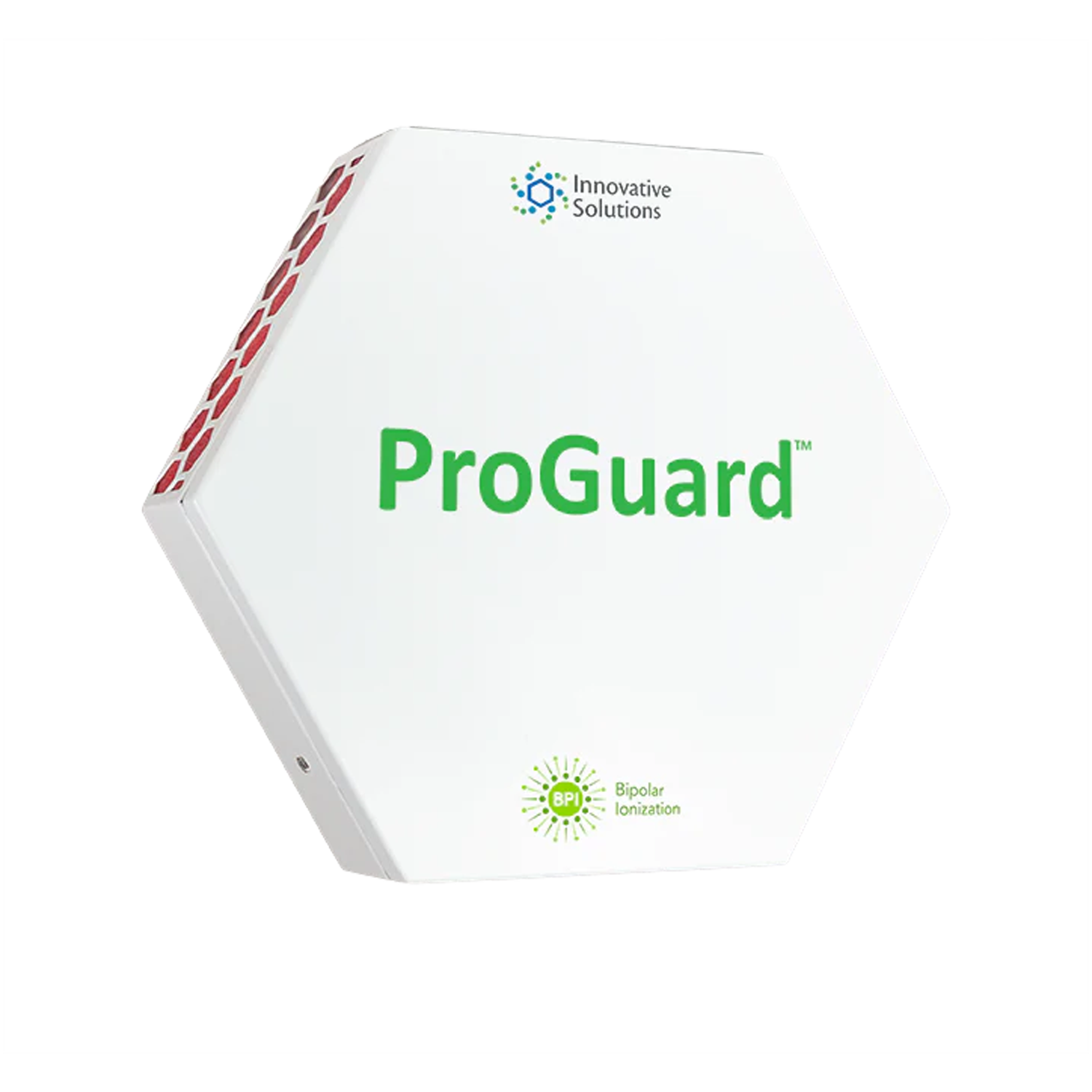
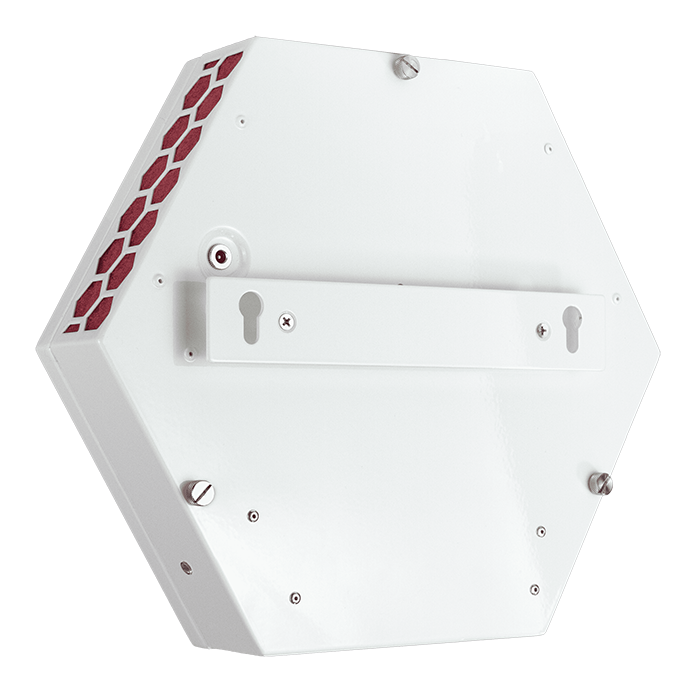
What is the ProGuard Defender DXB 100?
The Defender DXB 100 is the post-harvest version of ProGuard's most popular full-size unit. It uses the exact same housing as the standard DXB 100, but the UV output is intentionally reduced to approximately 70% — appropriate for spaces like trim, packaging, extract, pre-roll, and shipping rooms where full-strength sanitization isn't necessary.
How does ProGuard air sanitization actually work?
ProGuard uses a PCO (photocatalytic oxidation) cell — a titanium catalyst honeycomb with a UV bulb inside. As air is drawn across the cell, it generates H2O2 (hydrogen peroxide) in a vapor/dried format that becomes ionized with positive and negative charges. When those charged ions contact spores or VOCs in the room, they pierce and kill them on contact. The H2O2 then reverts to water vapor, leaving no residue on plants, racks, or surfaces.
How much space does one DXB 100 unit cover?
Approximately 500 square feet per unit. It's generally better to slightly over-spec than under-spec — for example, a 1,300 sq ft room would typically use 3 units rather than 2, even though that technically covers 1,500 sq ft.
Where and how should this unit be installed?
Hang the unit 12-14 inches above canopy height, positioned 3-4 feet away from circulation fans (not directly in front of or behind them), and away from exhaust vents. In a square room with 2 units, place them on opposite side walls, away from the door; with 4 units, place one on each wall.
How is this different from HEPA or UV filtration?
HEPA and passive UV systems wait for spores and VOCs to travel to the filter — and in the meantime, those particles can land on plants before ever reaching it. ProGuard is active: it sends sanitization out into the room to kill pathogens on contact, before they have a chance to settle.
Does high humidity hurt ProGuard's performance?
No — the opposite. ProGuard was specifically designed for high-humidity cannabis environments. Higher humidity actually increases ionization cluster output. Independent testing showed ProGuard produces roughly 13 times the ionization output of its nearest competitors.
How often does the PCO cell need to be replaced?
Annually. The cell is what generates the sanitization, so it's a required yearly maintenance item — not optional. For facilities running 30-80+ units, this becomes a significant recurring maintenance line item worth planning for.
How often do filters need to be replaced on the DXB 100?
Between each harvest. The DXB 100 uses 2 filters per unit, sold in packs of 12.
What warranty comes with ProGuard units?
All ProGuard units carry a two-year warranty. If a cell has an issue, ProGuard typically turns around a replacement quickly.