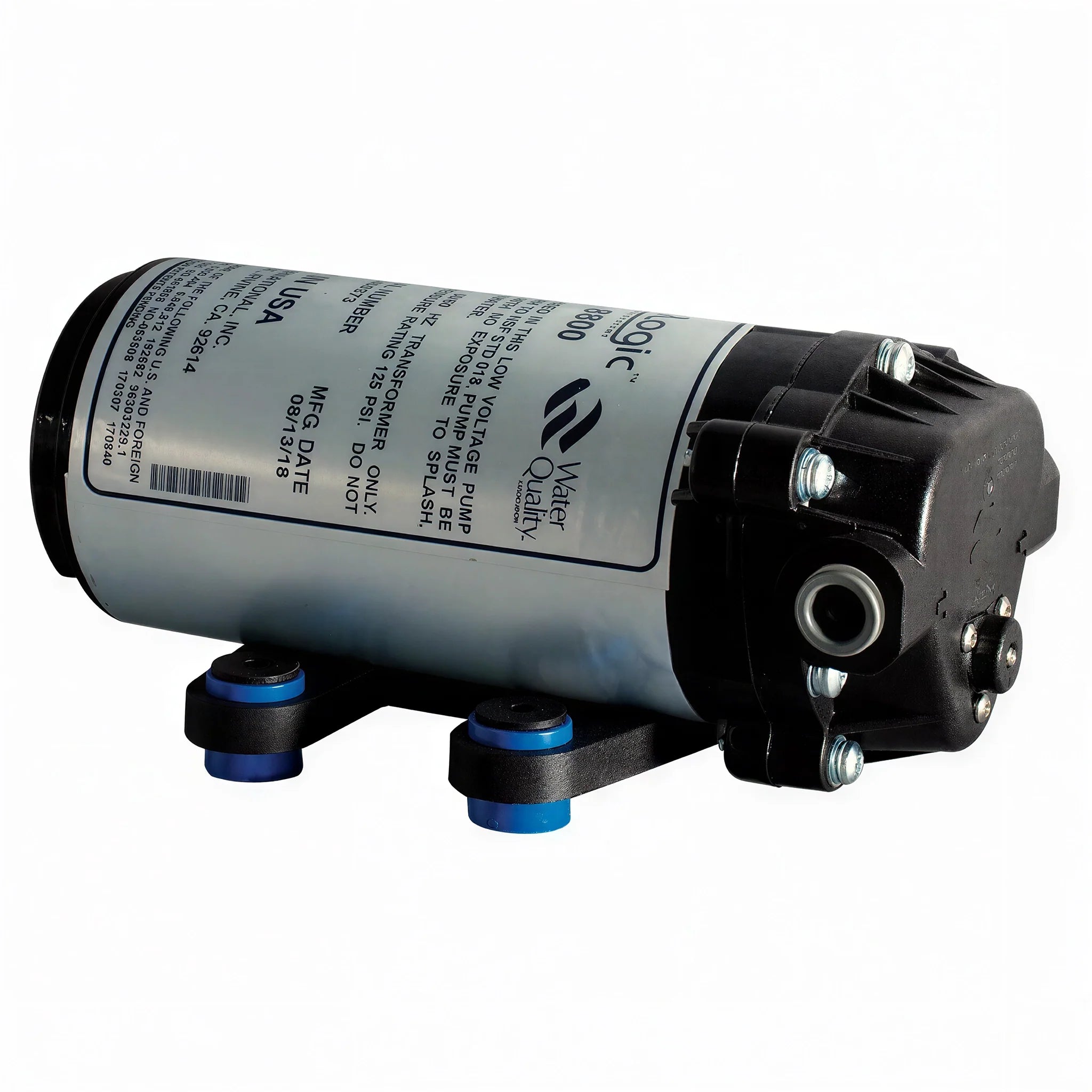
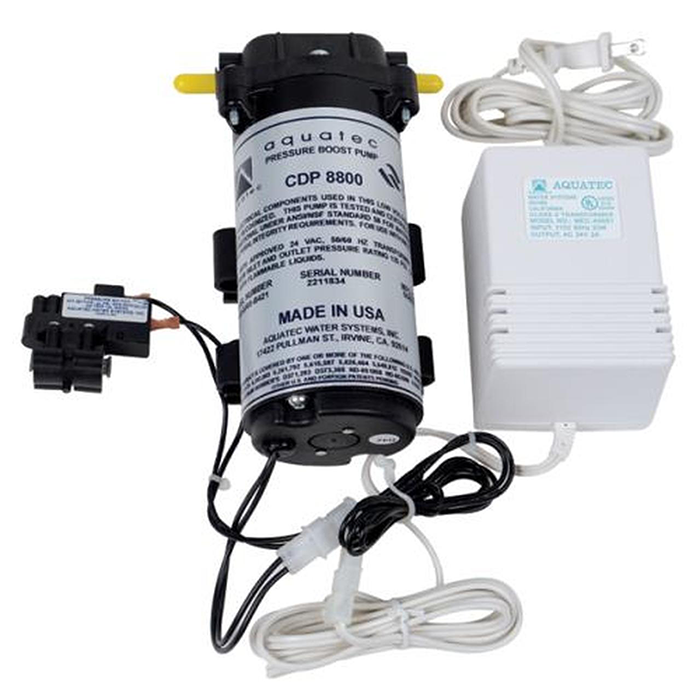
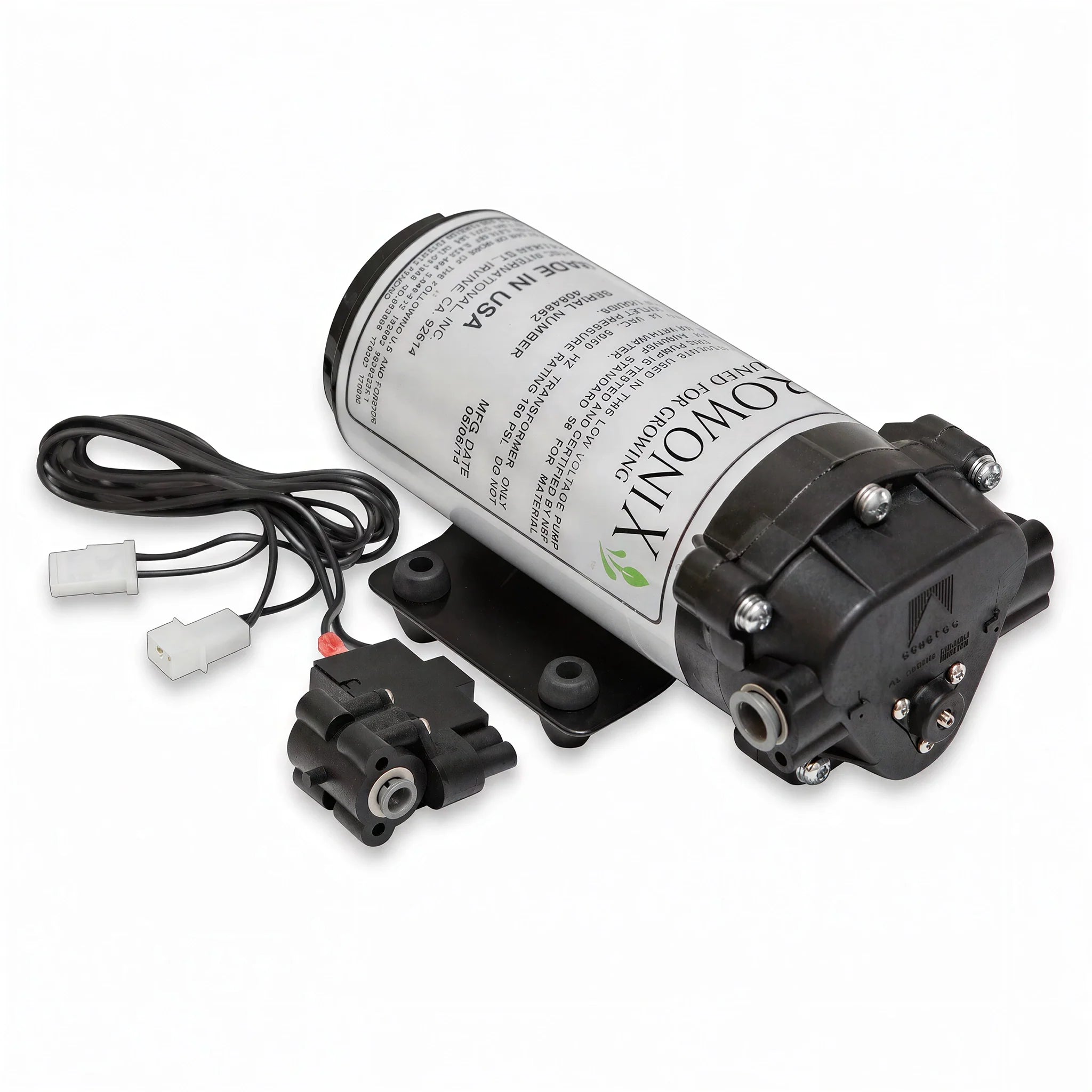
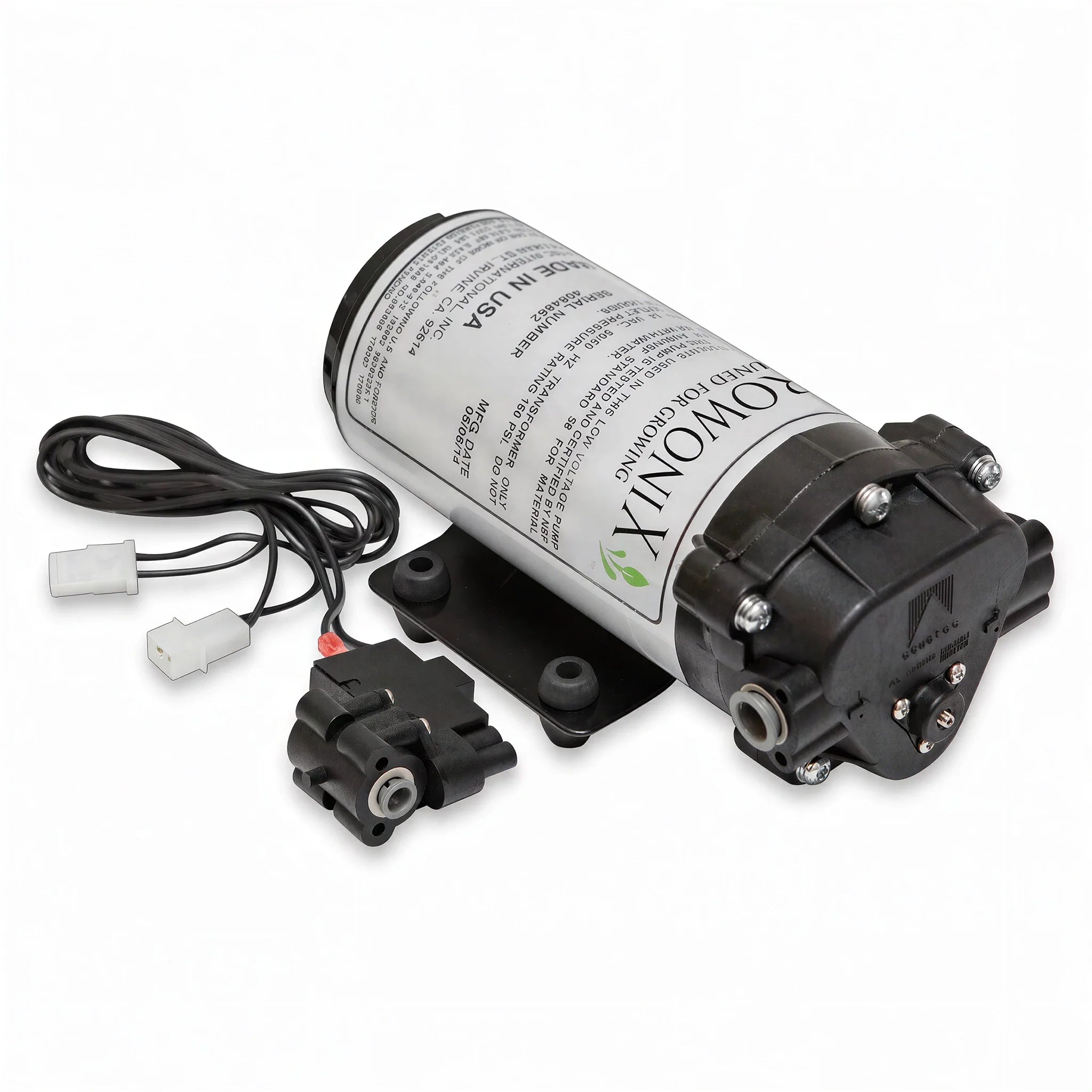
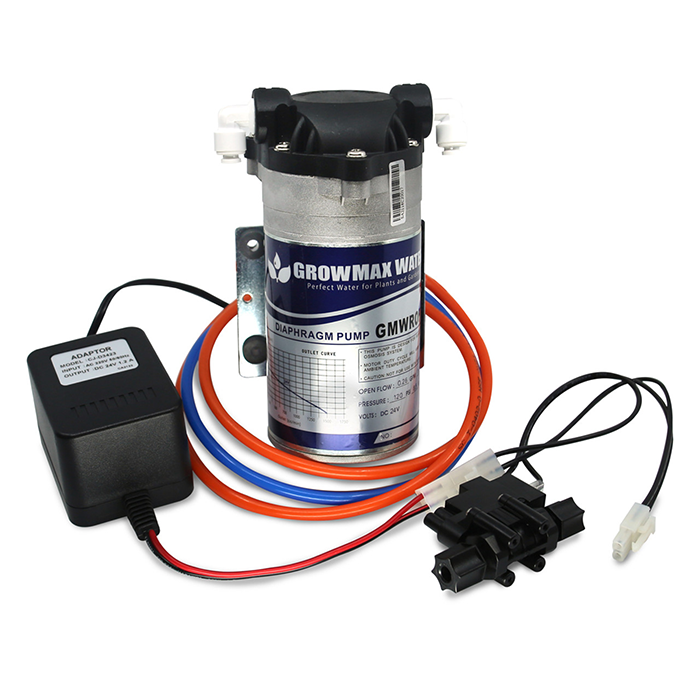
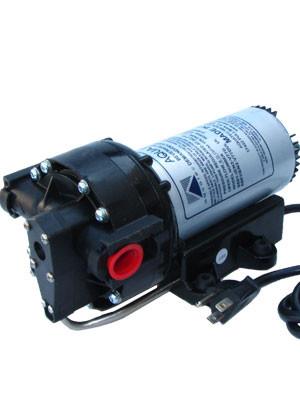
Water Filter Booster Pumps for RO & Multi-Stage Systems
Water filter booster pumps increase inlet water pressure to reverse osmosis membranes and multi-stage filtration systems that require higher pressure than the available supply delivers. RO membranes require 60-80 PSI inlet pressure for optimal rejection rate and production flow -- below 40 PSI, rejection rate drops, production rate slows, and the waste-to-product water ratio increases, reducing system efficiency significantly. Many residential water supplies, well systems, and growing facility water connections deliver less than 60 PSI after line losses and pre-filter stages consume available pressure. A booster pump installed before the RO membrane restores pressure to the optimal operating range.
When a Booster Pump Is Needed
Test your supply pressure at the RO system inlet with a pressure gauge: below 40 PSI indicates a booster pump will significantly improve RO performance; 40-60 PSI is borderline and a booster pump will improve efficiency; above 60 PSI typically does not require additional pressure. Signs that an existing RO system is pressure-starved without measurement: very slow production rate (well below the membrane's rated GPD); high reject-to-product water ratio (should be approximately 3:1 or less in efficient systems, not 6:1 or higher); and TDS rejection below the membrane's rated specification. Browse the complete water filtration and treatment collection for pumps alongside complete systems.
Pump Selection
Select a booster pump rated for the maximum flow rate of the RO system (measured in GPD or GPH) and the target outlet pressure. Most residential and horticultural RO booster pumps are small centrifugal pumps rated for 50-100 PSI outlet pressure with flow capacities of 50-200+ GPD. Install after the sediment and carbon pre-filters (to protect the pump from particle damage) and before the RO membrane housing. Fast shipping.
Water Filter Booster Pumps FAQ
How do I know if I need a booster pump for my RO system?
Test inlet pressure at the RO system with a pressure gauge -- below 40 PSI indicates a booster pump will meaningfully improve performance; 40-60 PSI will benefit from boosting; above 60 PSI is typically adequate without boosting. Functional signs of low pressure: production rate significantly below the membrane's rated GPD, high ratio of reject water to product water, or TDS rejection below the membrane's rated specification (below 95%). If you are seeing any of these symptoms with clean pre-filters, low inlet pressure is likely the cause.
Where in the system should I install a booster pump?
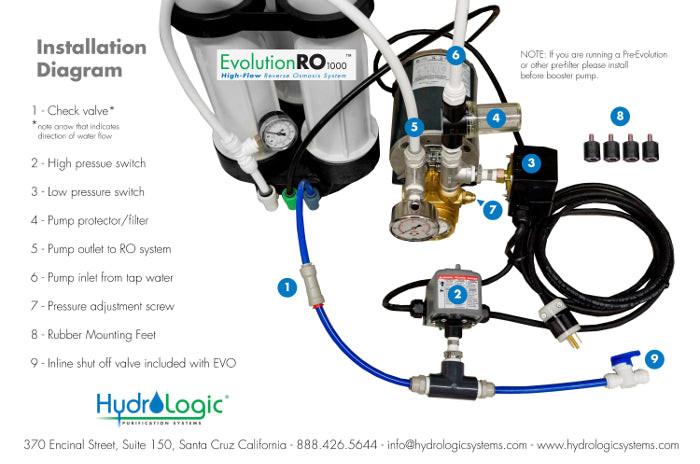
Install the booster pump after all pre-filter stages (sediment and carbon filters) but before the RO membrane housing. The pre-filters protect the pump from particle damage, and the pump provides the elevated pressure the RO membrane needs. The correct order: supply water > sediment pre-filter > carbon pre-filter > booster pump > RO membrane housing > post-filter (carbon or DI) > storage or use. Never install the booster pump before the pre-filters -- unfiltered water with sediment and chlorine will damage the pump internals and shorten its service life.
What pressure should a booster pump deliver for RO?
Target 60-80 PSI at the RO membrane inlet for optimal performance. Most residential and horticultural RO membranes have a maximum rated inlet pressure of 100-125 PSI -- do not exceed this with the booster pump. A pump with an adjustable pressure switch set to 65-75 PSI outlet pressure covers most RO membrane requirements with a comfortable margin below the maximum rating. If the booster pump delivers more than 80 PSI to the membrane, add a pressure regulator between the pump outlet and the membrane housing.
Can I use a garden hose booster pump for my RO system?
A purpose-made RO booster pump is strongly recommended over repurposing a garden hose pump. RO booster pumps are designed for continuous low-flow, high-pressure duty -- they produce 60-100 PSI at the low flow rates (50-200 GPD) RO membranes use, operate quietly, and have the corrosion resistance appropriate for long-term clean water service. Many general-purpose booster pumps are not suited for the low flow rates and continuous operation of RO service, and may produce inconsistent pressure or fail prematurely when operated outside their intended duty cycle.
Does a booster pump increase water waste in an RO system?
A booster pump typically reduces water waste (improves efficiency) in an RO system by increasing rejection rate and production rate. An RO membrane operating below its rated inlet pressure produces a higher ratio of reject water to product water as the lower driving pressure reduces the membrane's effective selectivity. Boosting inlet pressure to the optimal 60-80 PSI range improves the reject-to-product ratio from potentially 6:1 or higher at low pressure to the designed 3:1 or lower. Less reject water per gallon of product water means less total water consumption from the supply.