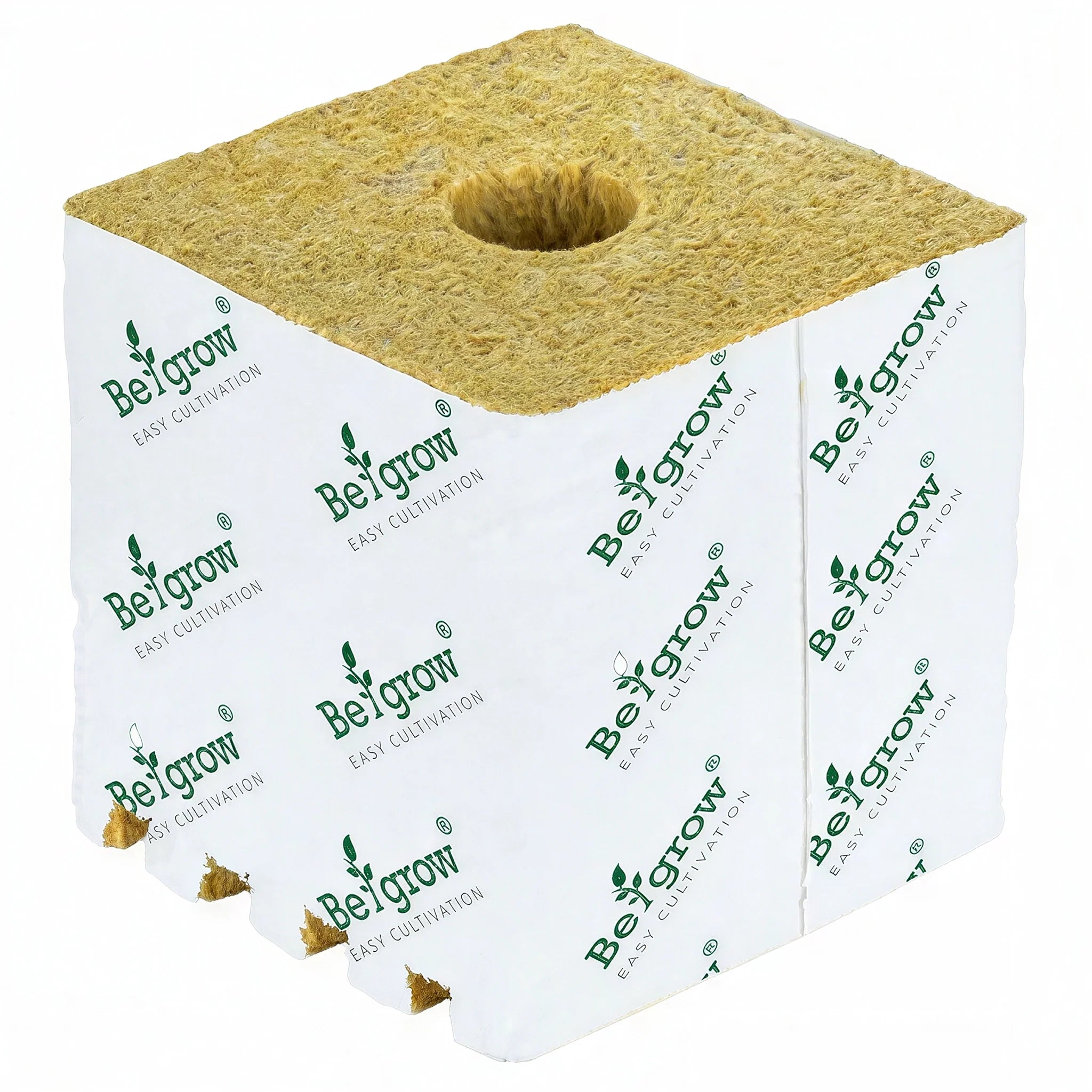
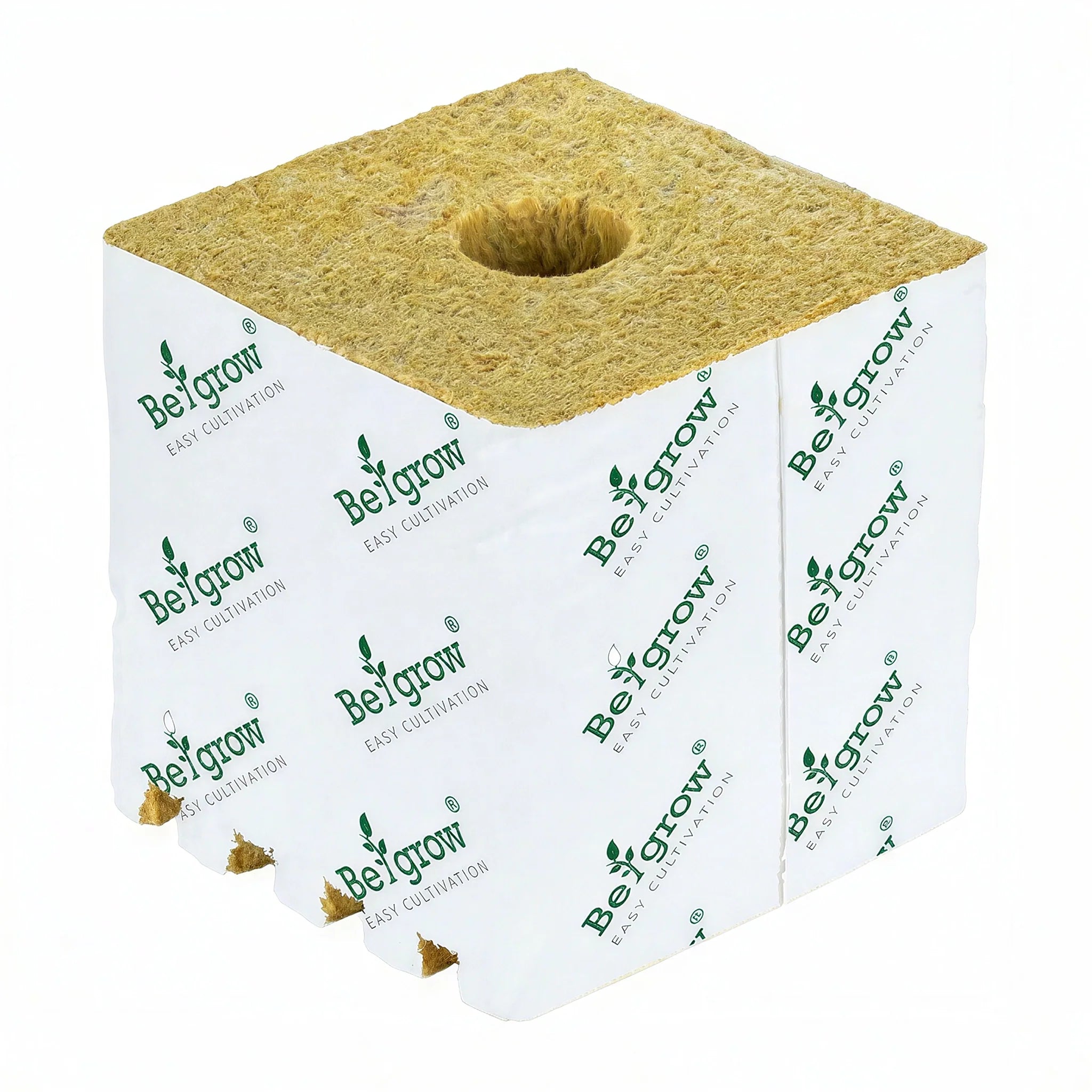
Rockwool Blocks for Hydroponic Transplanting
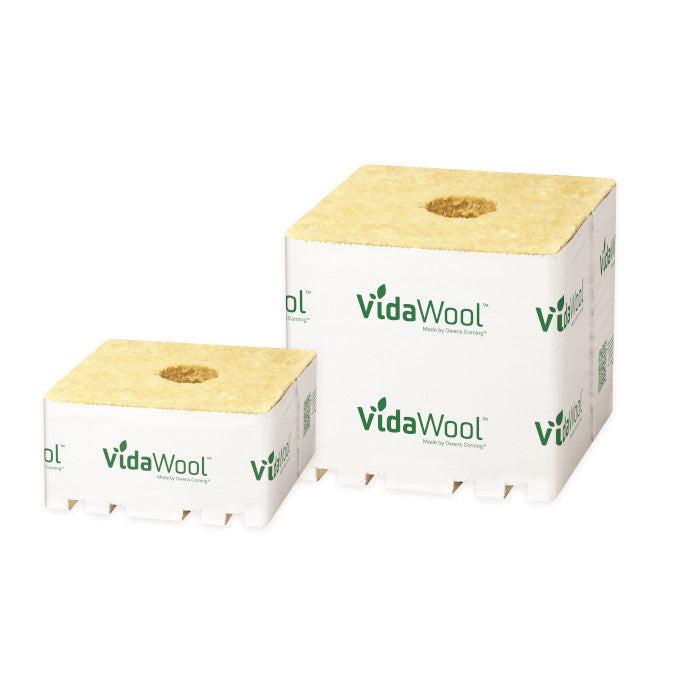
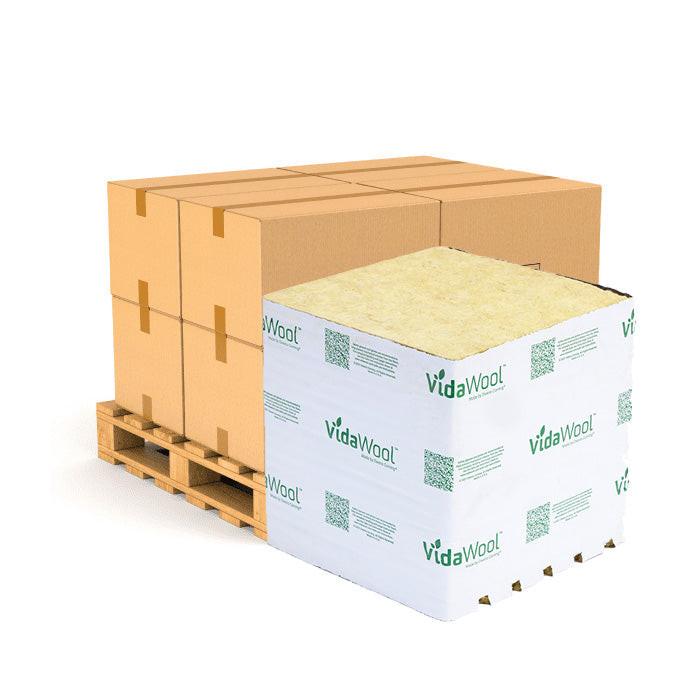
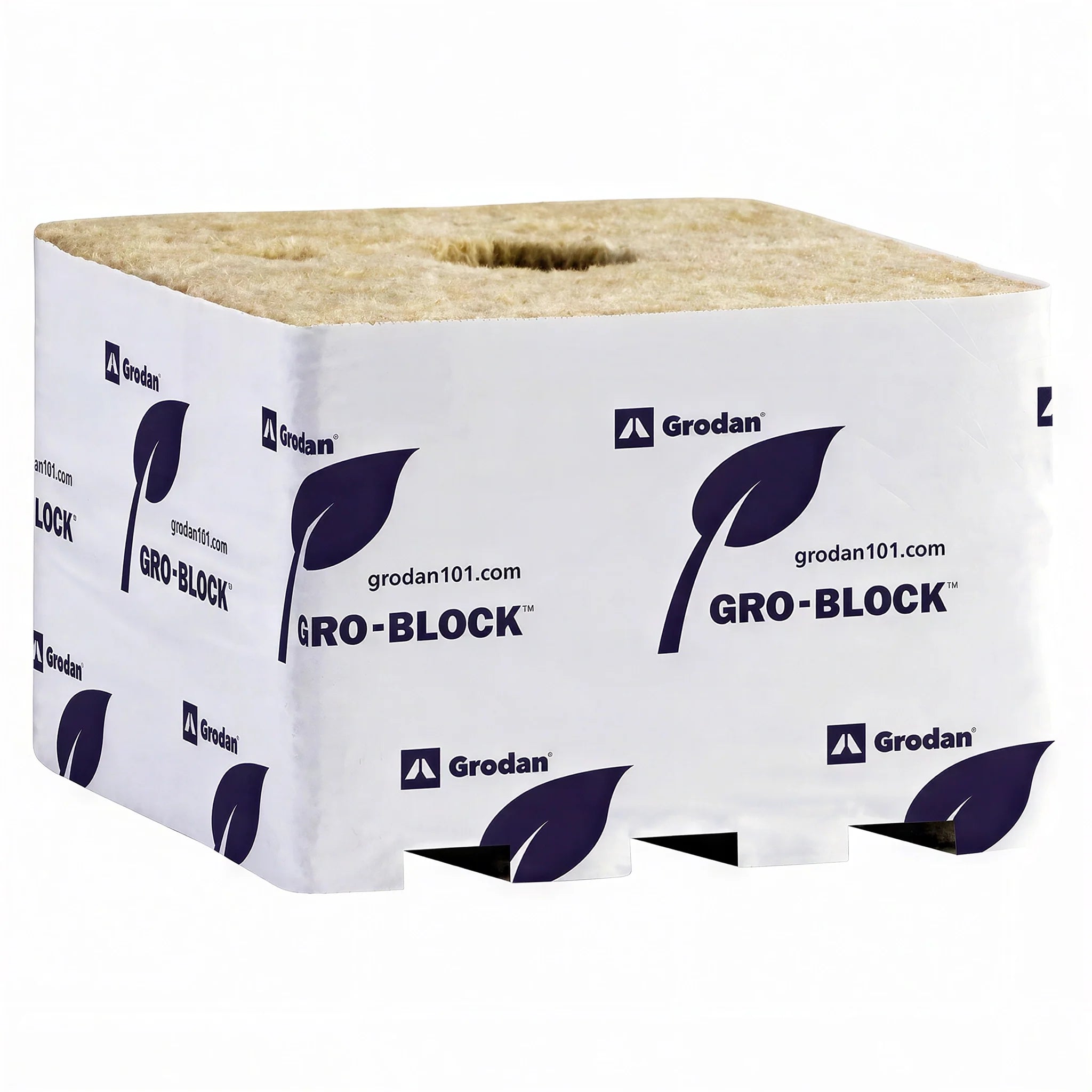
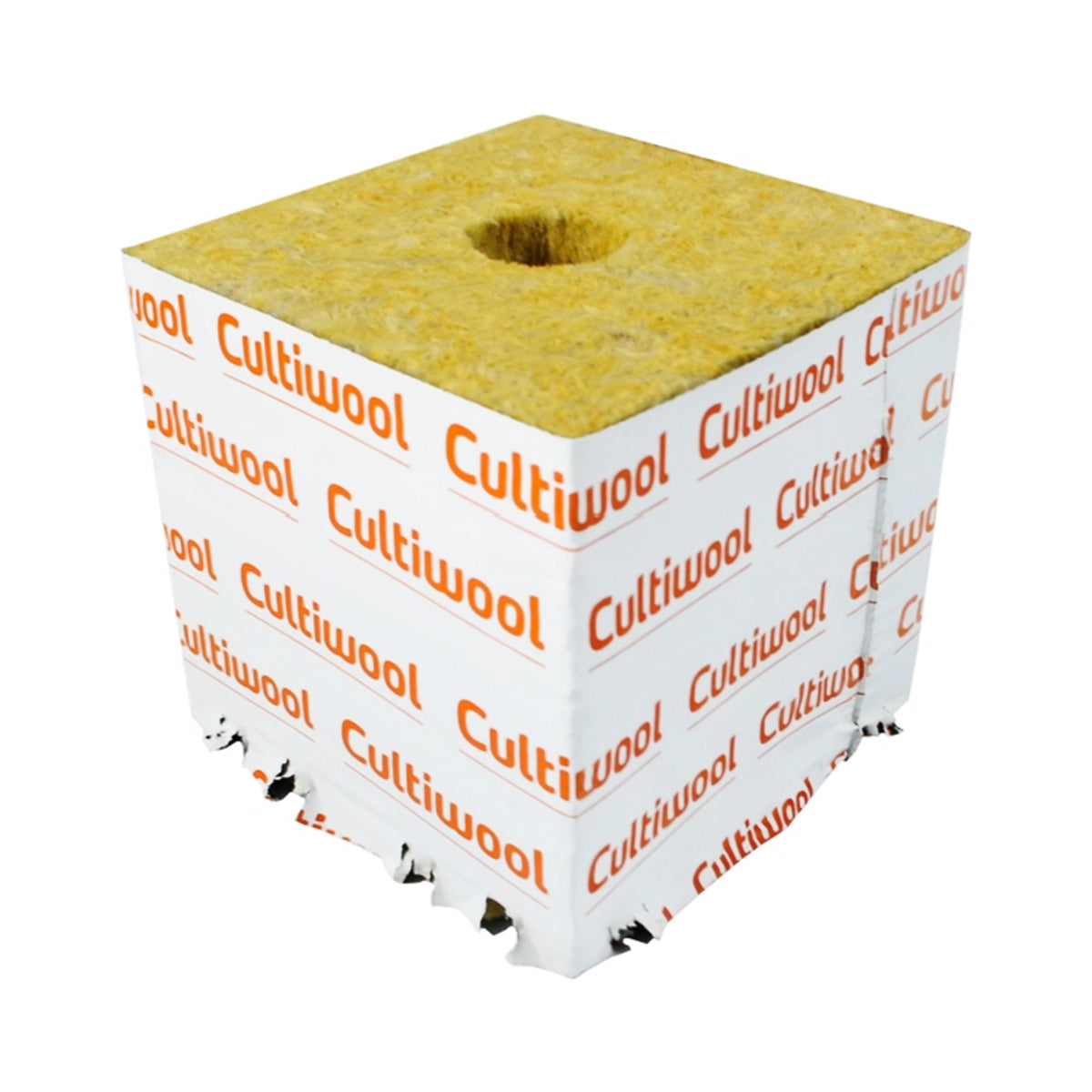
Rockwool blocks (also called grow blocks or transplant blocks) are the larger rockwool format used for the established vegetative and early flowering stages of hydroponic production - receiving plants transplanted from smaller rockwool cubes or starter plugs and serving as the root zone until final transplant to a production slab or large container. Available in 4-inch, 6-inch, and 8-inch formats, rockwool blocks provide a defined, drip-irrigated substrate volume that supports plants through the most active root development phase of the crop cycle. Browse the full rockwool collection for all formats.
Block Sizes & Production Timelines
4-inch blocks support plants for 2-4 weeks of vegetative growth before the roots fill the block and transplanting to a slab or larger system is needed. 6-inch blocks provide additional root zone volume for 4-6 week veg programs, or serve as the final substrate for short-cycle fruiting crops. 8-inch blocks are used for longer-cycle programs where a large individual root zone volume is needed without the row format of a grow slab - particularly for single-plant production in commercial specialty crops. Match block size to the plant's expected time in the block and the root development rate for the specific crop variety.
Block Covers & Drip Emitter Setup
Cover all rockwool block surfaces with light-blocking sleeves to prevent algae growth on the moist block surfaces under grow lighting. Install drip emitters (Netafim or equivalent pressure-compensating emitters) at 1-2 emitter sites per block positioned for even moisture distribution across the block's cross-section. Irrigate at 1-3 minute events repeated 8-20 times per day depending on plant size, growth stage, and environmental conditions. Pre-soak all new blocks at pH 5.5 for 1 hour before use to buffer the alkaline mineral binder. Fast shipping.
Rockwool Blocks FAQ
What is the difference between a rockwool block and a rockwool cube?
In practice, "block" and "cube" are often used interchangeably for the same product - both describe individual rockwool units in the 2-inch to 8-inch size range used for transplanting and vegetative growth. Some manufacturers distinguish "cubes" as the smaller sizes (2-3 inch) and "blocks" as the larger formats (4-8 inch), while others use the terms interchangeably across all sizes. When ordering, verify the actual dimensions rather than relying on the name - a 4-inch block and a 4-inch cube from different manufacturers are the same product format at the same dimensions.
When do I transplant from a rockwool block to a grow slab?
Transplant from a rockwool block to a grow slab or final container when roots are visible emerging from the base and sides of the block - typically when the root system has colonized approximately 60-70% of the block volume. Waiting until the block is completely root-bound creates unnecessary stress at transplant. For commercial programs, timing the transplant before root emergence at the block base maintains continuous root growth momentum through the transplant event rather than requiring the plant to recover from root restriction before resuming development.
Do I need to buffer rockwool blocks before use?
Yes - always pre-soak new rockwool blocks in pH 5.5 adjusted water for at least 1 hour before planting. New rockwool is alkaline from the mineral binder and will cause pH problems in the root zone if used without pre-soaking. After soaking, drain to field capacity and verify the runoff pH is in the 5.5-6.2 range before transplanting. Continue irrigating with nutrient solution at pH 5.5-6.2 throughout the crop cycle to maintain the block in the appropriate pH range for nutrient availability.
How many drip emitters do I need per rockwool block?
One drip emitter per block is the minimum for smaller blocks (4-inch). For 6-inch and 8-inch blocks, 2 emitters positioned at 1/3 and 2/3 of the block width provide more even moisture distribution across the larger cross-section. Position emitters 1-2 inches from the block edge to distribute moisture through the full block volume rather than concentrating irrigation at one corner. Pressure-compensating emitters (Netafim PC type, 0.5-2 GPH output) deliver consistent flow regardless of head pressure variation across drip lines of different lengths.
Can I use rockwool blocks without a slab system?
Yes - rockwool blocks work as standalone growing containers for single plants in individual drip-irrigated setups. Position each block on a collection tray or gutter for drainage, install a drip emitter, and run the drip system to the same schedule as a slab program. Many hobby growers use individual 4-inch or 6-inch blocks for the full vegetative cycle of short-cycle crops without transplanting to slabs. For long-cycle crops (tomatoes, cucumbers) where root systems eventually outgrow individual blocks, slab transplanting at the appropriate timing produces better long-term results.