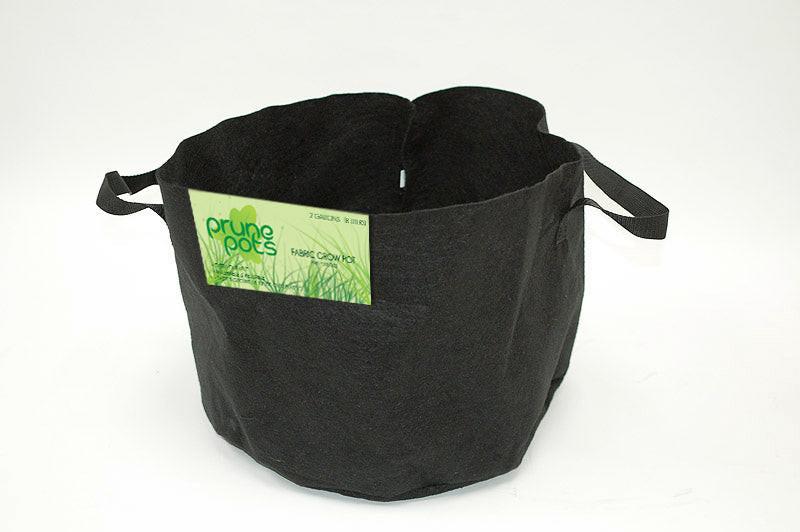
Prune Pots & Air-Pruning Containers
Prune pots are rigid plastic containers engineered with inward-pointing cone-shaped holes around the wall perimeter - the same air-pruning principle as fabric pots but in a rigid, reusable form factor. When a root tip grows outward and contacts the cone opening, it encounters the low-humidity air environment outside the container wall, causing the root tip to desiccate and stop growing. The plant responds by producing multiple new lateral roots from the same branch point, creating a denser and more fibrous root architecture than plants grown in conventional smooth-walled plastic pots where roots circle the container interior. The result is a root system with more total surface area for nutrient and water uptake.
Prune Pots vs. Fabric Pots
Both prune pots and fabric smart pots produce air-pruned root systems that outperform standard plastic containers. Prune pots (rigid plastic with cone holes) are more durable for multi-cycle commercial use - typically lasting 5-10+ years - and the cone-shaped hole design directs roots to the opening rather than allowing them to grow along smooth interior walls before finding an exit. Fabric pots produce air pruning across the entire breathable wall surface but degrade over multiple wash cycles and do not maintain their shape as reliably under heavy growing media loads. Browse our air pots and fabric containers collection for both rigid and fabric air-pruning options alongside prune pots.
Sizing & Applications
Prune pots are available from 0.5-gallon propagation sizes through 10-gallon and larger production containers. Match container volume to expected root development over your production cycle - the air-pruning design does not compensate for insufficient root zone volume. Prune pots dry out faster than solid-walled plastic containers because the perforated walls increase evaporation - automated drip irrigation is the most practical solution for high-frequency irrigation needs in air-pruning container programs. Fast shipping.
Prune Pots FAQ
What is the difference between a prune pot and an air pot?
Prune pots and air pots refer to the same product type - rigid plastic containers with inward-pointing cone-shaped holes that cause air pruning of root tips at the container wall. "Air pot" is the name used by the original Airpot brand from Denmark; "prune pot" is a generic category name for the same design. Both terms describe rigid plastic air-pruning containers as distinct from fabric smart pots, which achieve air pruning through a different mechanism (breathable geotextile fabric rather than discrete cone holes).
Do prune pots work better than fabric pots?
Both produce air-pruned root systems that meaningfully outperform standard smooth-walled plastic containers. The rigid cone-hole design of prune pots directs roots specifically toward the cone openings where air pruning occurs, preventing the root circling that can happen when roots hit a smooth wall before finding an exit. Fabric pots provide air pruning across the entire wall surface - in practice both produce similarly fibrous, well-developed root systems. Prune pots are more durable for multi-year commercial use; fabric pots are less expensive initially and easier to transplant from. The performance difference between the two is minimal compared to either versus a standard plastic pot.
How much more often do I need to water in prune pots?
Prune pots and fabric air-pruning containers dry out 20-40% faster than equivalent solid plastic pots because the perforated or breathable walls increase evaporation from the root zone surface. In a warm grow room running 75-80 degrees F, a plant in a 3-gallon prune pot may need watering every 1-2 days at peak vegetative development versus every 2-3 days in a solid plastic container. Automated drip irrigation eliminates this as a management burden - the system adjusts to the container's faster dry-back cycle automatically when set appropriately.
Can I use prune pots in an ebb and flow system?
Prune pots with solid bases work in ebb and flow systems - the base is impermeable and holds nutrient solution during flood events while the cone holes in the walls provide the air-pruning benefit during the dry periods between floods. Fabric pots are not suitable for ebb and flow because the fabric base allows solution to wick out laterally. For ebb and flow applications requiring air-pruning benefits, rigid cone-hole prune pots are the correct choice.
Are prune pots reusable?
Yes - rigid plastic prune pots are designed for multiple growing cycles, typically lasting 5-10+ years with proper care. Clean between cycles by removing root material from the cone holes (a stiff brush handles this well), soaking in dilute bleach or H2O2 solution, rinsing thoroughly, and allowing to dry before reuse. Inspect the cone holes for clogging - blocked cone holes eliminate the air-pruning function at those sites. Replace pots when cone holes are permanently deformed or when structural cracks appear in the pot body.