HPS & Metal Halide Grow Lights for Indoor Horticulture
High-pressure sodium (HPS) and metal halide (MH) grow lights — collectively called high-intensity discharge (HID) lighting — have been the backbone of commercial indoor horticulture for over 40 years. With decades of proven yield data, predictable lamp replacement cycles, and compatibility with existing ballast infrastructure, HID lighting continues to deliver consistent results for growers who have built production systems around it.
HPS Spectrum: 550–750nm for Flowering & Fruiting
HPS lights emit primarily in the 550–750nm yellow-to-red wavelength range, which is highly effective at driving flowering and fruiting in most crop varieties. Most HPS bulbs operate at 2,000–2,100 Kelvin. The warm spectrum promotes dense canopy growth, high photosynthetic efficiency during the reproductive stage, and is particularly well-matched to tomatoes, peppers, cucumbers, and other high-light-demand fruiting crops. HPS has the highest lumen-per-watt output of any traditional HID source, making large-canopy coverage economical at scale.
Metal Halide Spectrum: 400–700nm for Vegetative Growth
MH lights cover a broader 400–700nm spectrum, with strong output in the blue wavelengths (400–500nm) that drive compact, tight vegetative growth. Most MH bulbs run between 4,000–10,000 Kelvin. Many HID growers run MH during vegetative growth, then switch to HPS for flowering — a straightforward way to match spectrum to growth stage using the same ballast infrastructure with different bulbs.
HPS & MH Fixtures from DimLux, Phantom, Iluminar, Matrix & Gavita
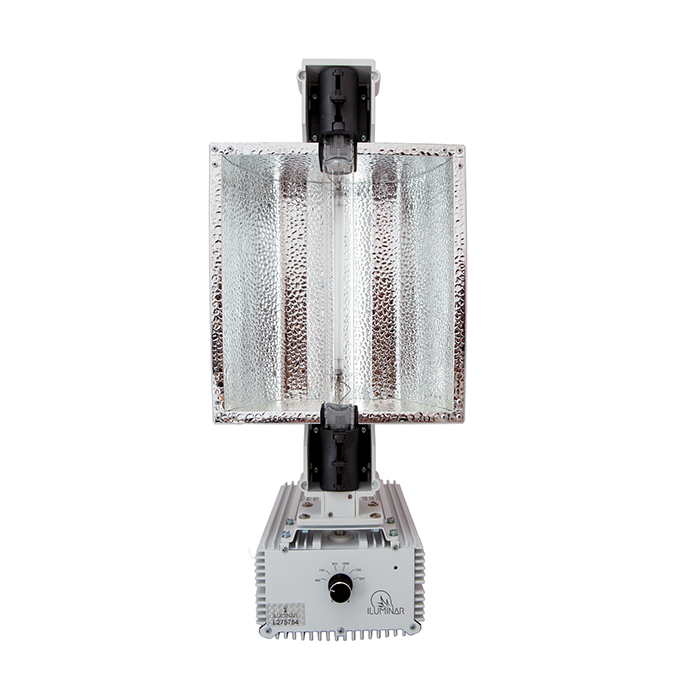
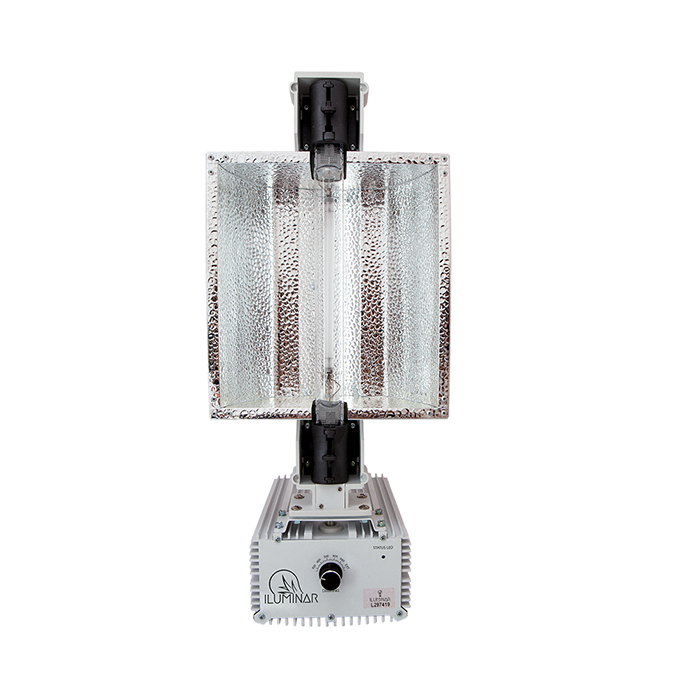
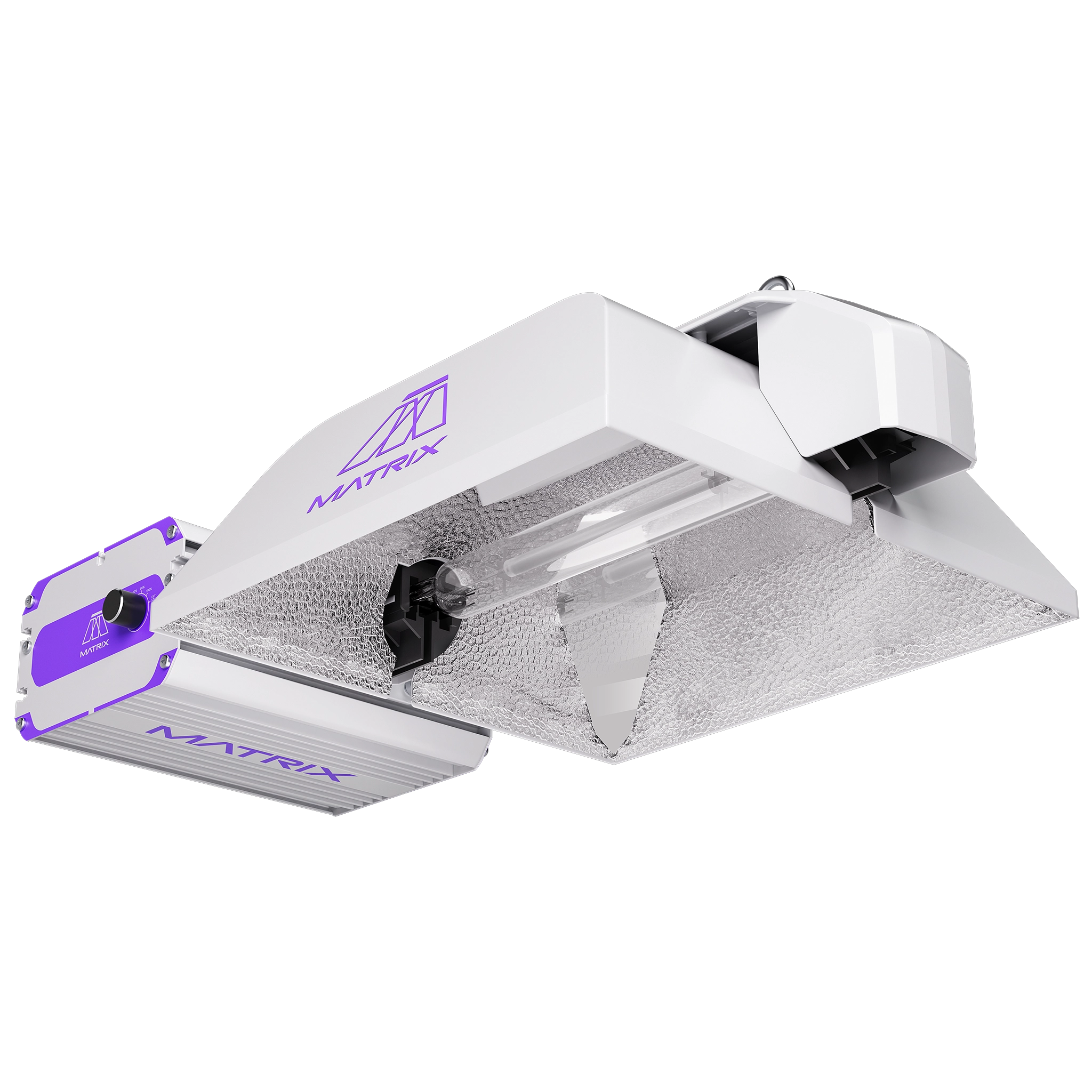
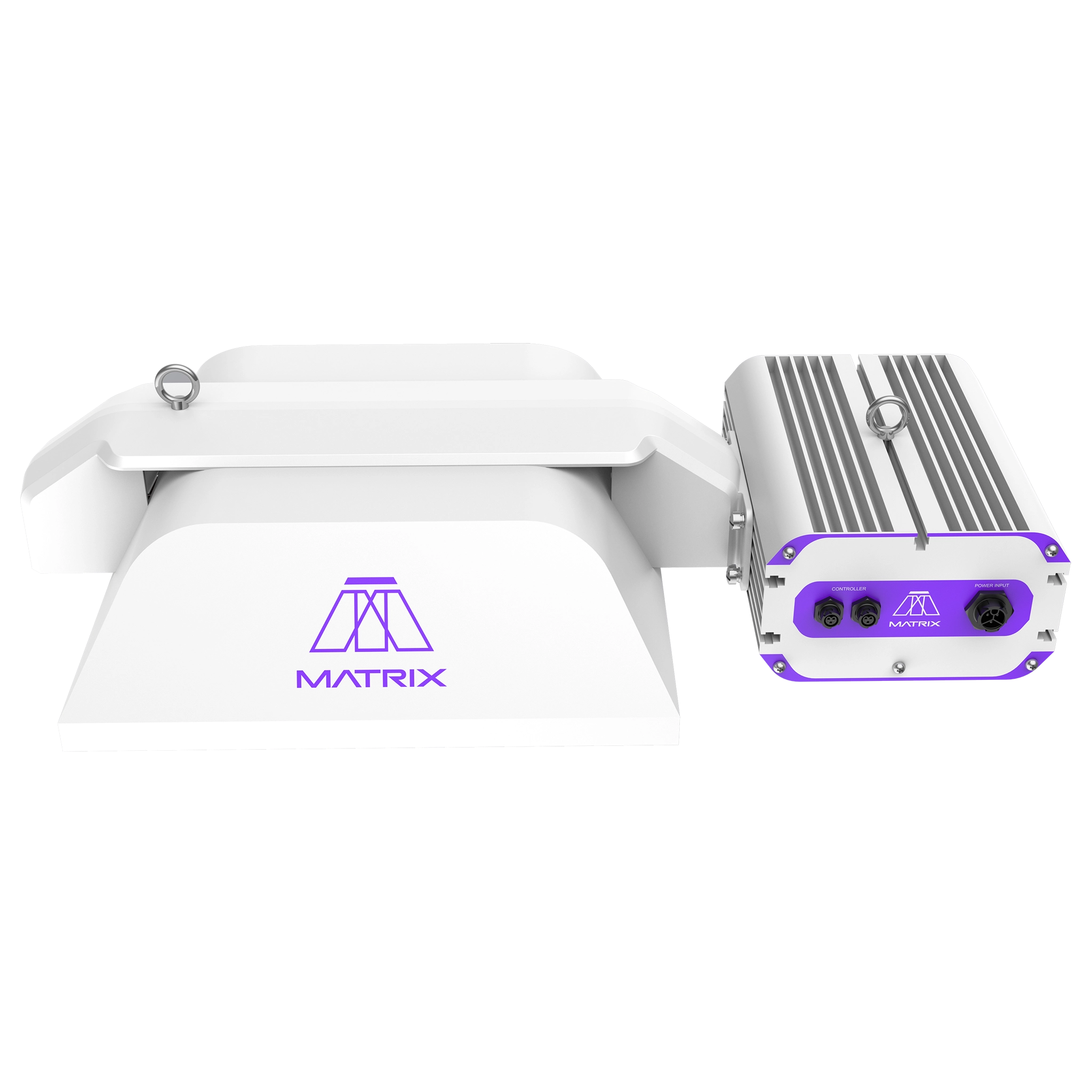
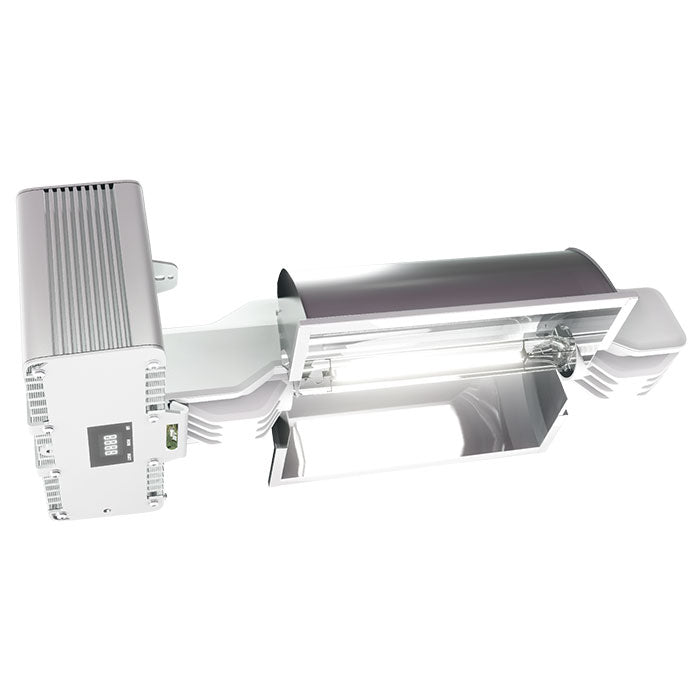
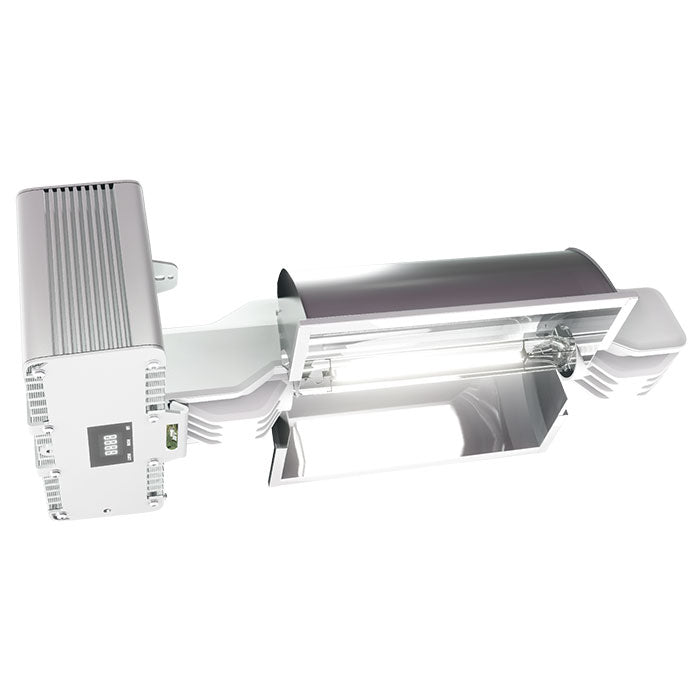
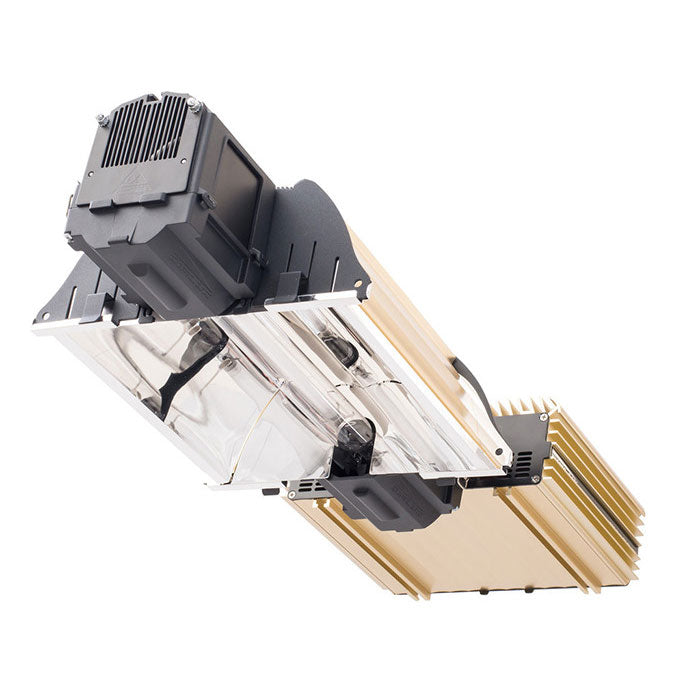
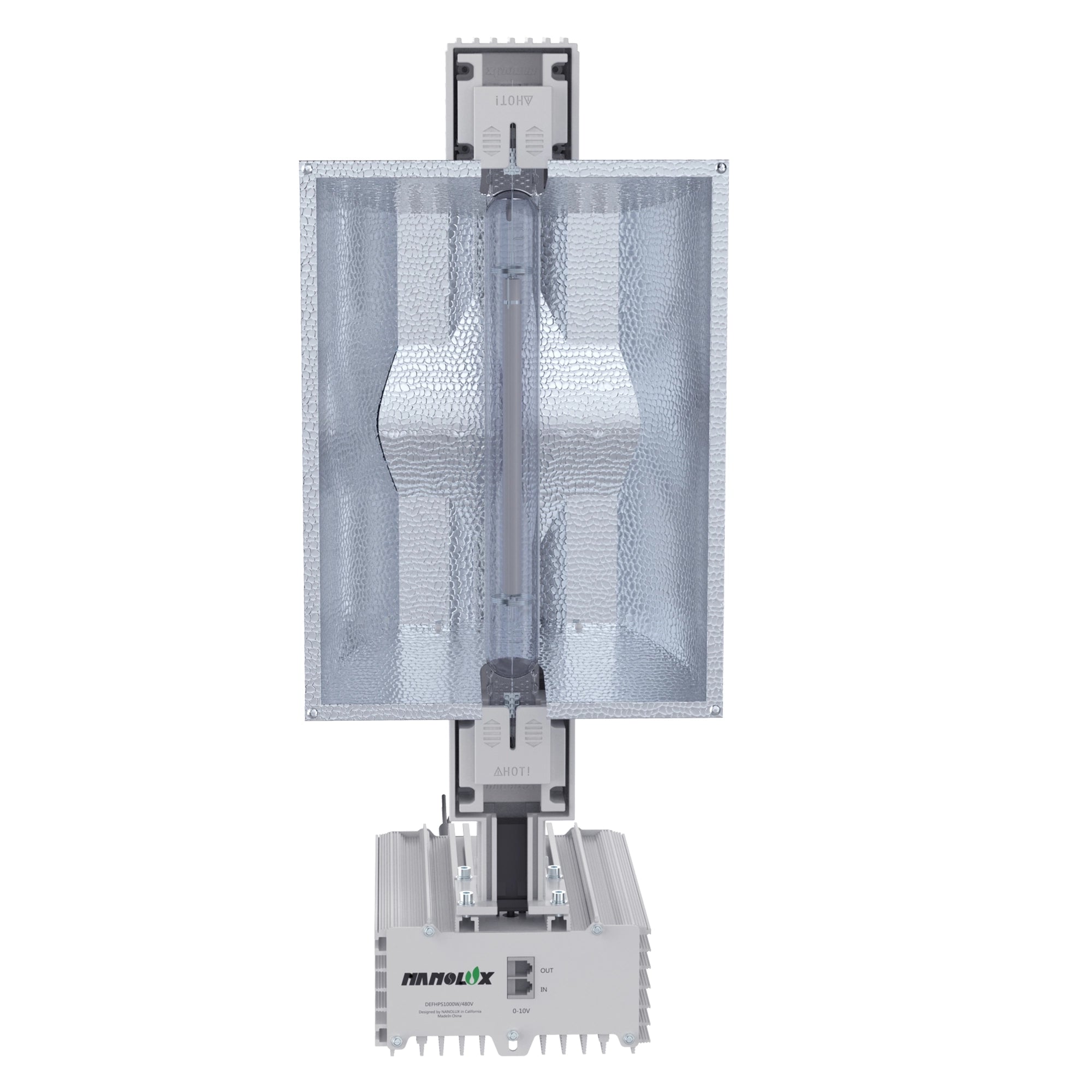
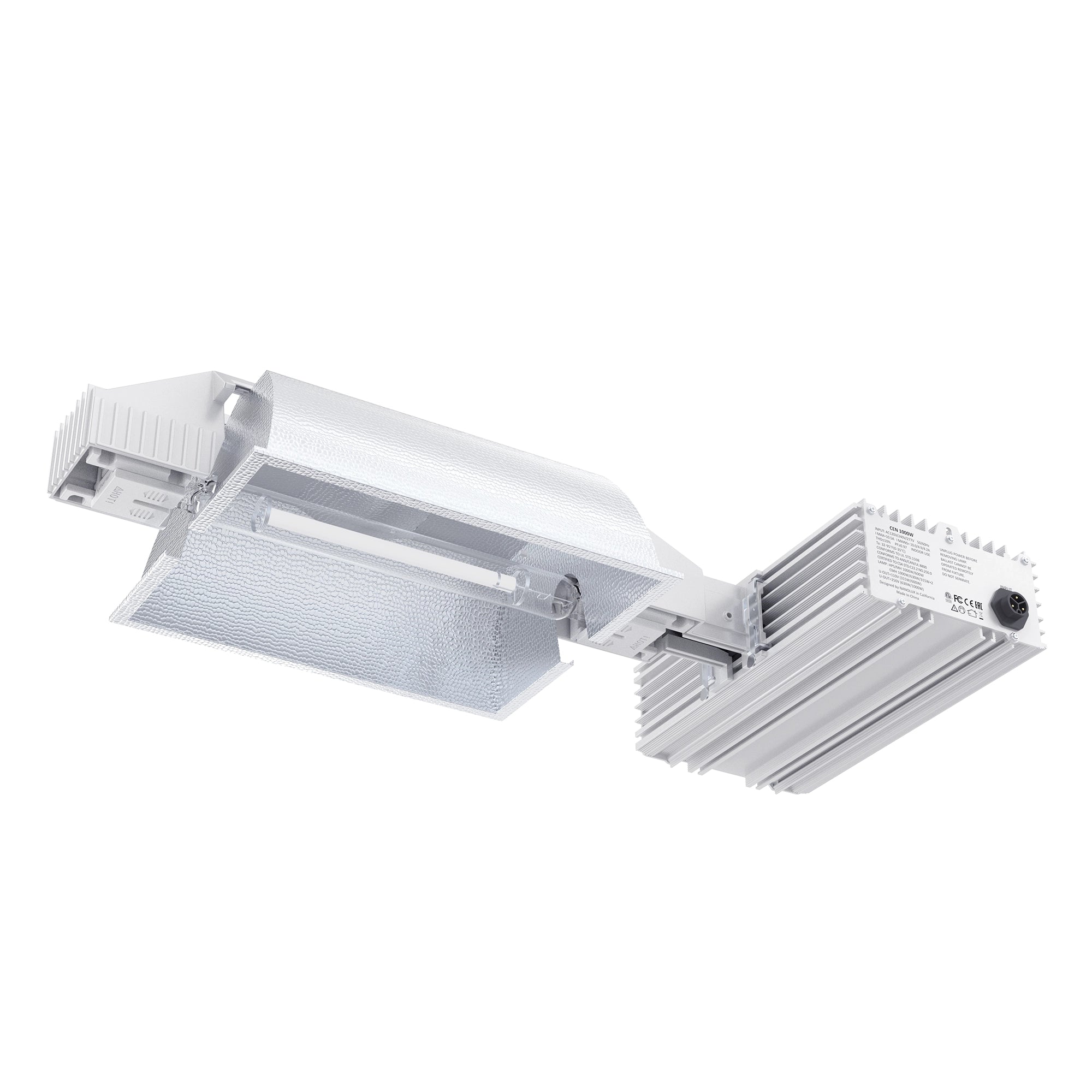
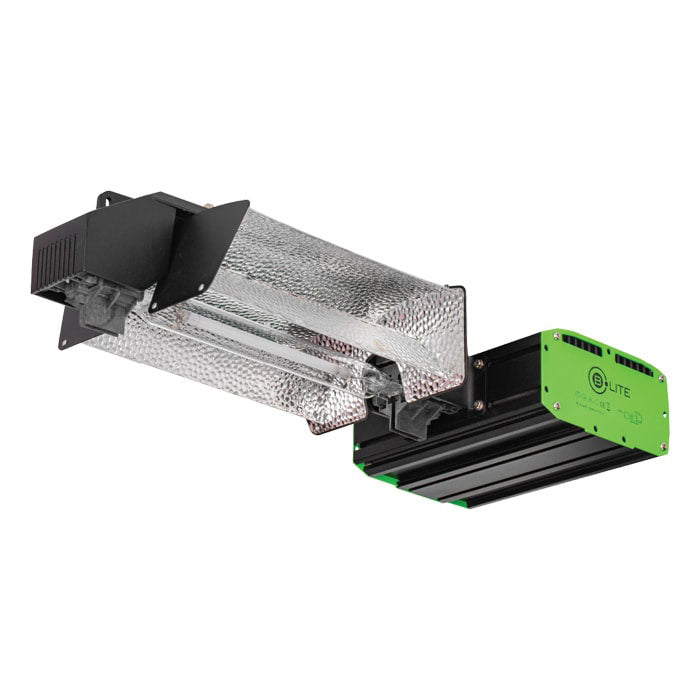
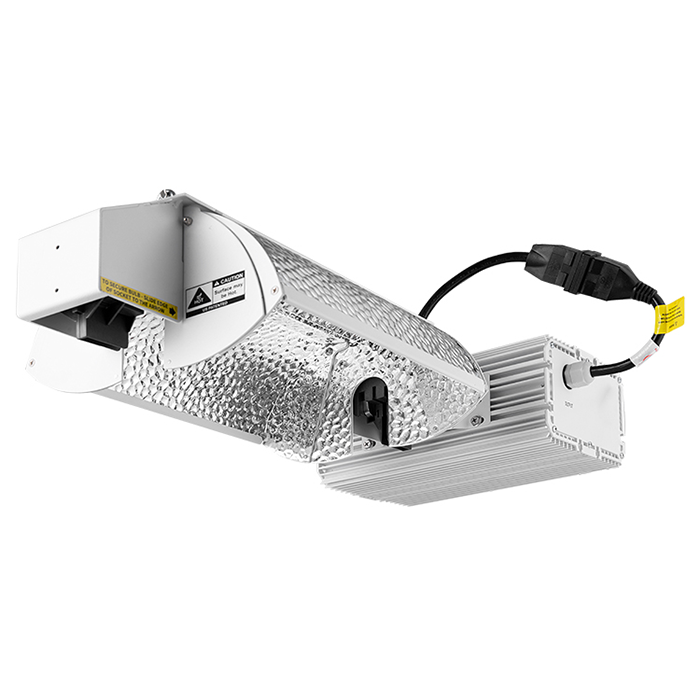
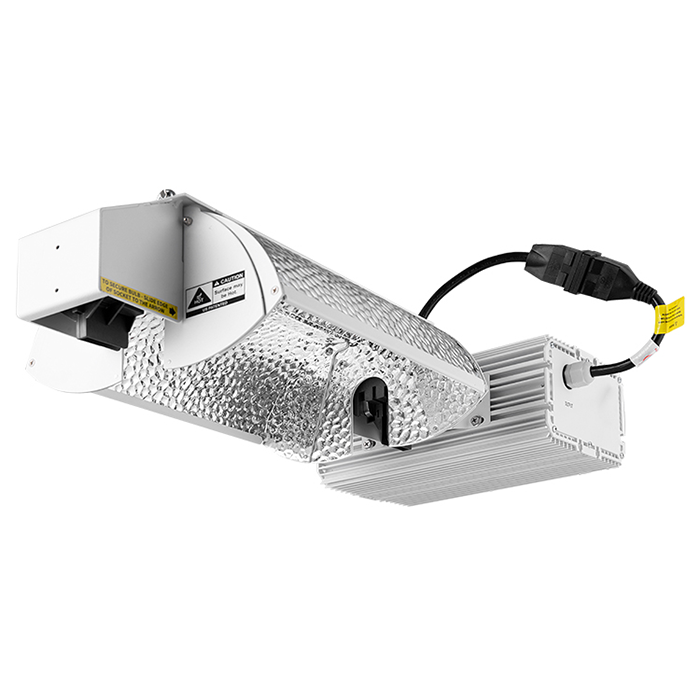
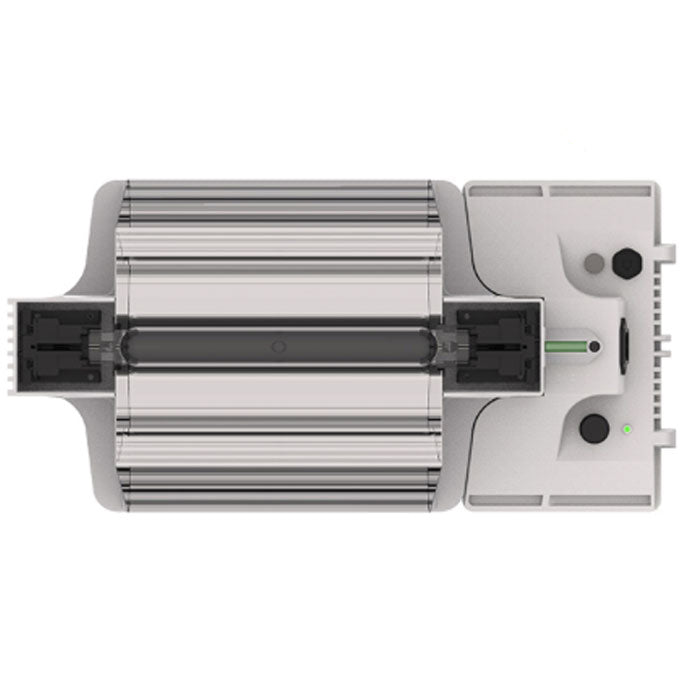
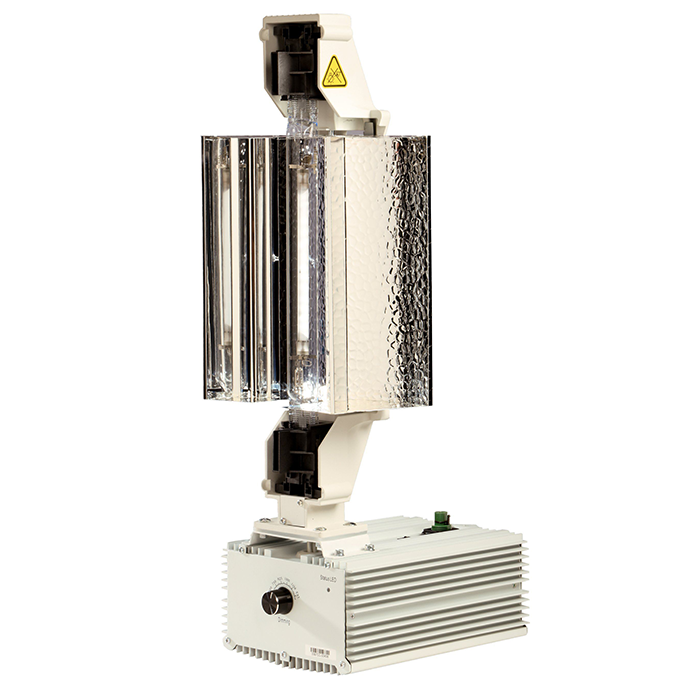
Hydrobuilder carries HID fixtures, digital ballasts, hoods, and reflectors from qualified brands including DimLux, Phantom, Iluminar, Matrix, and Gavita. Available wattages run from 250W to 1,000W in both HPS and MH configurations. Digital dimmable ballasts allow output adjustment by growth stage — a practical feature for managing heat load and plant response during vegetative-to-flower transitions. Double-ended (DE) HPS fixtures deliver 10–30% higher PAR output and longer lamp life than single-ended (SE) designs — the commercial standard for large-canopy production. Air-cooled enclosed hoods and open-face reflectors are available to match different ventilation configurations.
HID Operating Costs & Efficiency
HID fixtures require ballasts, hoods, and reflectors as separate components, adding to upfront cost. However, at commercial scale, HPS remains cost-competitive with LED on a per-photon basis, particularly in well-insulated facilities where the additional radiant heat of HID reduces winter heating costs. Use our Electricity Cost Calculator to model HID running costs against LED alternatives for your specific energy rate and light schedule, and our PPFD & Light Coverage Calculator to map fixture placement for your canopy footprint.
Compare HID with LED grow lights, browse replacement grow light bulbs for your existing fixtures, or visit our best HPS grow lights guide in the Learning Center. Expert support available.
HPS & Metal Halide Grow Lights FAQ
What is the difference between HPS and metal halide grow lights?
High-pressure sodium (HPS) lamps emit primarily in the yellow-to-red spectrum (550–750nm) at 2,000–2,100 Kelvin — optimized for flowering, fruiting, and high-lumen output. Metal halide (MH) lamps emit a broader spectrum including strong blue output (400–500nm) at 4,000–10,000 Kelvin — better matched to vegetative growth, producing compact, tight internodal spacing. Many HID growers run MH during vegetative growth and switch to HPS at flowering — both lamp types work with the same ballast using a conversion lamp, allowing the spectrum switch without replacing the entire fixture.
What is the difference between single-ended and double-ended HPS?
Single-ended (SE) HPS lamps use a standard mogul screw base, are compatible with a wide range of ballasts, and are the traditional format used in most legacy HID infrastructure. Double-ended (DE) lamps connect at both ends of the arc tube rather than through a single base — this design delivers 10–30% more PAR output from the same wattage, better UV and far-red output, and longer lamp life than equivalent SE designs. DE lamps require purpose-built DE fixtures (not compatible with SE ballasts). For new builds, DE is the clear choice for performance; SE is the choice if you need compatibility with existing equipment.
How often should I replace HPS and MH bulbs?
HPS lamps maintain acceptable output for 10,000–12,000 hours of operation — approximately 1–2 years depending on daily hours of use. After this point, lumen output drops significantly while power consumption remains the same, reducing efficiency. MH lamps degrade faster, typically requiring replacement at 6,000–10,000 hours. Double-ended HPS lamps maintain output longer than single-ended and typically allow longer replacement intervals. Many commercial operators replace lamps on a fixed 12-month schedule regardless of hours to maintain consistent output across their facility rather than tracking individual lamp hours.
Should I upgrade from HPS to LED?
Modern LED fixtures produce equivalent or greater yield per watt as DE HPS with 30–50% less heat output. For new builds, LED is the clear choice. For existing HPS facilities, the transition economics depend on your electricity rate, cooling costs, and remaining life on your current ballast infrastructure. At $0.15/kWh or above, the electricity savings from a 1,000W HPS to LED transition typically pay back the LED fixture cost within 2–3 years. Use our Electricity Cost Calculator to model your specific situation before deciding.