Fan & Carbon Filter Kits for Grow Room Ventilation
A properly matched fan and carbon filter kit is the most important single ventilation purchase for any enclosed indoor grow. The inline fan handles air exchange -- exhausting heat, humidity, and stale CO2-depleted air from the grow space while drawing in fresh ambient air. The carbon filter handles odor control -- adsorbing volatile compounds from exhaust air before it enters the living environment. When fan and filter are correctly matched and sized for your specific tent or room volume, the result is a consistently comfortable growing environment with controlled temperature, humidity, and air quality.
What is Included in a Fan & Filter Kit
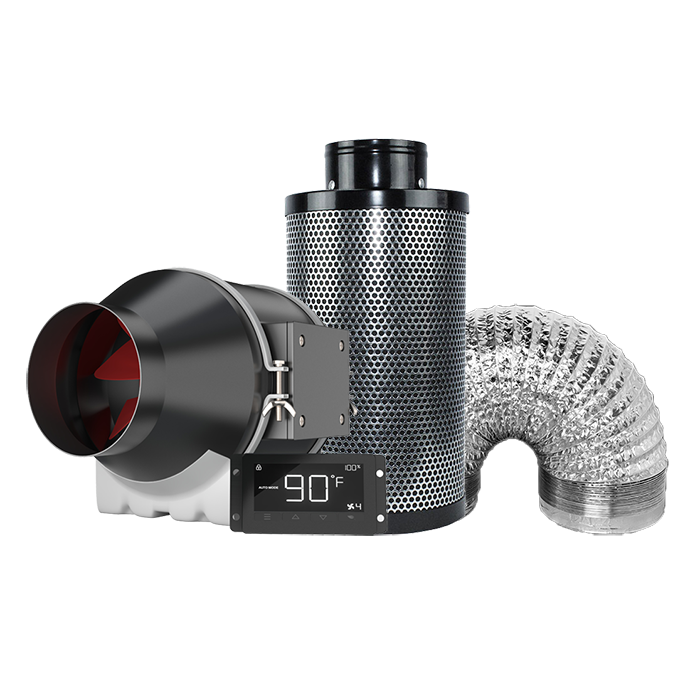
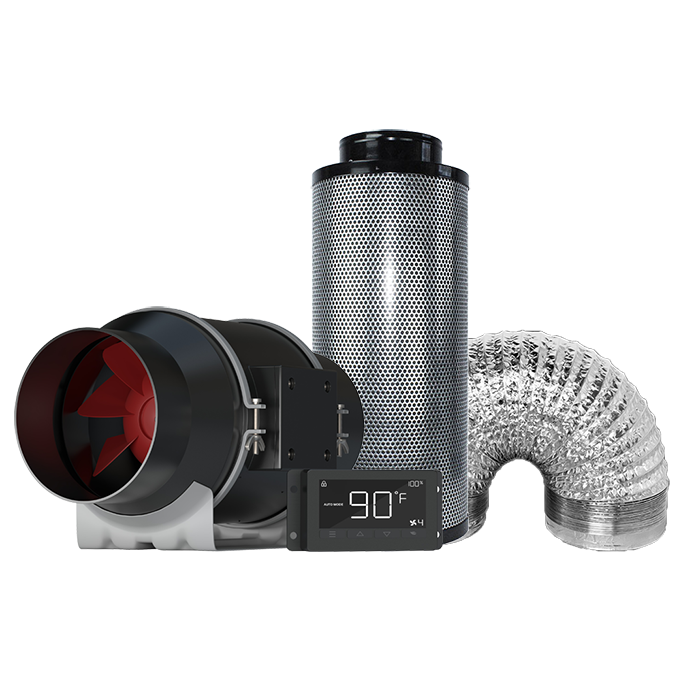
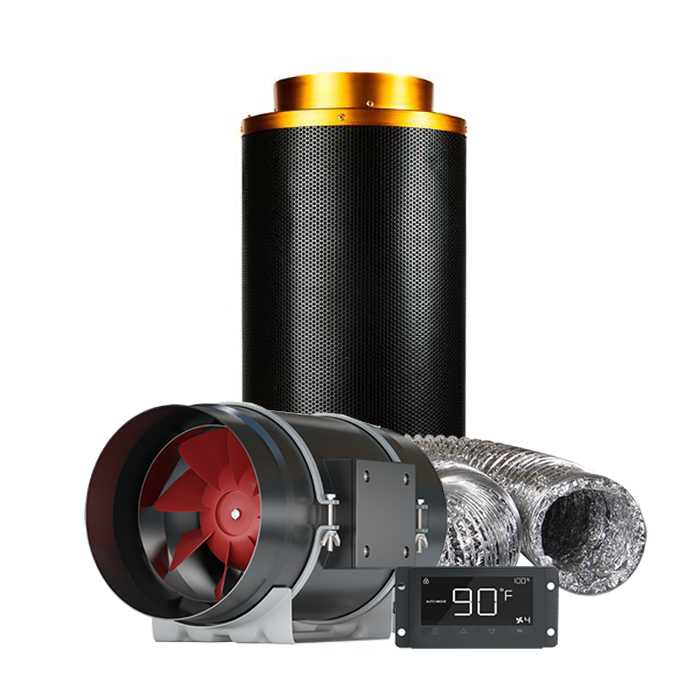
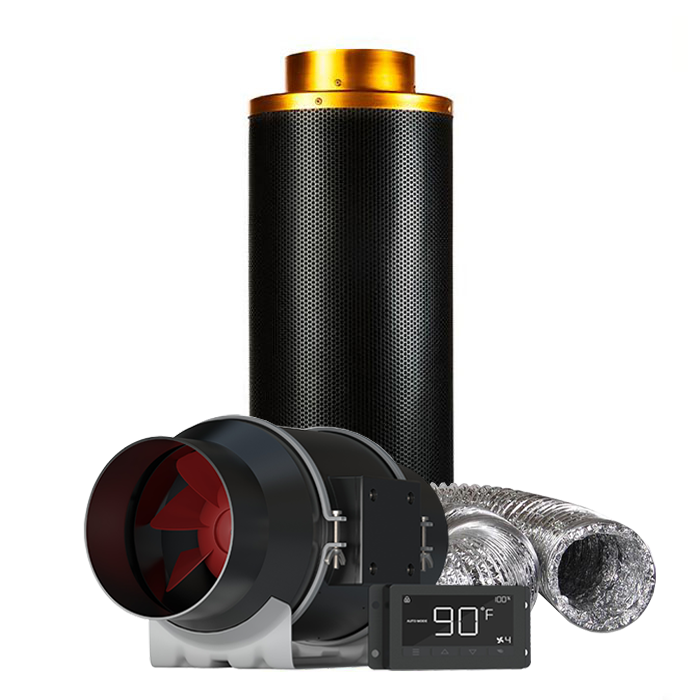
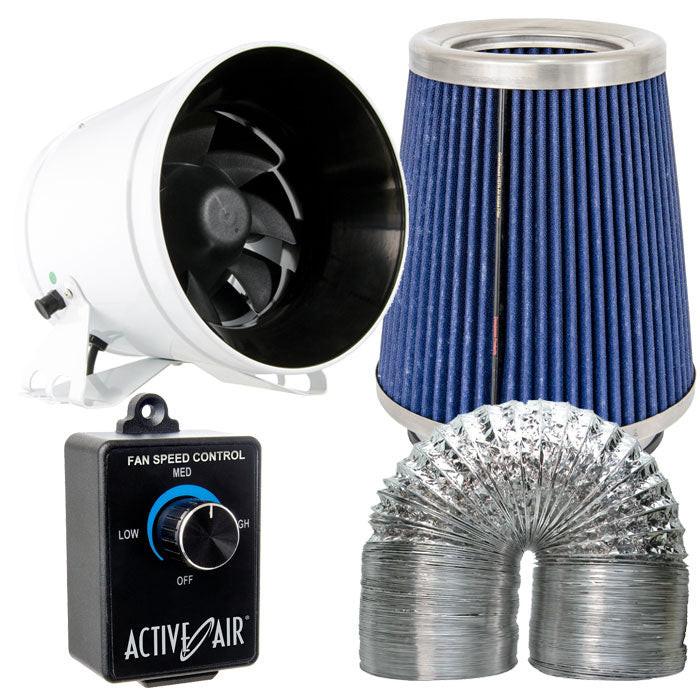
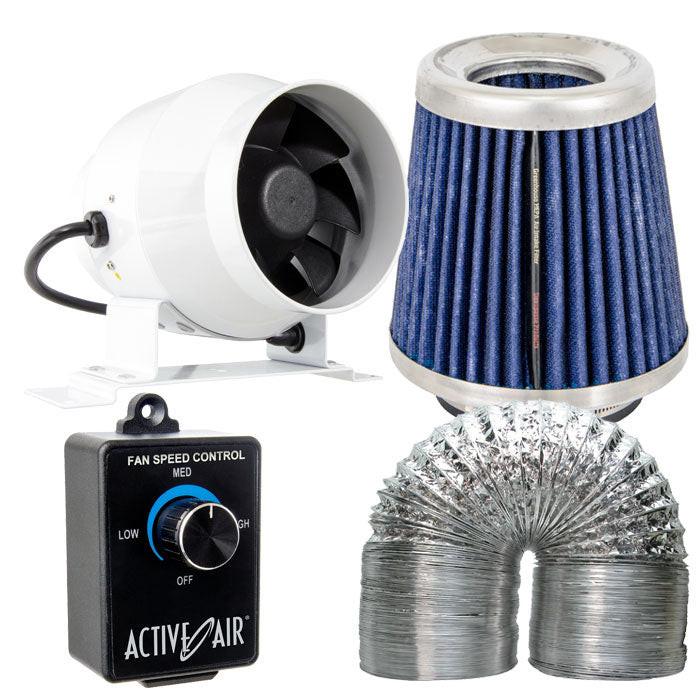
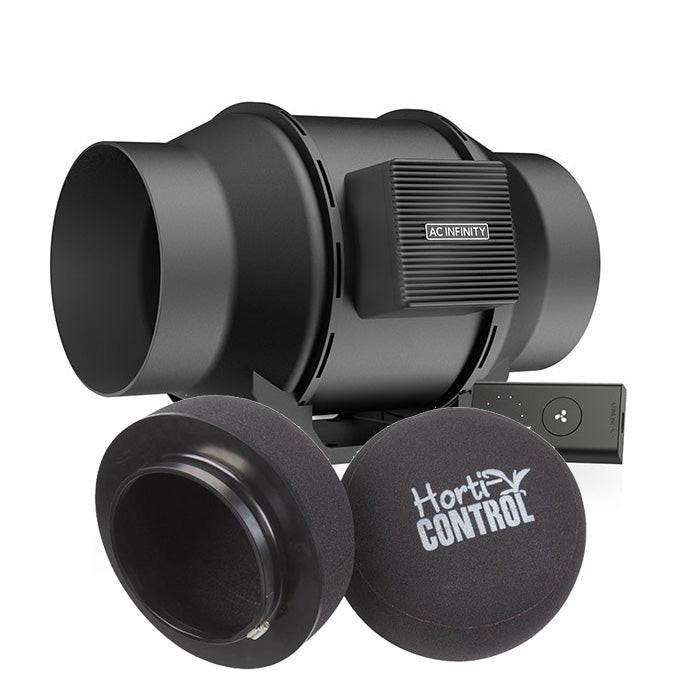
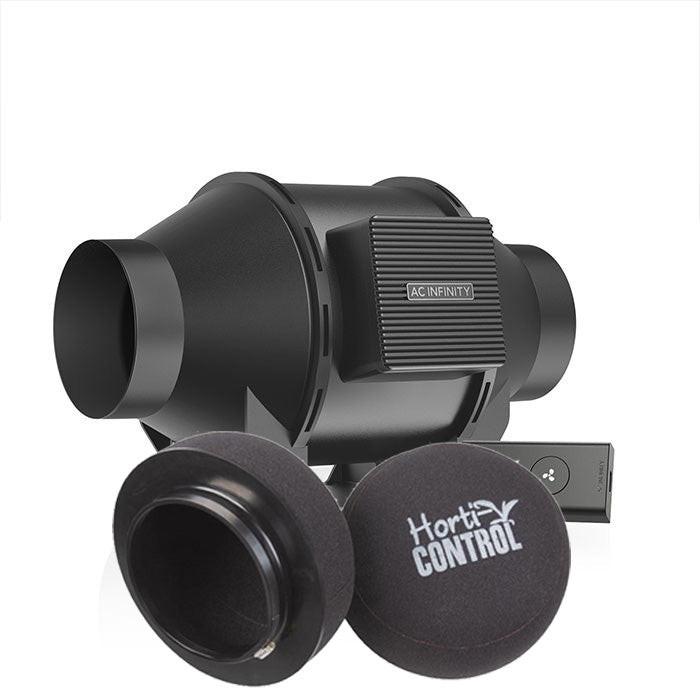
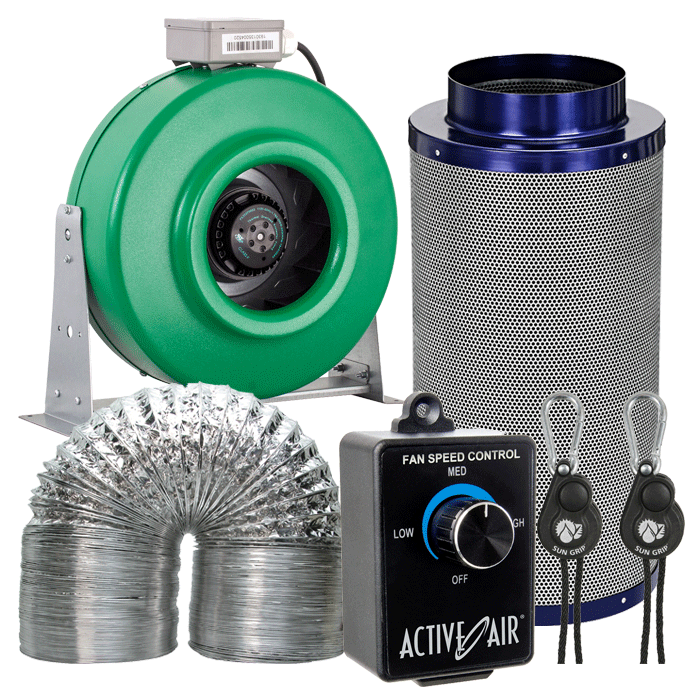
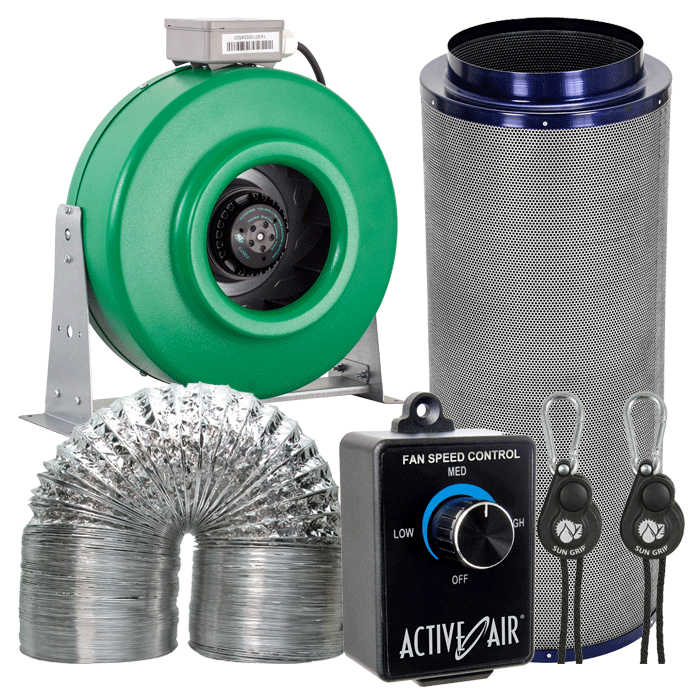
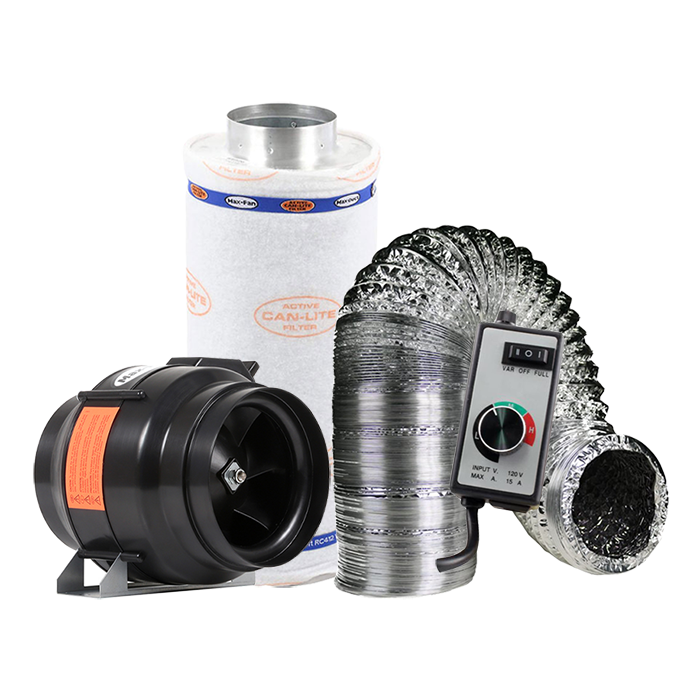
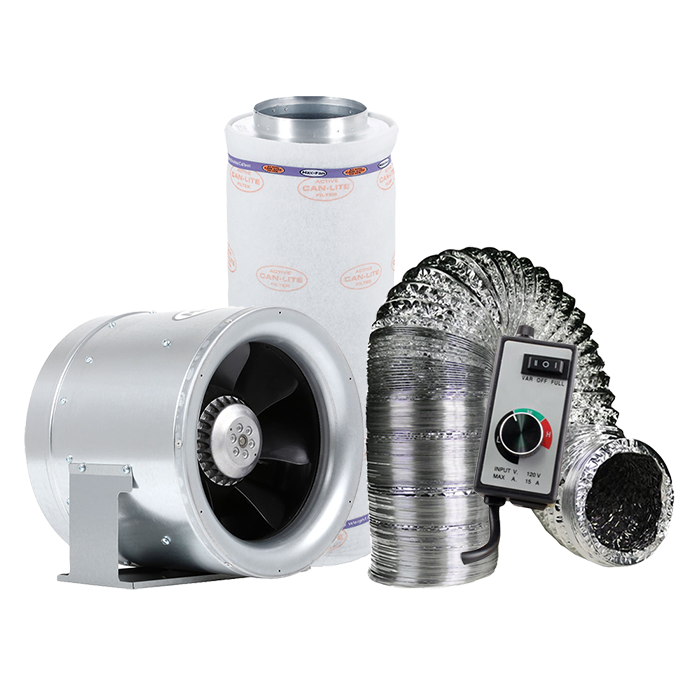
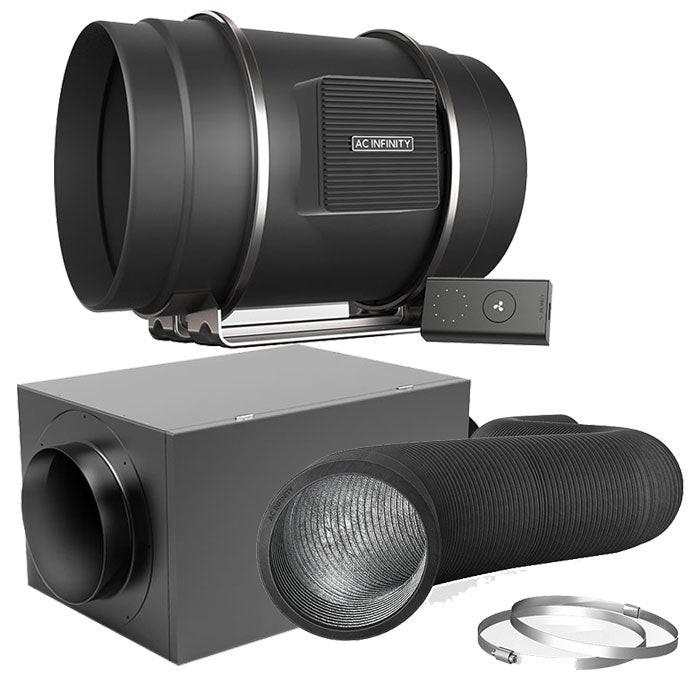
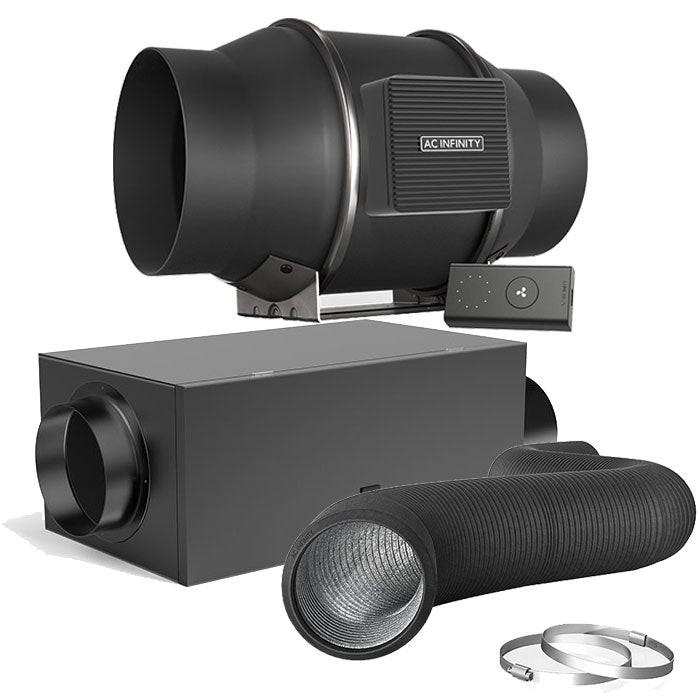
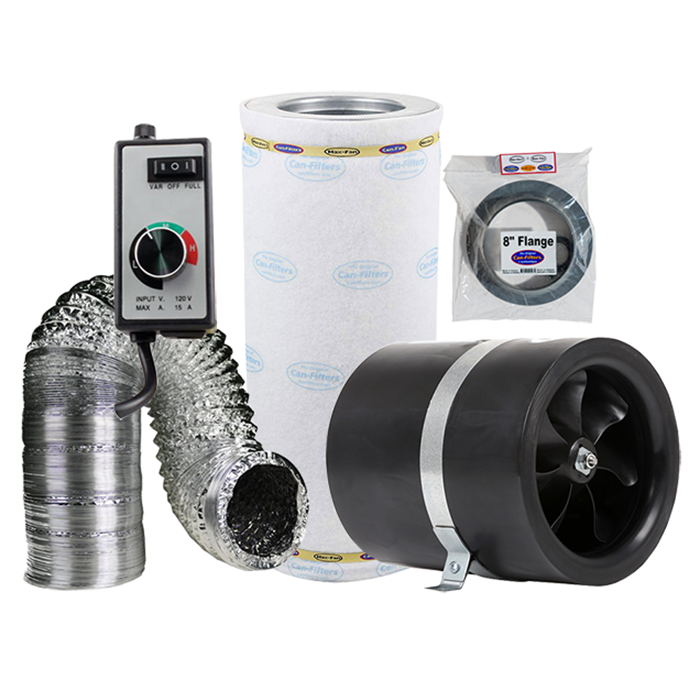
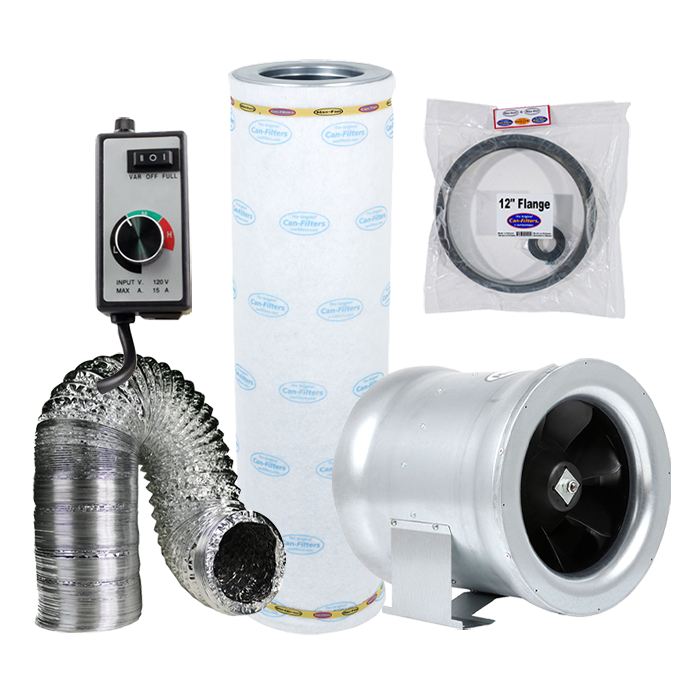
Complete fan and filter kits typically include: an inline duct fan (centrifugal impeller, rated in CFM), a carbon filter (activated carbon in a mesh housing with a pre-filter sleeve), insulated or non-insulated flexible ducting in the appropriate diameter and length, and clamps or speed controller depending on kit configuration. Fan and filter sizing within each kit is matched by the manufacturer -- the filter's rated CFM equals or exceeds the fan's maximum output, ensuring all exhausted air passes through the carbon bed at operating flow rates. This pre-matched sizing eliminates the most common setup error of pairing an undersized filter with an oversized fan (which causes channeling and rapid filter saturation).
Sizing Fan & Filter Kits for Your Space
Kit sizing is determined by your grow space volume and target air exchange rate. Determine tent or room volume (L x W x H in cubic feet), then select a kit with a fan rating that covers that volume at least once per minute -- adding 25-30% buffer for carbon filter pressure resistance. A 4x4x7 ft tent (112 cu ft): needs 140-150 CFM minimum; a 4-inch kit (170+ CFM) or 6-inch kit (300+ CFM with speed controller) covers this. A 4x8x7 ft tent (224 cu ft): needs 280-300 CFM; a 6-inch kit is the standard. A 5x5x8 ft tent (200 cu ft): needs 250+ CFM; a 6-inch kit is appropriate. Use our Ventilation & Carbon Filter Sizing Calculator for a precise recommendation based on your exact dimensions. Hydrobuilder carries fan and filter kits from Can-Fan, AC Infinity, Vivosun, and other qualified brands in 4-inch, 6-inch, 8-inch, and 10-inch duct diameters.
Installing a Fan & Filter Kit
Standard installation mounts the carbon filter inside the tent connected to the fan's intake via a short duct section -- the fan then exhausts outside the tent through a port. This pulls all tent air through the carbon before exhausting it, maximizing odor control. Hang the filter from the tent's overhead cross bars using adjustable rope ratchets (most kits include these), connect the ducting with clamps to ensure no leaks, and route the fan exhaust duct out through a tent port to the exterior space or HVAC exhaust. A speed controller between the fan power supply and the fan allows airflow reduction during cooler periods -- running the fan at 60-70% speed rather than maximum reduces noise and energy consumption while maintaining adequate air exchange for most conditions. An environment controller can automate fan speed in response to temperature and humidity rather than running at a fixed rate. Fast shipping.
Fan & Carbon Filter Kits FAQ
What size fan and filter kit do I need for a 4x4 tent?
For a 4x4x7 ft tent, a 4-inch kit (fan rated 170+ CFM) or a 6-inch kit with a speed controller is the standard choice. The 4-inch kit handles the volume adequately at lower cost; the 6-inch kit provides more headroom for situations with additional heat or humidity load, runs quieter at reduced speed, and allows airflow increase during summer or heavy plant load periods. If you are running a high-wattage LED (600W+) in a 4x4 tent and managing temperature closely, the 6-inch kit's extra CFM capacity is worth the additional cost to give the system more thermal management headroom.
How often do I need to replace the carbon filter in a fan kit?
Carbon filters in normal grow room conditions last 12-24 months of continuous operation before the activated carbon saturates and loses adsorption capacity. Signs that replacement is needed: odor begins passing through the filter even at full airflow; the pre-filter sleeve is heavily clogged and airflow has dropped noticeably even after pre-filter cleaning; the filter has been in continuous use for over 18-24 months. Replacing the pre-filter sleeve (the removable fabric outer layer) every 3-4 months extends the life of the carbon bed by preventing fine particulate from clogging the carbon surface and reducing effective exposure area. Pre-filter sleeves are sold separately and are significantly cheaper than replacing the full filter.
Should the carbon filter go inside or outside the tent?
Inside the tent is the standard recommended position. Mounting the filter inside -- hanging from cross bars with the fan drawing air through it -- ensures all tent air passes through the carbon before being exhausted outside. This configuration also keeps the positive pressure differential inside the tent (air is constantly being pulled from the tent, maintaining slight negative pressure inside), which prevents untreated air from leaking through tent seams and zipper gaps. Outside-tent mounting requires careful duct sealing to prevent bypassing. For most setups, internal mounting produces better odor control with simpler installation.
Does a carbon filter work for all plant odors?
Activated carbon is effective at adsorbing a wide range of volatile organic compounds (VOCs) -- the molecular class responsible for most plant and growing environment odors. Carbon filters work well for aromatic herb odors, growing media smells, humidity-related musty odors, and most compound organic scent profiles. Effectiveness depends on adequate contact time between exhaust air and the carbon bed, which requires sizing the filter at or above the fan's airflow rate so air does not channel through without full contact. Extreme or unusually persistent odors may benefit from double-carbon filter setups or supplemental in-room air purification with UV or ozone-based systems.