Actinovate Organic Fungicide & Bactericide
Actinovate is an OMRI certified biological fungicide and bactericide based on the beneficial soil bacterium Streptomyces lydicus WYEC 108. Applied to growing media or as a foliar spray, Actinovate colonizes the root zone and leaf surface, producing antifungal and antibacterial compounds that suppress a broad range of plant pathogens including Pythium, Phytophthora, Rhizoctonia, Fusarium, Botrytis, and powdery mildew. As a biological control agent, Actinovate works as a preventive and early-intervention tool - it is most effective when applied proactively rather than as a rescue treatment on severely infected plants.
Actinovate Product Line
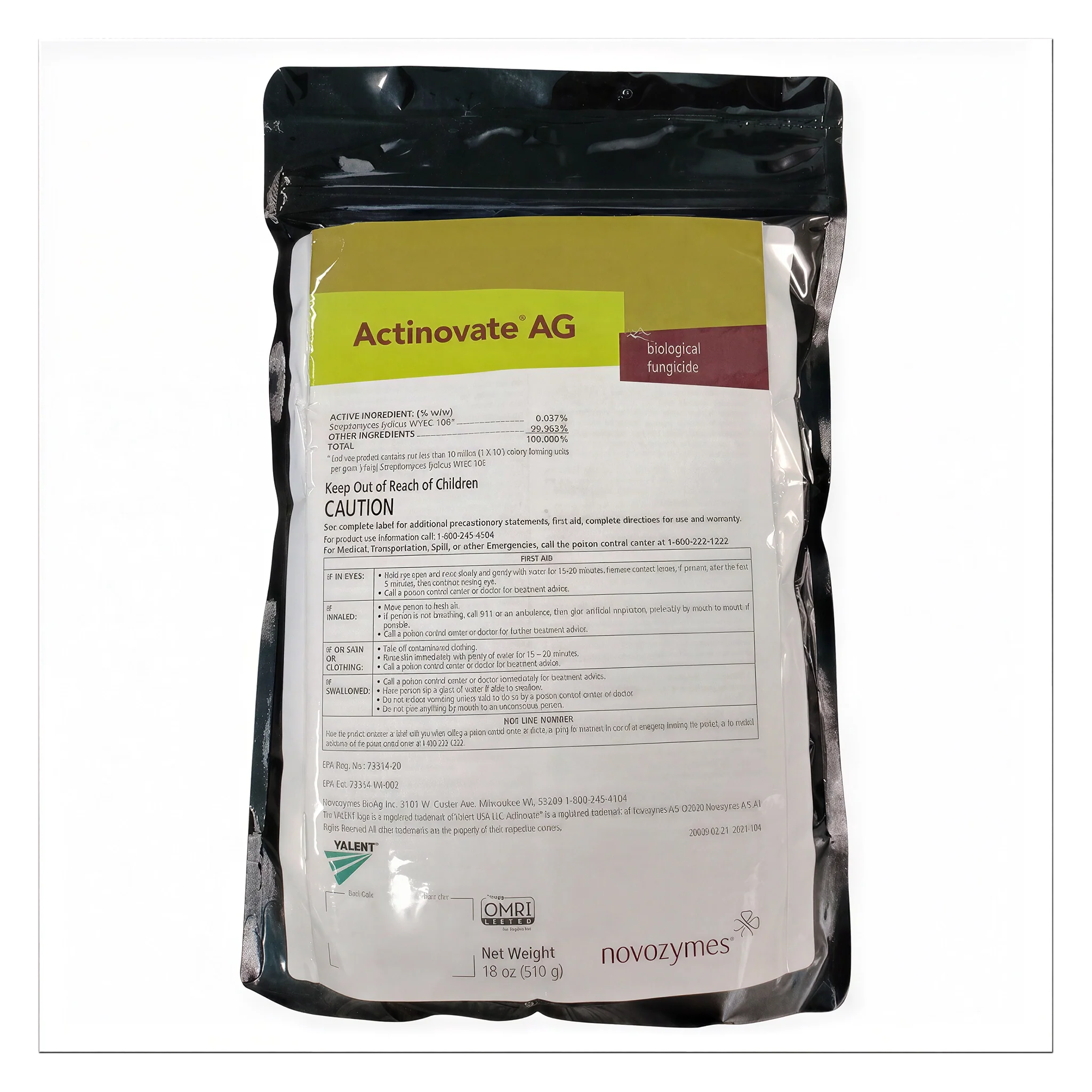
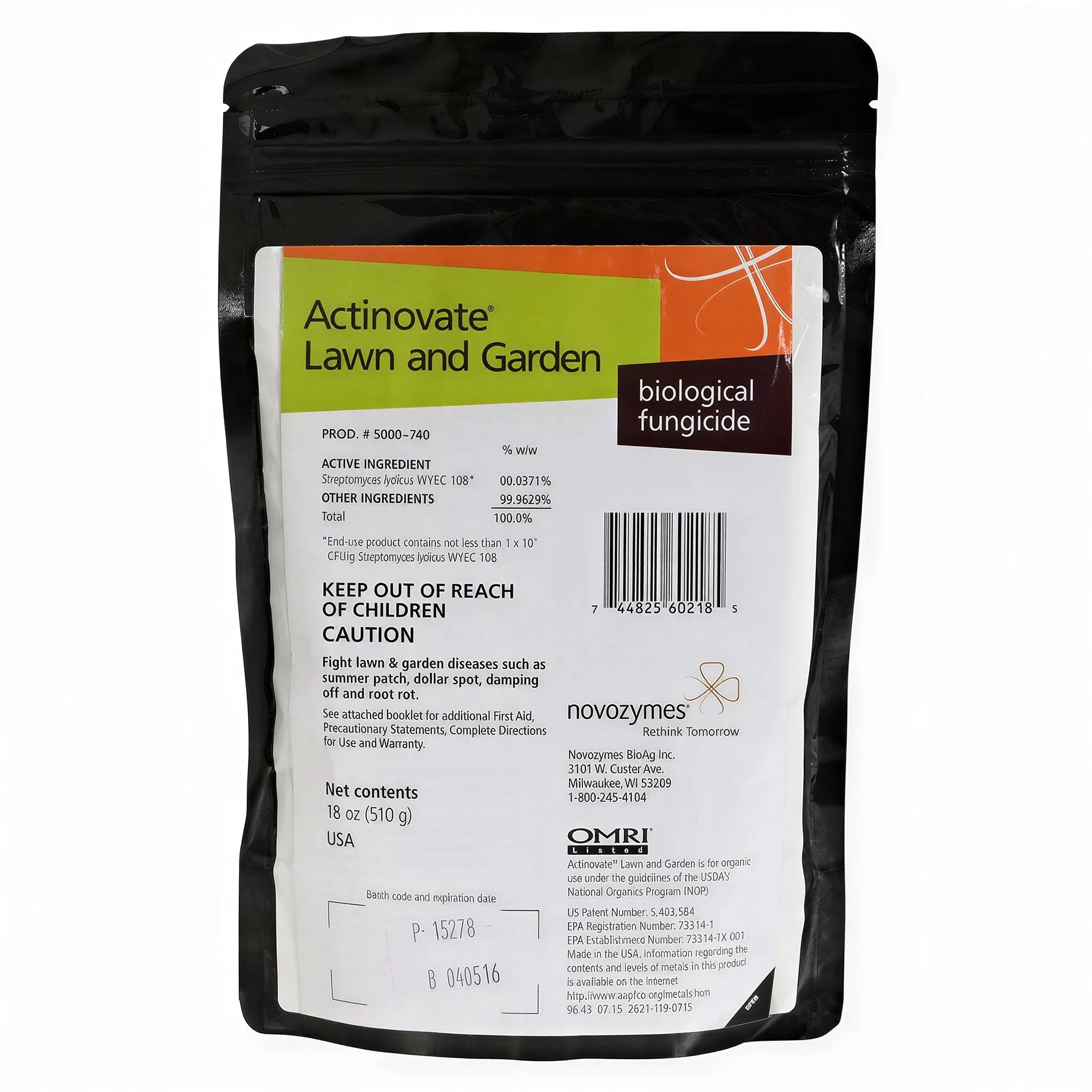
Actinovate Fungicide is the standard 18 oz granular formula for residential and hobby growers, suitable for soil drench and root zone applications in gardens and containers. Actinovate AG is the agricultural-grade version - the same active organism at a higher concentration, packaged in 18 oz dry ounce format and labeled for commercial greenhouse and field crop production. Both products are OMRI listed for use in certified organic growing programs. Actinovate can be applied as a soil drench at transplant, incorporated into growing media, or applied as a foliar spray for aerial disease suppression.
Biological Control in an IPM Program
Actinovate works best as part of a broader integrated pest management (IPM) program. Apply at transplant to establish beneficial colonization in the root zone before pathogen pressure builds. Repeat applications every 2-4 weeks during high-risk periods (high humidity, cool temperatures, dense canopy). Actinovate is compatible with most synthetic and organic fungicides but should not be tank-mixed with products that have documented bactericidal activity. Browse all pest control and garden care products or see BioSafe Systems for complementary biological control options. Fast shipping.
Actinovate FAQ
What diseases does Actinovate control?
Actinovate is effective against a broad range of fungal and bacterial plant pathogens. Soil-borne disease targets include Pythium, Phytophthora, Rhizoctonia, and Fusarium - the main causes of root rot and damping-off in hydroponic and container growing. Foliar application targets Botrytis (gray mold), powdery mildew, downy mildew, and bacterial leaf spot. The active organism, Streptomyces lydicus WYEC 108, produces antifungal metabolites and competes with pathogens for resources in the root zone and on leaf surfaces. Results are best when applied preventively before infection establishes.
Is Actinovate safe for use in hydroponic systems?
Actinovate is registered for drip irrigation and soil drench applications, making it compatible with hydroponic systems where it is applied to the growing medium rather than directly into the recirculating nutrient reservoir. For reservoir-based systems (DWC, RDWC, NFT), consult the product label for approved application methods - direct reservoir introduction of biological control agents can affect the nutrient solution environment. For rockwool or coco drip systems, Actinovate can be applied through the drip lines as a root zone drench. Contact our team at 888-815-9763 for application guidance specific to your system type.
What is the difference between Actinovate Fungicide and Actinovate AG?
Actinovate Fungicide is the standard residential and hobby-grower product - labeled for use in gardens, landscapes, and container plants. Actinovate AG is the agricultural-grade version with a higher concentration of the active organism (Streptomyces lydicus WYEC 108) and a label that covers commercial greenhouse, nursery, and field crop applications. Both are OMRI listed for certified organic production. Choose Actinovate AG for commercial operations or any application requiring a commercial-labeled product for documentation and compliance purposes.