Water Conditioners & Treatment Solutions
Water conditioners for hydroponics address the chlorine, chloramine, and other treatment compounds present in municipal tap water that can harm beneficial microorganisms in living soil programs and potentially affect nutrient uptake in hydroponic systems. Municipal water treatment uses chlorine or chloramine to control pathogens -- a necessary step for drinking water safety but potentially disruptive in growing systems that depend on healthy microbial populations. Water conditioners neutralize these treatment compounds before water is applied to plants or added to nutrient reservoirs.
Dechlorinators and Chloramine Removers
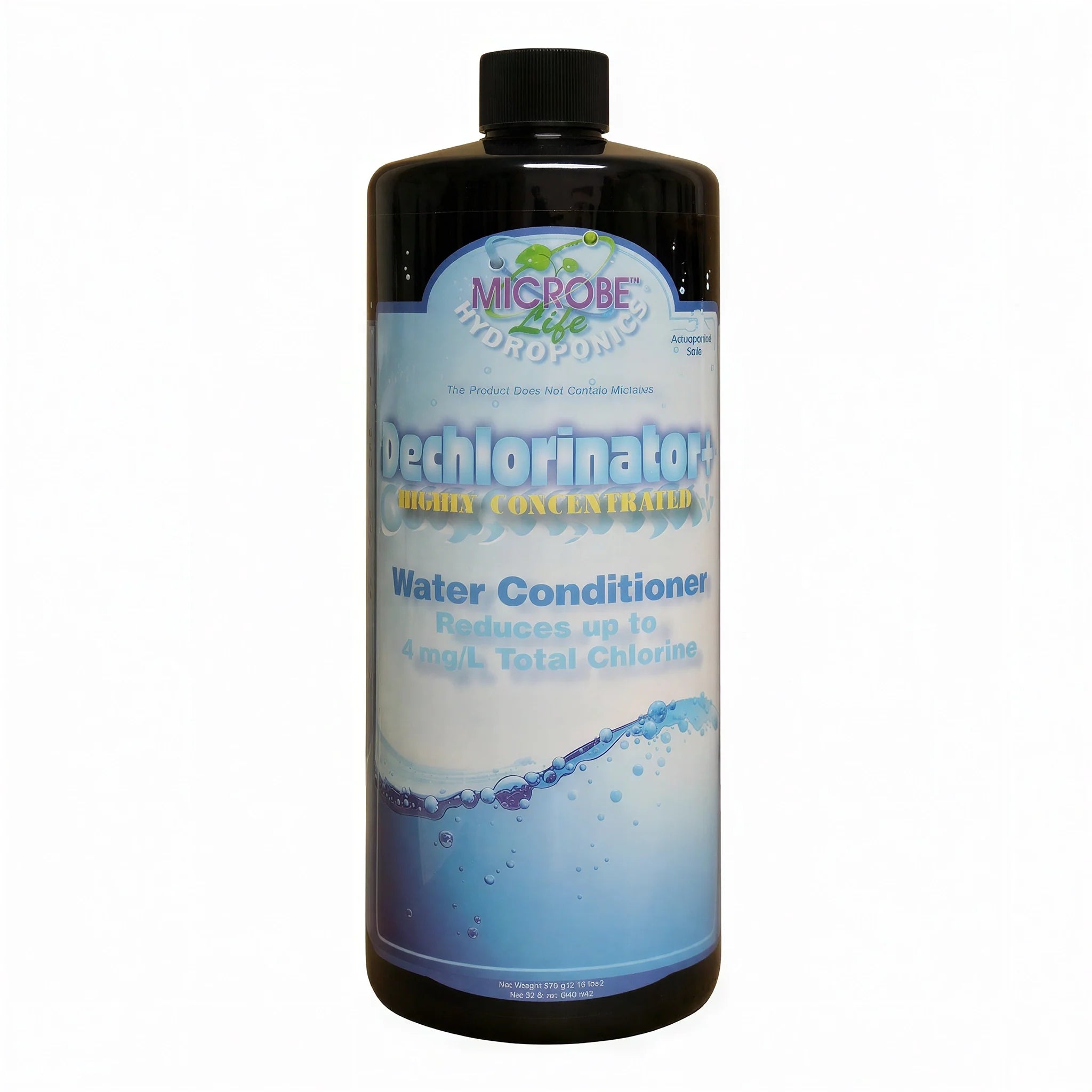
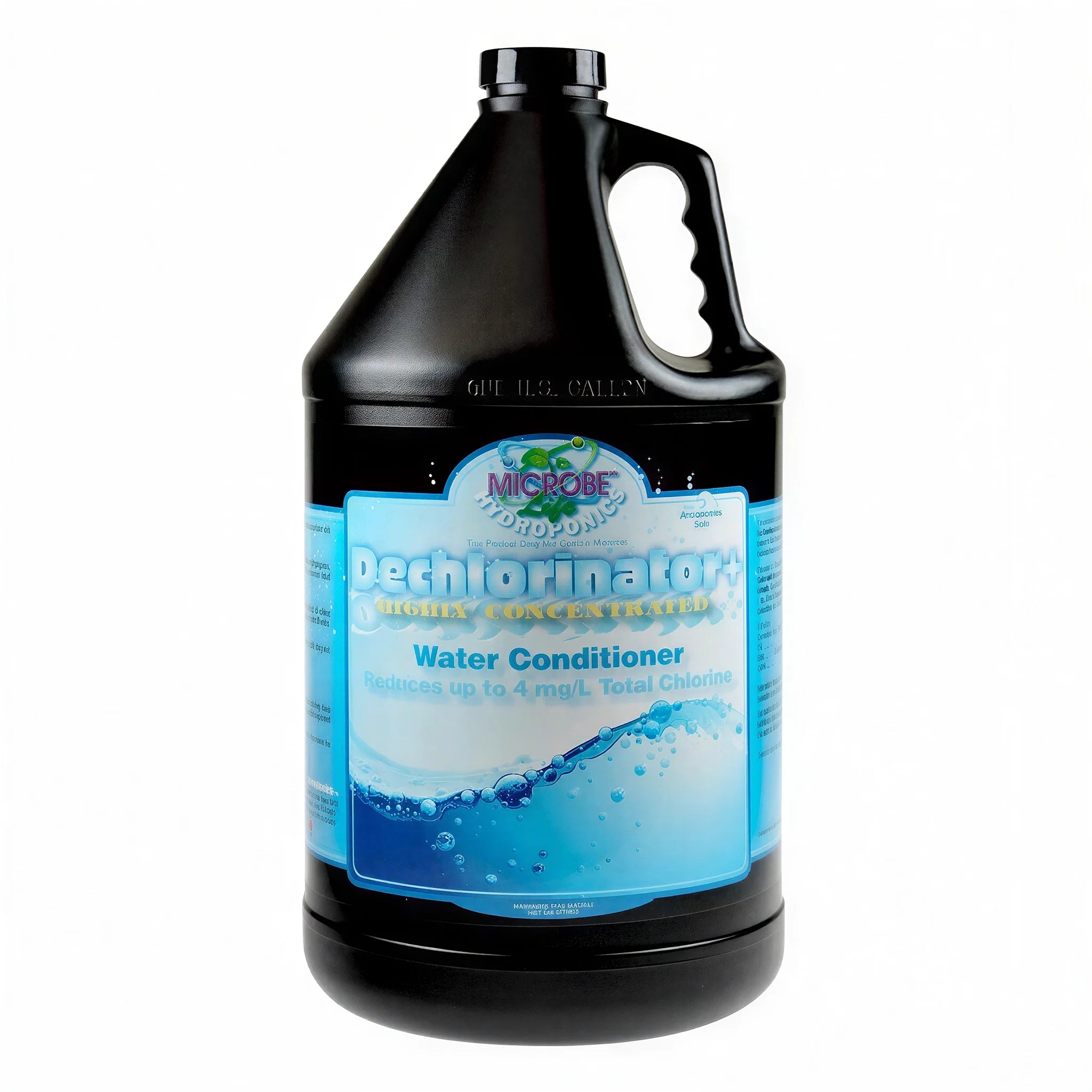
Standard chlorine dissipates from tap water naturally within 24-48 hours of aeration -- simply filling your reservoir and letting it sit with the air stones running overnight removes most chlorine before nutrient mixing. Chloramine (a chlorine/ammonia compound increasingly used in municipal water treatment as a longer-lasting alternative to chlorine) does NOT dissipate with aeration and requires a chemical dechlorinator for removal. GrowoniX, Microbe Life Hydroponics Dechlorinator+, and Central Coast Garden Products products address both chlorine and chloramine. If your municipality uses chloramine (check your water quality report), aeration alone is insufficient and a dedicated chloramine remover is required.
Mineral Balance Solutions
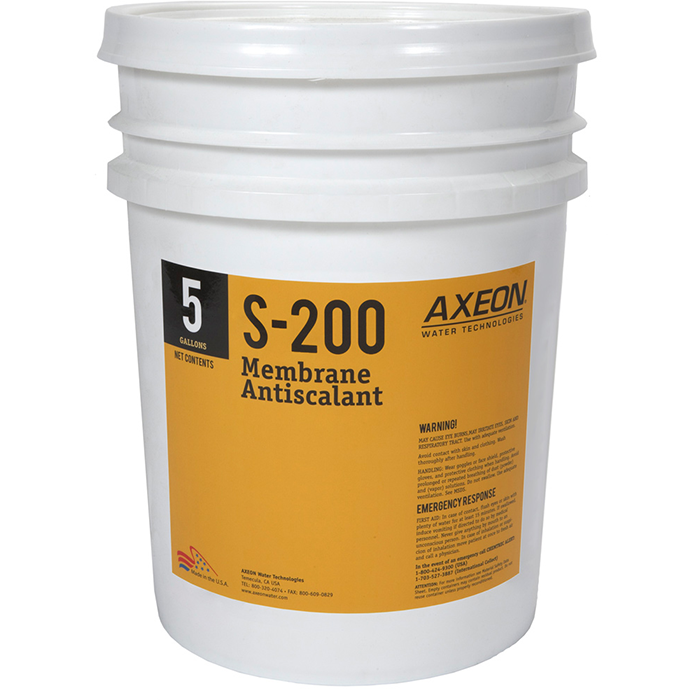
Beyond chlorine/chloramine management, this category includes products that adjust the mineral profile of irrigation water for specific growing applications. pH up and pH down solutions are the most widely used water treatment products in any hydroponic or soil growing program. Browse all water filtration products including AXEON RO systems for comprehensive water treatment. Expert support at 888-815-9763. Fast shipping.
Water Conditioners FAQ
Does tap water need to be treated before using in a hydroponic system?
It depends on your municipality's water treatment method and your growing system type. If your water uses standard chlorination (most common), letting the water sit in an open reservoir with air stones running for 24 hours removes most chlorine through aeration. If your water uses chloramine (check your annual water quality report), aeration will not remove it -- you need a dedicated dechlorinator that specifically addresses chloramine. For living soil programs where beneficial microbial populations are the foundation of the system, treating for both chlorine and chloramine is recommended regardless of source. For conventional hydroponic programs in inert media, chlorine at typical municipal levels is less critical but chloramine at high levels can affect beneficial microorganisms used in biological programs.
How do I know if my water has chlorine or chloramine?
Check your municipality's annual Consumer Confidence Report (CCR), which all US public water systems are required to provide -- it lists the disinfection method used. You can also call your water utility and ask directly. A simple field test: put a drop of your tap water on a pet store chlorine/chloramine test strip -- strips that show positive for chlorine after 24 hours of aeration indicate chloramine, since free chlorine would have dissipated. Many municipalities have switched from chlorine to chloramine over the past decade as chloramine provides longer-lasting protection in distribution systems -- it is more common than it used to be, particularly in urban water systems.
What is pH up and pH down and when do I use them?
pH up and pH down are water treatment solutions that adjust the acidity of irrigation water and nutrient solution to the target pH range for your growing system. pH down (typically phosphoric acid or citric acid) lowers pH; pH up (typically potassium hydroxide or potassium carbonate) raises pH. Most tap water in the US is pH 7-8, and most hydroponic nutrient solutions need to be brought down to pH 5.5-6.5 for optimal nutrient availability. Add pH down after mixing your nutrient solution, in small increments, measuring after each addition until you reach your target. pH adjustment is one of the most important routine maintenance tasks in any growing system -- incorrect pH is the most common cause of nutrient deficiency symptoms in otherwise well-managed programs.