Rotary Evaporators for Botanical Extract Concentration
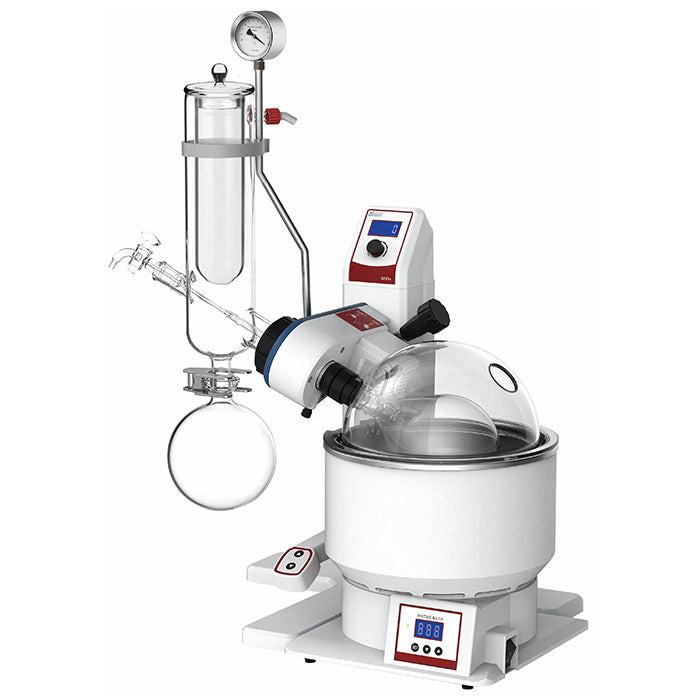
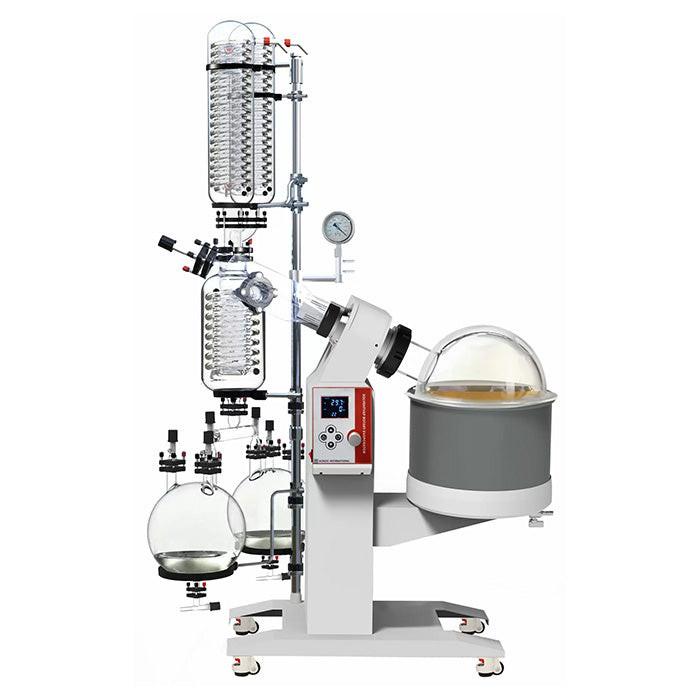
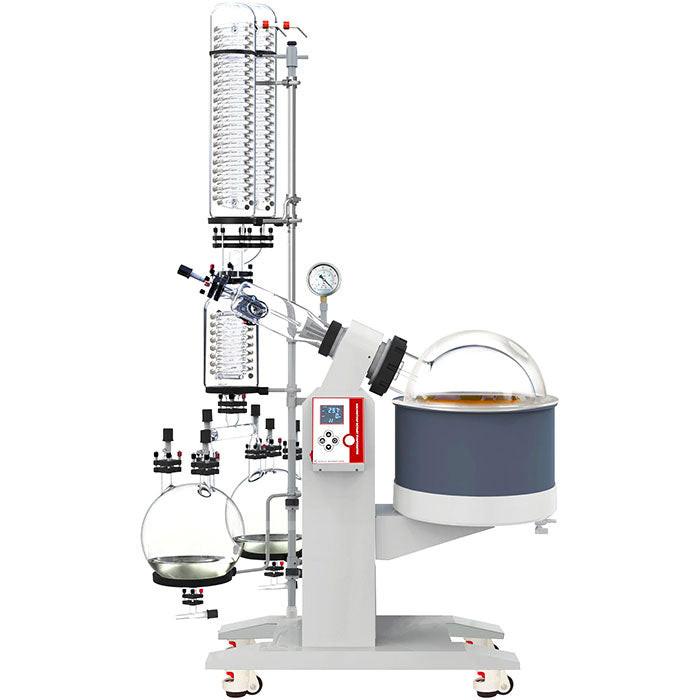
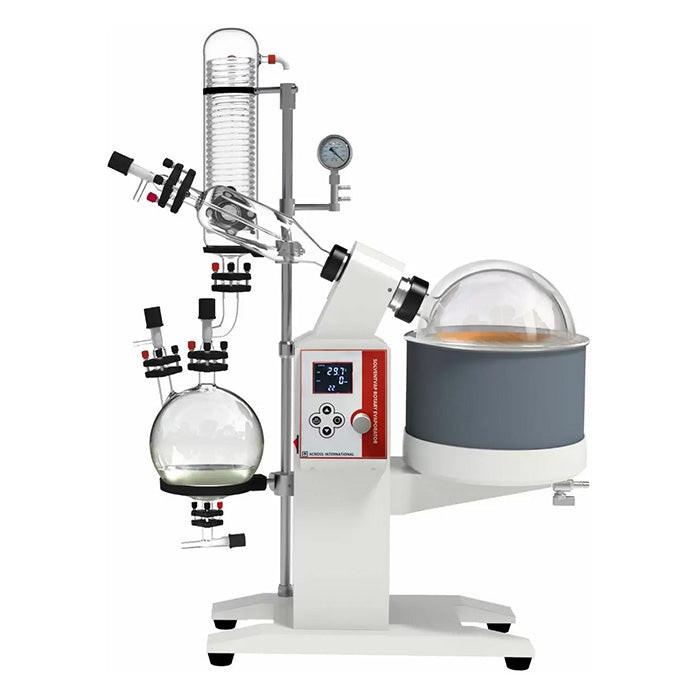
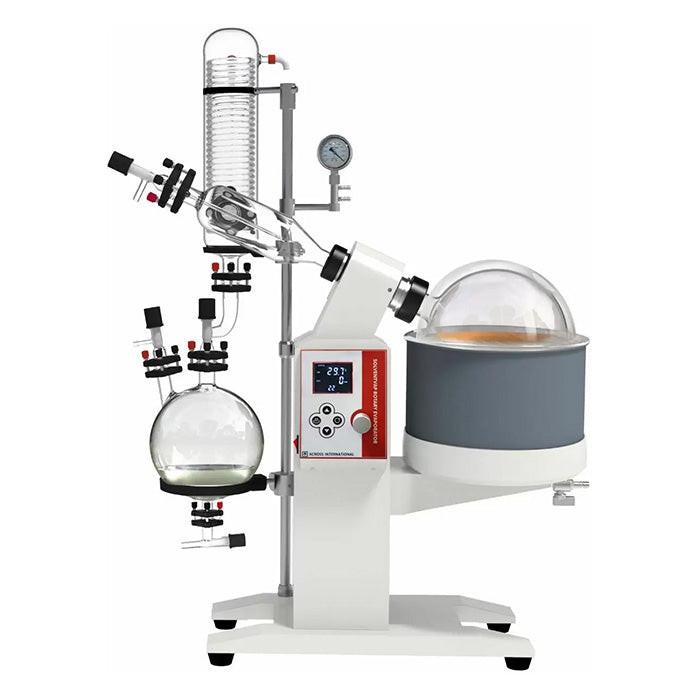
A rotary evaporator (rotovap) removes solvent from a botanical extract solution by rotating a heated flask under vacuum, creating a thin film of solution on the flask inner surface that evaporates solvent rapidly and efficiently. The vacuum reduces solvent boiling points to temperatures that preserve heat-sensitive botanical compounds; the rotation continuously exposes fresh solution surface to the heated flask wall, dramatically increasing evaporation rate compared to static flask heating; the evaporated solvent is condensed in a separate condenser coil and collected for recovery or disposal. Rotovaps are the standard tool for gentle, efficient solvent removal in ethanol extraction and other solvent-based processing workflows.
Components of a Rotovap System
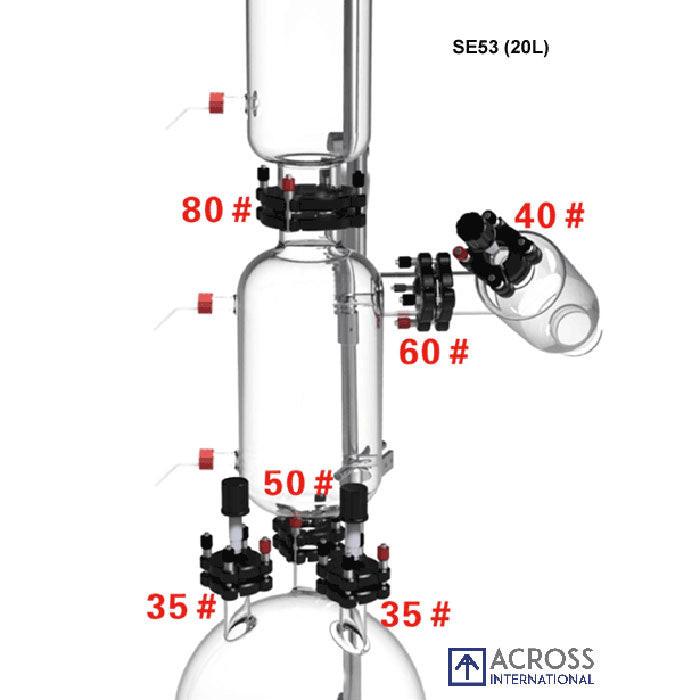
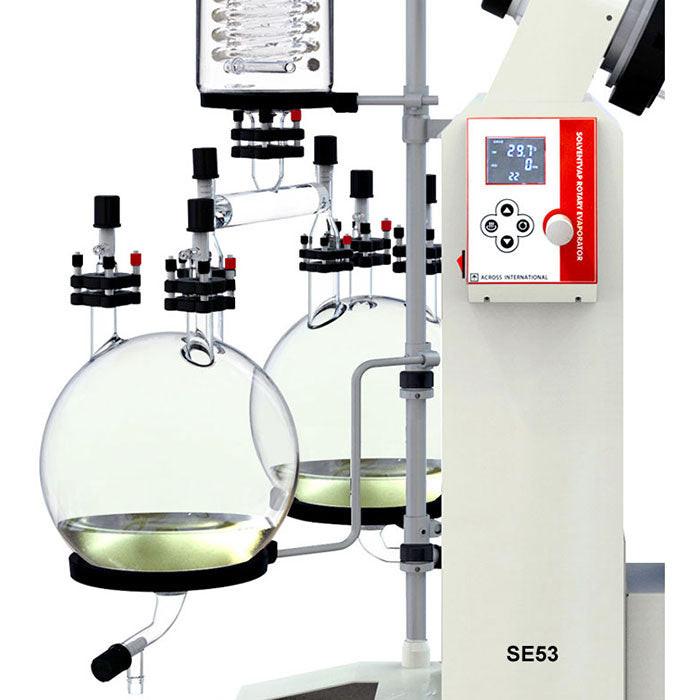
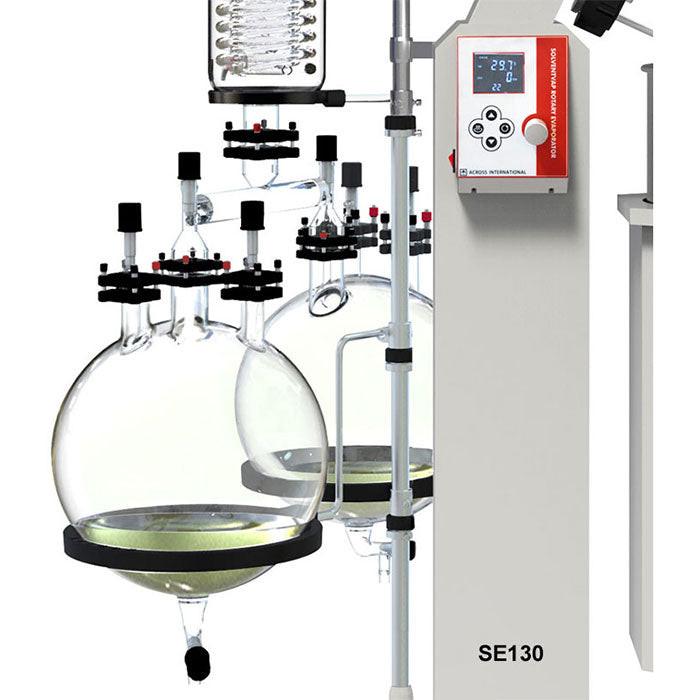
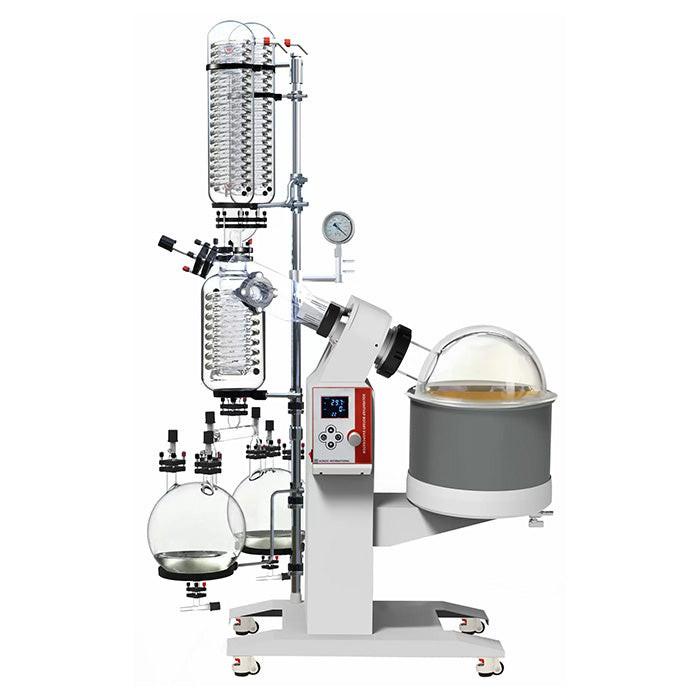
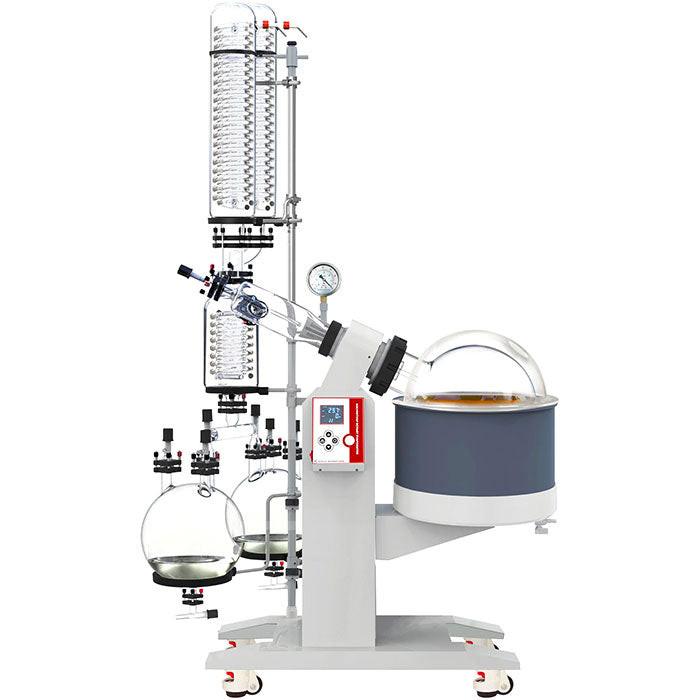
A complete rotary evaporation system includes: the rotary evaporator unit itself (rotating motor, heated bath, condenser coil, collection flask, and vapor duct), a vacuum pump to maintain sub-atmospheric pressure in the system, and a recirculating chiller to cool the condenser coil for efficient solvent condensation. The evaporation flask (the rotating flask in the heated bath) and the receiving flask (where condensed solvent collects) are both glassware components that may need replacement over time. For replacement glassware and parts, see the distillation accessories collection.
Rotovap vs. Jacketed Reactor for Solvent Recovery
Both rotovaps and jacketed reactors can be used for solvent recovery from botanical extracts. Rotovaps are more efficient for solvent removal from small to medium volumes (up to 20-50 liters) because the thin-film rotating action exposes maximum solution surface area to the heated bath, accelerating evaporation significantly compared to the static liquid surface in a jacketed reactor. Jacketed reactors handle larger volumes and integrate more naturally with multi-step processing workflows where the same vessel is used for extraction, separation, and concentration. For dedicated solvent recovery at small to medium commercial scale, a rotovap with the right bath volume is faster and more energy-efficient. Expert support available. Fast shipping.
Rotary Evaporators FAQ
What does a rotary evaporator do?
A rotary evaporator removes solvent from a solution by evaporating the solvent under vacuum while continuously rotating the solution flask. The rotating flask creates a thin, constantly renewed film of solution on the flask inner surface -- this thin film evaporates solvent much faster than a static liquid surface would. The evaporated solvent travels through the vapor duct to the condenser, where it is cooled and collected as liquid in the receiving flask. The result is solvent-free or solvent-reduced concentrate remaining in the evaporation flask. Rotovaps are used primarily for recovering solvents like ethanol from botanical extract solutions after extraction.
What vacuum level do I need for rotary evaporation?
For ethanol removal from botanical extracts: 50-200 millibar (roughly 40-150 mmHg) reduces ethanol's boiling point to 20-35 degrees C -- gentle enough to preserve temperature-sensitive botanical compounds while driving rapid evaporation. Standard single-stage diaphragm pumps reach 50-100 millibar, adequate for ethanol rotovap applications. Deep vacuum (below 1 millibar) is not necessary or desirable for ethanol removal -- it causes excessive foaming and bumping. For solvent removal applications requiring very low residual solvent levels, deeper vacuum in the 1-10 millibar range with a two-stage pump may be needed at the final concentration step.
What bath temperature should I use for rotary evaporation?
Set the heated bath temperature to achieve the target evaporation rate at your operating vacuum level. For ethanol removal at 100-150 millibar vacuum: a bath temperature of 30-40 degrees C provides efficient evaporation while maintaining gentle process temperatures. Higher bath temperatures increase evaporation rate but risk thermal degradation of temperature-sensitive compounds in the concentrate. A temperature differential of 20-30 degrees C between the bath and the condenser coolant optimizes condensation efficiency -- if the bath is at 40 degrees C, target condenser coolant at 10-15 degrees C or colder.
How do I prevent bumping in a rotary evaporator?
Bumping (sudden violent boiling that can expel material through the vapor duct) is the primary operational hazard in rotary evaporation. Prevention measures: add anti-bumping granules (boiling chips) to the evaporation flask; maintain moderate vacuum rather than maximum vacuum (deeper vacuum increases bumping risk); ensure the flask is not more than half full; and ramp up vacuum gradually rather than applying full vacuum immediately. If bumping occurs, reduce vacuum immediately by opening the bleed valve slightly. Rotovap design (the rotation itself helps reduce bumping by continuously refreshing the liquid surface) mitigates bumping more effectively than static distillation, but high-viscosity extracts and over-filled flasks can still bump.
What size rotovap do I need?
Rotovap size is described by the evaporation flask volume. For laboratory and small-batch processing (500 ml to 2 liter batches): a 2-5 liter rotovap is appropriate. For small commercial processing (2-10 liter batches): a 5-20 liter unit. For commercial production (10-50 liter batches): a 20-50 liter unit. Note that the evaporation flask should be filled to approximately 40-50% of capacity for optimal thin-film formation -- a 5-liter flask works best with 2-2.5 liters of solution per batch. Continuous-feed rotovaps allow adding fresh solution while evaporation proceeds, increasing effective throughput without proportionally increasing flask size.