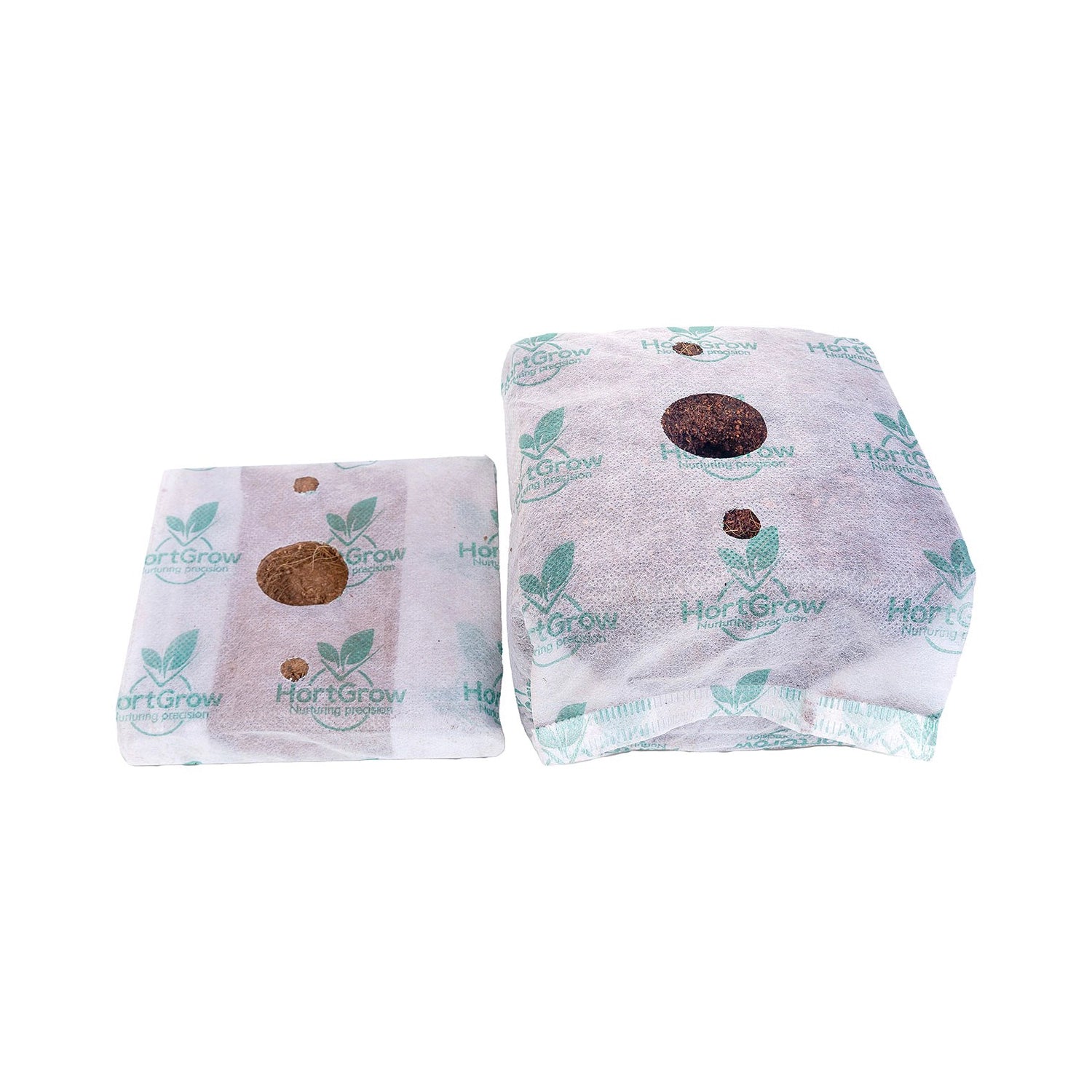
Rockwool Starter Plugs for Seed Germination & Cloning
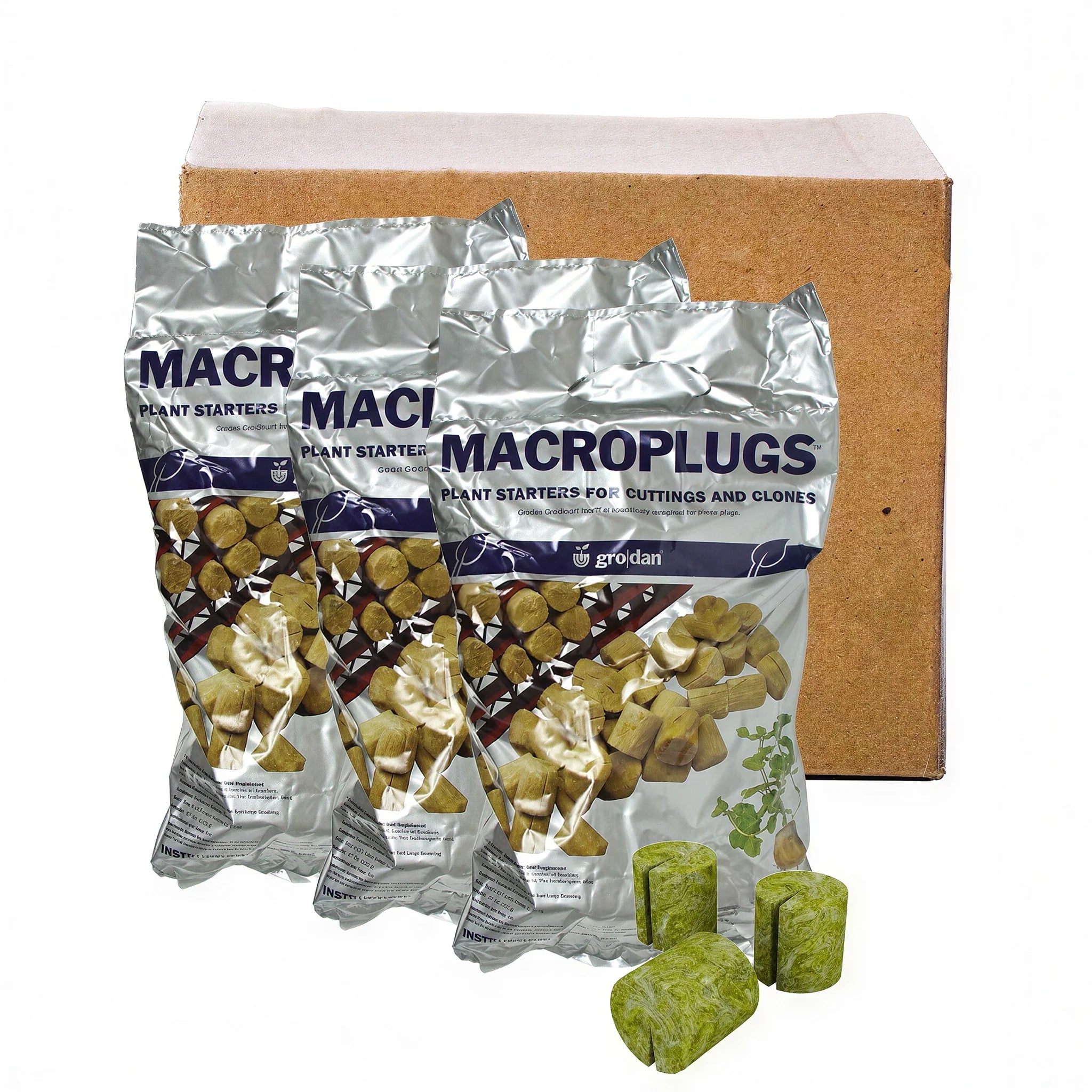
Rockwool starter plugs (also called propagation plugs or rockwool mini-cubes) are the smallest rockwool format -- typically 1-inch or 1.5-inch cubes used specifically for seed germination and rooting cuttings. Their compact size fits high-density propagation trays (36-site and 98-site configurations hold many plugs in a standard 10x20 inch tray), and their fiber structure provides the balanced air-to-water ratio that seed germination and root initiation require. Rooted plugs transplant directly into larger rockwool cubes or other growing systems when the first root tip emerges at the plug base -- the entire plug transfers without disturbing the developing root system. Browse our complete rockwool collection for all formats.
Rockwool Plugs for Cloning
For cloning in rockwool plugs: pre-soak plugs at pH 5.5, apply IBA rooting gel to the cutting base, insert the cutting into the pre-punched hole in the plug center, and place in a humidity dome tray at 70-80% relative humidity. Rockwool plugs for cloning work in standard humidity dome trays as well as aeroponic cloning machines -- the plug holds the cutting upright while the aerated or misted environment around the stem base develops roots. When the root tip is visible emerging from the plug base, the cutting is ready to transplant. Pair with rooting hormone gel for best results.
Rockwool Plugs for Seed Starting
For seed germination in rockwool plugs: pre-soak plugs at pH 5.5-6.0, place one seed per plug at the depth specified for the seed variety (typically 1-2x the seed diameter), and maintain at 72-78 degrees F under a humidity dome until germination. Unlike peat or coco plugs that provide some initial nutrient availability from organic matter, rockwool plugs are inorganic -- begin feeding with a very dilute nutrient solution (EC 0.5-0.8) when the seed coat falls and the first true leaves emerge. Fast shipping.
Rockwool Starter Plugs FAQ
What size rockwool starter plugs should I use?
1-inch (2.5 cm) plugs are the standard for most cloning and seed starting applications -- they fit standard 98-site propagation trays and provide adequate root zone volume for the 7-14 day rooting period before transplanting to larger cubes. 1.5-inch plugs provide more root zone volume for seedlings spending 3-4 weeks in the plug before transplant, or for larger cuttings that benefit from more space during rooting. For high-density commercial propagation programs where maximizing plug sites per tray footprint is the priority, 1-inch plugs in 98-site trays are the standard.
Do I need to soak rockwool plugs before use?
Yes -- pre-soak all rockwool plugs in pH 5.5 adjusted water for 30-60 minutes before use. New rockwool is alkaline from the manufacturing binder and will cause pH drift in an unsaturated dry plug. After soaking, gently squeeze out excess water (leaving the plug moist but not dripping) or drain passively. Do not squeeze aggressively -- maintaining the plug's fiber structure preserves the air porosity that root development depends on. A properly saturated plug should feel uniformly moist and hold its shape without crumbling.
When should I transplant from a starter plug to a rockwool cube?
Transplant when the root tip is clearly visible emerging from the base or sides of the plug -- typically 7-14 days after inserting a cutting or 5-10 days after seed germination and emergence. Do not wait significantly longer after first root emergence -- plants held in small plugs after the root system is established become root-bound and nutrient-depleted. Transplanting at the first root emergence timing maximizes growth without restriction. The entire plug transfers intact into the destination cube hole -- never pull the root from the plug before transplanting.
Can I use rockwool starter plugs in a humidity dome tray?
Yes -- rockwool starter plugs in standard humidity dome trays are one of the most common propagation setups for cloning and seed starting. The plug holds the cutting upright; the humidity dome maintains 70-80% RH around the stem before roots establish. Bottom heat from a heat mat accelerates rooting. This setup works for most crop varieties and is inexpensive and reliable. For commercial-scale propagation, aeroponic or DWC cloners with rockwool plug collars provide faster rooting, but humidity dome tray propagation with rockwool plugs produces excellent results for hobby and small-scale production.
Do rockwool plugs work in aeroponic cloners?
Yes -- rockwool starter plugs work in aeroponic cloning machines alongside the standard neoprene collars. Place the plug in a neoprene collar of appropriate size (the collar holds the plug in the cloner lid site), with the cutting's stem base extending below the plug into the aeroponic mist zone. The plug holds the cutting stable and maintains the humidity seal around the upper stem, while the aeroponic mist develops roots on the exposed lower stem. Some growers prefer this setup over neoprene-collar-only cloning for cuttings that benefit from the additional stem stability the plug provides.