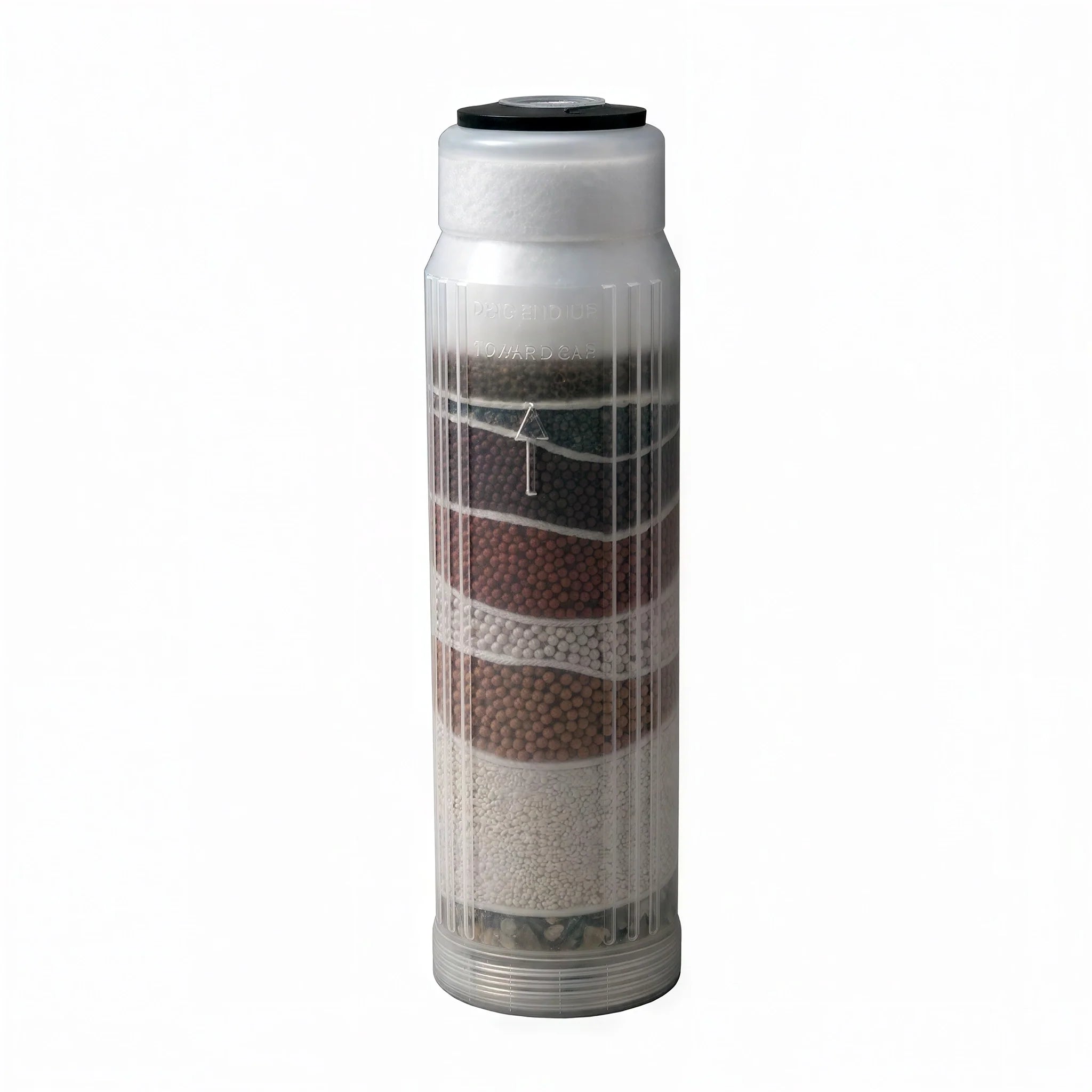
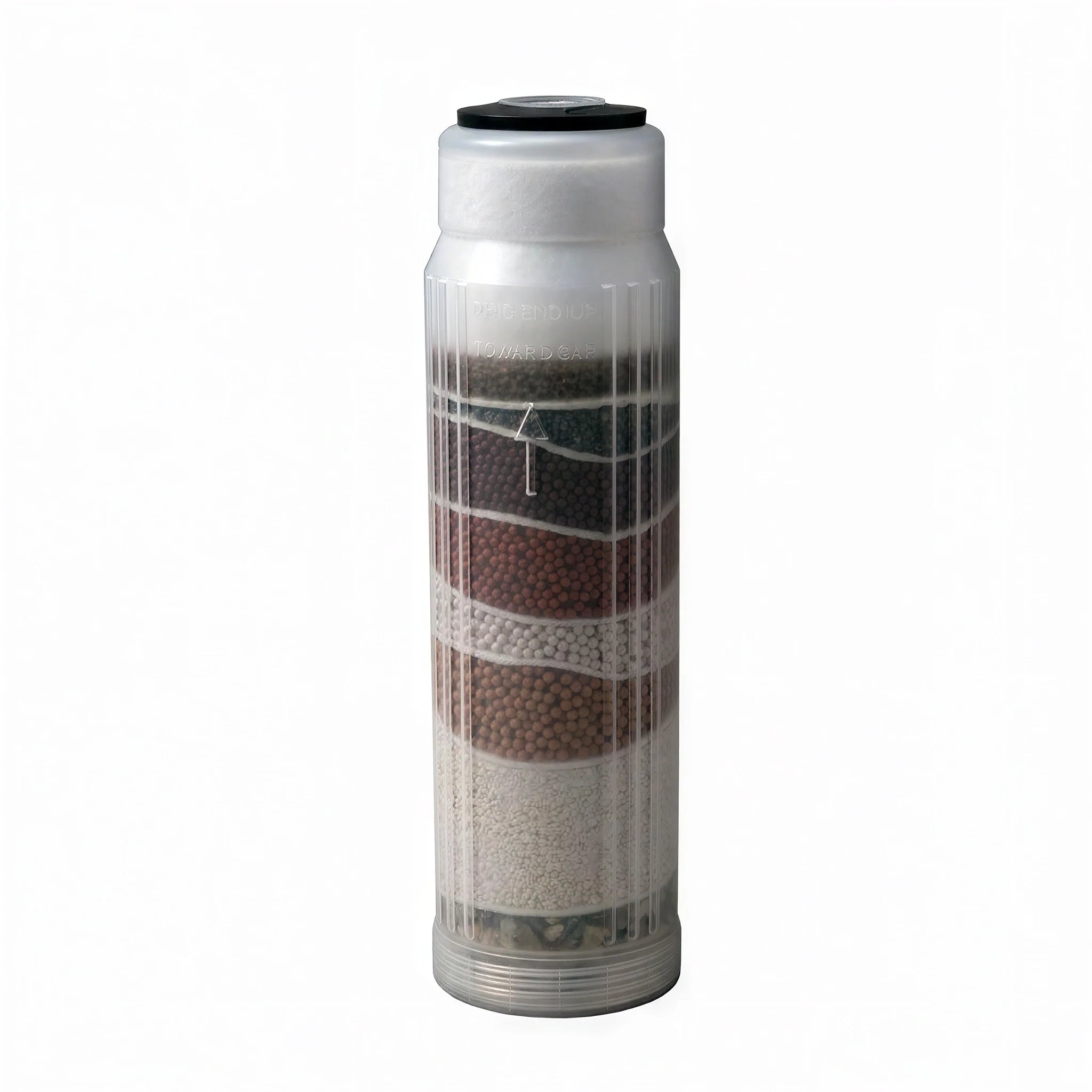
Replacement pH Neutralizing & Remineralizing Cartridges
pH neutralizing and remineralizing cartridges are inline filter media replacements that address a specific problem created by reverse osmosis water treatment: RO water is extremely pure but also extremely soft, with near-zero alkalinity, low pH (typically 5.5-6.5 from dissolved CO2), and essentially no mineral content. For drinking water applications, this flat taste and corrosive low-pH water is addressed by passing the RO output through a calcite or mineral media cartridge that dissolves a small amount of calcium carbonate and other minerals into the water, raising both pH and mineral hardness to a balanced, palatable level. For growing applications, remineralized RO water provides a consistent, low-EC baseline with known mineral content that is more predictable for nutrient program formulation than variable tap water.
How These Cartridges Work
Calcite media (calcium carbonate) in the cartridge dissolves slowly as the low-pH RO water passes through - the dissolution reaction consumes hydrogen ions (raising pH) and releases calcium and bicarbonate into the water. This raises the pH from the acidic RO output toward neutral (6.8-7.5 typical) and adds 30-80 ppm of calcium hardness depending on contact time and flow rate. Coral media cartridges function similarly. Magnesium-enhanced media adds magnesium alongside calcium for a more balanced mineral profile. The cartridge media depletes over time as calcium carbonate dissolves - replacement is needed when the output pH or mineral content drops back toward the RO baseline. Browse the full water filtration collection for complete systems alongside replacement cartridges.
Growing Application Notes
For hydroponic growing, remineralizing RO water before adding nutrients provides a consistent, low-EC starting point (typically 50-100 ppm after remineralization) that still requires full nutrient supplementation. The small amount of calcium and bicarbonate added provides slightly improved pH buffering capacity compared to pure RO water. Fast shipping.
pH Neutralizing & Remineralizing Cartridges FAQ
Why does RO water have a low pH?
Reverse osmosis removes bicarbonates and other buffering minerals from the water, leaving it with very little alkalinity. When dissolved CO2 from the air equilibrates with this mineral-free water, it forms carbonic acid, driving the pH down to the 5.5-6.5 range. This is normal behavior for very pure, low-mineral water and not a problem with the RO system itself. A remineralizing cartridge corrects this by adding alkalinity (calcium carbonate) that consumes the carbonic acid and buffers the pH upward to near-neutral.
Do I need a remineralizing cartridge for hydroponic growing?
It depends on your preference and program. For drinking water and direct consumption: a remineralizing cartridge improves the taste and reduces the corrosive effect of low-pH RO water on plumbing and fixtures. For hydroponic growing: pure RO water works well as a starting point without remineralization - many commercial growers use pure RO and add calcium and magnesium directly through their nutrient program. A remineralizing cartridge adds a small, consistent baseline of calcium and bicarbonate that slightly improves pH stability compared to pure RO; whether this benefit justifies the cartridge cost depends on how much pH stability improvement you observe in your specific program.
How often should I replace a remineralizing cartridge?
Remineralizing cartridge service life depends on water volume processed and the media fill amount. Most standard cartridges process 500-1,500 gallons before the calcite media is significantly depleted. The sign the cartridge needs replacement: the pH of the output water drops back toward the low-pH RO baseline and measured hardness (calcium) in the output drops toward zero. Test output pH and TDS monthly and replace when values decline noticeably from the initial post-installation readings.
Can I use a remineralizing cartridge on tap water?
Remineralizing cartridges are designed for post-RO water that has low mineral content and low pH. Applying a calcite cartridge to standard tap water that already has adequate pH (7.0-8.0) and hardness (50-200+ ppm) raises pH further toward alkaline and adds more calcium and bicarbonate to already-buffered water - this is generally not beneficial and can push tap water pH too high for some growing applications. These cartridges are specifically intended for the soft, low-pH water produced by RO systems.
What is the difference between a calcite and a coral media cartridge?
Both calcite (calcium carbonate from calcium-rich rock) and coral media (calcium carbonate from coral/shell sources) dissolve in low-pH water and raise pH through the same chemical mechanism - they are essentially the same active chemistry from different natural sources. Coral media tends to have a slightly different dissolution rate than calcite due to its different physical structure. Some manufacturers blend calcite with magnesium oxide to add magnesium alongside calcium - these blended media cartridges produce a more minerally balanced output than pure calcite or coral.