Humidity Packs & Desiccant Packs for Curing & Storage
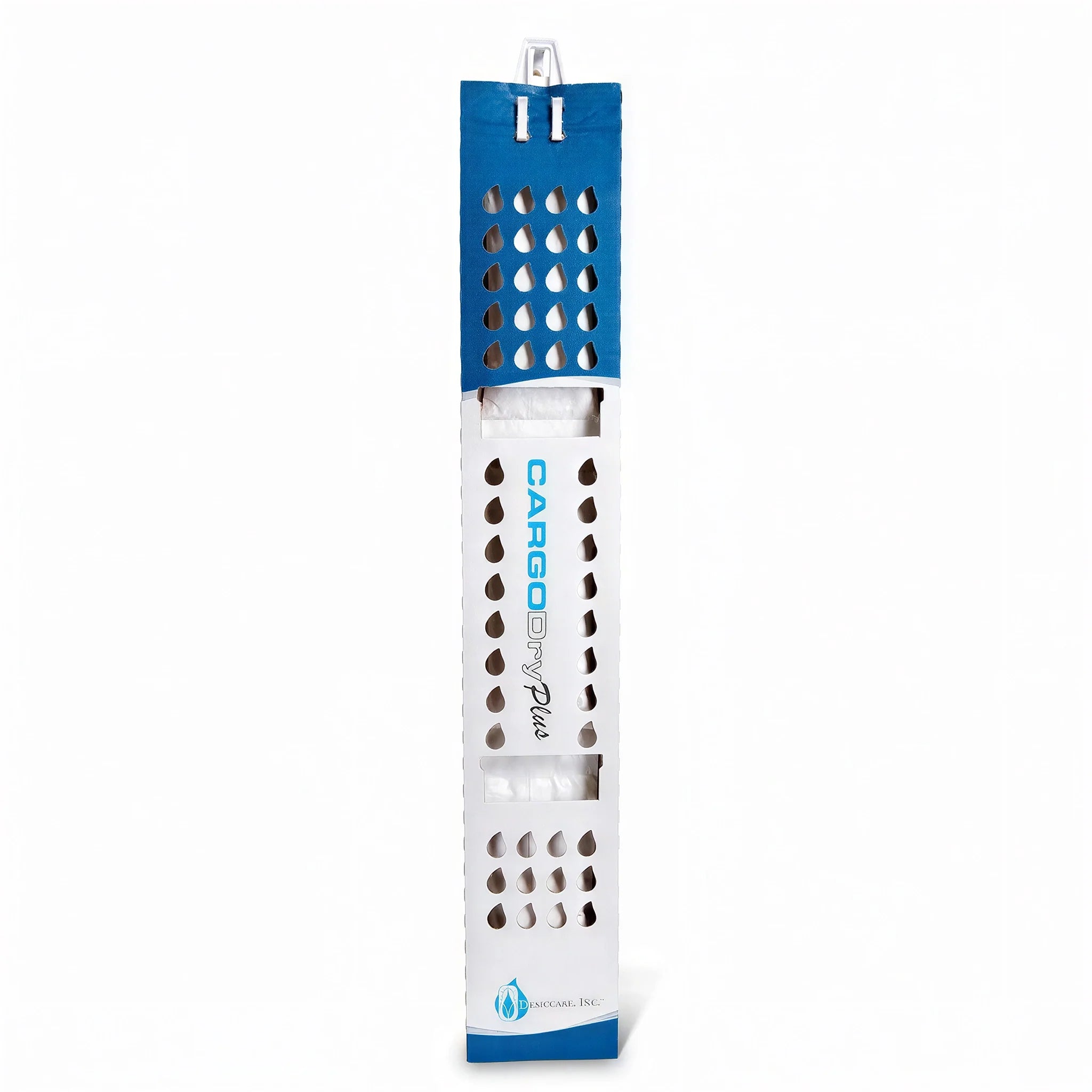
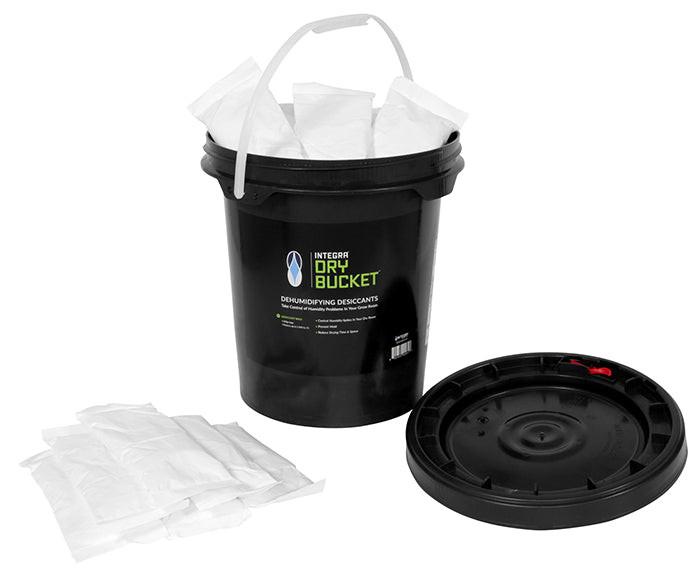
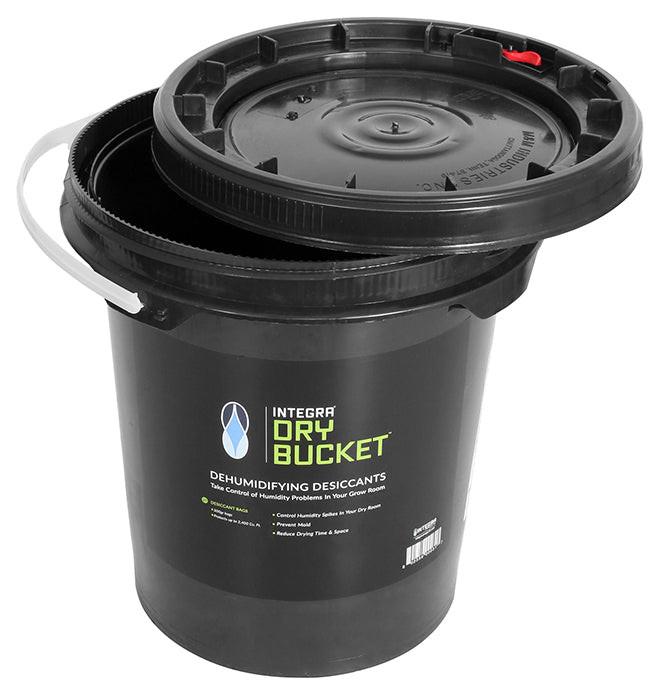
Humidity control packs and desiccant packs regulate the moisture environment inside sealed storage containers -- maintaining the specific relative humidity range that preserves dried botanical material quality over time. Two-way storage jar humidity control packs (Boveda, Integra) actively add or remove moisture as needed to maintain a fixed target RH inside the sealed container, protecting against both over-drying and excessive moisture without any user adjustment. Desiccant packs (silica gel, calcium chloride) absorb moisture one-directionally -- also useful alongside vacuum sealers for equipment storage -- useful for protecting equipment, paper, and non-botanical materials from humidity damage, and for specific post-processing drying applications where moisture removal without humidity control is the goal.
Two-Way Humidity Packs
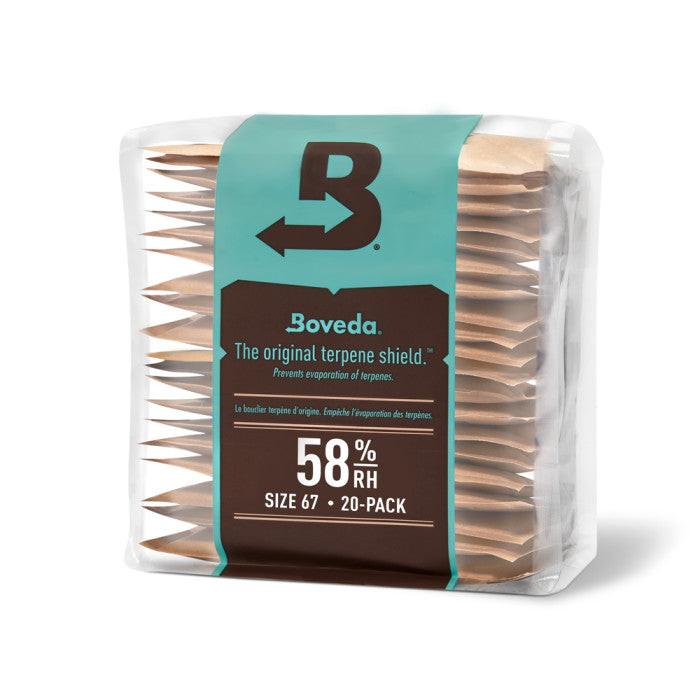
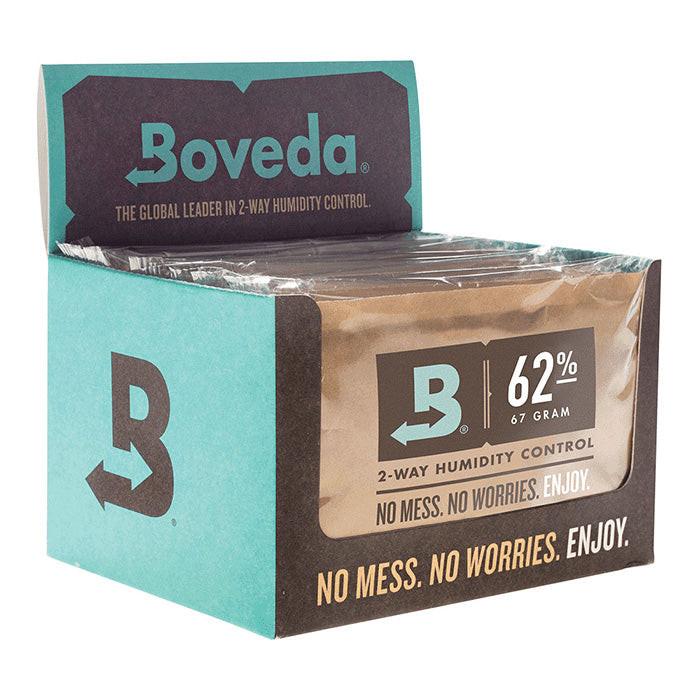
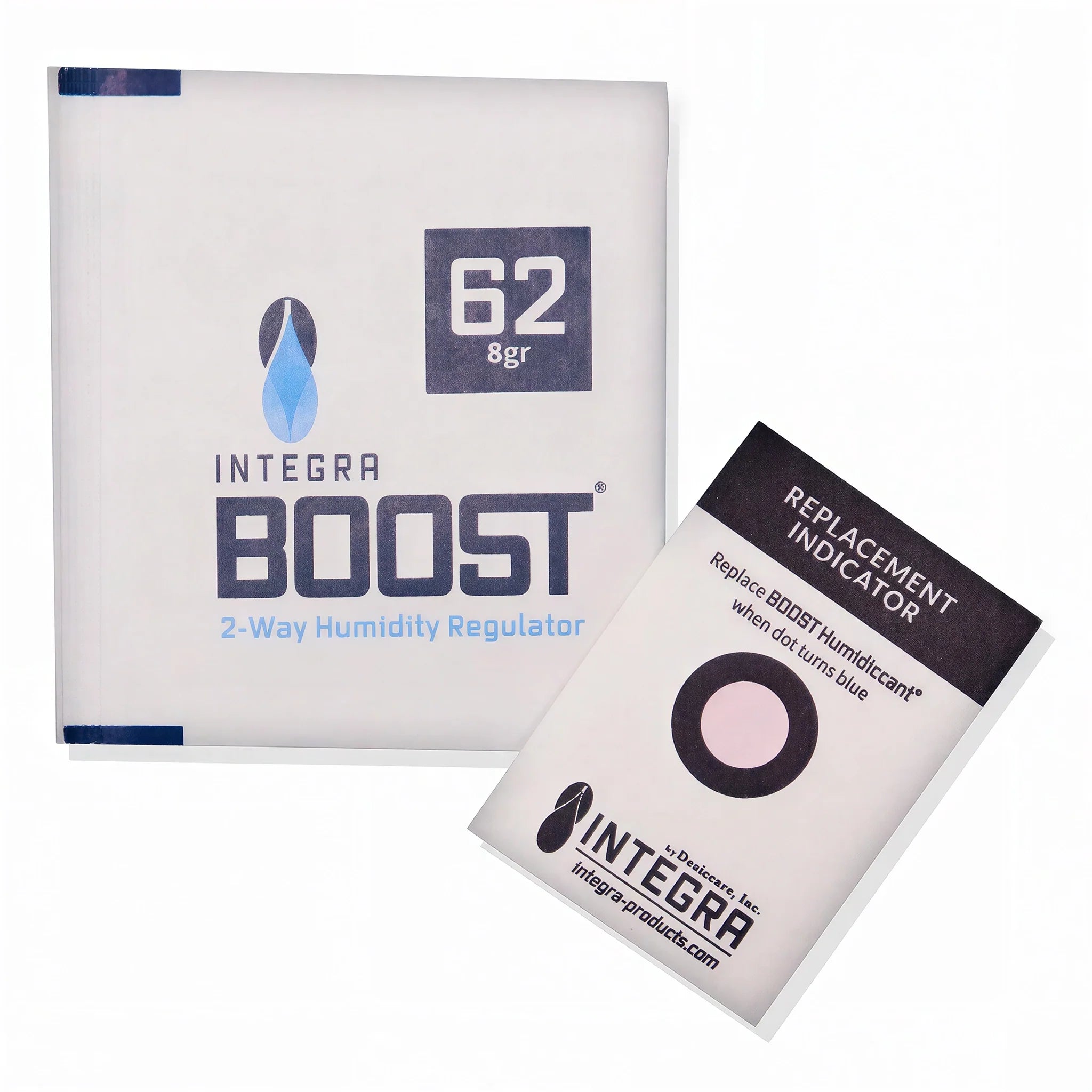
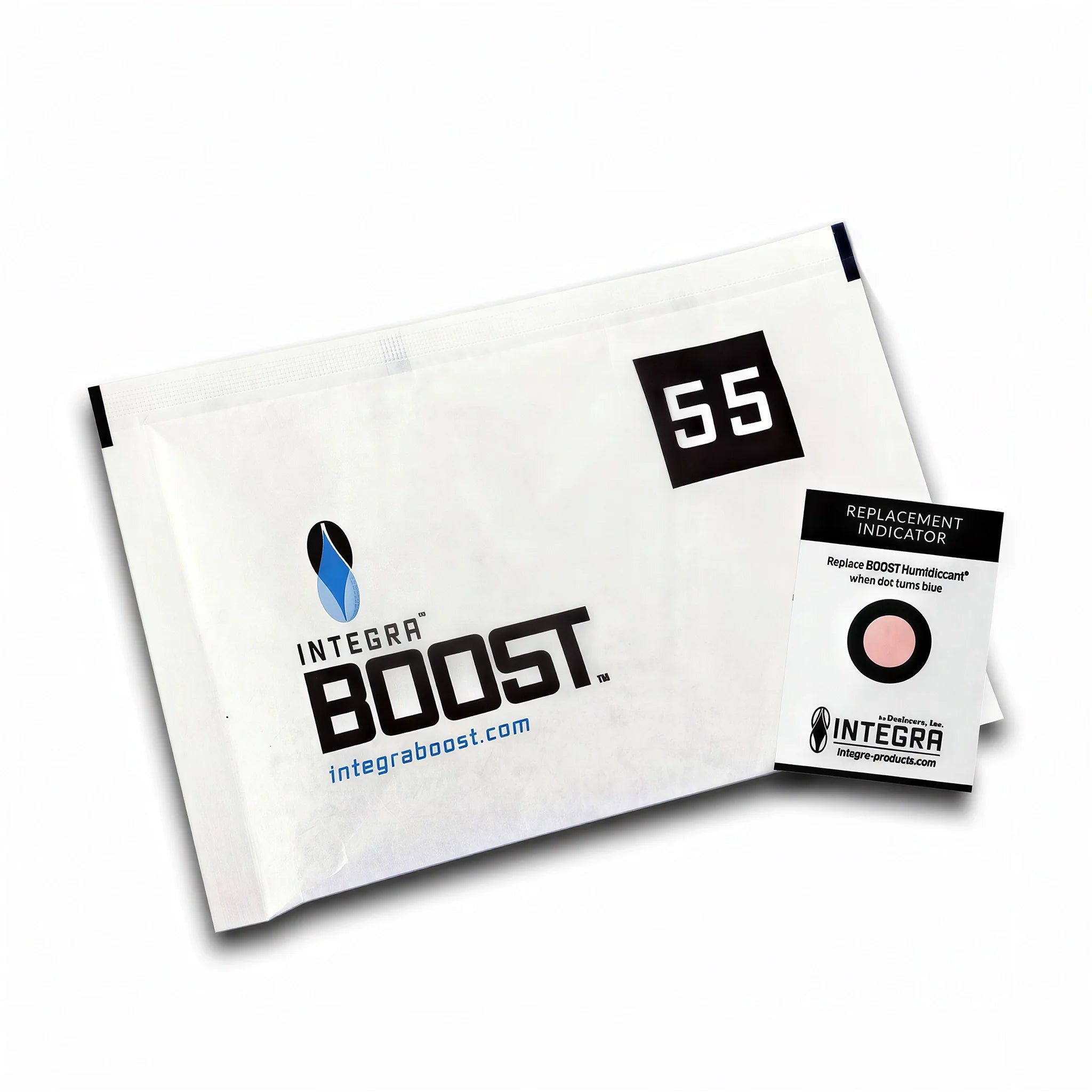
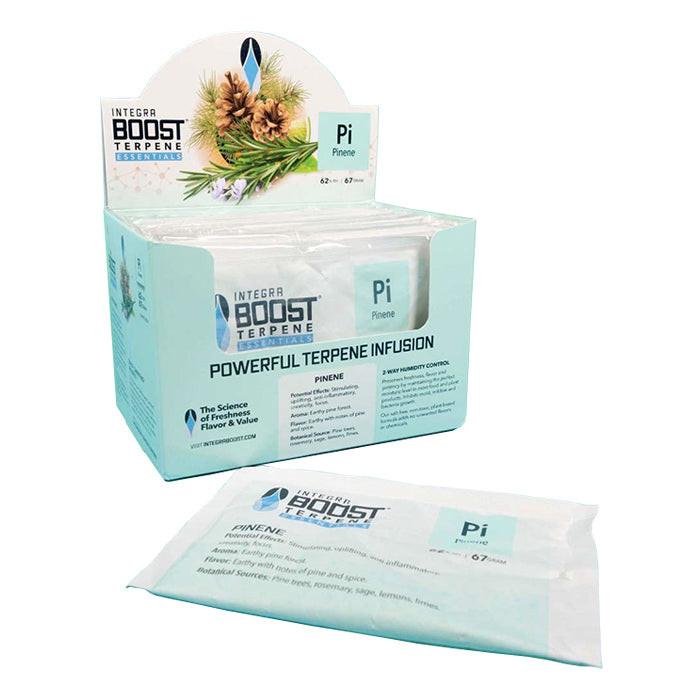
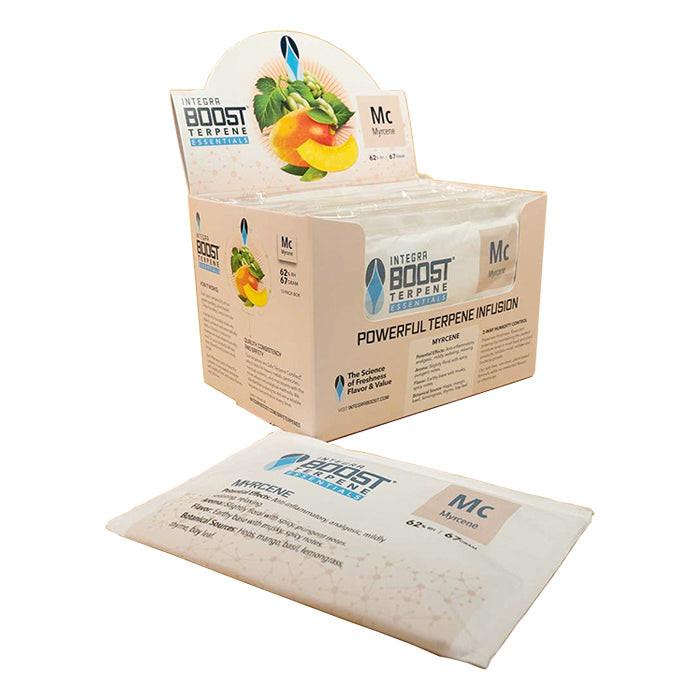
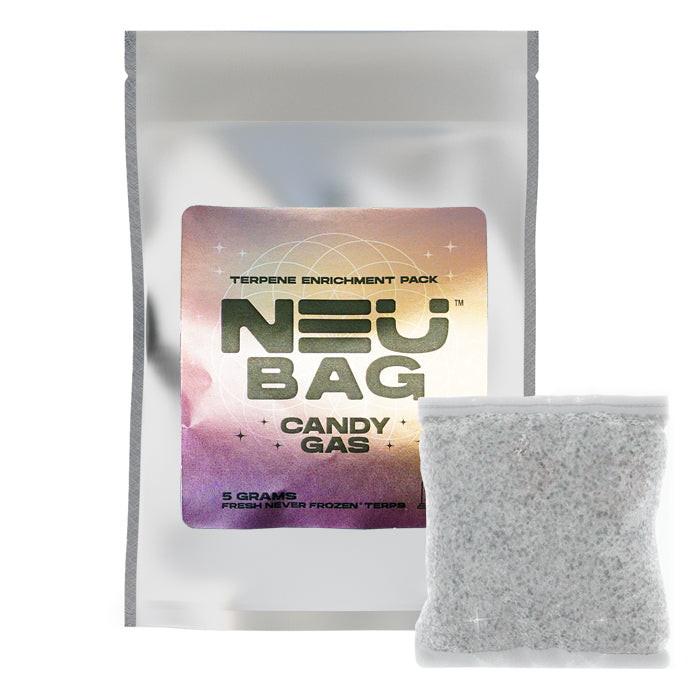
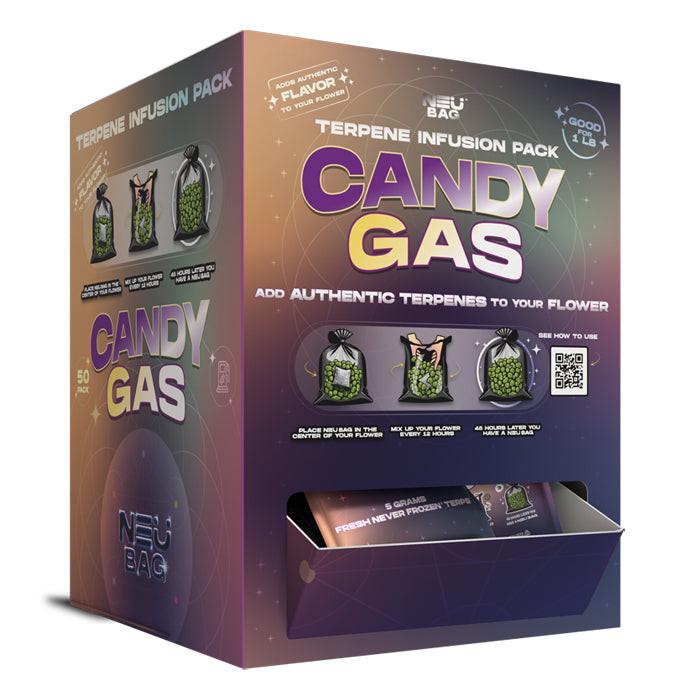
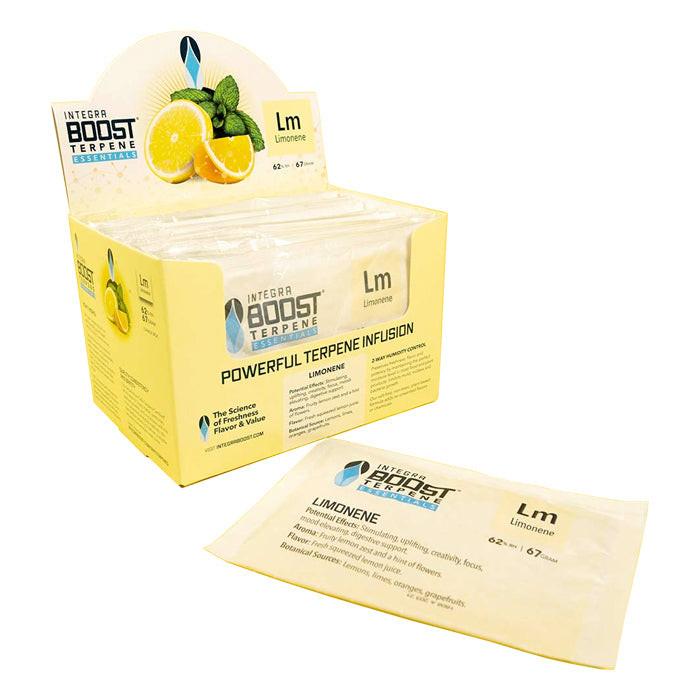
Two-way humidity packs work through a saturated salt solution inside a semipermeable membrane -- the salt solution maintains a specific equilibrium RH regardless of the ambient conditions. When the container air is too dry, moisture migrates from the pack into the air; when the container air is too humid, moisture migrates from the air into the pack. The result is automatic, passive humidity maintenance at the pack's rated RH without any active monitoring or adjustment. The 62% RH pack is the most widely used format for curing and storing aromatic dried botanical material -- at 62% RH, material retains adequate moisture for quality without approaching the 65%+ range where mold risk increases. 58% packs are preferred for material that was slightly high-moisture at the start of storage or for environments where 62% allows too much moisture retention.
Pack Sizing & Replacement
Humidity packs are sized by the container volume they regulate. General guidelines: one 4-gram pack per quart jar; one 8-gram pack per half-gallon jar; larger packs or multiple packs for larger containers. A pack is exhausted when it feels uniformly hard rather than partially pliable -- the salt solution has fully equilibrated and can no longer exchange moisture. Replace exhausted packs immediately and monitor with a digital hygrometer; a jar without active humidity control drifts toward ambient room humidity, which is often too dry. Fast shipping.
Humidity Packs FAQ
What RH percentage humidity pack should I use?
62% RH is the most widely recommended for curing and storing dried aromatic botanical material -- it maintains enough moisture to preserve quality and prevent brittleness while staying below the 65%+ range where mold risk increases significantly. Use 58% packs for material that was dried to a slightly higher moisture content and needs the lower target to prevent excess moisture accumulation, or for storage in warm environments where slightly drier conditions are preferred. Do not use humidity packs rated above 65% for botanical material storage -- the increased moisture supports mold growth that ruins stored material.
How do two-way humidity packs work?
Two-way humidity control packs contain a saturated salt solution inside a semipermeable membrane. The chemistry of the specific salt determines the equilibrium relative humidity -- for example, sodium chloride solutions buffer at approximately 75% RH; potassium acetate at approximately 22% RH; the salt blends in commercial packs are formulated to maintain specific targets like 58% or 62% RH. When container RH is below target, the salt solution releases water vapor through the membrane to raise it; when container RH is above target, the membrane allows vapor to enter the pack and be absorbed by the solution. This passive two-way exchange maintains the target RH indefinitely until the pack's moisture reservoir is exhausted.
How long does a humidity pack last?
Pack lifespan depends on how much moisture exchange work the pack is doing -- a pack in a well-sealed container with material at nearly the target RH lasts much longer than a pack working against frequent container openings or material that starts significantly above or below target. Typical lifespan: 2-4 months in a well-sealed quart jar opened once per week; 4-8 months in a sealed jar rarely opened. Check packs monthly by feel -- a pack that is entirely rigid (no soft or pliable areas) is exhausted and should be replaced. Do not wait until the pack is completely hard before replacing; replace when more than 75% of the pack feels firm.
What is silica gel used for?
Silica gel is a one-directional desiccant -- it absorbs moisture from the surrounding air until saturated, then stops. Unlike two-way humidity packs that maintain a specific RH, silica gel simply reduces humidity as low as possible. Appropriate applications: protecting equipment, tools, and papers from humidity damage during storage; drying freshly cleaned scissors or trimming equipment completely before storage; and moisture-emergency first aid for material that has gotten excessively wet (place in a bag with fresh silica gel for 24 hours to reduce moisture quickly, then transfer to proper humidity-controlled storage). Do not use silica gel in curing jars with botanical material -- it will over-dry the material below the target RH range.
Can I recharge or reuse humidity packs?
Two-way humidity packs are designed as single-use consumables -- once exhausted, the salt solution chemistry has shifted and recharging the pack with water does not restore the original RH calibration. Discard exhausted packs and replace with fresh ones. Silica gel desiccant can be regenerated by heating to 120 degrees C (250 degrees F) in an oven for 1-2 hours, which drives off absorbed moisture and restores desiccant capacity -- look for color-indicating silica gel (orange or blue crystals that change color when saturated) to make exhaustion and regeneration status visually obvious.