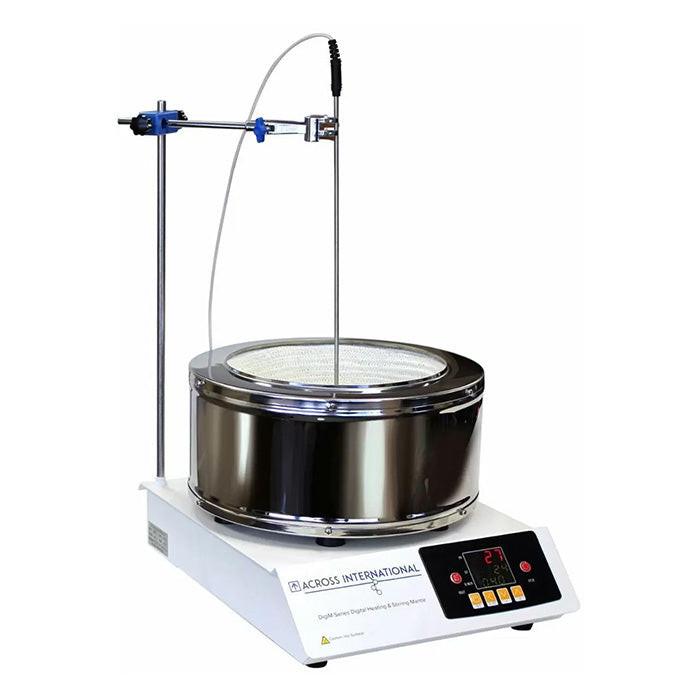
Heating Mantles for Laboratory & Distillation Applications
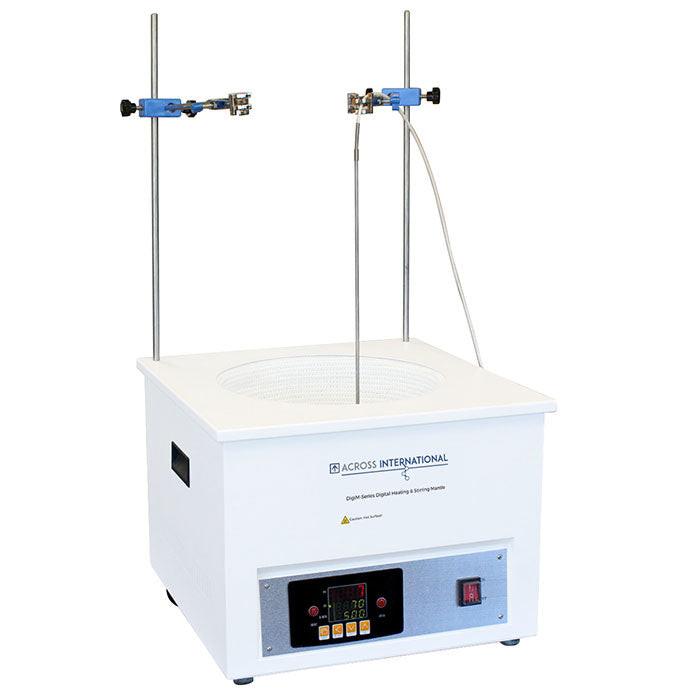
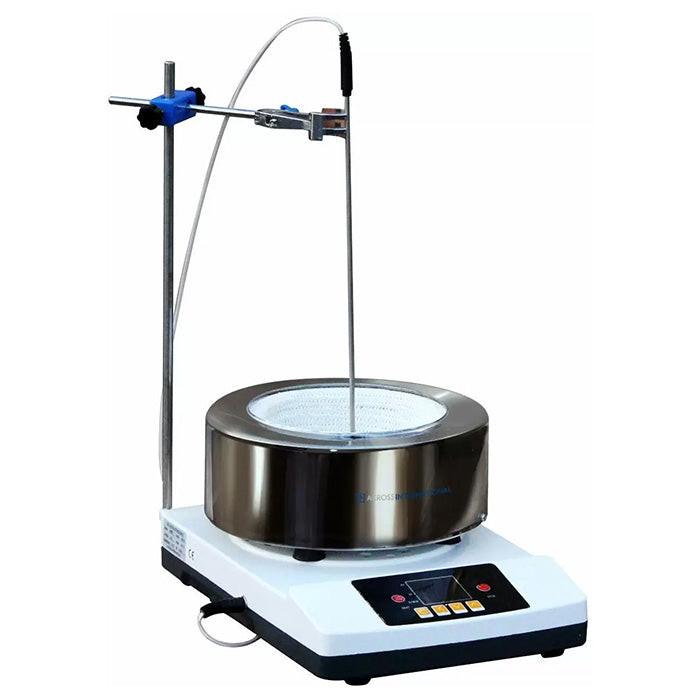
Heating mantles are fabric-covered electrical heating devices designed to uniformly heat round-bottom laboratory flasks from below and around the sides -- the standard heat source for short path distillation boiling flasks, reaction vessels, and any application requiring controlled, even heating of a glass flask. Unlike a hot plate (which contacts only the flat bottom of a flask), a heating mantle conforms to the curved flask surface, delivering heat to the full lower hemisphere of the flask and producing more even temperature distribution with fewer localized hot spots that can degrade heat-sensitive botanical compounds.
Sizing Heating Mantles to Flask Volume
Heating mantles are sized by flask volume -- a 500 ml mantle fits a 500 ml round-bottom flask, a 1,000 ml mantle fits a 1,000 ml flask, and so on. Using a mantle significantly larger than the flask leaves the lower flask walls unsupported and reduces heating efficiency; using a mantle too small leaves the upper flask shoulder unheated and creates temperature gradients. Match mantle volume exactly to flask volume for the best heating uniformity. Standard volumes: 50 ml, 100 ml, 250 ml, 500 ml, 1,000 ml (1 L), 2,000 ml (2 L), 3,000 ml (3 L), 5,000 ml (5 L). For short path distillation, match the mantle to the boiling flask volume in the system.
Temperature Control
Most heating mantles connect to an external variable autotransformer (Variac) or digital temperature controller rather than having built-in temperature control -- the mantle provides the heating element while the controller regulates power delivery. Variable transformers allow setting mantle output as a percentage of full power (0-100%); digital PID controllers with a thermocouple probe placed in the flask provide actual temperature feedback and more precise setpoint control. For distillation work where precise boiling flask temperature control is critical to fraction separation, a digital PID controller with the thermocouple in the liquid inside the flask is strongly preferred over a simple variable transformer. Fast shipping.
Heating Mantles FAQ
Why use a heating mantle instead of a hot plate?
A hot plate heats the flat bottom of a flask through direct conductive contact -- it creates a localized hot spot at the contact point and leaves the flask sides unheated. For heat-sensitive botanical extracts, these hot spots risk localized thermal degradation even when the average flask temperature is within the target range. A heating mantle wraps around the curved flask surface and delivers heat to the full lower hemisphere with much more even distribution -- reducing hot spot risk and producing more uniform heating throughout the flask contents. For distillation and extraction applications where temperature precision and thermal product quality matter, a heating mantle is the appropriate heat source.
Do heating mantles come with temperature controllers?
Most heating mantles sold for laboratory use do not include a temperature controller -- they include only the mantle (heating element and fabric cover) and a power cord with a standard plug. Temperature control requires a separately purchased variable autotransformer (Variac, for percentage-of-power control without temperature feedback) or a digital PID temperature controller (for actual setpoint control with thermocouple feedback). Some integrated units include a built-in controller; verify whether the specific mantle includes control capability before purchasing if you need it.
What is a safe maximum temperature for a heating mantle?
Quality laboratory heating mantles are typically rated for continuous operation to 450 degrees C (842 degrees F) -- well above the temperatures used in botanical extract distillation (maximum boiling flask temperatures rarely exceed 250 degrees C). The fabric winding and insulation are designed for sustained high-temperature use. Do not exceed the manufacturer's rated maximum temperature and avoid contact between the mantle fabric and flammable materials. Allow the mantle to cool completely before storing or handling -- mantles retain heat for considerable time after power is removed.
Can I use a heating mantle for a flat-bottom flask?
Heating mantles are designed for round-bottom flasks and do not contact flat-bottom flask bases effectively. For flat-bottom vessels, a hot plate or hot plate stirrer is the appropriate heating method. If you need uniform heating for a flat-bottom vessel in a laboratory setting, a silicone oil bath heated on a hot plate provides more even heat distribution than direct hot plate contact. Round-bottom flasks are the standard in short path distillation because their shape works with heating mantles and also minimizes the surface area per volume that creates localized heating issues.
How do I clean a heating mantle?
Heating mantles are difficult to clean once contaminated -- the fabric winding traps spilled material and the heating element cannot be washed. Prevention is the best approach: always use a flask support ring and clamp stand to secure the boiling flask above the mantle, ensuring that if the flask shifts or breaks, material does not spill into the mantle fabric. If minor contamination occurs: allow the mantle to cool completely, then carefully brush away any solid material. Liquid spills into the mantle winding generally require mantle replacement -- a contaminated heating element is a fire risk and cannot be safely restored.