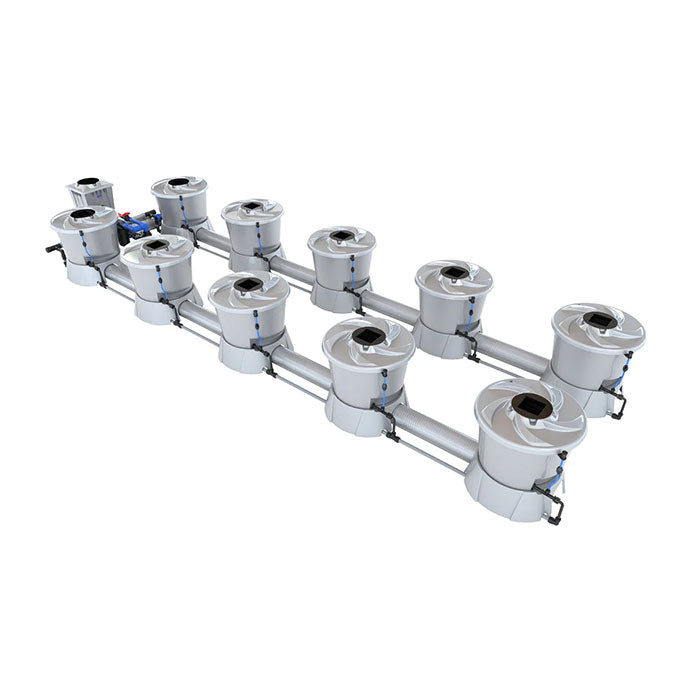
Deep Water Culture (DWC) Hydroponic Systems
Deep water culture is one of the simplest and most effective hydroponic methods. Plant roots are suspended directly in an oxygenated, nutrient-rich reservoir for continuous nutrient uptake and consistently rapid growth rates. With fewer moving parts than drip or NFT systems — no emitters to clog, no tubing to manage at the plant level — DWC is both accessible for first-time hydro growers and scalable to commercial production volumes.
DWC Systems from Active Aqua & Current Culture
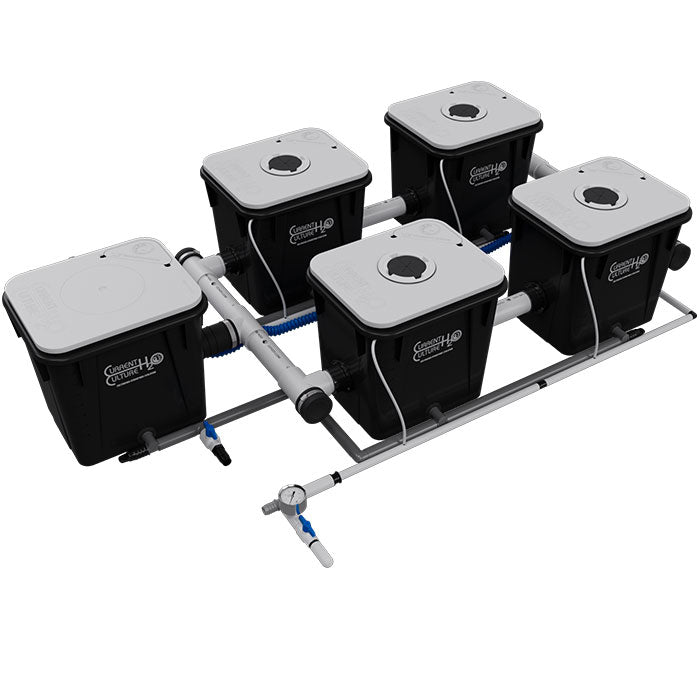
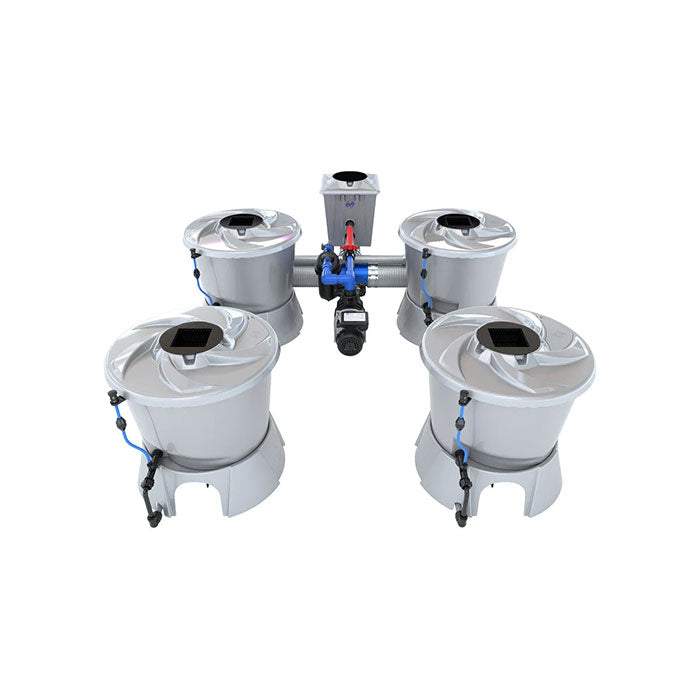
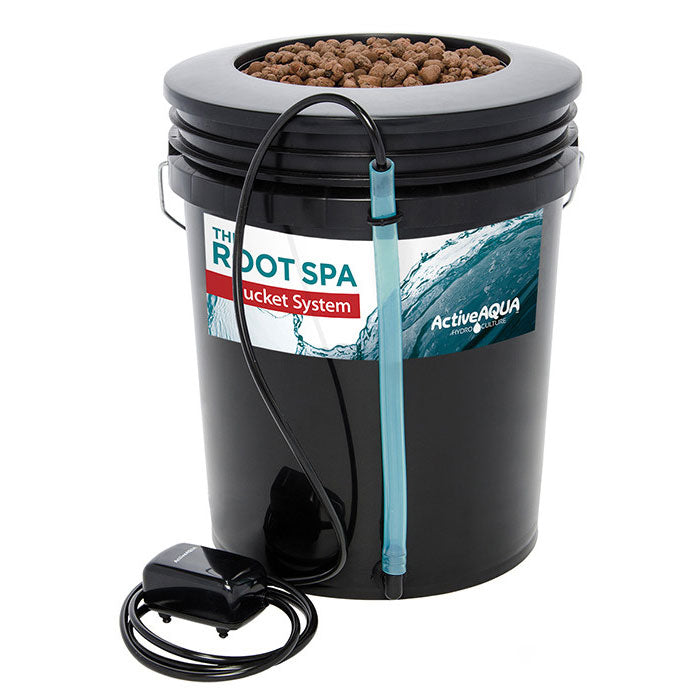
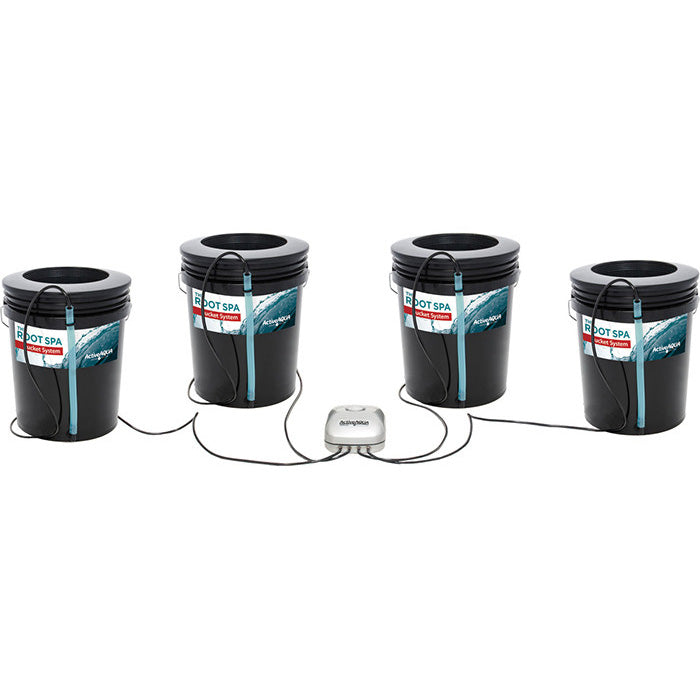
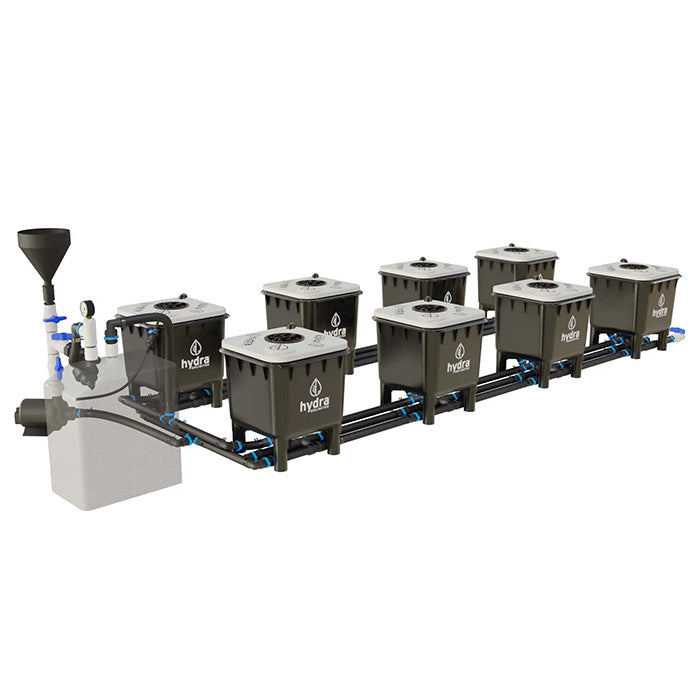
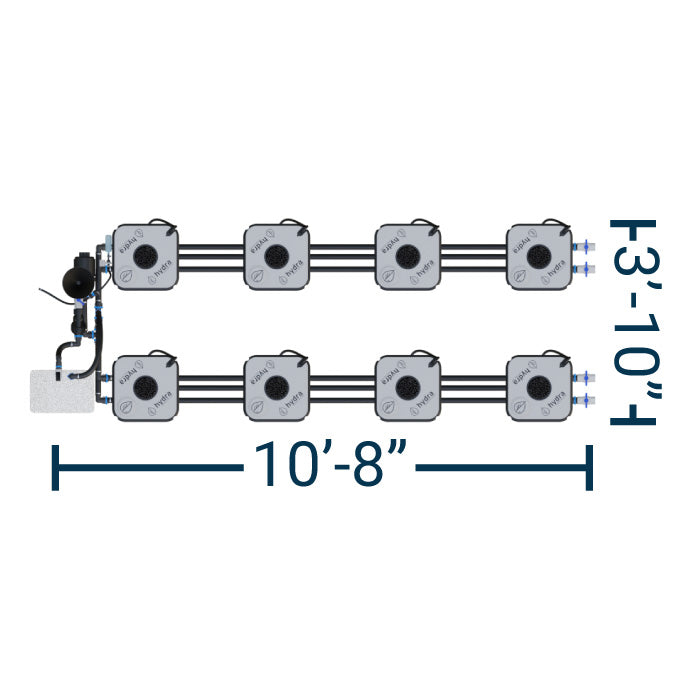
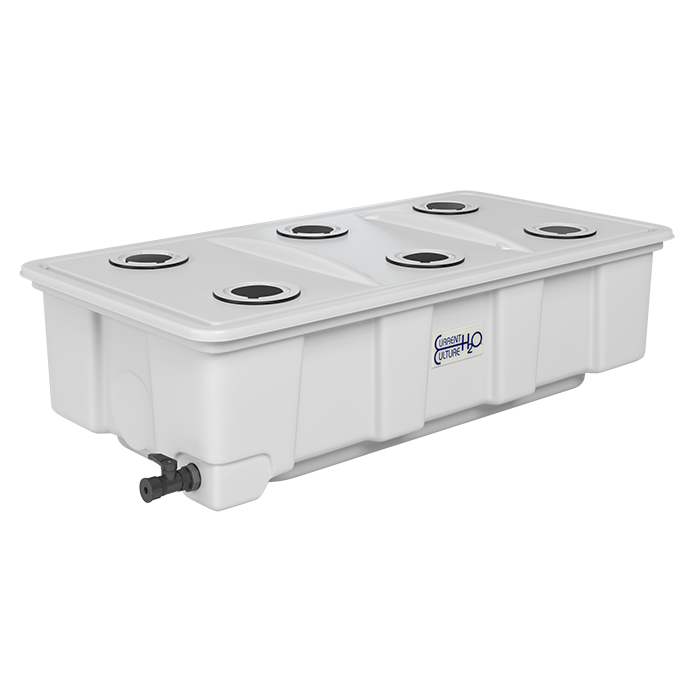
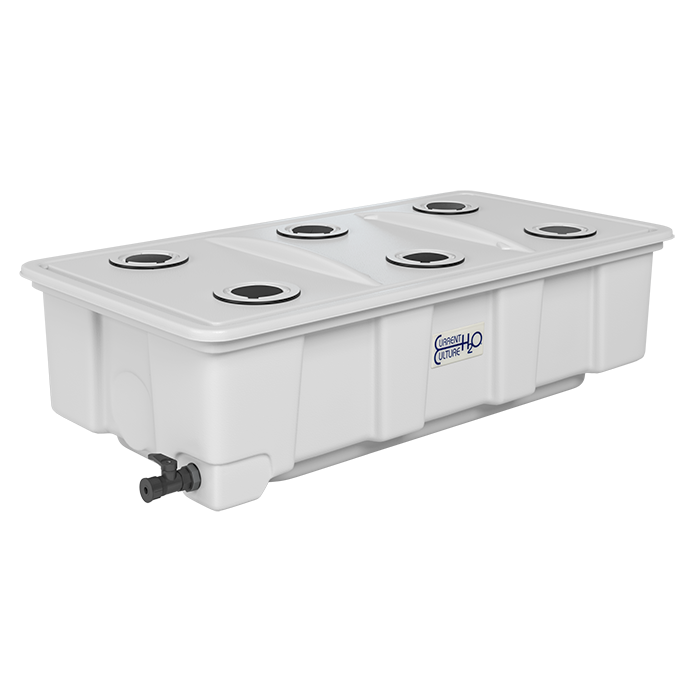
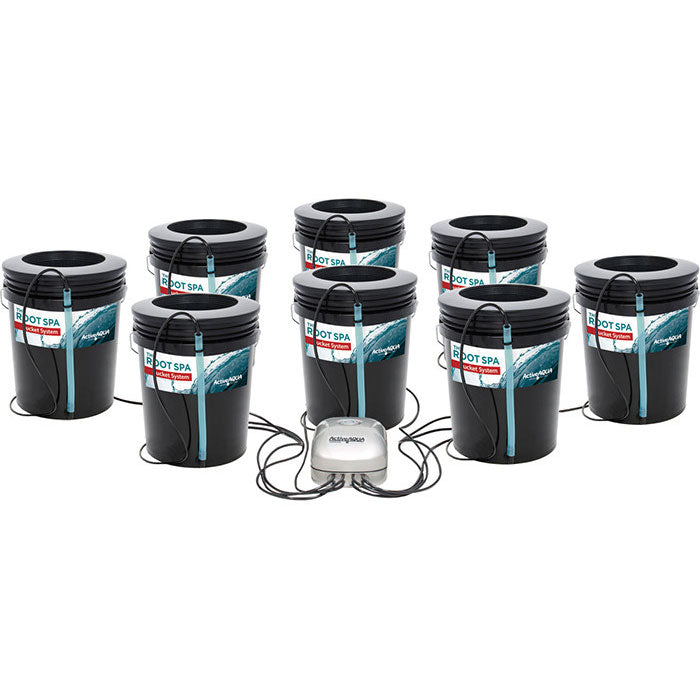
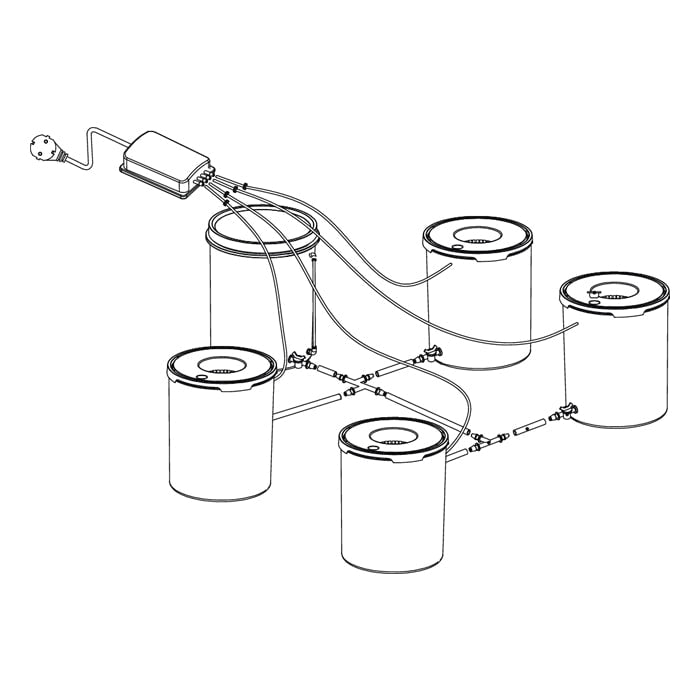
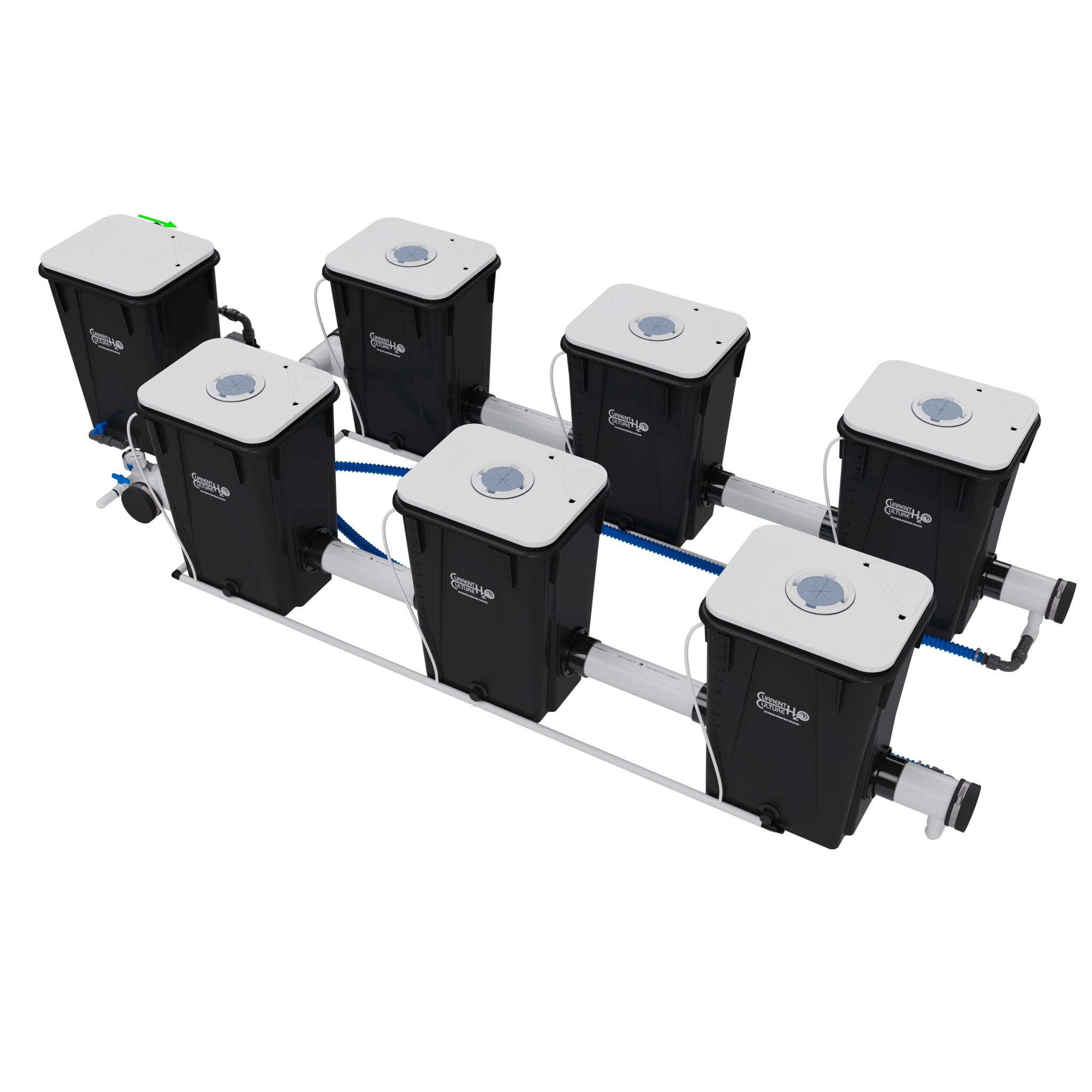
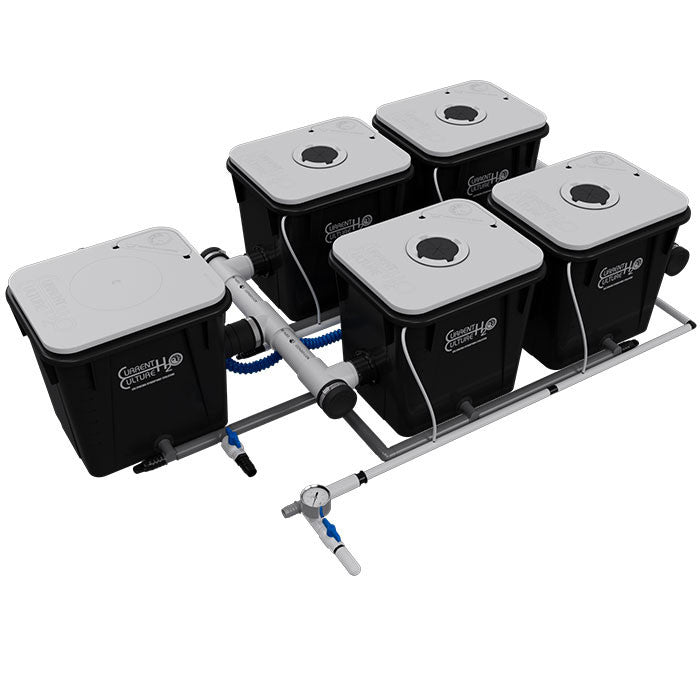
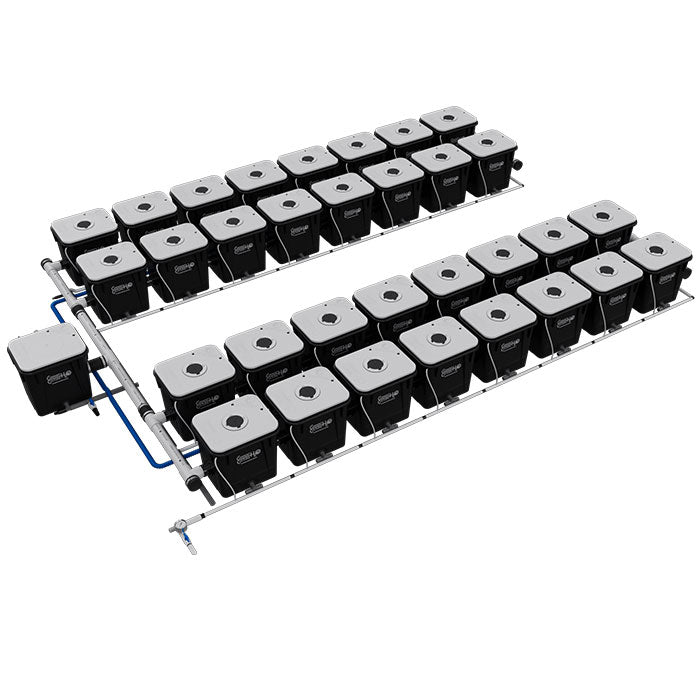
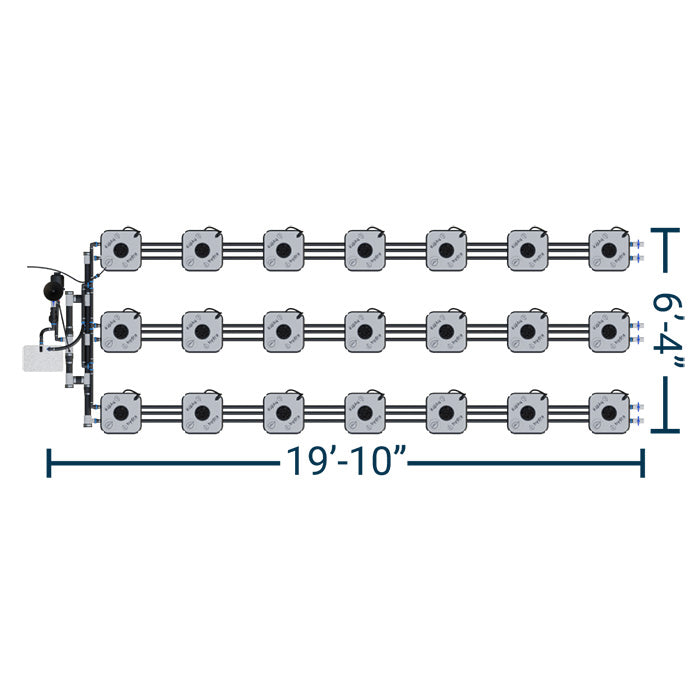
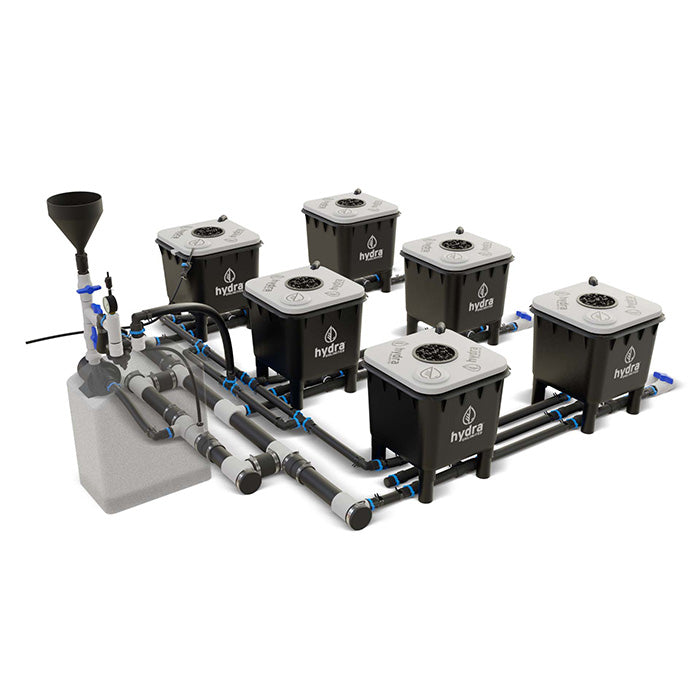
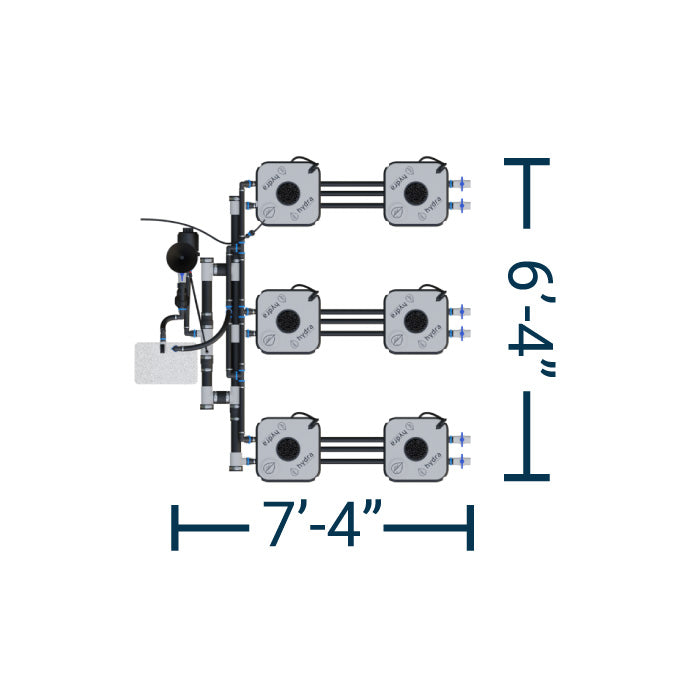
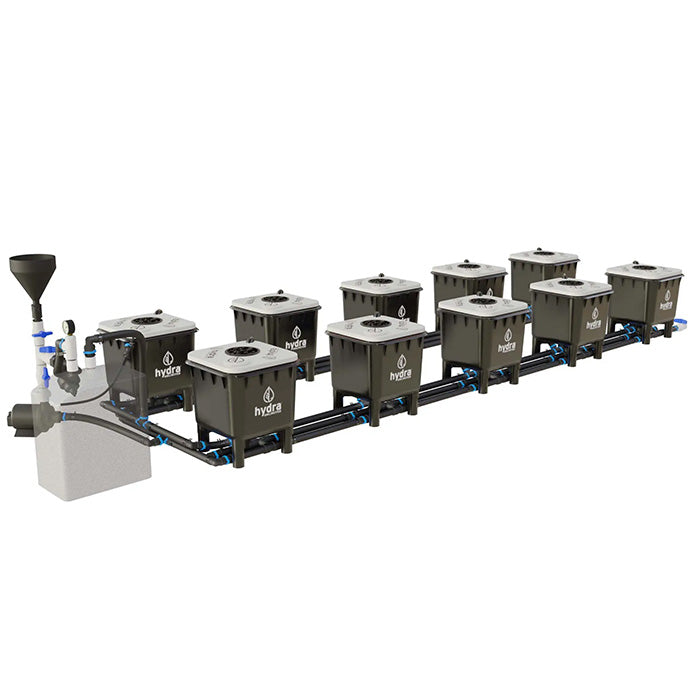
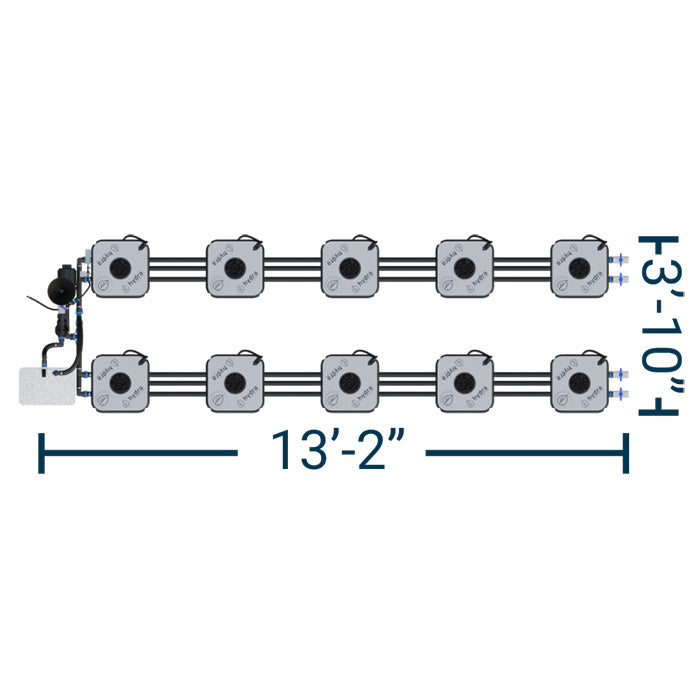
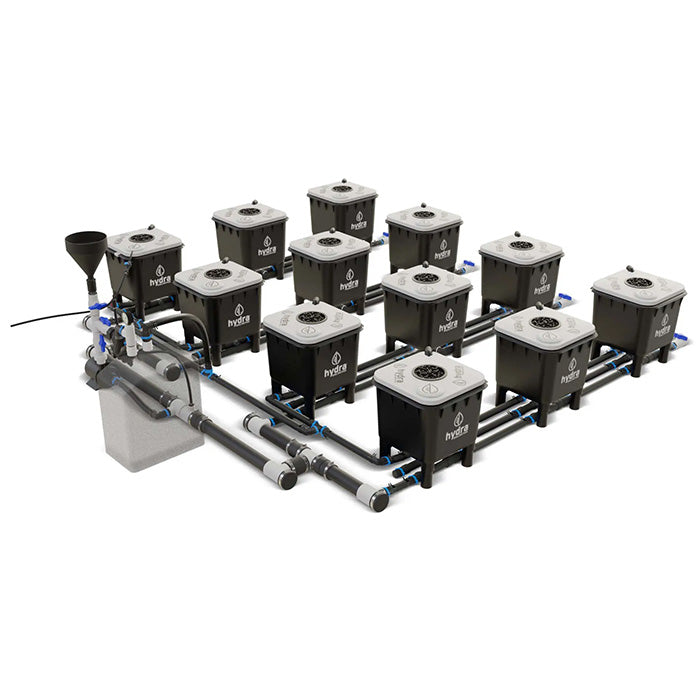
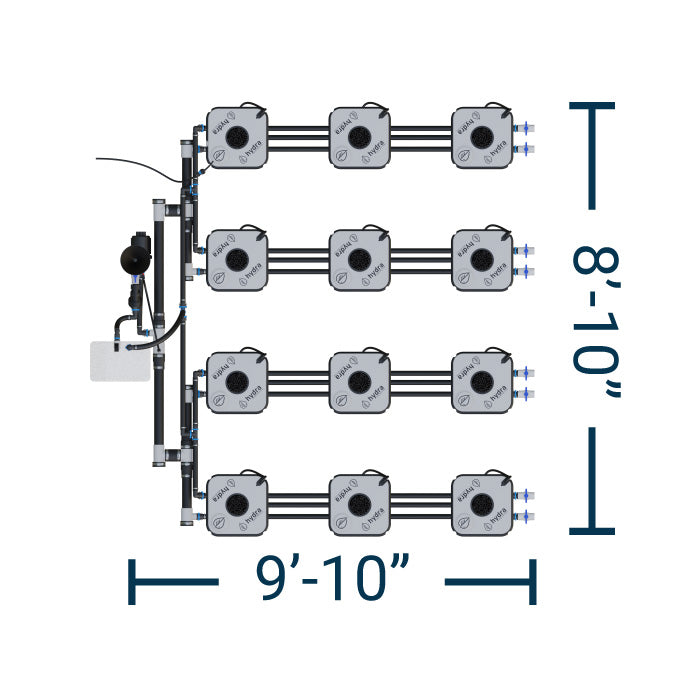
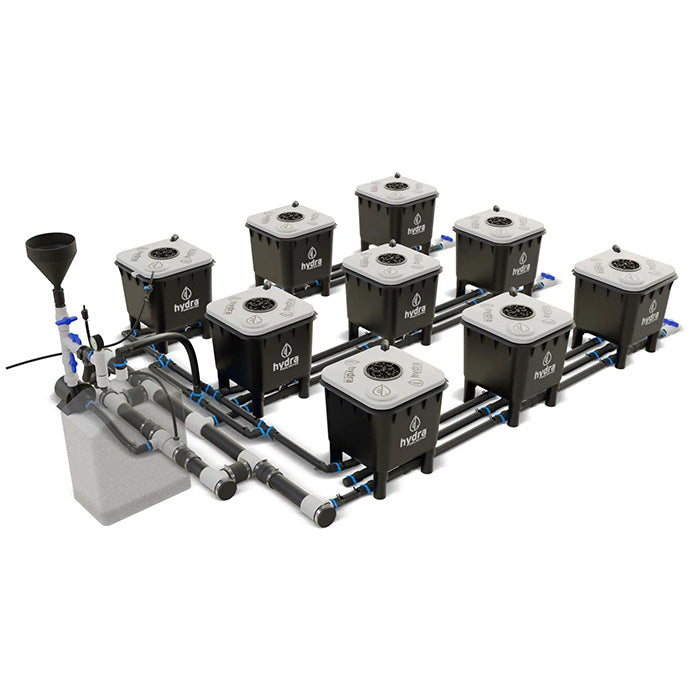
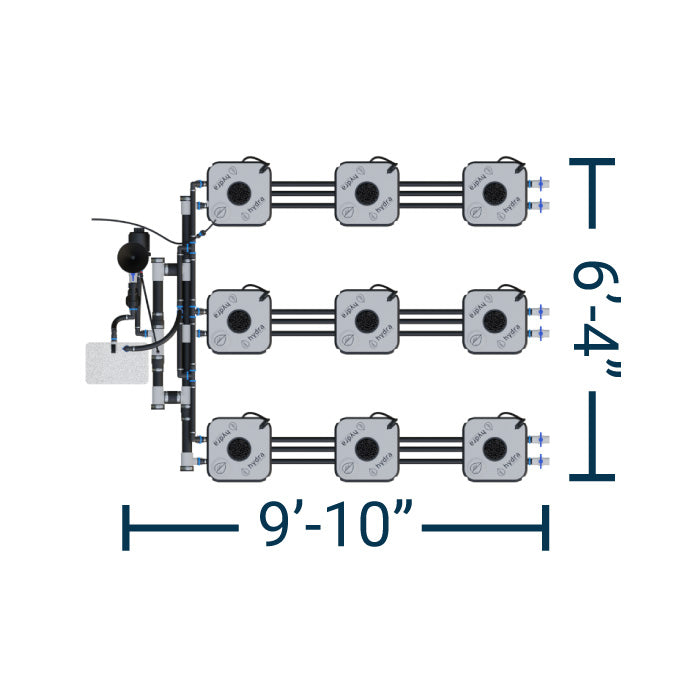
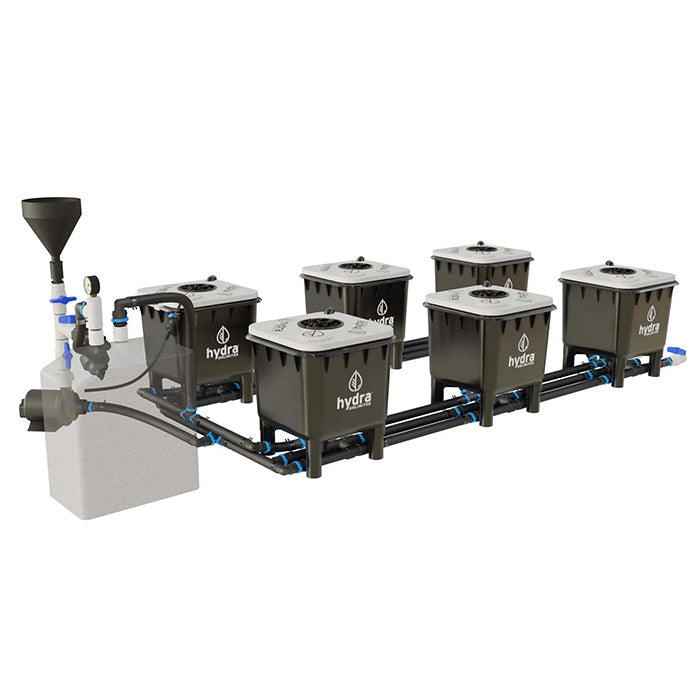
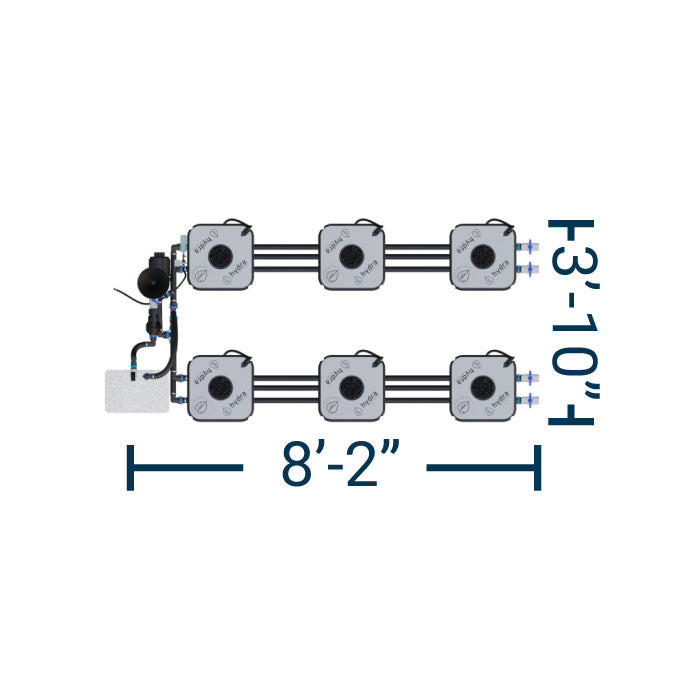
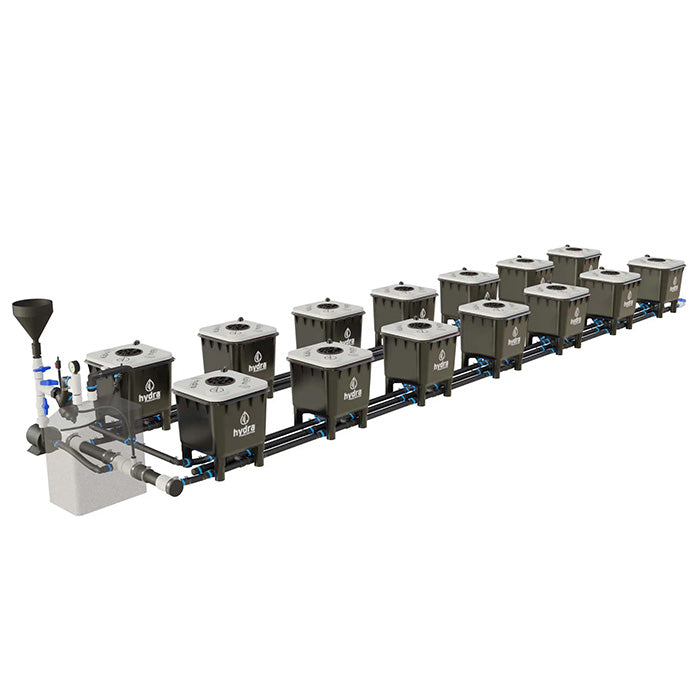
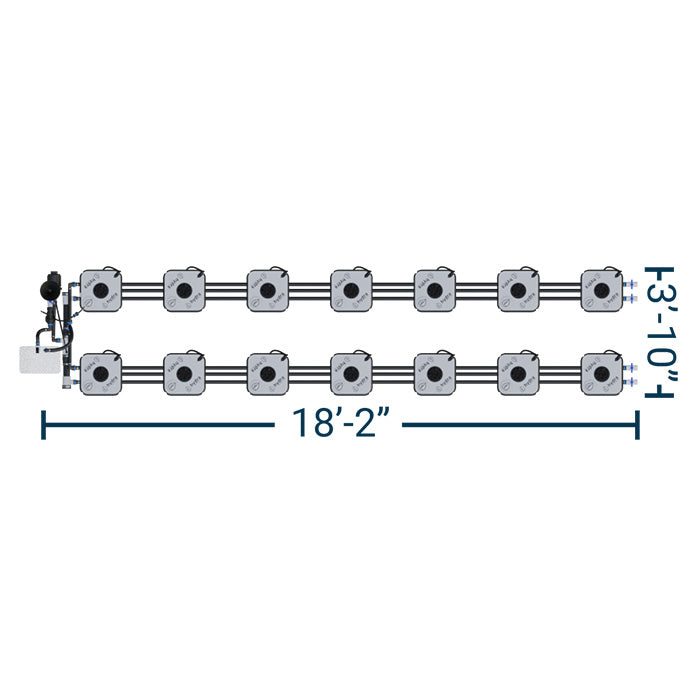
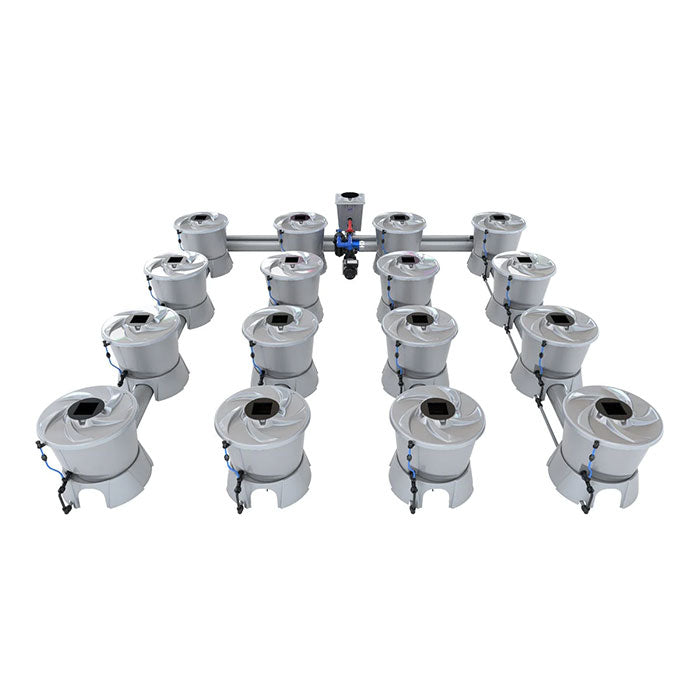
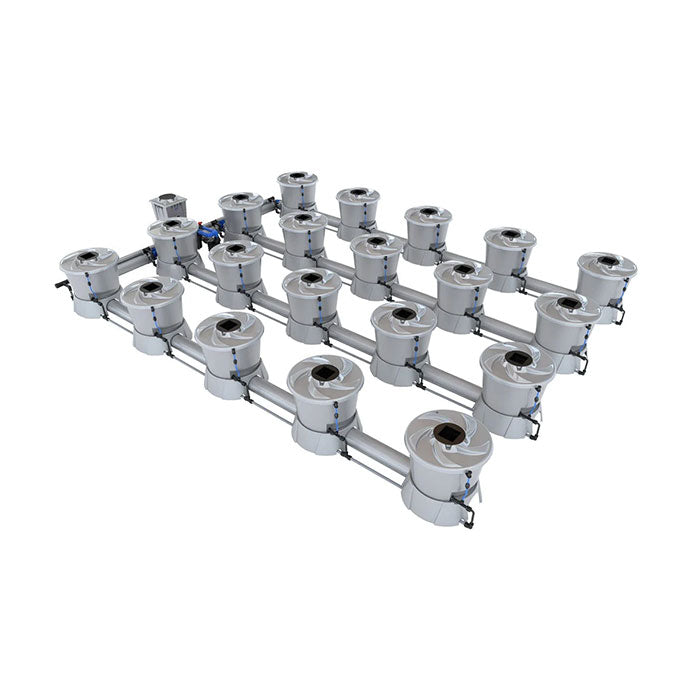
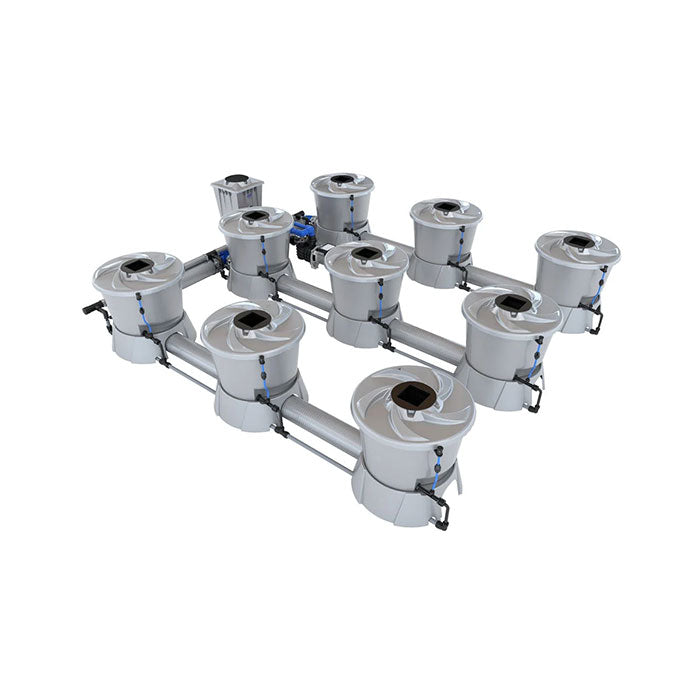
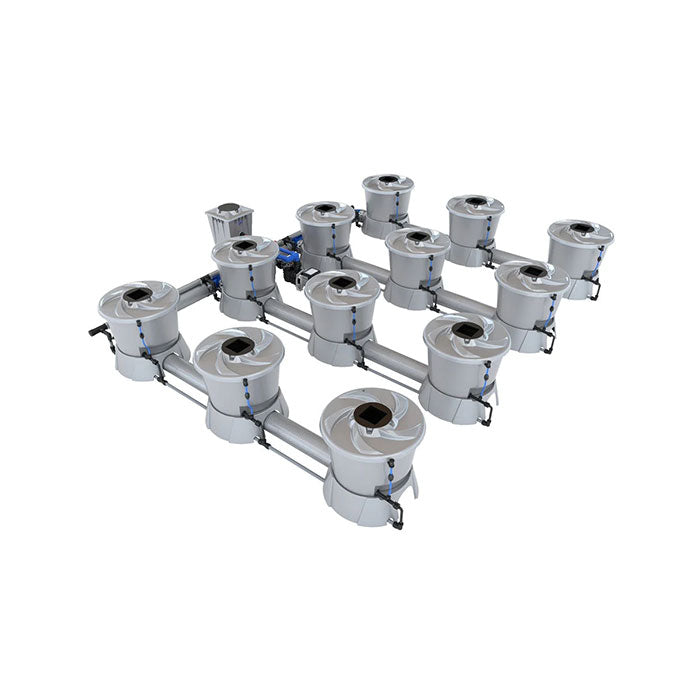
Single-bucket DWC systems from Active Aqua are the standard entry point — the Root Spa 5-gallon 8-bucket system supports up to 8 plants and comes in under $200 with everything needed to start. For larger operations, recirculating deep water culture (RDWC) systems from Current Culture connect individual buckets through a central reservoir and recirculating pump, enabling centralized nutrient and pH management across many plants simultaneously. The Current Culture Under Current lineup — available in Solo, Standard, Evolution, and Double Barrel configurations — is the commercial standard for large-scale DWC production and supports everything from 4-plant home grows to 100+ plant warehouse operations. Replacement parts including net pot lids, bulkhead fittings, manifolds, and air pumps are stocked for both brands.
How DWC Works
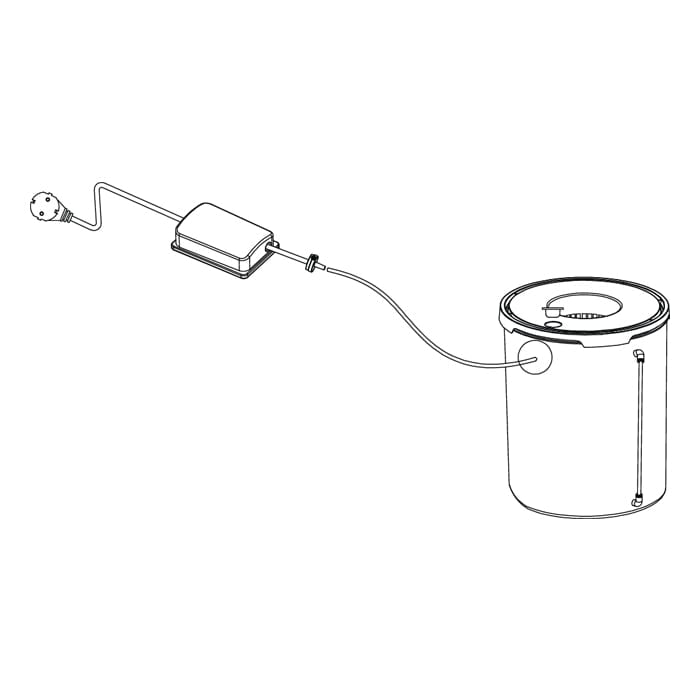
In a basic DWC setup, plants sit in net pots above a nutrient-filled reservoir. Roots grow downward into the solution, where an air pump and air stone provide continuous dissolved oxygen to prevent anaerobic conditions. The reservoir houses the entire nutrient solution — plants absorb water, nutrients, and oxygen directly from the solution without any soil or growing medium buffering the inputs. This direct access to oxygen-rich nutrients is why DWC routinely produces faster growth rates than soil-based growing at the same input levels.
DWC Pros & Cons
Advantages of DWC include low maintenance once established (larger water volumes buffer pH and EC fluctuations more than smaller systems), fast plant growth driven by continuous nutrient access, and minimal moving parts that reduce failure points. The main challenges are reservoir temperature management (keep between 65–75°F — too warm drops dissolved oxygen; too cold slows plant metabolism), pH drift requiring regular monitoring, and zero soil buffering meaning nutrient errors are felt quickly. A pH meter, EC meter, and thermometer are essential tools for any DWC grower. For larger systems, an autodosing system eliminates the manual monitoring burden entirely.
Reservoir Management: Water Changes & Nutrients
During vegetative growth, change reservoir water at minimum every 14 days to prevent nutrient imbalance and pathogen buildup. During flowering, increase to every 7 days — plants have greater nutritional demands and solution quality degrades faster under higher feeding rates. Use hydroponic-specific nutrients formulated for fully soilless systems. Use our Nutrient Mixing & Dilution Calculator to batch-mix nutrient solutions to precise EC targets for your reservoir volume.
Pair your DWC setup with nutrients from our hydroponic nutrients collection, browse air pumps and diffusers for reservoir oxygenation, or read our Hydroponics 101 guide for a full DWC primer. Fast shipping.
Deep Water Culture (DWC) FAQ
What is the ideal reservoir temperature for DWC?
Keep DWC reservoir temperature between 65–72°F (18–22°C). Above 75°F, dissolved oxygen levels drop below the threshold needed for healthy root function — this is the primary cause of root rot in DWC systems that aren't running in temperature-controlled rooms. Below 60°F, plant metabolism slows significantly. In warm climates or rooms with high lighting loads, a water chiller is essential to maintain this range. In cold rooms or during winter, a submersible aquarium heater keeps the reservoir from dropping too low.
What is the difference between DWC and RDWC?
In standard DWC, each plant has its own separate bucket that is managed independently — you check and adjust pH and EC in each bucket individually. In RDWC (recirculating DWC), individual grow buckets connect through a central reservoir via a recirculating pump. All buckets share one nutrient solution, so one pH and EC adjustment covers the entire system. RDWC from Current Culture is the commercial standard for large DWC operations — managing 20+ plants from one reservoir instead of 20+ individual buckets is a massive labor efficiency gain.
How much air pump capacity do I need for DWC?
A common guideline is 1 watt of air pump output per gallon of reservoir volume, but a more reliable approach is to ensure your air stones produce vigorous bubbling throughout the entire reservoir bottom with no dead spots. For a standard 5-gallon bucket, a 2–4 LPM output pump is adequate. For a 50-gallon RDWC central reservoir, target 40–60 LPM minimum. When in doubt, size up — over-oxygenation is not a practical concern, while under-oxygenation consistently limits growth and opens the door to root disease.
Why are my DWC roots turning brown?
Brown roots in DWC are most commonly caused by one of three issues: insufficient dissolved oxygen (too little aeration or reservoir too warm), pythium root rot (a water mold that thrives in warm, low-oxygen conditions), or nutrient staining (brown discoloration from tannins or certain nutrient compounds without sliminess or rot smell). True root rot will have a slimy texture and unpleasant smell. Healthy roots should be white and firm. If you have genuine rot: lower reservoir temperature to below 70°F, increase aeration, add beneficial bacteria such as Hydroguard to colonize the root zone, and consider a hydrogen peroxide flush at 3 mL/gallon of 3% H2O2.