CO2 Regulators for Grow Room Tank Systems
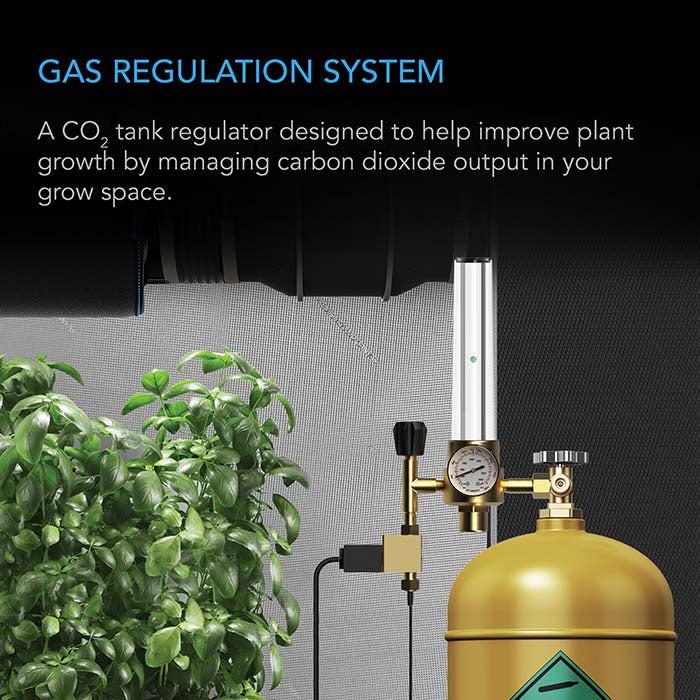
CO2 regulators reduce the high-pressure gas in a compressed CO2 tank (typically 800-1,200 PSI) to a usable working pressure (typically 5-30 PSI) suitable for delivery through solenoid valves, flow meters, and distribution tubing to the growing environment. Without a regulator, the full tank pressure would make flow rate control impossible and would damage downstream equipment. Single-stage regulators provide a fixed output pressure; dual-stage regulators offer more stable output pressure as the tank empties -- preferred for precise CO2 management programs where consistent delivery rate matters. Browse our complete CO2 tank and regulator kits collection for complete systems.
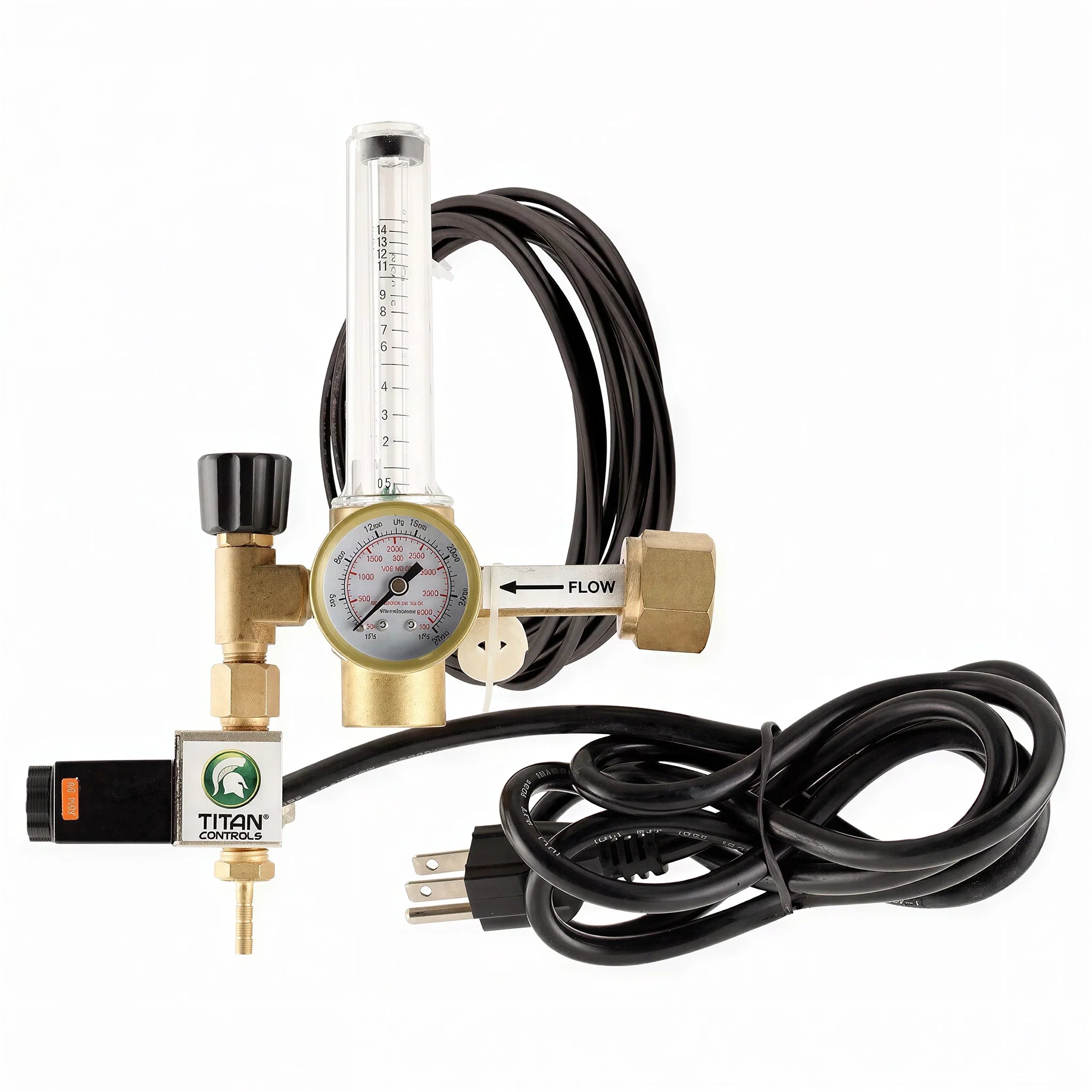
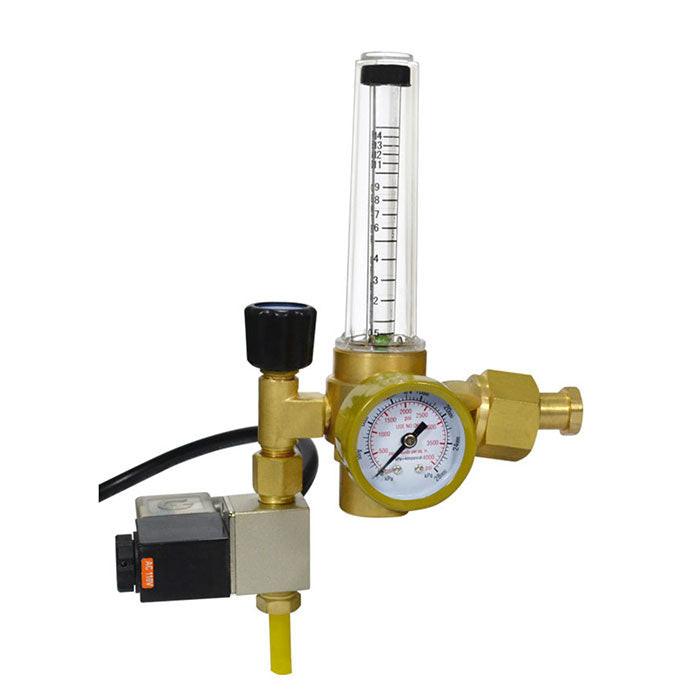
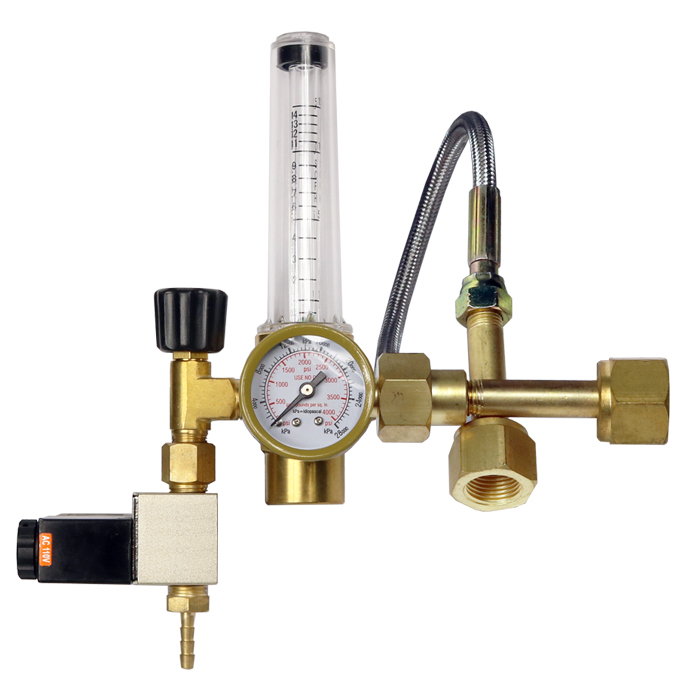
Regulator Components
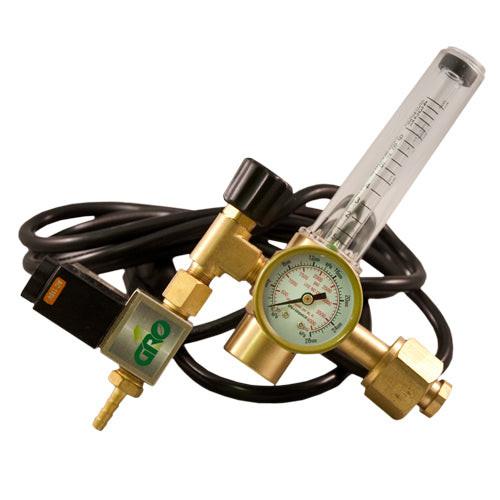
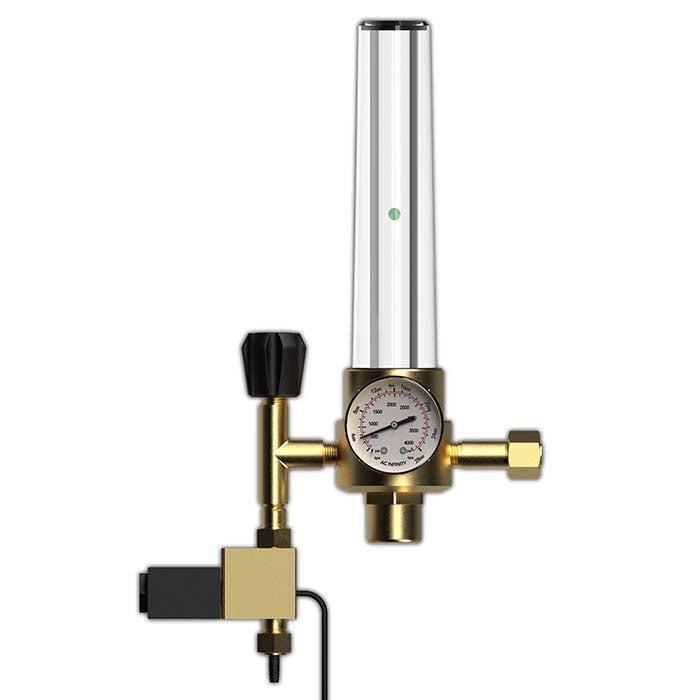
A complete CO2 regulator assembly for grow room use includes: the regulator body (connects to the tank CGA-320 valve), a high-pressure gauge (shows remaining tank pressure -- used to estimate remaining CO2 volume), a low-pressure gauge (shows the working output pressure delivered downstream), a solenoid valve (electronically controlled valve that opens and closes on controller command), and a flow meter or needle valve for adjusting the volumetric flow rate when the solenoid is open. Integrated regulator kits include all these components factory-assembled; component-by-component sourcing allows customization for specific applications. Browse our all grow room CO2 collection for controllers and complete systems.
Single-Stage vs. Dual-Stage Regulators
Single-stage regulators provide adequate performance for most hobby CO2 programs. Dual-stage regulators reduce the pressure in two steps rather than one -- the first stage reduces tank pressure to an intermediate level, and the second stage regulates to the final working pressure. This two-step process produces more stable output pressure as tank pressure drops during use, preventing the "end-of-tank surge" where a single-stage regulator's output pressure rises as tank pressure approaches the regulator's working pressure setting. For commercial programs where consistent CO2 dosing precision is important, dual-stage is preferred. Fast shipping.
CO2 Regulators FAQ
What does a CO2 regulator do?
A CO2 regulator reduces the high pressure inside a compressed CO2 tank (800-1,200 PSI) to a safe, controllable working pressure (typically 5-30 PSI) for delivery to the growing environment. Without a regulator, the full tank pressure cannot be used safely with standard grow room equipment. The regulator also includes gauges to monitor tank pressure (remaining CO2) and working pressure, and usually integrates a solenoid valve for controller-based on/off control.
What is a CGA-320 fitting?
CGA-320 is the standard valve fitting for CO2 cylinders in North America -- the threaded connection used on most CO2 tanks in welding supply, beverage, and grow room applications. CO2 regulators use a CGA-320 nut to connect to the tank valve. Verify the regulator specifies CGA-320 compatibility before purchase -- other gas cylinders use different CGA fitting numbers that are not interchangeable. The CGA-320 connection is reverse-threaded (tightens counterclockwise) -- do not attempt to force it clockwise as this damages the fitting.
What working pressure should I set my CO2 regulator to?
Set the working pressure to the minimum needed to achieve adequate flow rate through your delivery system. For most grow room CO2 delivery setups (solenoid valve, needle valve, and short distribution tubing), 5-15 PSI working pressure is adequate. Higher working pressure does not deliver more CO2 per hour -- the needle valve or flow meter downstream controls the actual delivery rate. Set working pressure at the lower end of the functional range to reduce wear on the solenoid valve and distribution components.
How do I know when my CO2 tank is getting low?
Monitor the high-pressure gauge on the regulator -- it reads remaining tank pressure. A full CO2 tank reads approximately 800-1,000 PSI; as the liquid CO2 in the tank is consumed, pressure remains relatively stable until the liquid is exhausted, at which point pressure drops rapidly. When the high-pressure gauge reads below approximately 200 PSI, the tank is nearly empty and should be exchanged promptly before pressure drops to the point where the regulator's working pressure cannot be maintained. Keep a spare filled tank on hand for uninterrupted production during exchange.
Can I use any CO2 regulator for a grow room setup?
Grow room CO2 delivery requires a regulator specifically rated for CO2 gas at the appropriate pressure range. Beer/beverage CO2 regulators are compatible and widely used for grow room applications -- they are designed for the same CGA-320 connections and CO2 pressure ranges. Welding CO2 regulators also work. Avoid regulators designed for other gases (oxygen, propane, nitrogen) -- they use different fitting standards and may not provide the appropriate pressure range for CO2 grow room delivery. Always verify the regulator is rated for CO2 gas, not just the CGA fitting size.