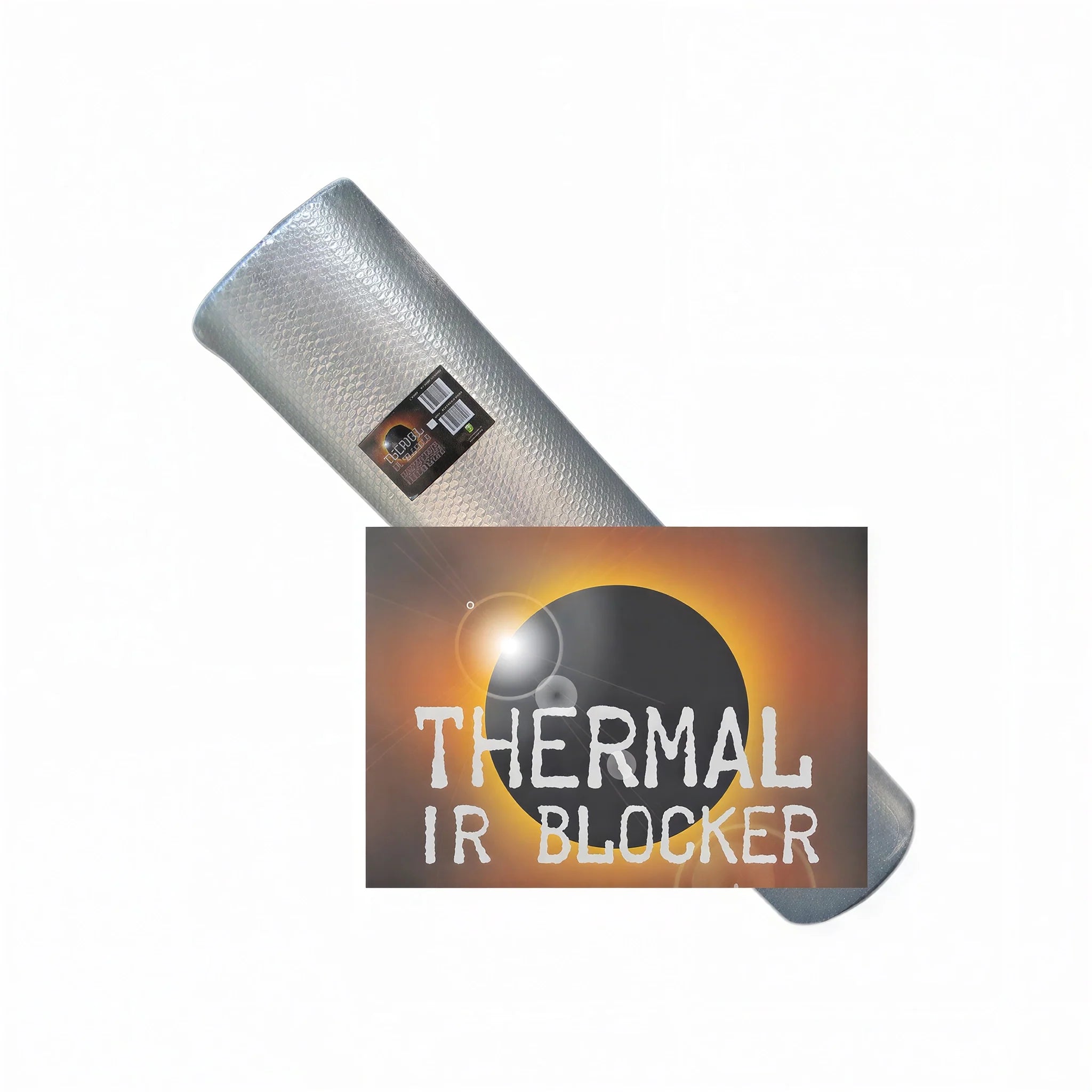
Reflective Mylar Film for Grow Rooms & Tents
Reflective mylar film lines the interior walls of grow rooms to maximize the percentage of light that reaches the plant canopy rather than being absorbed by walls and lost. Bare white walls reflect approximately 70-85% of incident light; high-quality diamond mylar film reflects 92-97% depending on the product. In a grow tent, the manufacturer's interior mylar lining is already installed; film rolls are used primarily for lining dedicated grow rooms and DIY setups. In a 4x4 grow room lined with quality reflective film, the difference between bare walls and full mylar coverage can represent a meaningful increase in effective PPFD at canopy level without increasing fixture wattage or electricity consumption. For dedicated grow rooms without pre-installed grow tent lining, reflective mylar film is one of the most cost-effective single upgrades available per dollar invested.
Mylar Film Types: Diamond Mylar, Flat Mylar & Panda Film
Diamond mylar (textured surface with small raised diamond pattern) is the highest-reflectivity option -- the textured surface creates a diffuse reflection pattern that spreads light more evenly across the canopy rather than creating direct hot spots. Flat (smooth) mylar produces slightly more specular (mirror-like) reflection -- higher total reflectivity in laboratory conditions but can create hot spots on leaves directly in line with the mirror reflection. Panda film (black on one side, white on the other) is a thicker, more durable alternative -- the white side reflects at 85-90%, the black side prevents light from passing through to exterior spaces. Panda film is commonly used as a DIY divider for multi-chamber tent setups, light-tight door coverage, and anywhere a more robust, opaque material is needed rather than the lighter mylar foil.
Installation & Coverage
Mylar film is sold in rolls (typically 4 ft wide, 25-100 ft lengths) or pre-cut sheets. Attach to walls using mylar tape, double-sided tape, or light staples -- avoid creating large wrinkles or folds in the reflective surface, as these create uneven reflection angles that reduce the uniformity benefit. For a complete grow room lining job, measure all four walls plus the ceiling (if the fixture does not already provide overhead reflection) and add 10-15% for overlap and waste. In grow tents, the interior mylar lining is already installed by the manufacturer -- mylar film rolls are primarily used for dedicated grow rooms, light-tight partitions in multi-chamber setups, and covering windows or other light entry points. Fast shipping.
Reflective Mylar Film FAQ
Does reflective mylar actually improve plant growth?
Yes -- by increasing the percentage of emitted light that reaches the plant canopy rather than being absorbed by walls. In a typical 4x4 grow room, quality diamond mylar can increase effective canopy PPFD by 10-20% over bare painted walls without any change to the fixture. This is equivalent to adding roughly 10-20% more wattage to your lighting at zero ongoing electricity cost. The benefit is most significant in smaller rooms where wall surface area is large relative to canopy area, and less significant in very large commercial spaces where wall reflectivity is diluted by the room volume.
What is the difference between diamond mylar and flat mylar?
Diamond mylar has a textured surface that creates diffuse (scattered) light reflection -- distributing reflected light more evenly across the canopy and reducing hot spots. Flat mylar has a smooth, mirror-like surface that reflects at a direct angle -- slightly higher total reflectivity in laboratory conditions but can create concentrated bright spots on leaves directly in the reflection path. For most grow room applications, diamond mylar's diffuse reflection produces better practical results than flat mylar's slightly higher total reflectivity.
What is panda film and when should I use it?
Panda film is a thick co-extruded polyethylene sheeting -- black on one side to block all light transmission, white on the other side to reflect light. It is used where a durable, fully opaque material is needed rather than lightweight mylar foil: as a DIY grow room divider for multi-chamber setups, to cover windows and doors against light contamination, and as flooring protection under growing containers. Panda film reflects at 85-90% (white side) -- lower than diamond mylar but more durable and tear-resistant for structural applications.
How do I attach mylar to grow room walls?
Mylar tape is the cleanest option -- it adheres directly to the wall surface and also seals mylar sheet edges to prevent light gaps. Double-sided tape works on smooth painted surfaces. Light staples work on wood-framed walls. Avoid large staple patterns that leave obvious gaps in the reflective surface. For temporary installations or rooms where wall damage must be avoided, Command strips or painter's tape over sections of double-sided foam tape provide removable mounting without adhesive residue. Smooth out any large wrinkles after mounting -- wrinkles create shadow zones and uneven reflection angles.
Do I need mylar in a grow tent?
No -- grow tents already include an interior mylar lining installed by the manufacturer. Mylar film rolls are primarily for dedicated grow rooms built in basements, garages, or spare rooms where you are lining bare walls. Some growers add additional mylar to cover grow tent walls that have developed tears or holes in the factory lining, but for intact tents the factory lining is sufficient.