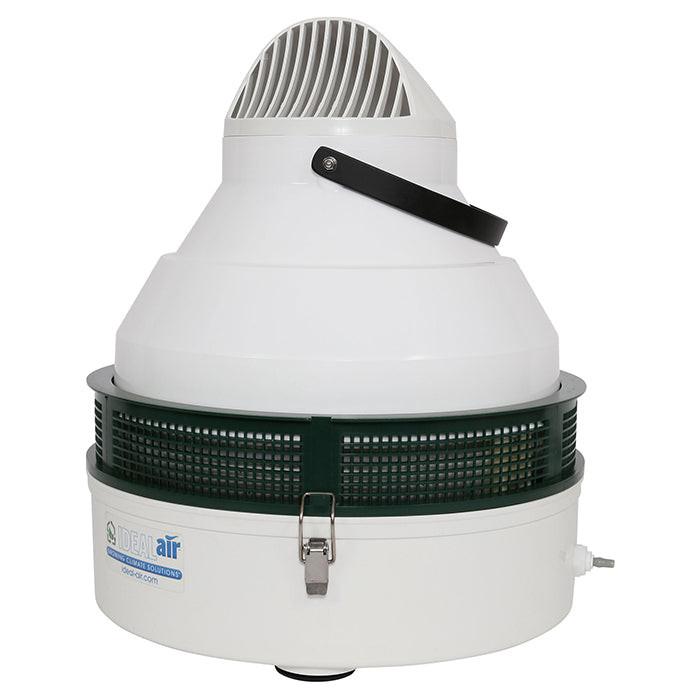
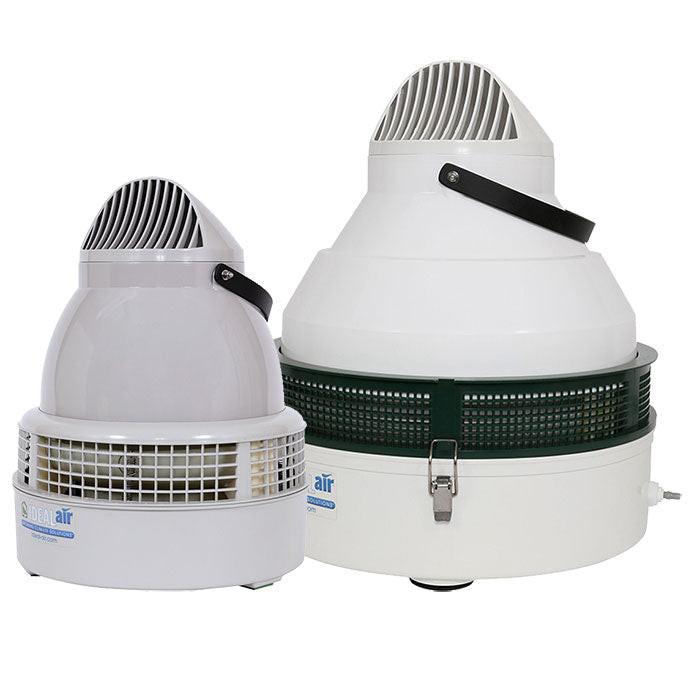
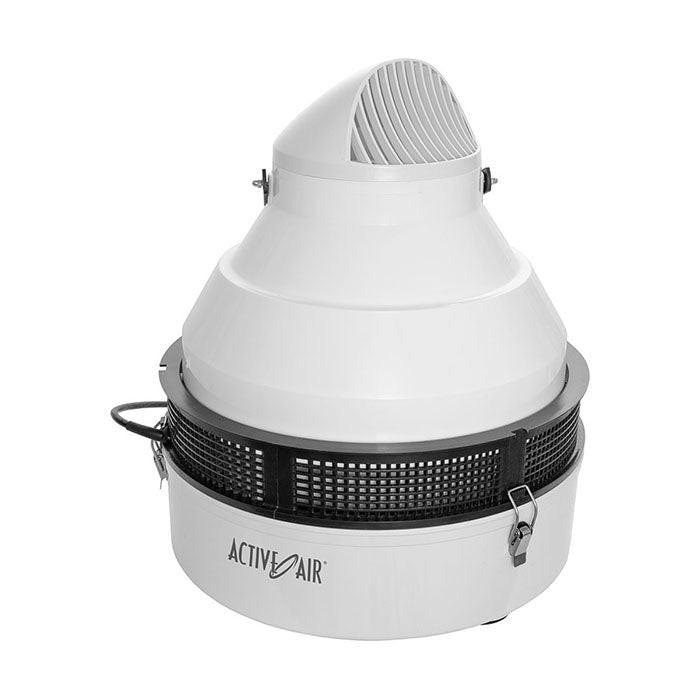
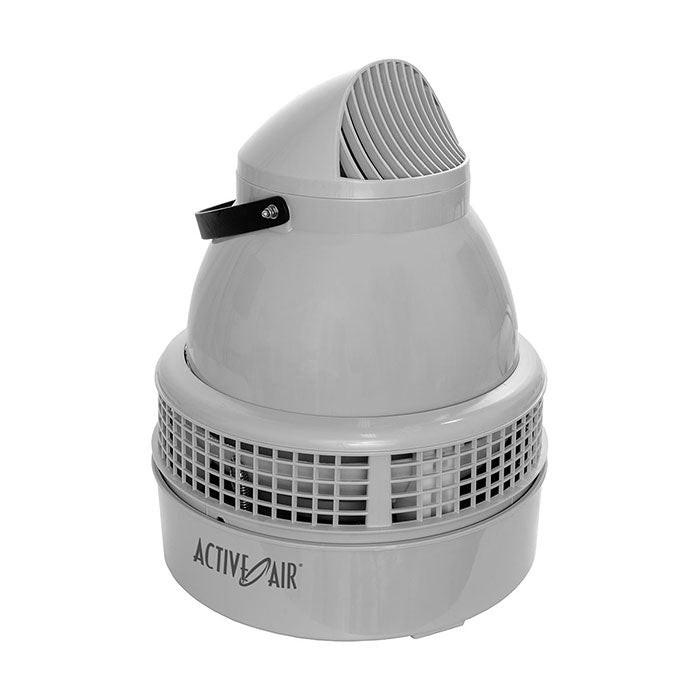
Grow Room & Grow Tent Humidifiers
While humidity control in flowering rooms typically means removing moisture with a dehumidifier, the early stages of plant development -- seedling propagation, cloning, and vegetative growth -- often require the opposite: adding humidity to dry environments to maintain the elevated relative humidity levels that support healthy development. In arid climates, heated indoor spaces during winter, or grow rooms with aggressive air exchange pulling in very dry outside air, ambient RH can drop well below the 60-75% range that seedlings and clones need. A humidifier addresses this gap efficiently without the complexity of sealing off air exchange.
When Growers Need a Humidifier
Target humidity for each growth stage: seedlings and cuttings in propagation require 70-80% RH for healthy stem and root development -- without adequate humidity, cuttings wilt and desiccate faster than roots can establish. Early vegetative growth performs best at 60-70% RH. Late vegetative and pre-flower transition: 50-60% RH. Once plants enter flowering, humidity requirements drop and a dehumidifier typically becomes the active tool rather than a humidifier. Growers most commonly need humidifiers in winter in cold, dry climates; in climate-controlled buildings with forced-air heat that strips moisture from the air; and in dedicated propagation spaces where seedlings and clones are maintained separately from the main flowering environment. Use our VPD Calculator to set coordinated temperature and humidity targets for each growth stage.
Ultrasonic vs. Evaporative Humidifiers
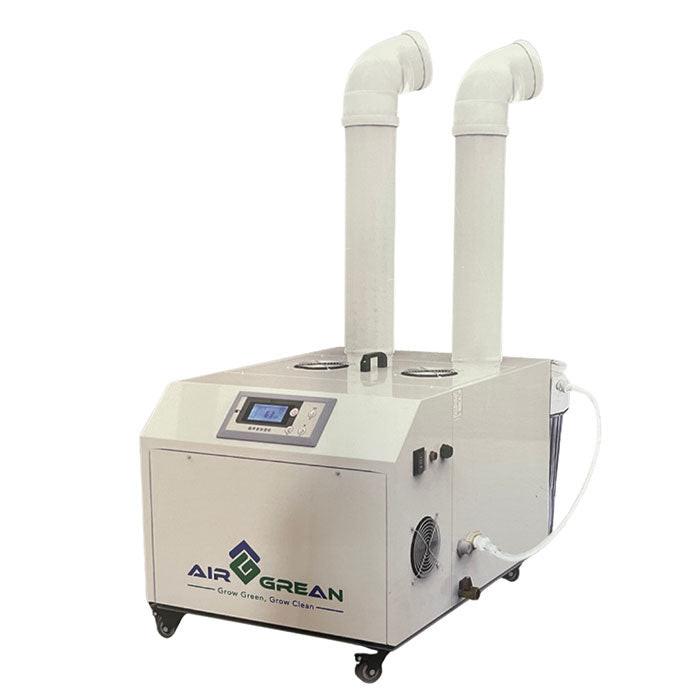
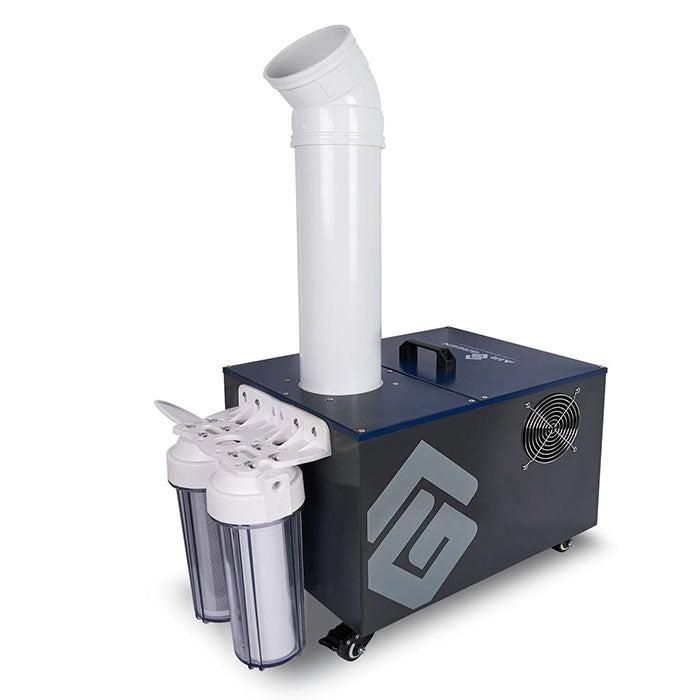
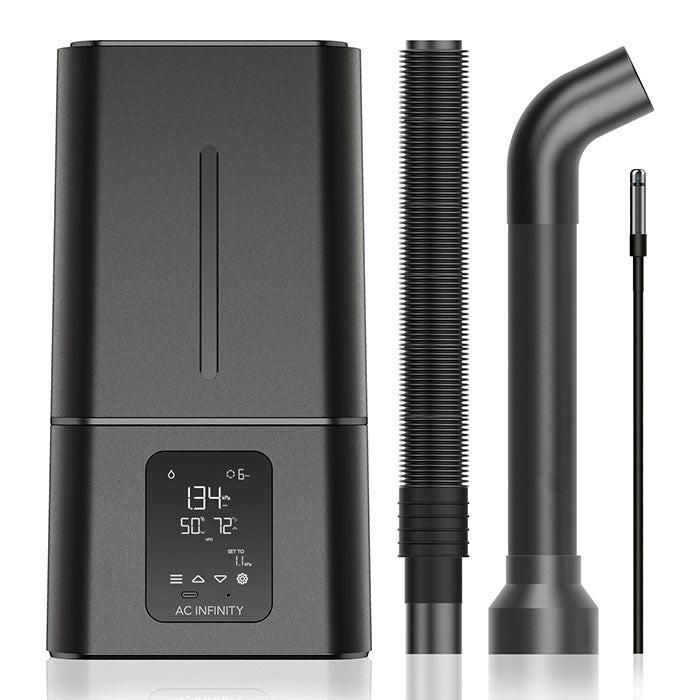
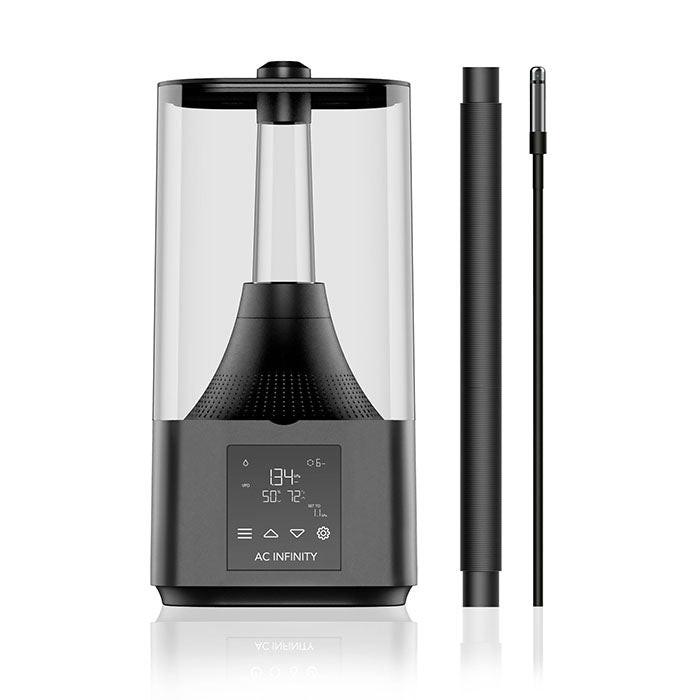
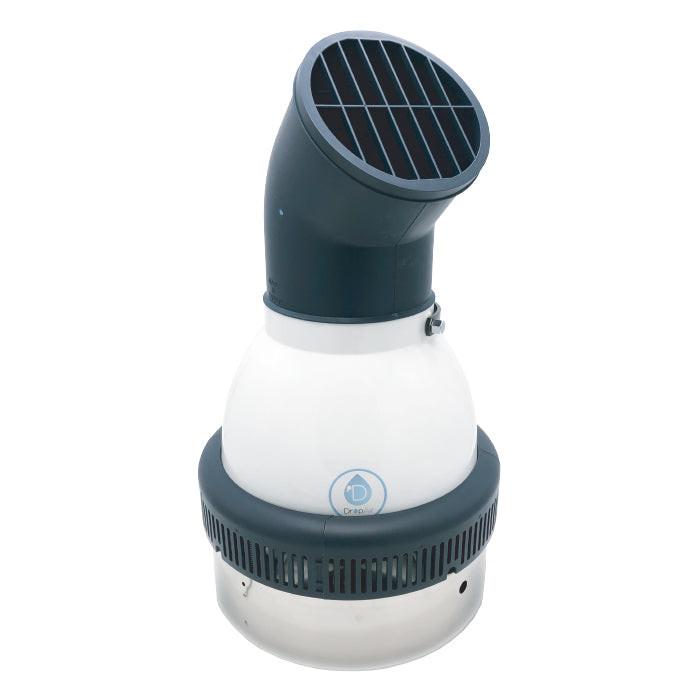
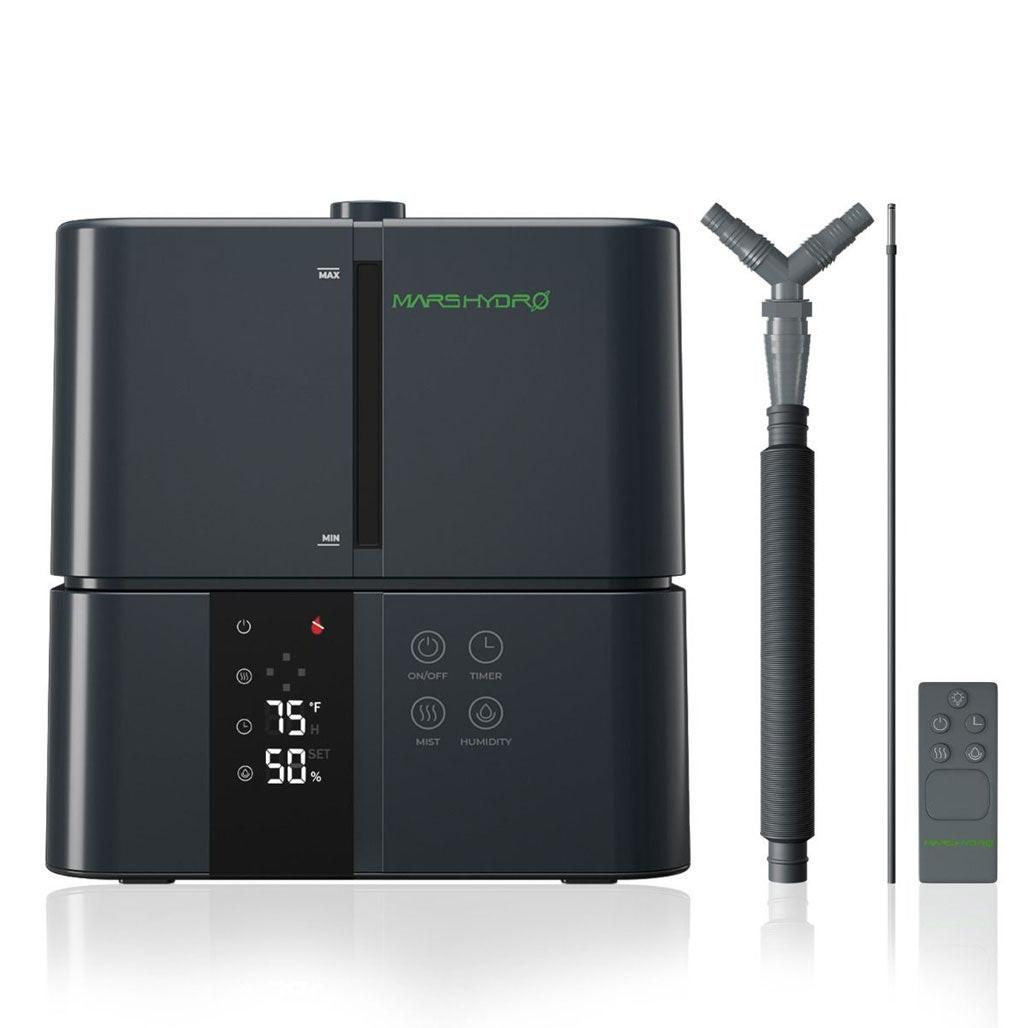
Ultrasonic humidifiers use a vibrating membrane to create a fine water mist that is then dispersed into the air -- producing a visible cool mist. They are compact, energy-efficient, and effective at raising humidity quickly. The tradeoff: if your water contains dissolved minerals (calcium, magnesium, etc.), ultrasonic units create a fine white dust from those minerals as water evaporates from the mist particles. Using filtered or distilled water eliminates this issue. Evaporative humidifiers pass air through a water-saturated wick or filter -- water evaporates naturally without misting, so no mineral dust is produced. They run more quietly and handle harder water without the white dust problem, but are typically less aggressive at adding moisture quickly compared to ultrasonic units of the same size. For most grow room applications with reasonable water quality, ultrasonic units are the more practical choice; growers in hard-water areas or using tap water may prefer evaporative to avoid mineral buildup on plants and equipment.
Humidifier Sizing for Grow Rooms & Tents
Size humidifiers by the volume of the space and target humidity increase needed. For a 4x4 grow tent in a typical indoor environment, a 1-2 gallon per day ultrasonic unit is generally sufficient to maintain 65-75% RH during vegetative growth. For a 4x8 or larger space, or for very dry climates where the starting RH is below 30%, step up to a 2-4 gallon per day unit. Pair any humidifier with a humidity controller or a multi-function environment controller for automated on/off control -- running a humidifier without humidity control risks overshooting the target and creating conditions that promote mold during flowering if the humidifier is left running too long.
Grow Room Humidifiers FAQ
Do I need a humidifier for a grow tent?
It depends on your ambient climate and growth stage. In arid climates, heated indoor spaces during winter, or any environment where ambient RH drops below 50%, a humidifier is beneficial -- especially during propagation and vegetative growth when target RH is 60-75%. In humid climates or during summer, ambient RH may already meet or exceed your target without supplementation. Monitor RH with a digital hygrometer at canopy level and add a humidifier if readings consistently fall below target for your current growth stage. Use our VPD Calculator to determine your specific RH target based on current temperature and growth stage.
What humidity should I maintain for seedlings and clones?
Seedlings and unrooted cuttings require the highest humidity of any growth stage -- 70-80% RH. At this range, the high moisture content of the air significantly reduces transpiration demand through leaves and stems, protecting cuttings from wilting before roots are established and supporting rapid early root development. A humidity dome over propagation trays creates a localized high-humidity microenvironment without requiring the entire grow space to be maintained at 75%+. Once cuttings have visible roots emerging from the medium (typically 7-14 days in an aeroponic cloner), they can be transitioned to the lower humidity of the vegetative environment.
What is the difference between an ultrasonic and evaporative humidifier?
Ultrasonic humidifiers use a vibrating membrane to create a fine cool mist -- effective and compact, but produce a fine white mineral dust with hard tap water as the mist particles evaporate. Using filtered or distilled water eliminates the dust issue. Evaporative humidifiers pass air through a saturated wick, evaporating water naturally without misting -- no mineral dust, runs quietly, but adds humidity more slowly than an equivalent ultrasonic unit. For most grow room applications with reasonable water quality, ultrasonic units are the practical choice. Growers in hard-water areas should use filtered or distilled water or choose an evaporative unit to avoid mineral accumulation on plants, lights, and equipment.
Can I use a regular household humidifier in a grow tent?
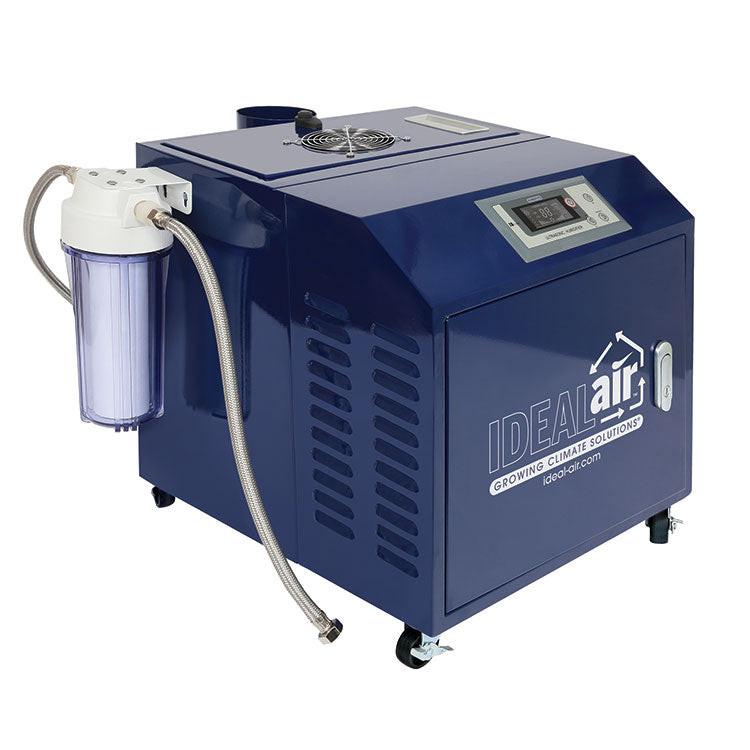
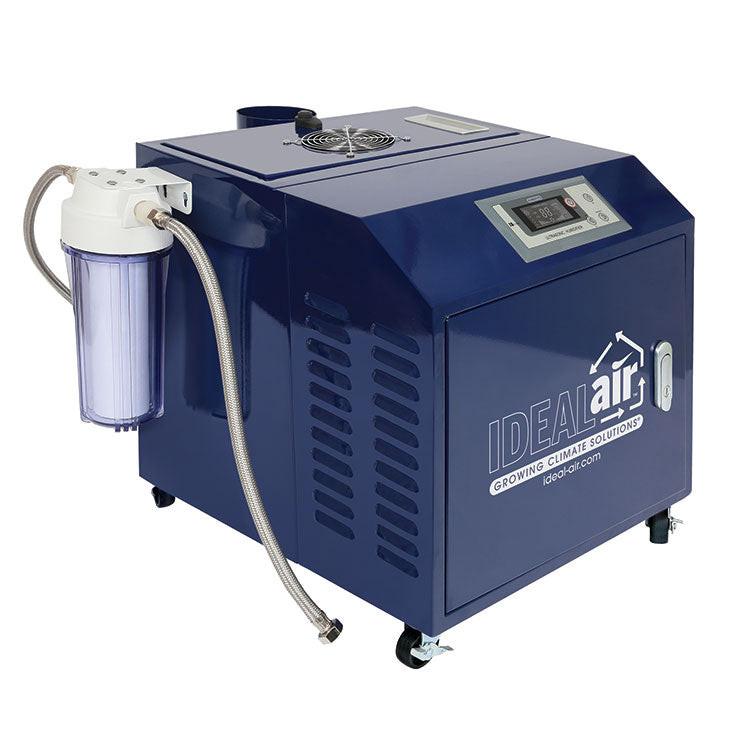
Yes -- standard household ultrasonic and evaporative humidifiers work in grow rooms and tents. The main considerations: capacity (a 1-gallon household unit may not keep up with the air exchange rate of a vented tent in a dry climate -- size up), durability (grow rooms run humidifiers more continuously than typical household use -- look for units with a robust warranty), and mineral dust (if using tap water in an ultrasonic unit, white mineral deposits on leaves and equipment will eventually accumulate -- use distilled or RO water). Dedicated horticultural humidifier brands like Ideal Air are sized and rated for continuous grow room use, but household units from reputable brands work adequately for most hobby applications.
Should I run a humidifier during the flowering stage?
Generally no -- once plants enter flowering, target humidity drops to 45-55% to reduce mold and disease risk on dense flowering plant material, and a humidifier is rarely needed unless your ambient RH is extremely low. If ambient RH in your climate or facility drops below 35-40% during flowering, a small amount of supplemental humidity may still be appropriate, but target the lower end of the acceptable flowering range rather than vegetative targets. More commonly, the concern in flowering rooms is removing excess humidity with a dehumidifier rather than adding it.