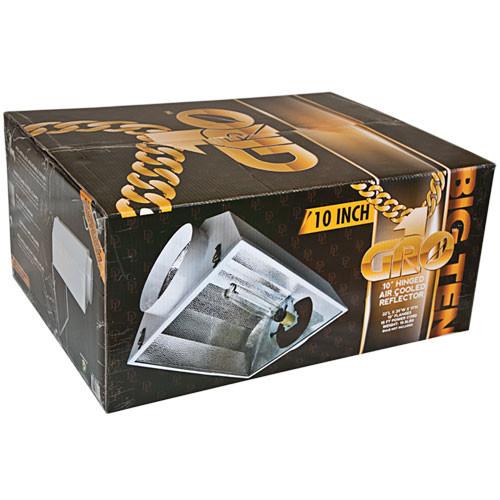
HPS & Metal Halide Grow Light Reflectors
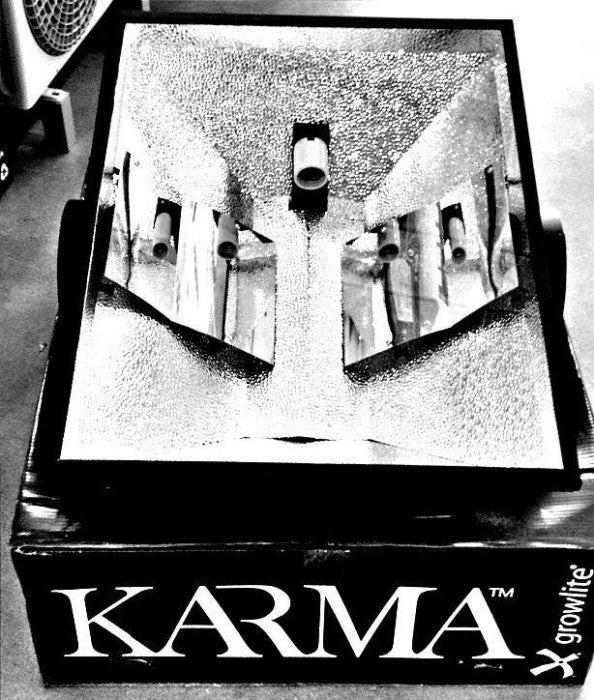
HPS and metal halide reflectors are the hood assemblies that mount a single-ended HID bulb and redirect the lamp's omnidirectional light output downward toward the plant canopy. Without a reflector, roughly half the lamp's photon output travels upward and is wasted. A quality reflector captures this upward emission and redirects it to the canopy, improving delivered PPFD by 30-60% compared to a bare bulb. For growers running SE HPS or MH fixtures, the reflector selection directly affects canopy PPFD and light distribution uniformity.
Reflector Types for Single-Ended HID
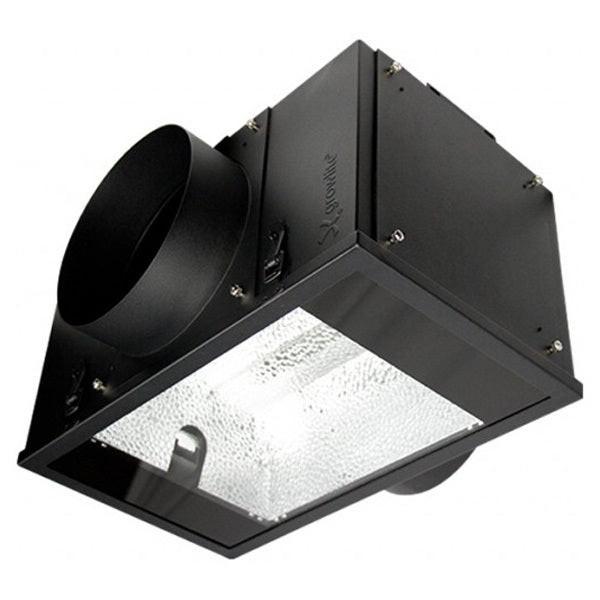
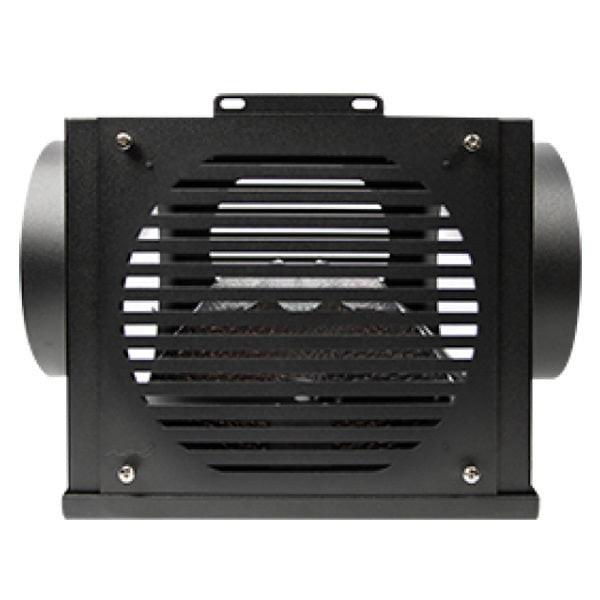
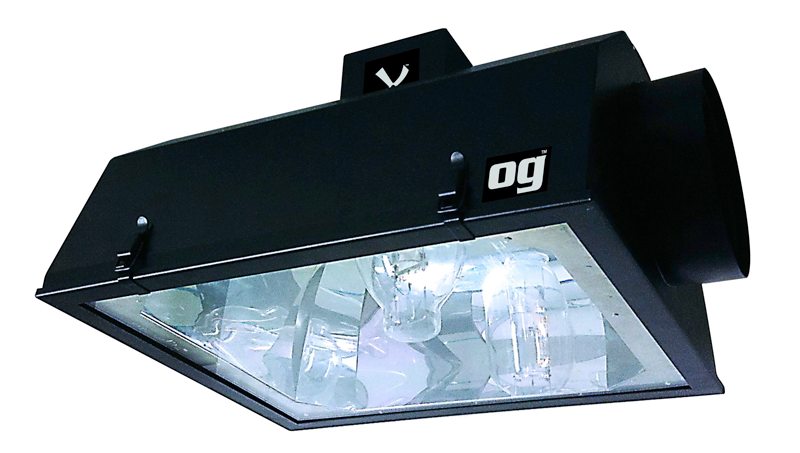
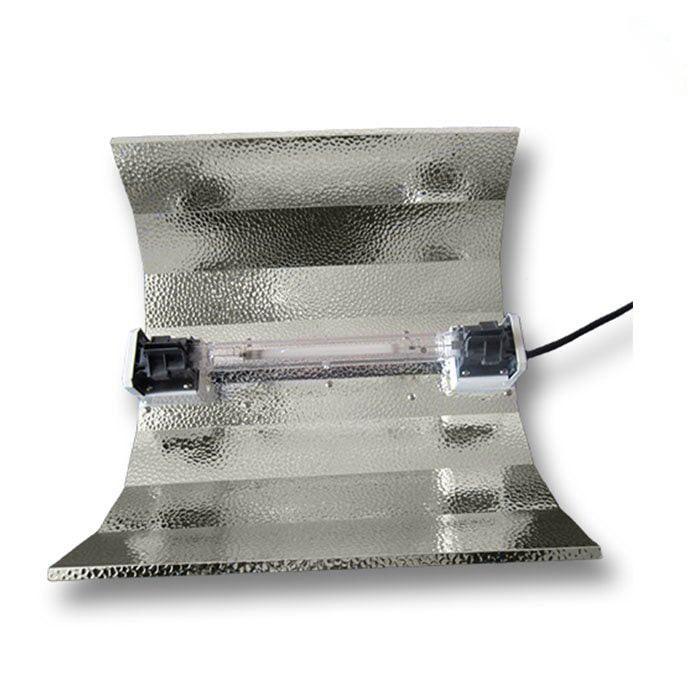
Open-wing reflectors have no glass lens -- light passes directly from the bulb through the open reflector to the canopy. Maximum light transmission, lowest cost, but heat from the lamp radiates freely into the growing space. Enclosed reflectors (cool tubes, sealed hoods) surround the lamp with a glass lens and include duct ports for active air cooling -- an inline fan draws ambient air through the hood, removing lamp heat from the grow space. Air-cooled hoods are the standard choice for tent growing where lamp heat otherwise raises temperature in the confined space. For complete DE HPS reflector systems, see our grow light hoods and reflectors collection.
Reflector Material & Efficiency
Bare polished aluminum reflects approximately 85-90% of incident light. Premium anodized, hammered, or prismatic-textured aluminum (Stucco, Vega, Euro-wing finishes) achieves 90-95%+ reflectivity. Pair with quality replacement bulbs on schedule for best results. Fast shipping.
HPS & MH Reflectors FAQ
What type of reflector gives the best coverage for a 4x4 grow tent?
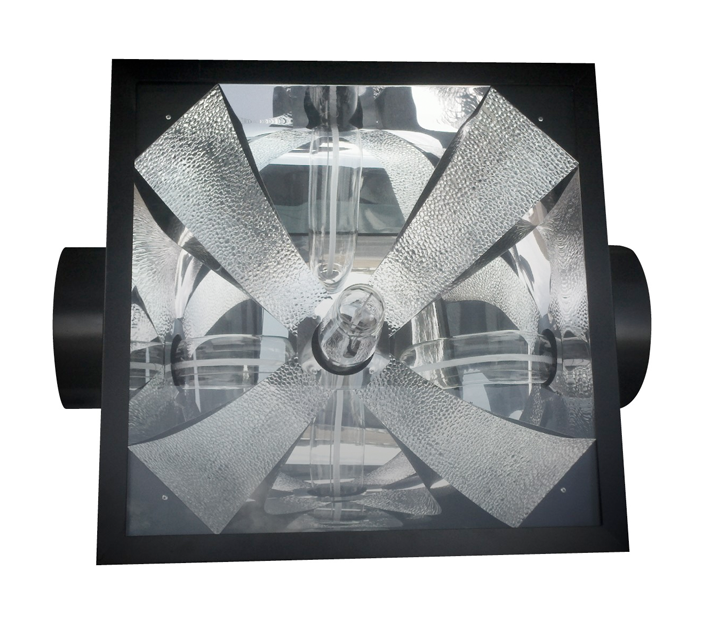
For a 4x4 ft tent with a 600-1000W SE HPS or MH fixture, a horizontal reflector (lamp oriented horizontally, large flat-angle aluminum reflector) provides the widest and most uniform coverage pattern across the 4x4 canopy footprint. Wide-wing and Euro-reflector designs are the most commonly used for 4x4 applications. Air-cooled cool tube or sealed hood designs are the better choice if heat management in the tent is a concern -- the cooling duct capability offsets the slightly reduced reflectivity of the glass lens.
Do I need an air-cooled reflector in a grow tent?
Air-cooled reflectors are highly recommended for tent growing with HPS or MH. The confined tent volume concentrates the lamp's heat around the canopy -- in a 4x4 tent, a 1000W HPS without heat extraction raises tent temperature 15-25 degrees F above ambient, forcing the fixture to hang much higher from the canopy to avoid heat stress and reducing PPFD at canopy level. An air-cooled hood connected to the inline exhaust fan extracts most of the lamp heat directly, allowing the fixture to hang closer to the canopy while maintaining safe canopy temperatures.
What is the difference between a cool tube and a sealed reflector?
Both are enclosed reflectors that surround the HPS or MH bulb with a glass lens. A cool tube is a cylindrical glass tube with the bulb centered inside and duct connections at each end -- air flows straight through the tube past the bulb. A sealed reflector is a conventional wing-shaped reflector enclosed in a glass front panel with duct connections -- the reflector shape directs light distribution more effectively than the cylindrical tube, while the glass front and ducts allow active cooling. Sealed reflectors provide better light distribution control than cool tubes; cool tubes are simpler and less expensive.
How do I match a reflector to my HPS ballast and bulb?
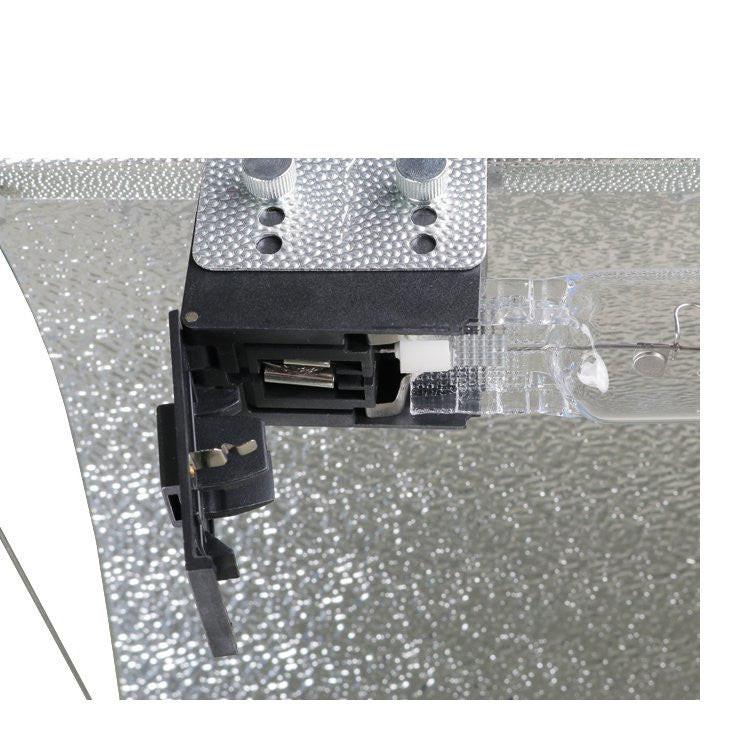
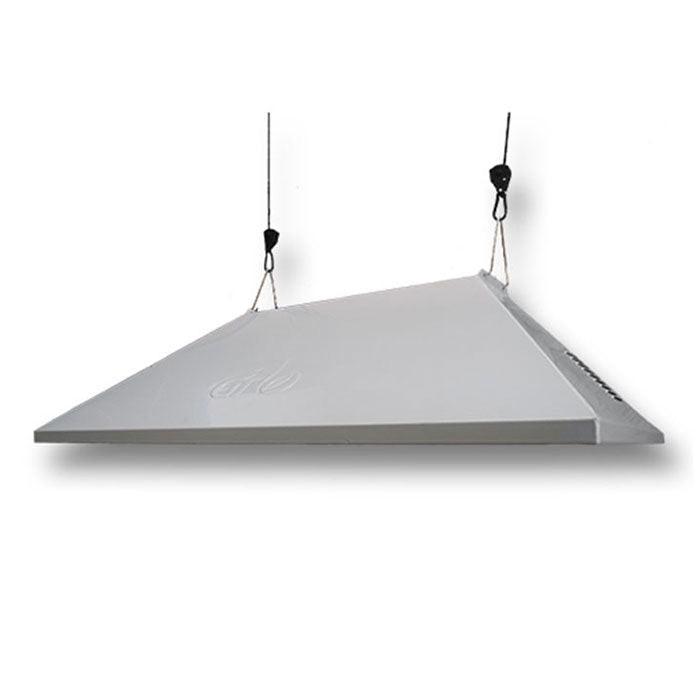
Single-ended HPS and MH reflectors use a standard Mogul (E39) socket that fits all standard SE HPS and MH bulbs at the correct wattage. The reflector socket accepts the bulb regardless of ballast brand -- the ballast connects to the socket via a lamp cord, and the reflector mounts independently via rope ratchets. Verify the reflector cord is rated for the ballast wattage. For DE HPS systems, DE fixtures use a completely different mounting format -- DE reflectors are designed for DE bulbs only and are not interchangeable with SE components.
When should I replace an HPS reflector?
Replace reflectors when: the interior reflective surface becomes permanently dirty or tarnished and cleaning does not restore reflectivity; the glass lens on an enclosed or air-cooled reflector becomes cracked or coated with permanent deposits; or the socket or lamp cord shows wear or corrosion. Reflectors do not have a fixed replacement schedule like bulbs -- a clean reflector in good physical condition continues to perform. Regular cleaning of the interior reflective surface (isopropyl alcohol wipe, no abrasives) after each bulb replacement maintains reflectivity and extends the reflector's useful life.