Grow Light Hoods & Reflectors for HPS & MH
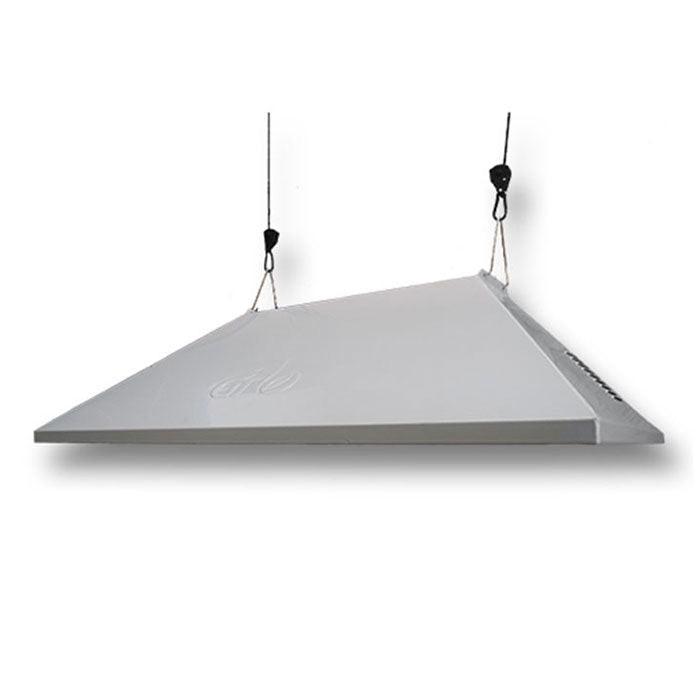
Grow light hoods and reflectors shape the distribution of light from HID grow light bulbs -- the bare bulb alone emits light in all directions, with half the photons going upward away from the plant canopy. A quality reflector captures the upward-emitted light and redirects it downward toward the canopy, significantly increasing the percentage of the lamp's output that reaches productive plant surfaces. The reflector's shape, material, and geometry determine how evenly the reflected light is distributed across the canopy footprint -- influencing both total PPFD and canopy uniformity.
Reflector Types: Open, Enclosed & Air-Cooled
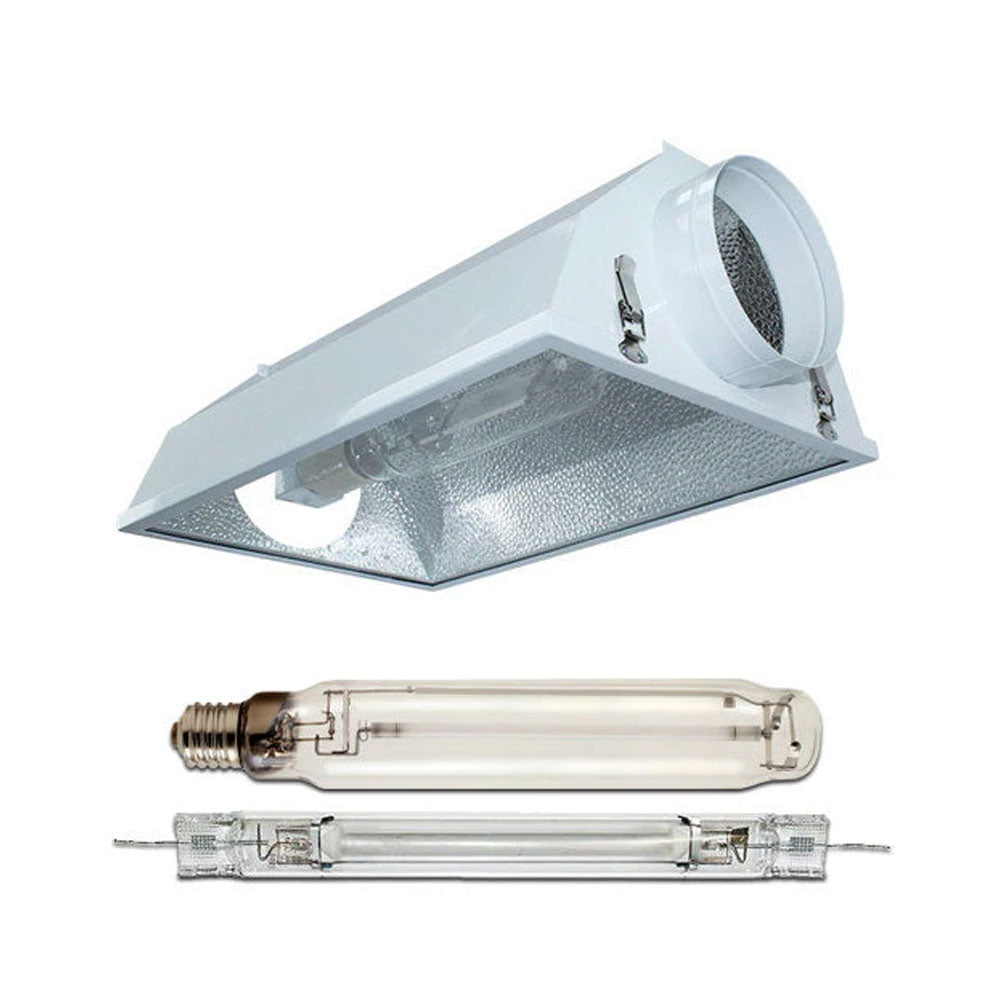
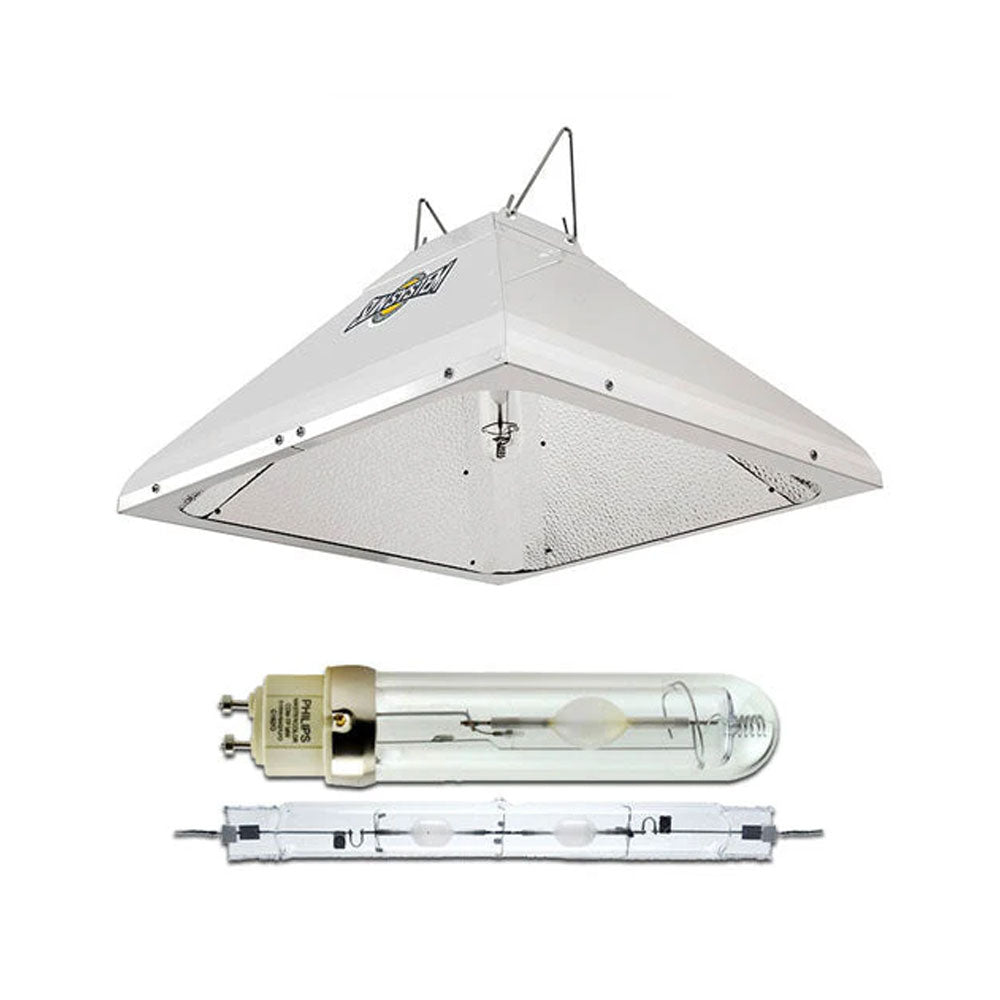
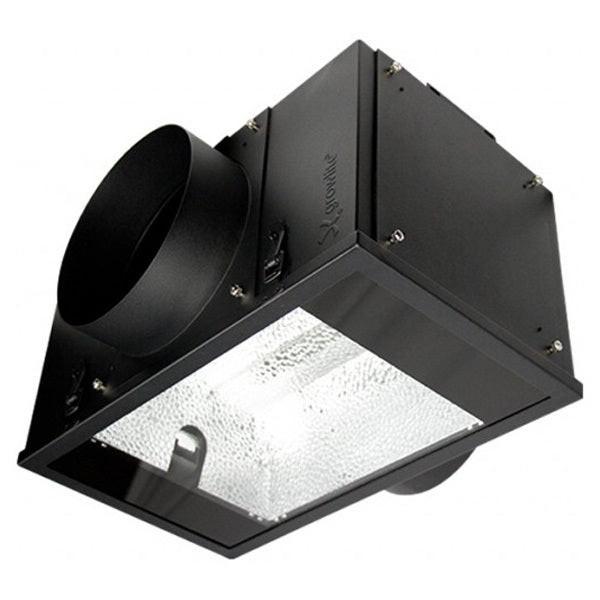
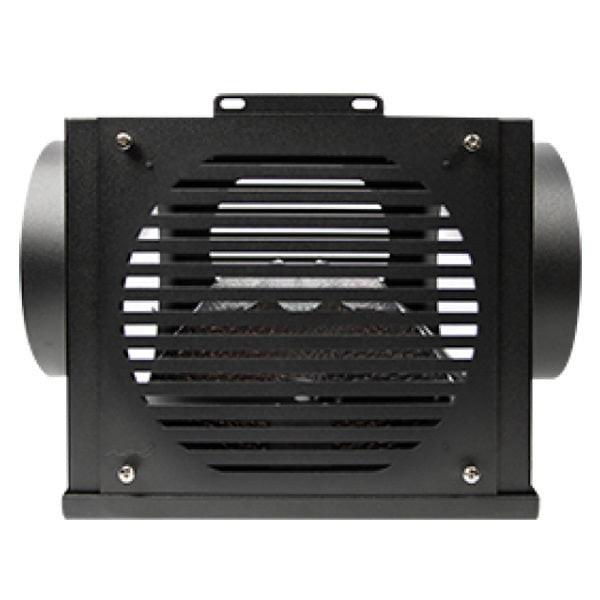
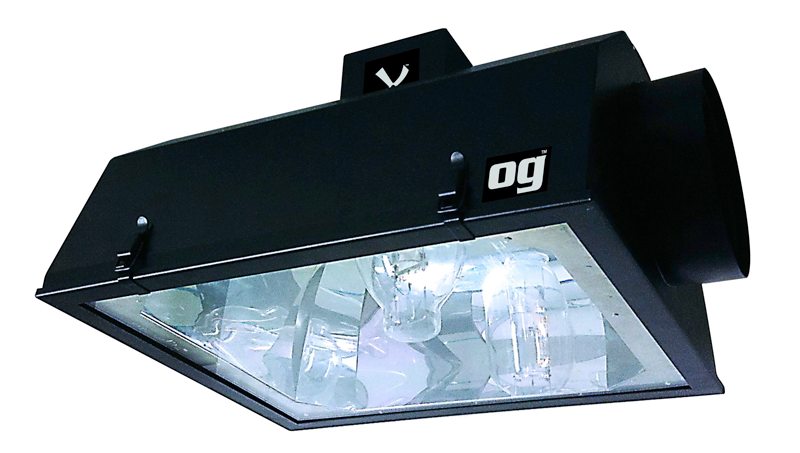
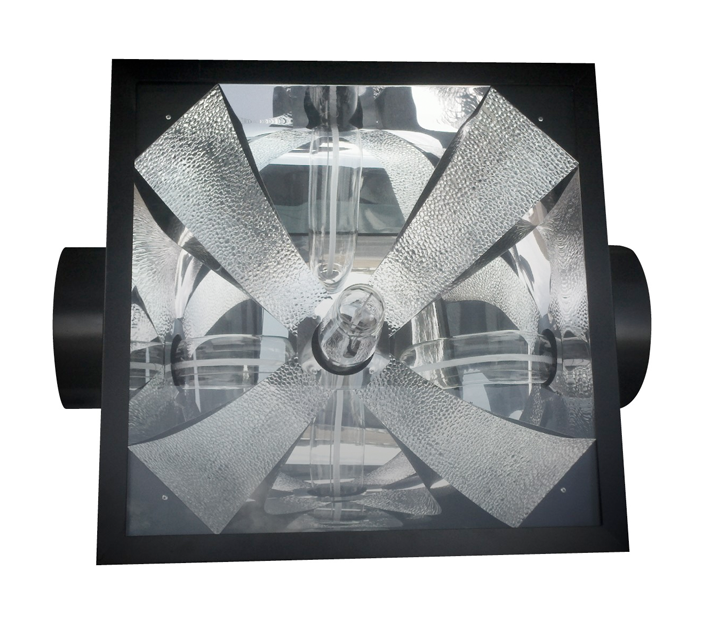
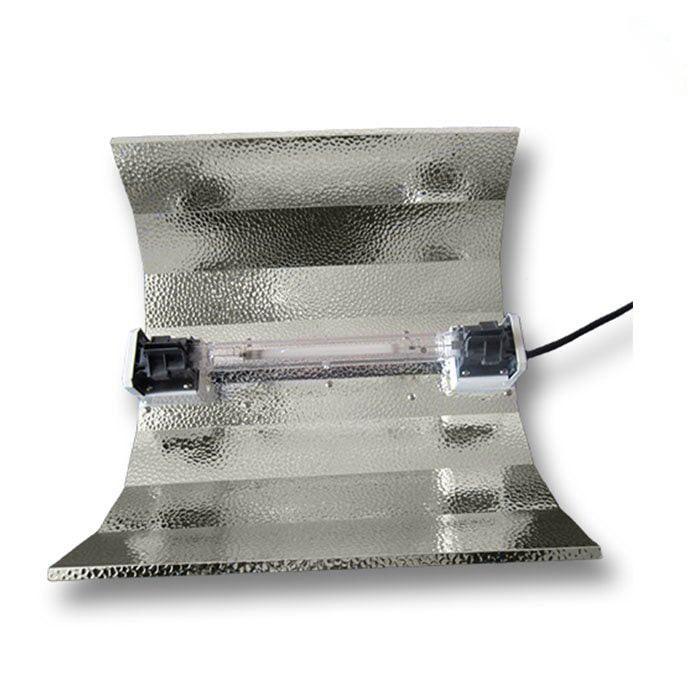
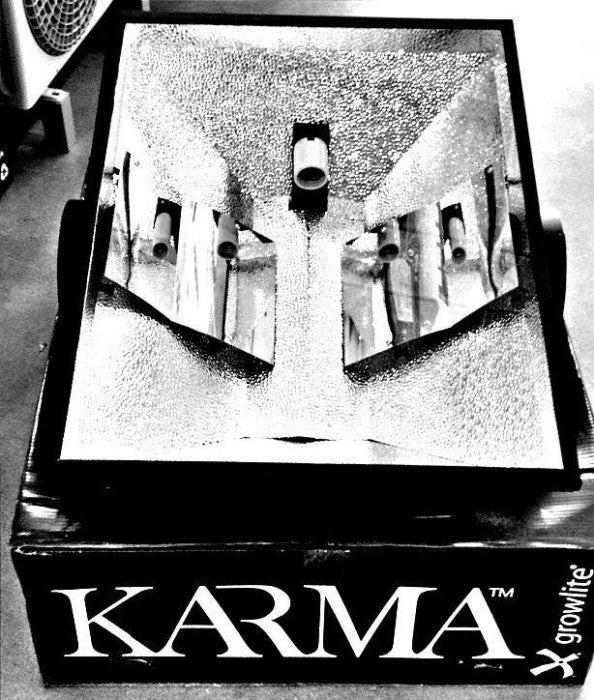
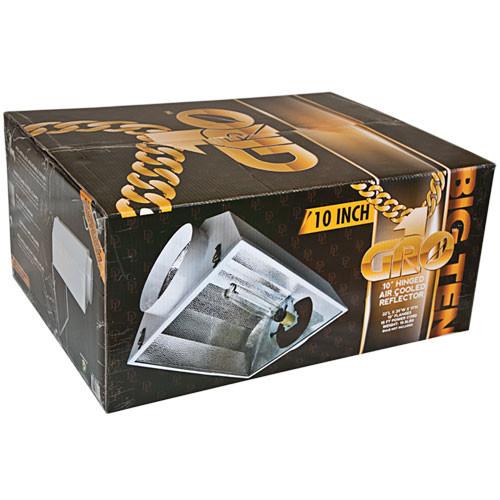
Open-style reflectors (bare aluminum wing reflectors, horizontal reflectors) have no glass lens -- light passes directly from the bulb through the open reflector to the canopy. Lower light loss (no glass absorption), lower cost, but heat radiates freely into the growing space. Enclosed reflectors (cooltube, air-cooled hoods) surround the lamp with a glass lens and provide duct ports for active air cooling -- an inline fan draws ambient air through the hood, cooling the lamp and removing heat from the grow space before it mixes with canopy air. Air-cooled hoods allow fixtures to hang closer to the canopy in confined spaces by lowering the surface temperature that the plants are exposed to. Sealed (non-air-cooled) enclosed reflectors protect the bulb from humidity damage but do not provide active heat removal.
Reflector Materials & Efficiency
Most grow light reflectors use highly polished aluminum or proprietary hammered/vega-textured aluminum as the reflective surface. Bare polished aluminum reflects approximately 85-90% of incident light; premium anodized or hammered aluminum (Stucco, Vega, Prismatic finishes) achieves 90-95%+ reflectivity. The difference between a basic aluminum wing and a premium textured reflector in delivered canopy PPFD is meaningful over the life of an HID installation. For most growers transitioning from HPS to LED, reflector quality becomes less relevant -- LED bar arrays do not use reflectors in the same way. Hang using rope ratchets rated for your fixture weight. Pair with quality HPS replacement bulbs for best results. Fast shipping.
Grow Light Hoods & Reflectors FAQ
Do I need an air-cooled reflector for HPS growing?
Air-cooled reflectors are beneficial in confined spaces where the lamp's radiant heat would otherwise require the fixture to hang uncomfortably high above the canopy to avoid heat stress -- or where room temperature management is challenged by HPS heat load. In larger rooms with robust air conditioning, open-style reflectors allow the lamp to operate at natural temperature with no glass light loss. For grow tents especially, air-cooled hoods allow inline fans to extract lamp heat directly before it mixes with tent air -- reducing cooling load and allowing closer fixture positioning.
What is the most efficient reflector design for HPS?
Horizontal reflectors (the lamp positioned horizontally with the bulb centered in a large, flat-angled reflector) are generally the most efficient design for even canopy coverage from a single HPS source -- they produce the widest, most uniform PPFD distribution pattern of any standard reflector design. Wing reflectors (parabolic shape, lamp vertical or horizontal) concentrate light more centrally with a steeper edge falloff -- better for smaller canopy footprints where center concentration is acceptable. For large canopy coverage (4x4 ft and above), horizontal reflectors provide the best balance of total output and uniformity.
Can I use an HPS reflector with a metal halide bulb?
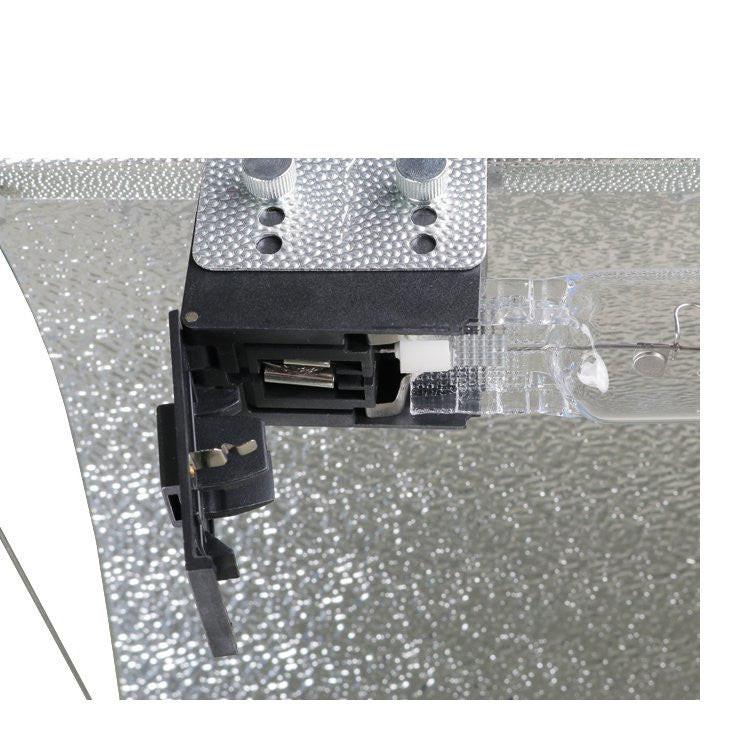
Yes -- most single-ended SE HPS and MH bulbs share the same Mogul-E39 base and will fit the same reflector socket. The reflector itself is neutral to lamp type; the ballast must match the lamp type (HPS or MH) and wattage. Conversion bulbs (MH conversion for HPS ballasts, or vice versa) are the standard solution when you want to change spectrum while keeping the same reflector and compatible ballast.
How do I connect an air-cooled hood to an inline fan?
Air-cooled hoods have two duct ports (inlet and outlet) sized to match standard duct diameters (typically 4-inch or 6-inch). Connect one port to the inline fan's inlet using a matching diameter duct section (the fan draws air through the hood). Route the other duct port either to room air (for a non-exhausting cool-air pass-through configuration) or tie it into your main exhaust duct system. Using the air-cooled hood in the exhaust path (hood air exhausted out of the room rather than recirculated) provides the greatest heat removal benefit -- the lamp heat is extracted completely from the growing environment rather than being returned to it through recirculation.
Should I upgrade from HPS with a reflector to LED?
For most growers, yes -- modern LED bar arrays produce equivalent or higher PPFD at 30-40% less wattage, produce significantly less heat (simplifying temperature management), and eliminate the reflector, bulb replacement, and ballast maintenance requirements of HPS systems. The upfront cost of a quality LED bar array is higher than an equivalent HPS fixture, but the electricity and cooling savings typically produce a 1-3 year payback period at commercial electricity rates. Use our Electricity Cost Calculator with your specific electricity rate to model the exact payback for your setup.