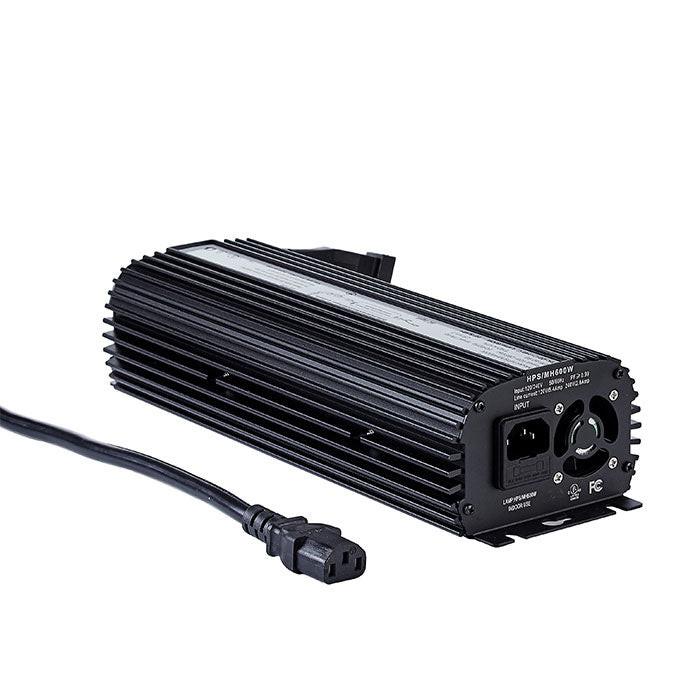
HID Grow Light Ballasts -- Digital & Magnetic
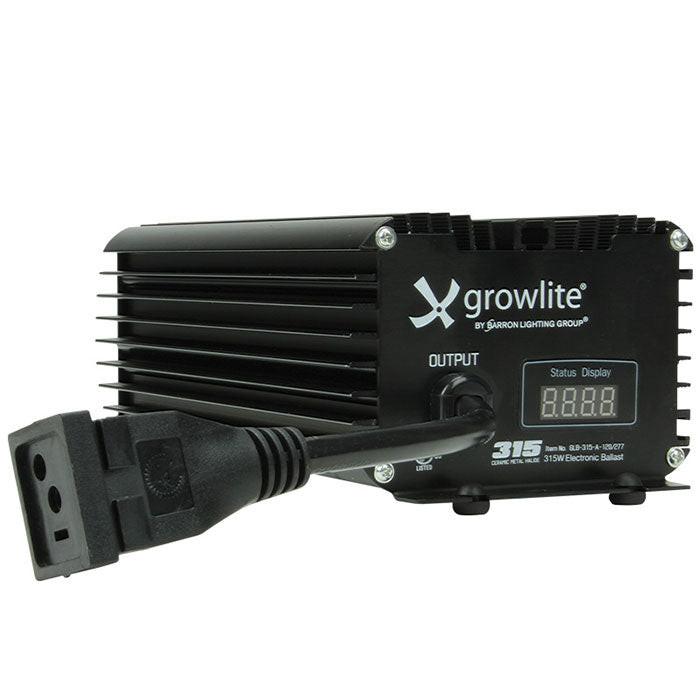
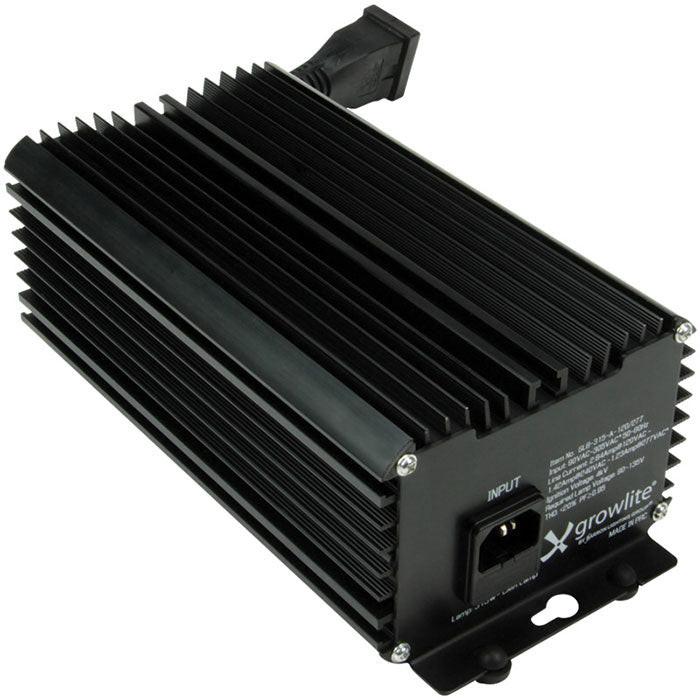
A grow light ballast is the electrical control unit that powers high-intensity discharge (HID) grow lights -- HPS and metal halide. HID lamps cannot connect directly to line voltage; they require the ballast to provide the high-voltage starting pulse that strikes the arc, and then regulate the current to stabilize the lamp at operating conditions. Without a matched ballast, an HID lamp simply will not operate. Ballasts are available in magnetic (older, heavy, runs warm) and digital electronic (modern, more efficient, lighter, with dimming capability) designs, and must be matched to the specific lamp type (HPS or MH), wattage, and connection format (single-ended or double-ended).
Digital Electronic vs. Magnetic Ballasts
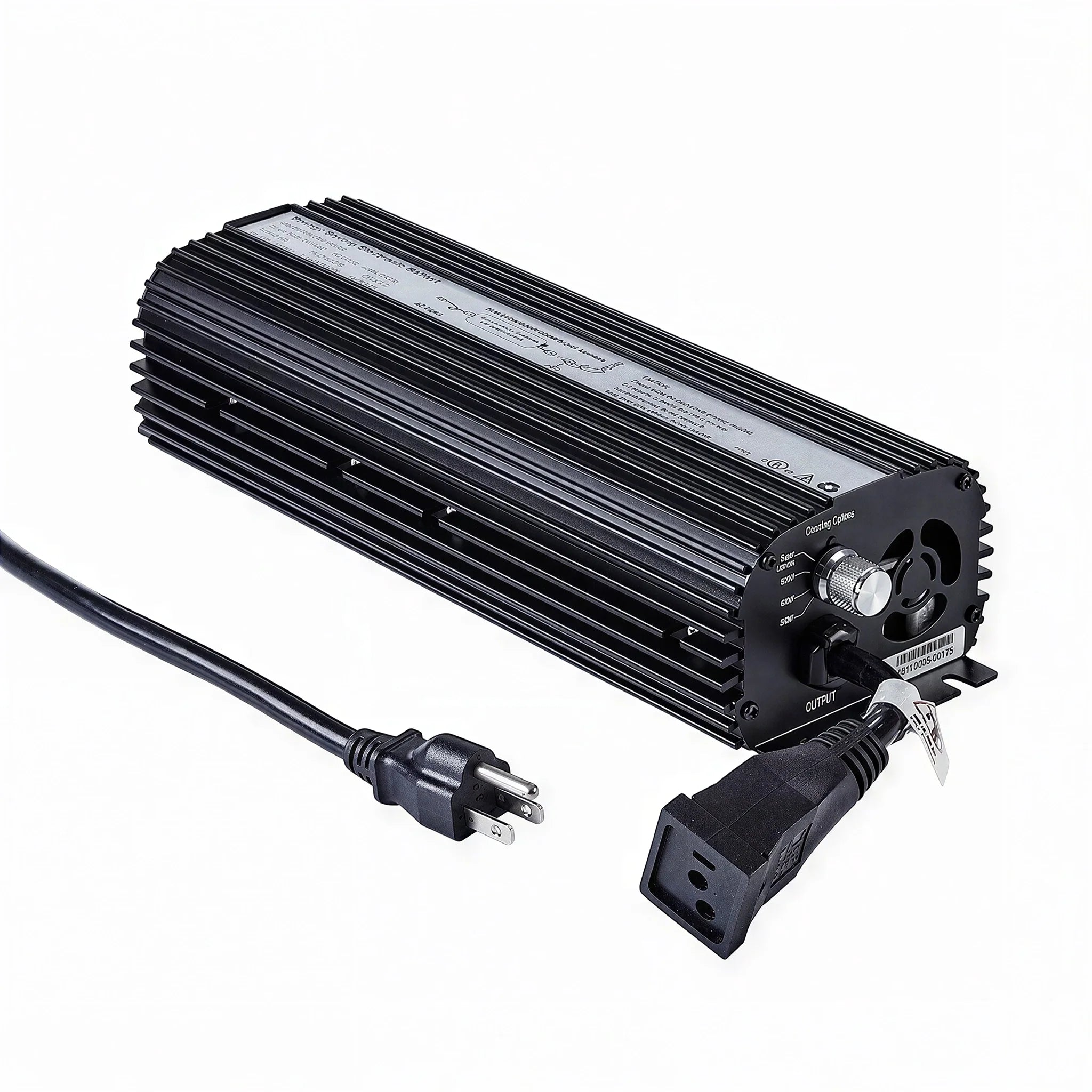
Magnetic ballasts use a transformer-based design that is robust and long-lived but heavy (15-30 lbs for 1000W models), operates warm, and wastes 3-10% of input power as heat within the ballast. Digital electronic ballasts use high-frequency switching circuitry that is lighter (5-8 lbs for 1000W), more efficient (95%+ power factor, less internal heat), and provides adjustable output in most modern models. The higher operating frequency of digital ballasts (20-60 kHz vs. 60 Hz for magnetic) also produces slightly higher lamp output compared to magnetic operation of the same lamp. For new HPS installations, digital ballasts are the current standard -- magnetic ballasts are primarily encountered as replacements for existing older fixtures. For DE HPS, only digital ballasts are available -- magnetic DE ballasts are not produced.
Adjustable Output & Multi-Watt Ballasts
Most modern digital electronic ballasts offer multi-watt operation, adjustable via a lighting controller -- running at 400W, 600W, or 1000W from a single unit with appropriate lamp compatibility at each wattage level. This flexibility allows growers to manage heat and intensity at different growth stages without changing the ballast. The most versatile configuration for a 1000W DE HPS installation is a digital ballast with 0-10V dimming input, controllable through a compatible TrolMaster or multi-function environment controller or dedicated lighting controller. Expert support available.
HID Grow Light Ballasts FAQ
What is a grow light ballast and why do I need one?
An HID grow light (HPS or metal halide) cannot operate directly on line voltage -- the lamp requires a high-voltage starting pulse to strike the arc and then precisely regulated current to maintain stable operation. The ballast provides both: it generates the starting ignition voltage and then limits current to the lamp's operating specifications. Using an HPS lamp without a ballast, or with a mismatched ballast, will either not work or damage the lamp and potentially create a fire hazard. Every HID grow light system requires a matched ballast -- most complete HID fixtures include an integrated or remotely mounted ballast.
Can I use a digital ballast with any HPS bulb?
Digital ballasts are compatible with most standard SE HPS lamps from qualified brands (Philips, Ushio, Gavita) at the ballast's rated wattage. Some lower-quality or non-standard HPS lamps may not perform optimally with certain digital ballast designs. For DE HPS, the lamp and ballast must be specifically matched -- DE ballasts are not interchangeable with SE ballasts, and the recommended lamp for each DE ballast brand varies (Philips GreenPower DE is the most broadly compatible). Always verify the specific lamp-ballast compatibility when mixing brands.
What is the difference between 600W and 1000W HPS?
A 1000W HPS produces more total photon output (approximately 1,600-2,100 umol/s depending on SE vs. DE format) than a 600W HPS (approximately 1,000-1,200 umol/s) but also generates 67% more heat and requires more electricity. A 600W HPS at 1.7-2.0 umol/joule covers a 3x3 to 4x4 ft canopy efficiently; a 1000W covers a 4x4 to 5x5 ft canopy. For a 4x4 tent, a 600W HPS is often the better match -- producing adequate PPFD without the thermal management challenge that a 1000W creates in a confined space. For 5x5 and larger canopies, 1000W is the appropriate wattage class.
Are magnetic ballasts still worth using?
Magnetic ballasts work reliably but are obsolete for new installations. Their primary disadvantages compared to digital: heavier (15-30 lbs vs. 5-8 lbs), lower efficiency (3-10% wasted as internal heat), no output adjustment, 60 Hz operating frequency produces slightly lower lamp output than digital's 20-60 kHz, and no dimming capability. The only reason to choose magnetic today is as a direct replacement for an existing magnetic fixture where the cost of upgrading to digital ballast is not justified -- for a fixture in its final cycles before LED replacement, a magnetic replacement ballast is a lower-cost short-term solution.
Can I use an HPS ballast to run a metal halide bulb?
Not with a standard MH bulb -- HPS and MH have different operating parameters that make them incompatible with each other's ballasts. However, MH conversion bulbs are specifically designed to operate in HPS ballasts -- they are engineered around the HPS ballast's electrical parameters to provide MH spectrum from an HPS-powered system. Similarly, HPS conversion bulbs run in MH ballasts. When using conversion bulbs, always verify the conversion bulb is rated for your specific ballast wattage -- not all conversion bulbs cover every wattage, and using an unmatched wattage damages the lamp and may stress the ballast.